

Shukun AI Gains Widespread Clinical Adoption, Showcased at Sequoia Global Healthcare Summit

SHUKUN
Provider of Intelligent Products and Innovative Solutions
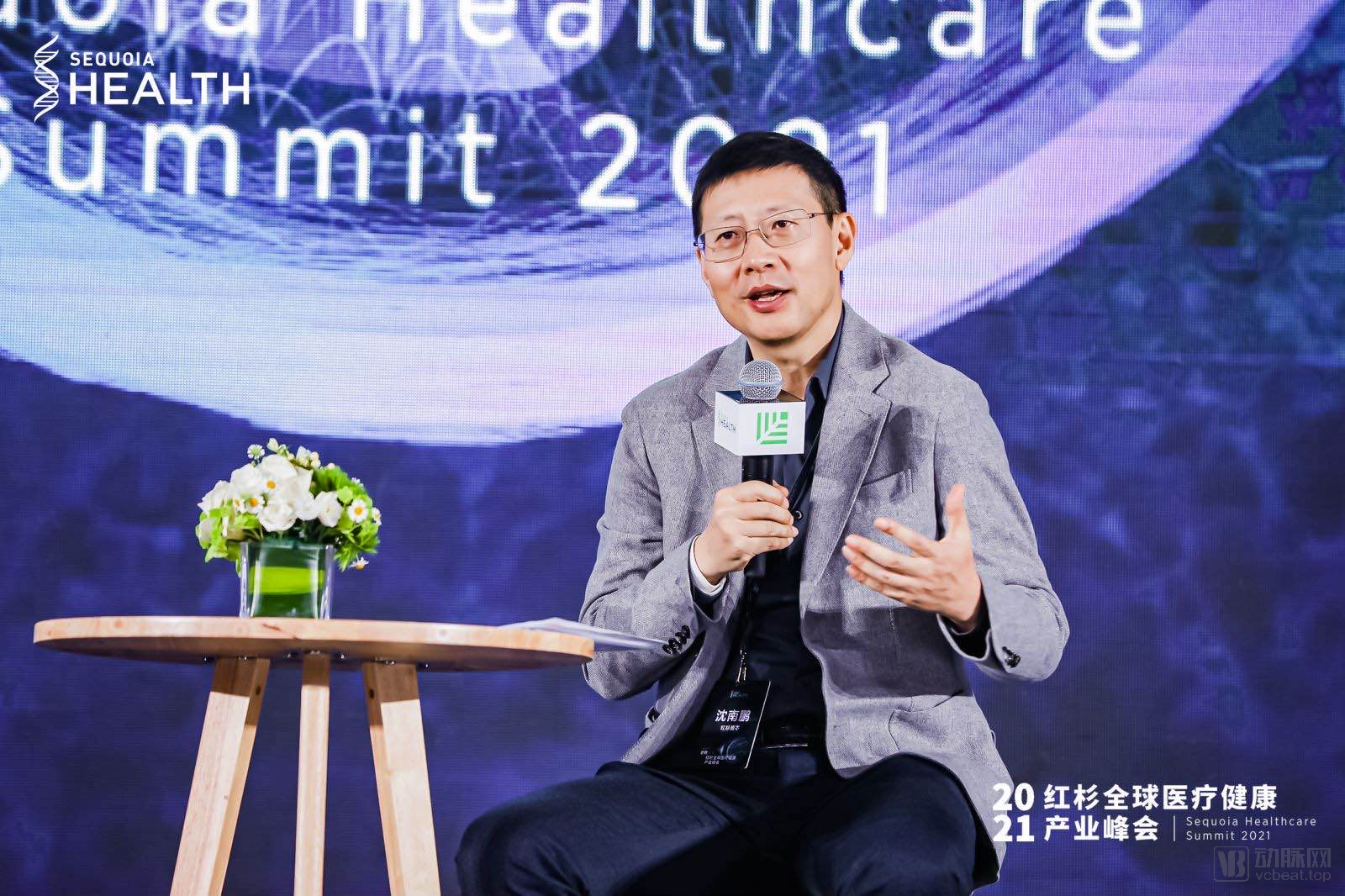
“We are witnessing the flourishing convergence of IT and BT (biotechnology), with their integration accelerating at a pace unprecedented in history.” At the 2021 Sequoia Global Healthcare Industry Summit, Neil Shen, Global Executive Partner of Sequoia Capital, shared his insights on AI in healthcare.
Currently, artificial intelligence (AI) technology is gradually maturing and achieving continuous breakthroughs in the healthcare sector, with application scenarios such as AI-powered medical imaging, computer-aided diagnosis, and accelerated new drug research and development being increasingly implemented. The AI healthcare industry has seen a surge in interest; in 2020, investment in China’s AI healthcare sector reached RMB 6.409 billion, a year-on-year increase of 141.9%. Even tech giants such as Tencent, Alibaba, and Huawei have entered the market.
Even more encouraging is the continuous commercial success of AI medical imaging in the healthcare sector. At the summit, Ma Chun’e, Co-founder and CEO of SHUKUN, revealed that SHUKUN’s AI products are being frequently used by clinicians in both Grade III tertiary hospitals and primary care institutions. SHUKUN is striving to expand the adoption of its AI solutions in primary care settings, enabling more patients at the grassroots level to access high-quality medical resources sooner.
Emerging technologies are accelerating their integration with the healthcare industry, and capital markets are opening their doors to innovative medical technology companies. As a result, AI in healthcare has become a highlight of this summit.
“In hospital settings, the early adoption of ambient intelligence can streamline clinical workflows and enhance patient safety in intensive care units and operating rooms,” said Professor Fei-Fei Li of Stanford University. She noted that in future home-care scenarios, where most elderly individuals will spend the majority of their time, AI sensors will help them maintain greater independence in daily life, facilitate chronic disease management through routine data collection, and support physical rehabilitation therapies.
Following Professor Li Fei-Fei’s compelling opening remarks on AI in healthcare, leading Chinese artificial intelligence enterprises—including Huawei, Tencent, Baidu, SHUKUN, and iFlytek—elevated the discussion on the future trends of “AI + Healthcare” to a climax.
Wu Wenda, Vice President of Tencent Healthcare and an expert on the World Health Organization’s Digital Health Technical Advisory Committee, stated that AI-based medical imaging is currently in high demand and has significantly improved the work efficiency of many physicians.
Tao Xiaodong, President of iFlytek Healthcare, also believes that medical AI is, at its core, designed to serve both physicians and patients. “Artificial intelligence has already demonstrated its value in many areas, including assisted diagnosis, medical imaging, and precise matching between patients and doctors. In the future, AI will showcase its value in an increasing number of scenarios, benefiting both patients and physicians.”
“The integration of AI and healthcare has the potential to enhance efficiency across various segments of the entire medical industry chain, from genomics research to vaccine and drug screening and development, to clinical auxiliary diagnosis””Yuan Jing, Vice President of the AI Division at Huawei Cloud, stated as such.

According to Ma Chun’e, Co-founder and CEO of SHUKUN, practical challenges such as the scarcity and uneven distribution of medical resources prevent many people from accessing adequate healthcare. The true value of AI lies in enabling every individual to enjoy equitable access to medical services, which is also the mission of AI-driven healthcare enterprises. SHUKUN aims to make the greatest possible contribution to smart healthcare in the future.
For many startups, the application of AI in medical diagnosis and treatment faces competition from internet giants. However, few companies have successfully achieved commercial implementation in the healthcare sector. SHUKUN is undoubtedly one of the earliest AI enterprises to realize clinical value.
A few years ago, Ma Chun’e observed a high degree of product homogenization in the market, with offerings largely concentrated on screening for pulmonary nodules and diabetic retinopathy. She firmly believes that only products with substantial clinical value can achieve long-term commercial success. By the end of 2020, SHUKUN had obtained the world’s first Class III medical device certification for an AI-based system to detect coronary artery stenosis, and its solution was rapidly deployed in more than 600 hospitals across China.
Furthermore, most domestic AI imaging products are developed as computer-aided diagnostic tools based on two-dimensional medical images. In contrast, SHUKUN has sequentially developed products such as “Digital Heart,” “Digital Brain,” “Digital Lung,” and “Digital Abdomen” under the framework of building a digital human.
Ma Chun’e explained that in developing the “Digital Heart,” SHUKUN Technology first reconstructs cross-sectional images to create a complete 3D model of the heart, enabling physicians to make further diagnoses. This is not merely about detecting a single plaque within the heart; it requires substantial effort from clinicians.
Ma Chun’e stated that, based on the aforementioned understanding, the SHUKUN team first digitizes organs. For instance, in developing head and neck products, they begin by digitizing the entire anatomical structure of the head and neck. They then simulate the diagnostic reasoning of radiologists to identify abnormalities within these structures, perform qualitative and quantitative analyses of the detected abnormalities, and finally generate a report. This approach aligns with the cognitive workflow of radiologists.
“So after our Digital Heart was deployed in routine clinical practice, physicians responded very favorably. Building on this momentum, we developed the Digital Brain and other products,” said Ma Chun’e. “Lesion detection is a relatively straightforward task from a technical perspective, yet it still delivers tangible value. Our focus has been on deepening the product’s value proposition and creating solutions that clinicians truly appreciate—particularly by addressing more complex diagnostic challenges in cardiology and neurology.”
Another major reason clinicians favor SHUKUN AI is that its integration has restructured the workflow of imaging diagnosis and treatment, reducing the time required from scan acquisition to structured reporting from the previous two to three hours to just two to three minutes. This significantly saves clinicians’ time and reduces waiting times for more patients.
By addressing the pain points of clinicians, commercialization naturally follows.
Ma Chun’e stated that after Shukun’s cardiovascular AI diagnostic products received regulatory certification last year, many hospitals were willing to procure them independently, while others sought to include Shukun’s products in their procurement contracts with major medical equipment suppliers. An increasing number of equipment manufacturers have proactively entered into strategic collaborations with Shukun. This shift eliminates the need for Shukun to sell its products on a case-by-case basis, and bundling Shukun’s AI solutions as standard offerings enhances the value proposition of major equipment manufacturers, providing customers with more comprehensive solutions.
Ma Chun’e stated that SHUKUN aims to ensure that every medical image can generate an AI-assisted report and that every surgical procedure can be supported by AI-driven preoperative planning. She emphasized that commercialization is merely a process of quantitative change leading to qualitative transformation, enabling more ordinary people to access high-quality medical resources from top-tier tertiary hospitals more rapidly.
To achieve this goal, SHUKUN has rapidly implemented a strategy of channel penetration into lower-tier markets, continuously advancing AI adoption in county-level hospitals at the grassroots level.
According to the People's Daily Health Client, in late December last year, Xinghua People's Hospital in Jiangsu Province introduced the Digital Brain, Digital Heart, and Digital Lung AI imaging systems developed and manufactured by SHUKUN. After two days of installation and training, radiologists at the hospital were able to proficiently use the system for intelligent patient diagnosis.
Liu Xingming, Director of the CT Department at the hospital, stated, “The introduction of SHUKUN’s AI-assisted diagnostic system for coronary and head-and-neck CTA has been highly beneficial in improving medical efficiency and quality, and it is now frequently used in clinical practice on a daily basis. In some complex and difficult cases, patients were initially uncertain about our diagnoses; however, their concerns were alleviated upon learning that the reports were jointly issued by both AI and physicians.”
By enabling patients to receive care at their doorstep, freeing radiologists from the burdensome task of image interpretation, and bringing the expertise of tertiary hospital physicians to primary care settings, AI has effectively enhanced the diagnostic capabilities of grassroots hospitals, allowing the tiered diagnosis and treatment system to take root among both primary care institutions and patients.
Today, SHUKUN AI has become an indispensable medical diagnostic tool for many physicians, fostering strong stickiness with both the provider and patient sides. This dependency and high level of engagement are precisely the key factors that investment institutions prioritize in their decision-making processes. On December 28 last year, SHUKUN completed a new round of financing amounting to RMB 590 million, led by Sequoia Capital China. Throughout last year, SHUKUN secured nearly RMB 1 billion in total financing, rapidly emerging as a leader in the AI medical imaging sector.