

Freespira Submits IPO Prospectus: FDA-Cleared Digital Therapeutic for Panic Disorder and PTSD Gains Momentum

freespira
Digital Therapeutics Researcher
According to the U.S. Centers for Disease Control and Prevention (CDC), COVID-19 has exacerbated the mental health crisis, with significant increases in panic disorder and post-traumatic stress disorder (PTSD). Given the side effects and potential for misuse associated with traditional pharmacological treatments for these conditions, a digital therapeutic called Freespira has emerged as a new option. It is the only product that addresses the underlying physiological causes of these disorders.
This digital therapeutic was developed by Freespira (formerly known as Palo Alto Health Sciences), a privately held medical device company headquartered in Washington State. The company focuses on developing digital therapeutics for patients with panic disorder, anxiety disorders, and post-traumatic stress disorder (PTSD). Its product, Freespira®, is FDA-cleared specifically for the treatment of symptoms associated with panic disorder and PTSD, and is not indicated for the treatment of other anxiety disorders or mental health conditions.
Freespira was founded by Beth Siegelman in 2014. Beth holds a Bachelor’s degree in Operations Management from the Massachusetts Institute of Technology (MIT) and another Bachelor’s degree in Operations Management from Boston College. Prior to founding Freespira, she was the founder and CEO of Calypso Software, a personal finance software company. After establishing Freespira, she led the product’s early development and clinical protocols, encompassing product development, regulatory strategy, and building relationships with key clinicians.
She founded the company after participating in a Stanford University study on the underlying physiological causes of panic disorder and the role of carbon dioxide exhaled during breathing. The study found that normalizing an individual’s carbon dioxide levels could alleviate their symptoms.
As a participant in the study, Beth Siegelman benefited significantly from the treatment. She decided to establish a company with the aim of producing a low-cost, easy-to-use commercial product for home use. Beth persuaded her husband, Russell Siegelman, to invest in the company, and their goal is to make Freespira therapy available to as many people as possible, providing millions of panic disorder patients with access to this innovative and effective treatment.
Breathing Pattern Adjustment: Freespira Digital Therapy Delivers Outstanding Results
In multiple clinical trials, breathing patterns have been proven to eliminate or alleviate symptoms of panic disorder and PTSD. Freespira developed its Freespira® digital therapeutic product based on research from Stanford University and received FDA approval in 2018. This therapy normalizes patients’ carbon dioxide levels and respiratory rate over a 28-day treatment course, resulting in significant symptom reduction.
Equipment Preparation:Freespira digital therapy combines patented sensors, nasal cannulas, connected tablets, and proprietary software to measure respiratory rate and exhaled carbon dioxide levels in real time, displaying physiological data graphically.
Treatment Cycle:Freespira digital therapy reduces or eliminates symptoms within 28 days. Twice daily, 17 minutes per session.
Treatment Process:During the 17-minute session, patients follow graphical cues on the Freespira tablet to synchronize inhalation and exhalation with rising and falling audio tones, while adjusting tidal volume to normalize end-tidal CO₂ levels and breathing patterns. Each session provides users with feedback necessary to achieve target respiratory rates and end-tidal CO₂ goals.
Efficient, Cost-Effective, and Convenient Digital Therapeutics Solutions
Freespira aims to improve patients’ quality of life, reduce healthcare expenditures, and support the appropriate use of valuable medical resources.
Day 28:Eliminate Panic Disorder Attacks and Alleviate PTSD Symptoms Within 28 Days. According to data from its official website, 86% of patients treated with Freespira experienced significant improvement in panic disorder after treatment, and 79% remained free of panic attacks 12 months post-treatment. Additionally, 89% of PTSD patients treated with Freespira showed clinically significant reductions in symptoms.
Reducing Behavioral Health Costs:Treating panic disorder and PTSD incurs high costs in terms of quality of life and financial burden. Freespira, by contrast, is a one-time investment that can eliminate symptoms of panic disorder and PTSD long after treatment has ended.
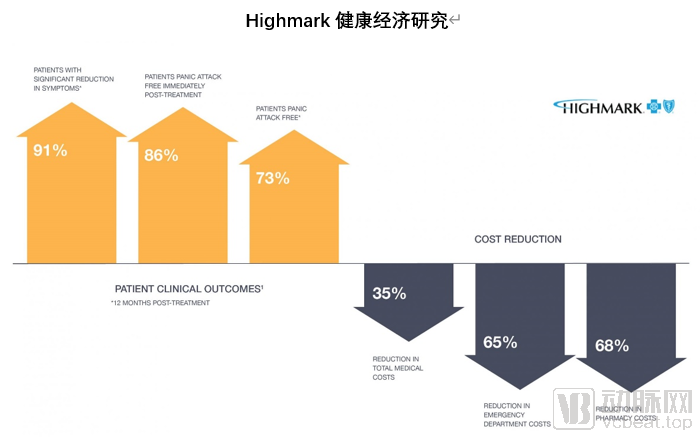
Source: Freespira Official Website
Home Solutions:Freespira® is delivered to the patient’s home after authorization, allowing users to undergo training with the system from any location. The therapy combines real-time breathing regulation training with personalized human coaching. Throughout the 28-day treatment regimen, weekly remote health coaching sessions provide support and guidance on breathing techniques to help patients achieve their respiratory goals. Upon completion of the 28-day treatment, patients are equipped with the skills necessary to independently manage their condition.
In reality, many patients with panic disorder and PTSD have experienced repeated treatment failures; however, this digital therapeutic offers a new avenue. Extensive peer-reviewed studies have demonstrated the clinical efficacy and cost-saving benefits of the Freespira solution.
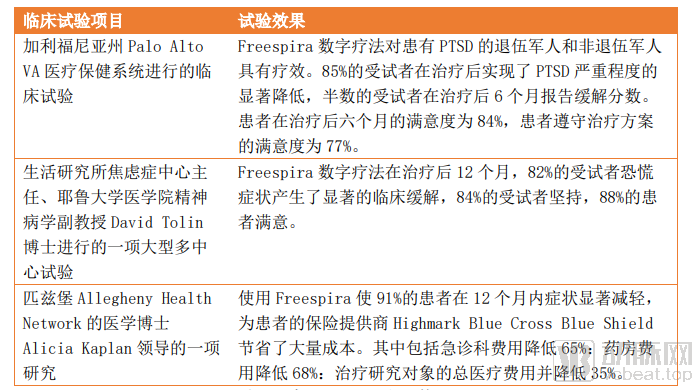
Source: Compiled from the official Freespira website
For several years, the business has been generating revenue, with clients including Highmark Health Plans, Comcast, and the U.S. Department of Veterans Affairs.
Among them, Highmark is the fourth-largest Blue Cross Blue Shield affiliate, serving 5.6 million health plan members in Pennsylvania, Delaware, and West Virginia. Highmark initially piloted Freespira in 2016 as part of its VITAL Innovation Program to help members with panic disorder access new treatment options. Freespira not only reduced or eliminated panic attacks but also lowered healthcare costs.
A Highmark executive stated, “We are pleased with the clinical and financial outcomes achieved by our members with PTSD and panic disorder through the use of Freespira. This groundbreaking non-pharmacological treatment reduces the impact of panic disorder and PTSD-related symptoms, thereby decreasing medication usage and other healthcare costs associated with symptom management.”
In February this year, Highmark is expanding the availability of Freespira to its members in Pennsylvania, Delaware, and West Virginia. The expanded partnership will include remote guidance for using Freespira devices for members who are not connected with behavioral health professionals.
Commercialization: Completed the largest funding round in the company’s history
Freespira has raised a total of $20.2 million across five rounds of financing. Its most recent funding was a $10 million Series D round on October 16, 2020, to support the development and deployment of its technology for alleviating panic attacks and PTSD. Freespira is backed by three investors, with Lightspeed Venture Partners and Farzad (Zod) Nazem as the most recent investors.
Jonathan MacQuitty, Venture Partner at Lightspeed Venture Partners, stated, “We are delighted to support Freespira’s mission to provide broad-access digital therapeutics for the debilitating symptoms of panic disorder and PTSD affecting millions.”
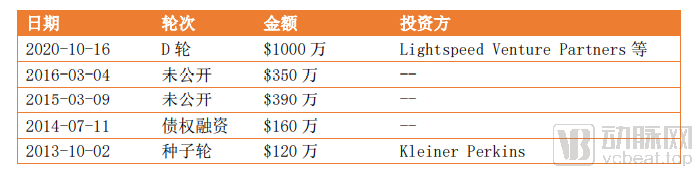
Source: VCBeat Orange
“Freespira CEO Dean Sawyer said, ‘We are honored that Lightspeed, one of Silicon Valley’s premier venture capital firms, has joined our existing investors to help accelerate the commercialization of Freespira, benefiting millions of patients with panic disorder and PTSD, including veterans, first responders, and an increasing number of frontline healthcare workers.’”
Perfect Timing: Freespira’s Continued Momentum
Freespira is now available to help adolescents with panic attacks, panic disorder, and PTSD
The U.S. Centers for Disease Control and Prevention (CDC) found that nearly 3 million children were diagnosed with serious emotional or behavioral health conditions during the influenza pandemic. From April to October 2020, the proportion of mental health-related emergency department visits among adolescents aged 12 to 17 years in U.S. hospitals also increased by 31%.
In March 2021, Freespira announced that its product is now available for adolescents aged 13 and older, in addition to adults. Freespira stated that while the system serves as an adjunctive therapy for panic attacks, panic disorder, or PTSD-related symptoms in patients aged 18 and older, it has been evaluated for younger patients and is being provided in accordance with the FDA’s COVID-19 Enforcement Discretion Guidance.
Children’s Community Health Plan is the first organization to provide Freespira digital therapy to adolescents. It is an HMO dedicated to delivering the highest quality healthcare and services to its members in Wisconsin, serving over 160,000 adults and children.
Freespira, Most Innovative Company of 2020
The 2020 List of the Most Innovative Healthcare Companies, compiled by Dr. David Shulkin, the ninth Secretary of the U.S. Department of Veterans Affairs, selected Freespira as the most innovative company for three reasons.
First, due to the significance of Freespira’s digital therapeutic solution. The stress induced by the COVID-19 pandemic has exacerbated the mental health crisis, leaving more patients in need of assistance than ever before, while traditional approaches often fail to provide relief. With its superior therapeutic efficacy, digital therapeutics are becoming increasingly important in the field of behavioral health.
Second, Freespira has been proven effective. Clinical trials conducted by the Palo Alto VA Health Care System have demonstrated the efficacy of Freespira in both veterans and non-veterans with PTSD.
Third, Freespira addresses panic disorder and post-traumatic stress disorder (PTSD) through a distinct approach. As a one-time investment, Freespira can eliminate symptoms of panic disorder and PTSD for an extended period after treatment concludes.
Special Moments, Amplified Value of Digital Therapeutics
On one hand, Freespira’s digital therapeutic demonstrates significant efficacy. According to a previous analysis by VCBeat on digital therapeutics, patients with post-traumatic stress disorder (PTSD) constitute one of the largest groups susceptible to substance use disorders. Freespira’s digital therapeutic does not require pharmacological intervention and has virtually no side effects, delivering significant symptom relief within 28 days.
On the other hand, due to the impact of the pandemic, pressures such as healthcare system strain, prolonged isolation, social distancing, and uncertainty about the future have led to a worsening of conditions among patients with mental health disorders and chronic diseases during the pandemic, necessitating timely intervention.
At this juncture, the advantages of digital therapeutics, including Freespira, are amplified. First, digital therapeutics support remote consultations, reducing unnecessary in-person contacts during the pandemic. Second, they offer personalized services tailored to individual patients, thereby enhancing the efficacy of diagnosis and treatment. Third, by leveraging mobile devices such as smartphones, digital therapeutics are convenient and highly scalable. Furthermore, there is significant potential for digital therapeutics to reduce treatment costs.
Megan Coder, PharmD, Executive Director of the Digital Therapeutics Alliance (DTA), believes that COVID-19 has highlighted the power of technology to improve care both now and in the future. Tools such as digital therapeutics will continue to play a valuable role in supporting safe, effective, and sustained patient care.