

Can Editas Medicine Maintain Its Leadership in the Rapidly Evolving Gene Editing Arena?

Editas Medicine
Genomic Drug Development and Manufacturing
Preface:
The Rise and Fall of Editas, the Global Leader in Gene Editing
Editas Medicine, founded in 2013, is a genome editing company co-established by five world-leading figures in the field of gene editing. Among its founders is Feng Zhang, the most prominent Chinese-American biologist today, along with 2020 Nobel Prize laureate Jennifer Doudna and other world-class gene editing scientists George Church, Keith Joung, and David Liu.
In addition to its world-leading scientific team, Editas also boasts strong investment backing, having received funding from major institutions and corporations such as Flagship, Juno, the Gates Foundation, and Google. By all rights, such a favored entity should have enjoyed smooth and uninterrupted growth. However, reality often falls short of expectations.
The landscape shifted rapidly. Co-founders Jennifer Doudna and Feng Zhang parted ways with the company amid a patent dispute, subsequently co-founding the competitor Intellia Therapeutics. Chief Medical Officer Gerald Cox and CEO Katrine Bosley also departed in succession.
To make matters worse, Editas Medicine, as a genome editing company, has also faced public skepticism regarding its CRISPR/Cas gene-editing technology as an emerging field. How will Editas respond to these doubts? Can it still maintain its leading position in the gene-editing industry? Let’s begin by examining the key factor: CRISPR gene-editing technology.
Last October, French scientist Emmanuelle Charpentier and American scientist Jennifer Doudna were awarded the Nobel Prize in Chemistry for their contributions to the development of genome editing methods.
This gene-editing approach is the currently booming CRISPR/Cas9 gene-editing technology. Gene-editing technology emerged as early as the 1990s, but in its initial stages, it was extremely time-consuming and even difficult to perform.
In 2012, French scientist Emmanuelle Charpentier and American scientist Jennifer Doudna published research demonstrating their development of the CRISPR/Cas9 gene-editing technology. Compared with previous technologies,CRISPR/Cas9 technology offers advantages such as low cost, ease of use, and high efficiency.
The CRISPR/Cas9 system originates from a defense mechanism found in prokaryotes (such as bacteria and archaea) and serves as a gene-editing tool effective for the genomes of any organism. Viruses can integrate their genes into bacteria, hijacking the bacterial cellular machinery to replicate their own genetic material. To eliminate these invading viral genes, bacteria have evolved the CRISPR-Cas9 system. Using this system, bacteria can silently excise viral genes from their own genomes, constituting a unique immune system specific to bacteria.
Editas Medicine (hereinafter referred to as “Editas”) is such a globally leading genome editing company. It was founded in 2013 and is headquartered in Cambridge, Massachusetts, USA.
Editas is dedicated to translating the power and potential of the CRISPR/Cas9 and CRISPR/Cpf1 (also known as Cas12a) genome editing systems into a broad pipeline of gene editing medicines to improve the lives of people with serious diseases. In addition,Editas is also the only company that holds patents for a combination of CRISPR-Cas9 and Cas12a.
Cas9 is a programmable protein that can specifically locate, bind to, and edit the DNA of target genes. Cas9 has accelerated biomedical research worldwide and is widely used in the development of gene-editing drugs and cell therapies that were previously unattainable.
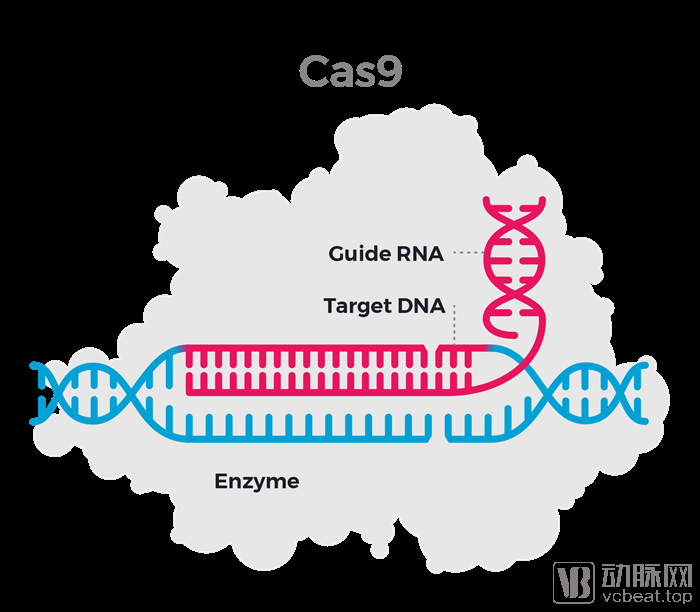
Cas9. Image source: Editas Medicine official website
Cpf1 is a CRISPR protein similar to Cas9, but it exhibits significant molecular differences in the mechanisms of DNA targeting and editing. Cpf1 can also perform staggered DNA cleavage, thereby enhancing the efficiency and accuracy of certain forms of gene repair. These distinctions make Cpf1 an excellent complementary tool for expanding the scope of CRISPR-based gene editing applications.
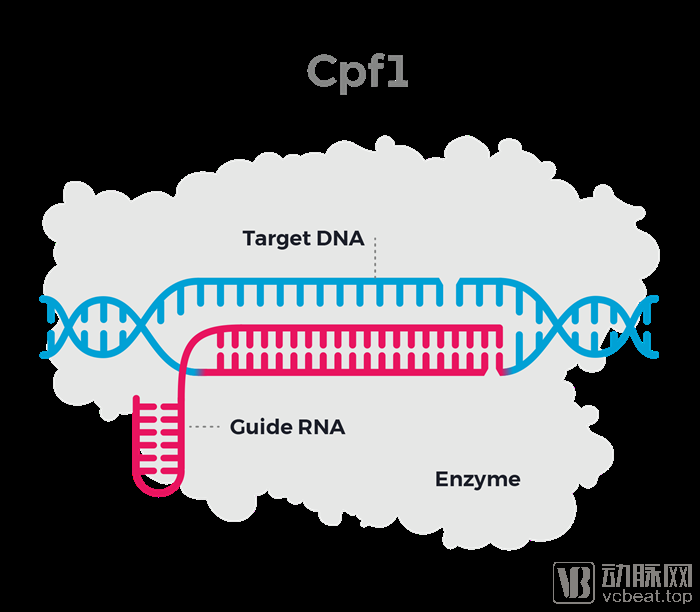
Cpf1. Image source: Editas Medicine official website
How did Editas, with its exclusive patent portfolio, rapidly evolve from a gene-editing newcomer into a leading company in the field within just seven years? Let’s examine its development timeline to gain insight into the surging popularity of gene editing in recent years:
In 2013, Editas Medicine was founded by five world-class leaders in the field of gene editing.The five co-founders are Chinese-American biologist Feng Zhang, 2020 Nobel Prize in Chemistry laureate Jennifer Doudna, and three other world-class scientists in the field of gene editing.
One of the founders—Chinese-American biologist Feng Zhang, who holds a Ph.D. in Chemical and Systems Biology from Stanford University. Zhang’s scientific career has been nothing short of extraordinary. He completed his undergraduate studies at Harvard University, majoring in Chemistry and Physics, under the mentorship of Xiaowei Zhuang, an expert in high-resolution optical imaging. In 2004, Zhang enrolled as a graduate student at Stanford University, where he studied under Karl Deisseroth, the pioneer of optogenetics.
In 2013, Feng Zhang’s laboratory developed an innovative CRISPR/Cas system that significantly improved the reliability and efficiency of gene editing, making Zhang the first scientist to edit the genome of mammalian cells using CRISPR/Cas9.
Another co-founder is equally distinguished: Jennifer Doudna, the 2020 Nobel Laureate in Chemistry. An American scientist, she is currently a professor at the University of California, Berkeley, and an investigator with the Howard Hughes Medical Institute. Dr. Doudna previously completed her postdoctoral fellowship in the laboratory of Thomas R. Cech, the 1989 Nobel Laureate in Chemistry, at the University of Colorado Boulder.
In addition, the founding team includes Harvard University Professor of Genetics George Church, who was nominated for the 2016 Nobel Prize in Chemistry; Keith Joung, Deputy Chief of Pathology and Pathologist at Massachusetts General Hospital, who has achieved breakthroughs in overcoming challenges such as gene off-target effects; and David Liu, an Investigator at the Howard Hughes Medical Institute and Professor of Chemistry and Chemical Biology at Harvard University.
Shortly after its establishment, Editas completed a $43 million Series A financing round on November 25, 2013. The round was led by venture capital firms Flagship Ventures, Polaris Partners, and Third Rock Ventures, with participation from Partners Innovation Fund.
The investors in this round also filled most of the company’s interim management roles: Kevin Bitterman, head of Polaris Partners, serves as interim President, and Lou Tartaglia, a partner at Third Rock Ventures, serves as Chief Scientific Officer. The board of directors of Editas Medicine includes representatives from Third Rock, Flagship, and Polaris.
A year and a half later, on May 27, 2015, Editas conducted its second round of financing, raising $47 million. Juno Therapeutics (hereinafter referred to as “Juno”) was the lead investor in this round. The funds were allocated to support the two companies’ collaboration in developing chimeric antigen receptor (CAR-T) and high-affinity T-cell receptor (TCR) therapies for cancer treatment.
Juno, a pioneer in CAR-T therapy, was founded in 2013 and is headquartered in Seattle. It was established by scientists from the Fred Hutchinson Cancer Research Center, Memorial Sloan Kettering Cancer Center, and Seattle Children’s Hospital.
Juno stated that it agreed to pay Editas more than $230 million to cover costs related to project research, regulatory affairs, and commercial sales. The two companies announced that their exclusive collaboration would combine Editas’s genome-editing technologies, including CRISPR/Cas9, with Juno’s CAR-T and TCR technologies.
Editas Medicine’s outstanding team and rapid growth naturally attracted the favor of top-tier investors. On August 10, 2015, Editas Medicine completed a $120 million Series B financing round,This round of financing was led by Microsoft co-founder Bill Gates, with participation from Google, Deerfield Management, Viking Global Investors, Fidelity Management & Research Company, and others.
On January 4, 2016, Editas Medicine filed its IPO prospectus. On February 3, 2016, it listed on the NASDAQ, issuing 5.9 million shares at an offering price of $16 per share, raising $94.4 million, with the stock ticker symbol: EDIT. It was widely expected that, armed with a cutting-edge scientific team and top-tier investor backing, Editas would thrive and rapidly scale new heights. However, developments in the following years plunged Editas into startup turmoil:
In terms of leadership, co-founders Jennifer Doudna and Feng Zhang departed the company amid a patent dispute and later went on to co-found the competing firm Intellia Therapeutics. Chief Medical Officer Gerald Cox announced his departure in August 2018, and CEO Katrine Bosley also stepped down in late March 2019. The successive exits of key leaders placed Editas, already under intense scrutiny, further in the spotlight and subjected it to widespread public skepticism.
CRISPR/Cas gene editing, as an emerging technology, has also faced scrutiny. Instability in the sgRNA responsible for precise targeting and the Cas9 protein involved in recognizing standard PAM sequences can lead to off-target effects, significantly compromising editing efficiency.
The best way to address skepticism is to resolve the underlying concerns. Off-target effects represent a critical scientific hurdle that must be overcome in the development of CRISPR/Cas gene-editing technology. Editas Medicine has significantly reduced off-target effects by enhancing the stability of sgRNA and improving the intrinsic specificity of the Cas9 protein.
While addressing technical challenges associated with CRISPR/Cas technology, Editas Medicine has also developed related products based on scientific research and technological advancements, thereby facilitating the practical application of CRISPR/Cas gene-editing technology.Editas Medicine’s gene-editing therapeutics under research and development fall into two categories: in vivo gene-editing drugs and ex vivo gene-edited cell therapies.
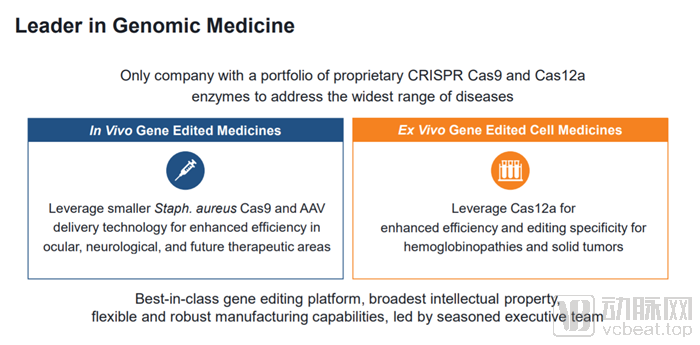
In Vivo Gene Editing and Ex Vivo Gene Editing | Image source: Editas Medicine official website
In vivo gene editing drug projects include the following three:
EDIT-101, jointly developed by Allergan and Editas Medicine, is indicated for the treatment of Leber congenital amaurosis type 10 (LCA10) caused by intronic mutations in the CEP290 gene. LCA10 comprises a group of inherited retinal degenerative diseases caused by mutations in at least 18 different genes. Patients present with symptoms such as decreased visual acuity and rapid, involuntary eye movements (nystagmus), with severe cases progressing to blindness.
Editas Medicine’s approach to LCA10 involves correcting CEP290 mutations to restore normal protein expression and photoreceptor function, ultimately restoring vision.
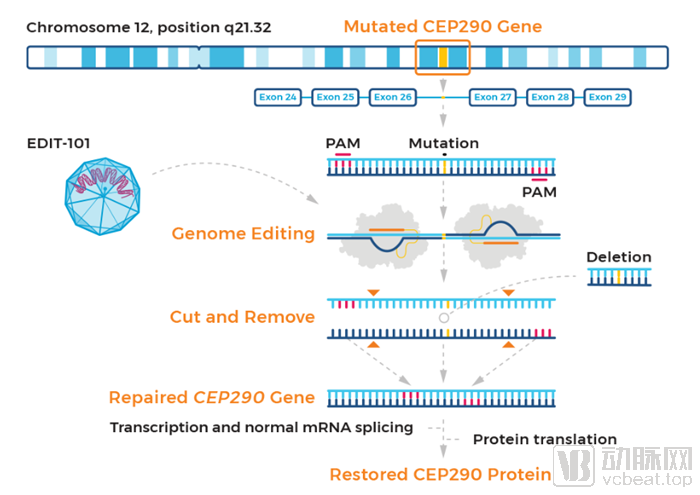
EDIT-101 Image source: Editas Medicine official website
The second in vivo gene-editing drug project targets Usher syndrome type 2A (USH2A), a disorder characterized by partial or complete vision and hearing loss, which is typically caused by mutations in exon 13 of the USH2A gene. Editas Medicine aims to restore healthy USH2A protein expression by editing exon 13, thereby restoring photoreceptor function.
The third in vivo gene-editing drug project is designed to treat autosomal dominant retinitis pigmentosa type 4 (RP4). Retinitis pigmentosa comprises a group of rare inherited retinal disorders that can cause progressive vision loss. Gene editing is particularly well-suited for addressing autosomal dominant mutations, as it enables therapeutic modification of the target gene to achieve a curative effect.
Furthermore, Editas has ongoing projects in ex vivo gene-edited cell therapies. Editas primarily employs two approaches to develop ex vivo gene-edited cell therapeutics.
The first approach involves harvesting a patient’s own cells, editing them ex vivo, and then reinfusing them into the patient. The second approach entails establishing a universal cell line that can be edited and supplied to any patient in need, without requiring prior cell donation from the recipient. Both strategies can be employed to engineer immune cells, thereby enhancing their ability to recognize and destroy tumors.
In its first approach, Editas focuses on editing T cells to enhance their ability to detect and attack cancer cells within the body. Certain tumors can interfere with T cell activity by generating an immunosuppressive microenvironment; gene editing can neutralize the effects of this suppressive microenvironment, thereby improving the efficacy of tumor-targeting therapies.
Based on the second approach, Editas Medicine’s drug development programs are focused on the treatment of solid tumors and hematologic cancers.Through its collaboration with BlueRock Therapeutics, Editas has granted mutual non-exclusive licenses to each other for the use of CRISPR genome-editing technology and the induced pluripotent stem cell (iPSC) technology platform, aiming to develop unique universal cell therapies across multiple related fields, including oncology, neurology, cardiology, and immunology.
The EDIT-301 project is Editas Medicine’s ex vivo gene-edited cell therapy program for the treatment of sickle cell disease (SCD) and beta-thalassemia. Both are severe blood disorders, with 90,000 to 100,000 SCD patients in the United States alone.
In sickle cell disease (SCD), red blood cells deform into a sickle shape rather than the normal biconcave disc shape. These irregularly shaped sickle cells obstruct blood vessels in tissues and organs, leading to tissue damage and pain. The disease typically manifests in early childhood, with initial symptoms including low red blood cell count, delayed growth and development, fatigue, and susceptibility to bacterial infections.
β-Thalassemia is a group of inherited hemolytic anemias. Each year, thousands of infants worldwide are affected by this condition. Symptoms include low red blood cell count, bone abnormalities, jaundice (yellowing of the skin and eyes), growth retardation, and complications such as bronchitis or pneumonia. Without treatment, most patients die before the age of five.
In the EDIT-301 project, Editas Medicine utilized the Cas12a protein for gene editing, enhancing both editing efficiency and specificity. This marks the company’s first drug candidate employing the Cas12a enzyme.
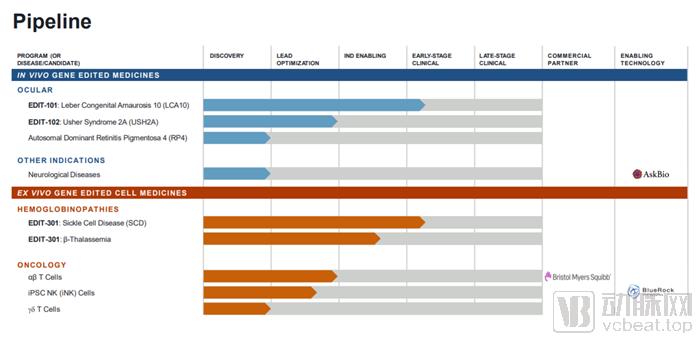
Information on the Company’s Product Portfolio | Image Source: Editas Medicine Official Website
Editas Medicine advances in this era of rapidly evolving information by combining its best-in-class gene editing platform with proprietary intellectual property. On January 21, 2021, Editas announced the issuance of 3,500,000 shares of common stock at a public offering price of $66.00 per share.
After deducting the underwriters’ discounts and commissions and estimated offering expenses, the total proceeds from this offering are expected to be approximately $231 million. J.P. Morgan and Morgan Stanley served as joint book-running managers for this offering, with Cowen and Credit Suisse acting as bookrunners.
The future of Editas Medicine remains uncertain. It is precisely the surge in popularity of gene editing that has drawn numerous top-tier scientists and investors into the field.Foreign companies involved include Sangamo, renowned for its zinc finger technology; Intellia Therapeutics, which has licensed relevant intellectual property from Jennifer Doudna, a pioneer of CRISPR; and Casebia, a 50-50 joint venture established with Bayer.Wait.
The gene sector in China is becoming increasingly vibrant, with a growing number of companies possessing mature genetic platforms:
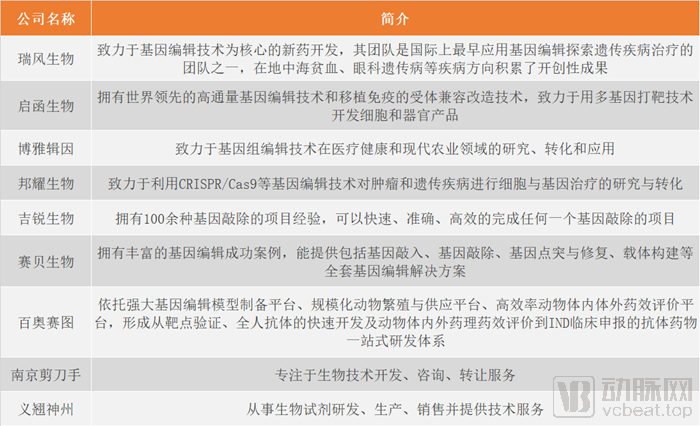
Domestic Companies Involved in Gene Editing
The racecourse is fixed, and the rewards are undoubtedly greater for those who arrive first. Under these circumstances, becoming a leader in the field of gene editing depends on speed and technology. Editas Medicine may have had the fortunate starting point of being “born in Rome,” but in the era of big data, obtaining information about “Rome” takes only moments. To maintain its leading position, Editas Medicine must continuously and rapidly optimize existing gene-editing technologies while constantly discovering new ones, thereby keeping pace with the times.