

NVIDIA DGX-2 Accelerates Anti-SARS-CoV-2 Drug Research, Empowering the Fight Against the Pandemic
NVIDIA
Artificial Intelligence Computing Service Provider
Led by Professor Wei Dongqing of Shanghai Jiao Tong University, the research team is currently leveraging artificial intelligence technologies for antiviral drug research, with a primary focus on three areas: exploring the potential of octapeptides against SARS-CoV-2, investigating the mechanisms of SARS-CoV-2 infection, and designing antiviral vaccines.
In this case, the use of five NVIDIA DGX-2 AI supercomputers reduced the simulation computation time from the original one to two months down to just one to two days, significantly accelerating computational speed and thereby greatly enhancing drug research efficiency.
This case primarily utilizes the NVIDIA DGX-2 artificial intelligence computing platform.
Nowadays, artificial intelligence (AI) technology has been widely applied in the healthcare sector, playing a significant role in areas ranging from assisted treatment and drug screening to new drug development. During the fight against the pandemic, AI technology has also played a crucial part, particularly in the highly anticipated efforts of screening anti-SARS-CoV-2 drugs and developing vaccines. With the support of AI, research teams continue to release new findings.
Among them, the research team led by Professor Wei Dongqing of Shanghai Jiao Tong University is leveraging artificial intelligence technologies for antiviral drug research. Professor Wei, affiliated with the School of Life Sciences and Biotechnology at Shanghai Jiao Tong University, specializes in computational structural biology and biophysics. His daily research extensively applies AI techniques, utilizing computer-assisted molecular dynamics simulations for drug screening, discovery, and design.
As early as the initial outbreak of the pandemic, Professor Wei led his team to immediately engage in the research and development of anti-SARS-CoV-2 drugs. His current research primarily focuses on three areas: exploring the potential of octapeptides against SARS-CoV-2, investigating the mechanisms of SARS-CoV-2 infection, and designing antiviral vaccines, with phased achievements already attained.
In pharmaceutical research, leveraging molecular dynamics simulations for drug discovery is an exceedingly complex endeavor. This process involves substantial amounts of unstructured data and often faces challenges such as limited data availability, insufficient negative samples, and data imbalance. Artificial intelligence technologies are required to address the issue of disorganized information in drug development, thereby enabling automated scoring and evaluation of viruses, proteases, targets, and compounds, and facilitating automated drug screening.
Moreover, with the vast diversity of molecular species today, some of the world’s largest databases contain more than 30 million distinct molecules. Further investigation into protein–protein interactions would entail computational demands reaching astronomical levels. Faced with such complex simulations and massive computational burdens, only the most advanced artificial intelligence technologies and computing platforms can enable researchers to achieve breakthrough scientific results.
During the drug screening process, the research team needs to perform molecular dynamics simulations on hundreds of thousands of molecules. Given this massive computational workload, it would take the team one to two months to complete all simulations using conventional computing resources currently available. However, in the face of the pandemic, time is life.
Given the urgent need to develop effective drugs as quickly as possible during the rampant pandemic, Professor Wei’s team ultimately decided to leverage five NVIDIA DGX-2 AI supercomputers as the core computational power for this research, based on their hands-on experience with various computing platforms in daily experimental work.
The DGX-2 AI supercomputer represents the pinnacle of NVIDIA’s GPU computing and storage capabilities. Equipped with 16 NVIDIA Tesla V100 GPUs, its scalable architecture overcomes the limitations of traditional architectures, allowing for greater model complexity and larger-scale applications. Furthermore, GPU clusters composed of multiple DGX-2 systems can readily address the complex AI and HPC challenges encountered in data science.
The DGX-2, powered by NGC, truly achieves seamless hardware-software integration with plug-and-play functionality. NGC is NVIDIA’s container platform for AI and HPC software stacks optimized for GPUs, offering images for over 50 related applications and frameworks, thereby simplifying software deployment and hardware-software co-tuning processes. Through NGC, NVIDIA provides users with specially optimized container images, further enhancing computational performance.
Since the DGX-2 comes pre-installed with NGC, users no longer need to worry about complex compilation processes, the need to optimize applications for the latest hardware, difficulties in reproducing AI experiments, or challenging environment management. This enables rapid deployment and immediate use, achieving a true plug-and-play experience. This capability is particularly critical in emergency situations like the current one, where every second counts.
Empowered by ultra-high-performance computing resources and advanced deep learning software for medical research, the team’s drug discovery process has been significantly accelerated. Simulations that previously required one to two months can now be completed in just one to two days, with the substantial increase in computational speed driving a marked improvement in drug research efficiency.
Professor Wei’s research team has achieved phased results. In the area of anti-SARS-CoV-2 drug development, the team has experimentally demonstrated that an octapeptide can exert a certain inhibitory effect on the novel coronavirus. The team is currently synthesizing designed peptides, which will subsequently be submitted to the Shenzhen and Shanghai Centers for Disease Control and Prevention for efficacy evaluation. Furthermore, the team is conducting computational simulations of molecules derived from traditional Chinese medicine (TCM) extracts to screen for promising candidates, thereby identifying which TCM materials may be utilized in the treatment of COVID-19.
To rapidly identify the source of infection and transmission routes, and to formulate effective prevention and control strategies, the research team is also leveraging the DGX-2 system. By performing computational simulations of the structure of the SARS-CoV-2 spike protein, they aim to elucidate the molecular mechanisms by which it interacts with human ACE2 protein and mediates viral entry into human cells.
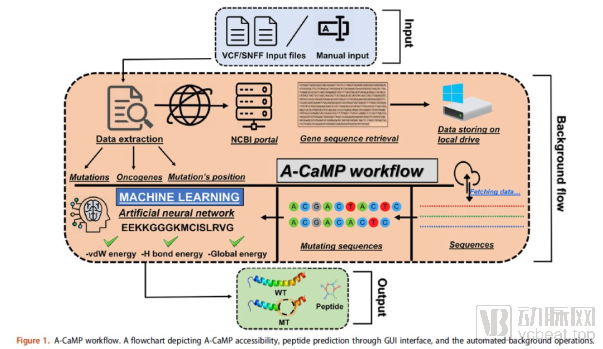
In addition, in the field of antiviral vaccine design, the research team is leveraging its independently developed artificial intelligence software—including A-CaMP, WeiDock, and DTI-CDF—to conduct research on vaccines against SARS-CoV-2. These software tools primarily employ deep learning-based AI algorithms for vaccine design and utilize the NVIDIA DGX-2 AI platform to perform ultra-large-scale simulations and data training. This approach validates the efficacy and safety of the proposed vaccine designs and can even provide recommendations for effective adjuvants. Related work is currently progressing smoothly, with results expected to be announced soon.
Professor Wei remarked, “Many of today’s most cutting-edge scientific research endeavors place substantial demands on computational resources. The DGX-2, the most powerful AI computing platform available on the market, can rightly be regarded as a formidable assistant in advancing data science research.”