

Meixiebao: Transforming China's Aesthetic Medicine Supply Chain with a 'Xiaomi-style' B2B Platform
As a rising star in the global medical aesthetics market, China’s medical aesthetics industry has maintained a compound annual growth rate of over 20% in recent years. The increasing consumer acceptance of medical aesthetic procedures has fueled the rise of the “beauty economy.” However, alongside this rapid domestic growth, reports of “medical aesthetics accidents” have become increasingly frequent in the media. Overall public satisfaction with the industry remains low. Unlicensed medical institutions, unqualified practitioners, and substandard products have emerged as major factors hindering the industry’s positive development, with the majority of medical aesthetics accidents attributable to unqualified products used by unlicensed providers.
A phenomenon in the medical aesthetics industry is that upstream suppliers largely dictate the demands of both institutions and consumers, as most procedures offered by medical aesthetics clinics rely heavily on upstream support.
For small and medium-sized institutions, the relatively low consumption of medical consumables often results in weak bargaining power against upstream manufacturers. In an effort to reduce procurement costs, some of these institutions resort to using gray-market or counterfeit products. When the market is flooded with non-compliant products, institutions, manufacturers, and consumers all bear the costs associated with market disorder, thereby hindering the development of the industry.
To address the widespread issue of gray-market and counterfeit products in the industry, “Meixibao,” a B2B platform for authentic medical aesthetic supply chains launched in 2019, leverages group volume-based procurement to help small and medium-sized medical aesthetic institutions secure stable and cost-effective channels for genuine products. It is reported that, to date, 1,000 medical aesthetic institutions (out of 9,000 registered) have completed transactions through Meixibao.
In this interview, VCBeat speaks with Qin Xingjiong, founder of Meixibao, to explore the company’s development trajectory and strategic planning.
Addressing Industry Irregularities Through Supply Chain Optimization
Since 2005, Qin Xingjiong has been dedicated to the medical aesthetics industry for 16 years. When he first entered the field, Qin participated in founding a plastic surgery hospital. At that time, the medical aesthetics industry was fraught with controversy; irregular practices by some institutions led to a lack of respect for the sector. Against this backdrop, in 2010, Qin decided to independently establish a compliant and respected institution, aiming to gain broader public recognition for medical aesthetics.
Throughout the hospital’s development, Dr. Qin Xingjiong and his team have remained steadfast in their professional commitment and original mission. By partnering with the Smile Angel Foundation, they have provided functional reconstructive surgeries to hundreds of patients with cleft lip and palate as well as those injured in earthquakes, earning high recognition within the industry.
To address the long-standing shortage of high-quality medical talent in the industry, Qin Xingjiong and his team developed “Zhengma Hao Yisheng,” an educational platform dedicated to providing physicians with comprehensive training in both technical skills and operational management. This initiative has not only enhanced individual physicians’ competencies but also promoted greater standardization within the industry.
By 2017, Chengdu had put forward the slogan of building itself into the “Capital of Medical Aesthetics.” At that time, the development level of the medical aesthetics industry had improved significantly compared with more than a decade earlier, but the problem of low industry standardization persisted. As a promoter and deep participant in the “Capital of Medical Aesthetics” initiative, Qin Xingjiong realized that, in addition to the shortage of medical talent, issues in the supply of pharmaceuticals and consumables were also largely restricting the industry’s growth. This insight spurred his idea to establish a medical aesthetics supply chain platform.
Regarding the establishment of a medical aesthetics supply chain platform, Qin Xingjiong and his team initially adopted the concept of centralized procurement, partnering with multiple hospitals and medical aesthetics groups to secure sufficient bargaining power when dealing with upstream manufacturers. This initiative served as the predecessor to Meixibao. Concurrently with this pilot operation, Qin Xingjiong and his team began developing a digital supply platform, officially launching the Meixibao platform in 2019. By leveraging big data, artificial intelligence, and blockchain technologies, the platform has facilitated the establishment of anti-counterfeiting and traceability systems, direct sales channels for authentic products, and medical technology solutions for medical aesthetics institutions. These efforts aim to alleviate administrative burdens for physicians, reduce costs for practice owners, and implement supply chain management at the source.
Price is a key consideration for medical aesthetic institutions when purchasing pharmaceuticals and consumables. By leveraging volume-based centralized procurement and providing authentic products directly from original manufacturers, Meixibao can help medical aesthetic institutions reduce procurement costs by up to 70%, while also enabling upstream manufacturers to lower their sales costs.
Transformation: From “Self-Operated + Marketplace” to “Creating Blockbuster Single Products”
Since its market launch, the Meixibao platform has secured stable direct-supply agreements with upstream manufacturers in the medical aesthetics industry, providing aesthetic clinics with channels for authentic products. Upstream manufacturers join the Meixibao platform through a “self-operated + marketplace” model. The platform categorizes products into several major segments based on their characteristics, including “Medical Aesthetics Centralized Procurement,” “Precision Aesthetic Extracts,” and “Aesthetic Frontline.” In the initial (testing) phase, product application scenarios cover low-value consumables in the medical aesthetics sector.
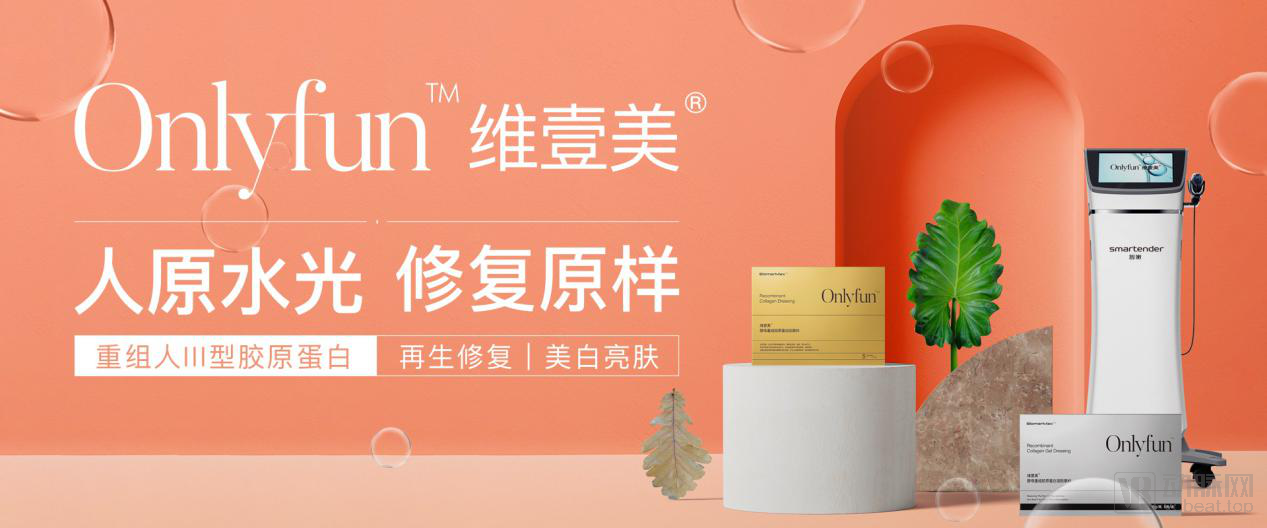
Leveraging its team’s understanding of the supply chain and industry, Meixibao has shifted its strategy from a “self-operated + marketplace” model centered on “products + equipment + consumables” to a core strategy focused on “single-category blockbuster products.” It creates these hit products through “product selection, centralized procurement, and operations,” while building supply chain value via “private-label brands + rigorously selected third-party sellers.” Currently, Meixibao is developing private-label “single-category blockbuster products” based on its “recombinant human type III collagen” technology platform, establishing a full product portfolio of recombinant human type III collagen across “medical aesthetics, professional beauty, and home beauty.” Meanwhile, Meixie Yanxuan (Meixibao’s ecosystem chain + third-party brands) invites brands to join its platform, with its core logic being “physician-involved design, emphasis on product quality, and exceptional cost-performance ratio.” It is reported that “Onlyfun Weiyimei” recombinant human type III collagen (human-origin skin booster) has officially launched in the market.
Collagen is the most abundant functional protein in the human body, accounting for 25%–30% of total body protein. It helps keep the skin hydrated and smooth; however, as people age, collagen levels decline, leading to gradual skin aging.
The collagen products predominantly circulating in the market are animal-derived. These products suffer from issues such as low bioactivity and poor water solubility, and may even trigger immune rejection reactions when applied to the human body. Meanwhile, the production of recombinant human type III collagen, which is more biocompatible with the human body, faces numerous technical barriers. To prevent skin aging, an increasing number of people are turning to hyaluronic acid injections and laser skin rejuvenation treatments to restore a youthful appearance.
In recent years, with the deepening of related research, the core technical barriers to recombinant human type III collagen have been overcome one by one, resulting in significantly improved practical application outcomes compared to the past. A high proportion of type III collagen is key to achieving delicate and smooth skin tissue and scarless healing in infant skin; furthermore, the lack of immunogenicity is a prominent advantage of recombinant human-derived collagen over animal-derived collagen. In the context of skin rejuvenation and wrinkle reduction, botulinum toxin has drawbacks, including risks of toxicity and side effects (particularly with long-term, high-frequency use), and it cannot fundamentally repair structural skin damage caused by aging. In laser-based skin rejuvenation, which stimulates the regeneration of type I rather than type III collagen, there remains considerable room for improvement.
Data indicates that “Onlyfun Weiyimei” recombinant human Type III collagen, as an active biomaterial, is produced by transcribing human genes into engineered bacteria, followed by fermentation and purification processes. Since the gene screening process selects fragments with the strongest reparative function and excludes peptide segments that may cause allergies, it avoids rejection phenomena during product application. During the skin repair process, it not only maintains extracellular moisture but also directly provides the skin with materials homologous to the human collagen ultimately required for cellular repair, thereby accelerating the repair process.
Following the launch of “Onlyfun Weiyimei” recombinant human Type III collagen hydro-lifting materials, injectable products are also in intensive preparation. Meanwhile, Meixibao will continue to focus on hydro-lifting projects, collaborating with leading domestic product and technology teams to introduce its own brands: the “Smartender” hydro-lifting injection device and micro-needles, “Repairmer” human-derived collagen scar repair materials, and “Subskins” sodium hyaluronate injection products. The aim is to create blockbuster single products and establish Meixibao as the “Xiaomi” of the medical aesthetics B2B sector. Qin Xingjiong introduced that, in response to the current landscape characterized by numerous, fragmented, and chaotic upstream and downstream market players, as well as the prevalence of counterfeit and unapproved goods in the industry, Meixibao is benchmarking against “Xiaomi.” It seeks to build a “Xiaomi-like” model in the medical aesthetics B2B field, creating a technology-driven and ethically grounded supply chain that provides users with peace of mind and reliability.
Leveraging its established user base spanning nearly 1,000 small and medium-sized medical aesthetic institutions and over 20 large medical aesthetic groups across China, the Meixibao platform effectively promotes single-category blockbuster products, thereby solidifying the foundation for enhanced supply chain efficiency.
Building an Integrated Platform for Industry, Academia, Research, and Application
In addition to building a platform for authentic product supply, Meixibao has made other strategic moves to standardize the industry. In November 2019, the Procurement and Supply Branch of the Chinese Association of Plastics and Aesthetics (CSPSA) was established, with Qin Xingjiong, as its founder, elected as President of CSPSA. At the time of its establishment, CSPSA launched the “C37” series brand. By uniting leaders from 37 countries and 37 industry associations, collaborating with universities, and hosting the C37 Summit and New Products (Global) Expo, the initiative aims to bring the medical aesthetics industry back to a normal “37°C.” Furthermore, it has built an ecosystem platform for the medical aesthetics industry through “value creation” approaches such as technological innovation, cross-sector connectivity, and industrial empowerment.
Looking ahead, Meixibao has its own strategic plans. First, it will leverage its existing centralized procurement system and team’s industry expertise to conduct in-depth operations, continuously developing blockbuster single-product projects. Meanwhile, by integrating carefully selected onboarded brands, it aims to build a one-stop platform for the supply of authentic medical aesthetic products to the industry.
Secondly, it is developing technological capabilities and securing independent intellectual property rights across multiple sectors, including medical aesthetics, professional beauty services, and home-based beauty care. In addition to the skin booster projects currently being prioritized, Meixibao will subsequently engage in product research and development for scar removal and stretch mark treatment, aiming to create more blockbuster single products and apply a wider range of innovative technologies to the medical aesthetics field.
For Meixibao, talent development is clearly a key focus at this stage. High-quality talent will support the company’s continued expansion into the upstream segment of the medical aesthetics industry, transforming Meixibao into an integrated platform combining production, education, research, and application. This will help upstream players develop more innovative, high-quality products while enabling downstream medical aesthetics institutions to access emerging technologies. In addition, capital infusion is also a current need for the company, helping to ensure the rapid advancement of its business operations.