

Medical Facial Masks: A New Market Trend or Just Another IQ Tax?
“Capture women, and you capture consumption.” This remark by Jack Ma has proven unfailingly effective in the business world.
If you doubt this, just look at major e-commerce festivals such as “Double 11” and “6·18” each year, where women’s clothing, cosmetics, and other categories are the focal points of brands’ promotional battles.
Beyond consumer goods, women’s demand for enhanced appearance and anti-aging treatments has turned medical aesthetics into an industry with substantial profit potential. According to the “White Paper on the Medical Aesthetics Industry 2020” released by Gengmei, China’s medical aesthetics market reached RMB 197.5 billion in 2020, accounting for 17% of the global market size. Women dominated the sector, representing 86.5% of consumers.
From plastic surgery to skincare maintenance, a myriad of medical aesthetic treatments—such as hyaluronic acid injections, chemical peels, botulinum toxin injections for facial slimming, intense pulsed light (IPL) skin rejuvenation, and Thermage—have emerged one after another, with trends coming in successive waves. Currently, medical-grade facial masks (also known as “medical aesthetic masks”) are undoubtedly among the hottest products in the medical aesthetics market.
How Popular Are Medical-Grade Facial Masks? On Douyin alone, the topic has garnered over 59 million views. From Fan Bingbing, Qiao Xin, and Jing Tian to Papi Jiang and Li Jiaqi, celebrities and influencers have been endorsing medical-grade facial masks across various social media platforms. For a time, medical-grade facial masks enjoyed unparalleled prominence.
Let’s examine the sales data. According to statistics from “Beauty Diary,” a medical aesthetics live-streaming e-commerce platform, medical-grade facial masks and similar products accounted for 10% of the transaction categories in its live-streaming sales. During the past two years’ “Double 11” shopping festivals, sales of medical-grade facial masks have repeatedly hit new highs, with top e-commerce streamer Li Jiaqi setting a record by selling 250,000 sheets in a single night.
Yet beneath the fervor, medical-grade facial masks have faced intense scrutiny. As recently as March this year, Guangzhou Xiluo Biotechnology Co., Ltd. was penalized for suspected false advertising due to its use of the term “medical-grade facial mask.” Moreover, at a routine press briefing held by the Guangdong Provincial Medical Products Administration in mid-last year, relevant officials stated that the safety profile of certain medical-grade facial mask products was far from reassuring.
Amidst Market Hype and Growing Regulatory Scrutiny, One Can’t Help but Wonder: Are Medical-Grade Facial Masks a “IQ Tax” or the Next Big Opportunity?
The popularity of medical-grade facial masks originated from a post on Xiaohongshu.
In 2017, a product recommendation post titled “Review of Medical-Grade Facial Masks” rapidly gained popularity on Xiaohongshu (Little Red Book). The article listed more than 20 brands and nearly 30 products of medical-grade facial masks, accompanied by detailed information on product functions and prices. It quickly attracted numerous female users to save and share the post, generating nearly 1,000 comments and over 10,000 likes.
Astute businesses quickly seized this emerging opportunity. With substantial marketing support from major brands, medical-grade facial masks were enthusiastically promoted by numerous beauty influencers, rapidly gaining mainstream visibility and sparking a surge in popularity.
 (Douyin videos promoting medical-grade facial masks)
Behind this lies the incremental commercial value that medical-grade facial masks deliver to users by championing slogans such as “medical skincare” and “safe and effective.” As conventional facial masks are frequently reported in the media for issues like the detection of harmful substances and excessive preservative levels, the term “medical-grade” in medical-grade facial masks has quickly captured consumers’ demand for products with assured safety.
How Do Medical-Grade Facial Masks Differ from Regular Ones? In medical terminology, "medical-grade facial masks" are professionally referred to as "medical cold compress patches" or "dressings." Positioned between skincare products and pharmaceuticals, they fall under the category of medical devices, specifically classified as "Class II/III Medical Device" products (marked with a "Xie" registration number). In contrast, the ordinary facial masks commonly used by consumers are classified as cosmetics (marked with a "Zhuang" registration number).
In terms of specific ingredients, medical-grade facial masks have a relatively simple composition with fewer additives, resulting in a milder effect. In contrast, regular facial masks contain a more diverse range of ingredients, such as water, nutrients, plant extracts, and humectants, and offer multiple benefits, including skin whitening, hydration, and acne treatment.
Furthermore, as medical-grade facial masks are classified as medical devices, they face higher market entry barriers. Their manufacturing facilities must maintain an air cleanliness level of at least Class 100,000 (no more than 100,000 particles ≥0.5 μm in diameter per cubic foot of air), and the entire production process must take place in fully enclosed, sterile, dust-free, and temperature-controlled filling workshops. Consequently, their production is more standardized compared to that of ordinary facial masks. Naturally, medical-grade facial masks are several times more expensive than their conventional counterparts.
Benefiting from ongoing consumer education, the medical-grade facial mask market has experienced rapid growth. According to data from the "Research Report on China's Medical Skin Repair Dressing Market," the market for sheet-type medical skin repair dressings in China has continued to expand over the past three years, with a compound annual growth rate (CAGR) exceeding 40%. In 2019, consumption reached 340 million units, and sales revenue surpassed RMB 5 billion.
In this context, several medical facial mask research and development manufacturers have secured financing.
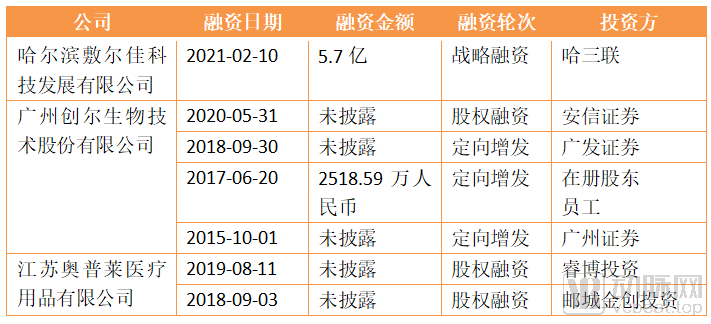
(Data source: Qichacha)
It is worth noting that Guangzhou ChuangEr Biotechnology Co., Ltd. (hereinafter referred to as “ChuangEr Bio”), a company that has long been deeply engaged in this sector, has recently passed its initial public offering (IPO) review on the STAR Market. Its flagship products include well-known medical-grade facial masks such as “ChuangFuKang,” which are registered as Class II medical devices. The listing of ChuangEr Bio undoubtedly signals that the A-share market is about to welcome its first publicly traded company specializing in medical-grade dressings classified as medical devices.
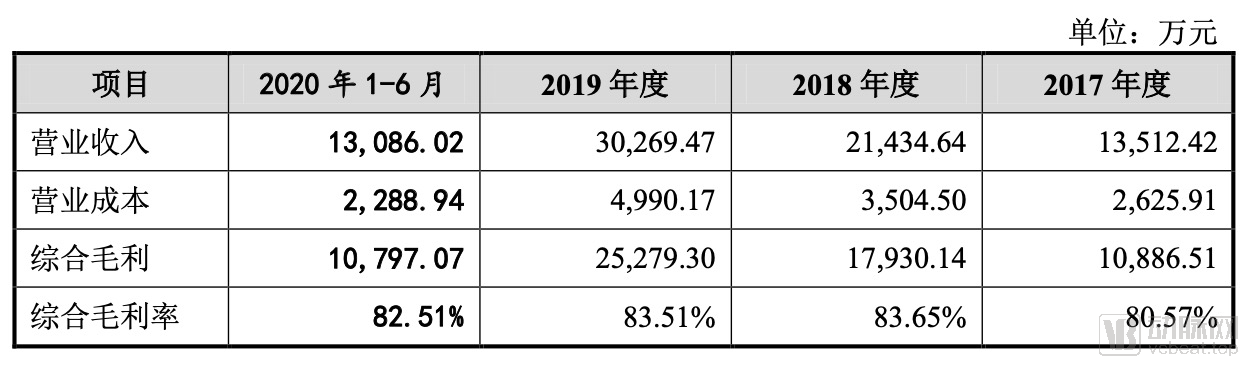 (Image source: Chuanger Biotech prospectus)
In Chuanger Biotech’s prospectus, the high gross profit margin behind medical-grade facial masks was disclosed for the first time: the company’s overall gross profit margin reached as high as 82.51%, slightly exceeding the 78.18% average gross profit margin of the hyaluronic acid industry, which is known as the “Moutai of medical aesthetics.”
It is precisely the allure of such high gross margins that has drawn a host of players into the arena, plunging the medical-grade facial mask market into a state of fierce “red ocean” competition.
The surging popularity and high gross margins of medical-grade facial masks have undoubtedly created a “gold mine,” attracting fierce competition among medical device manufacturers, beauty and skincare companies, raw material suppliers, and pharmaceutical firms.
According to previous media reports, more than 200 brands promoted “medical-grade facial masks” as their selling point at the 2019 Guangzhou International Beauty Expo. However, after reviewing nearly 100 products, VCBeat found that among facial masks claiming to be “medical-device registered,” only a small number held valid medical device certifications. The majority were filed as Class I medical devices, while those with Class II or Class III clinical device filings were extremely rare; most other products were primarily registered under cosmetics (“Zhuang” category).
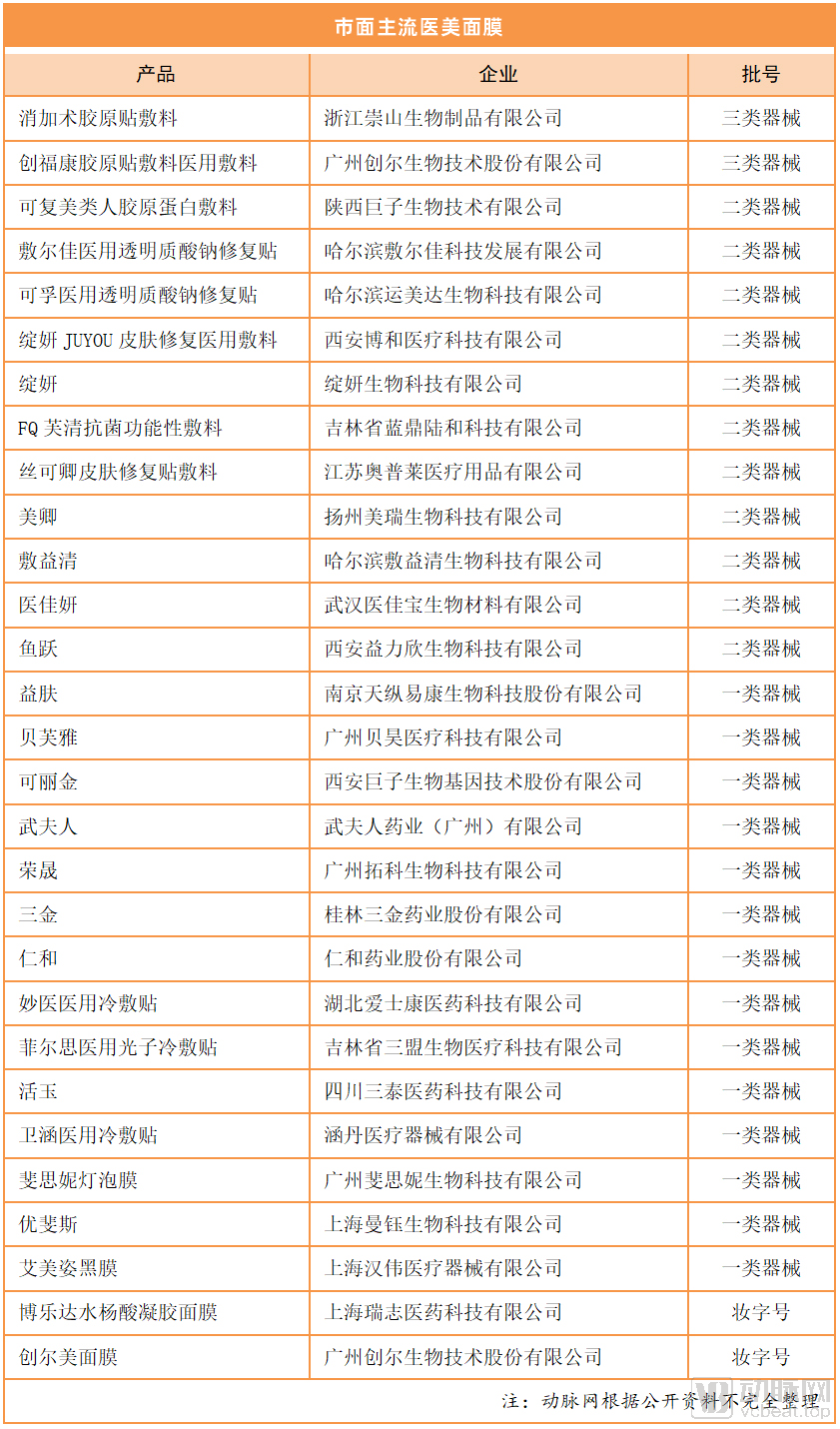
In other words, there are many "cosmetic-grade" facial masks on the market that mislead consumers by marketing themselves as "medical-grade facial masks."
As a result, many consumers who purchase facial masks based on packaging claims such as “medical-grade,” “medical aesthetics,” or “dermatological skincare” often find that these products are not registered as medical devices (“Class II Medical Device” certification), but rather as cosmetics (“Cosmetic Product” certification). As previously mentioned, facial masks with medical device registration are gentler than ordinary masks and are primarily used for post-procedure care in medical aesthetics, including managing minor wounds, applying medication, and protecting injured skin. If individuals recovering from aesthetic procedures inadvertently purchase cosmetic-certified masks due to misleading marketing, there is a significant risk of wound inflammation and skin irritation.
In its communications with the flagship stores of multiple “cosmetic-grade” facial mask brands, VCBeat found that customer service representatives frequently used terms such as “medical-grade” to highlight their selling point of “adhering to stricter production standards” compared with ordinary facial masks.

On the other hand, “medical-device-class” facial masks are also subject to excessive marketing.
To attract consumers with skincare needs, many “medical-device-classified” facial masks label their product descriptions with claims such as “hydrating,” “moisturizing,” “whitening,” and “acne-clearing.” However, investigations by the Guangdong Provincial Medical Products Administration have found no evidence that these “medical-device-classified” masks on the market offer superior skincare benefits compared to conventional masks. This practice reflects a regulatory gray area exploited by manufacturers: medical device products are not required to list all ingredients in their composition tables, nor do they need to adhere to the requirement for cosmetic products (“cosmetic-classified”) to list ingredients in descending order of concentration.
Therefore, as medical-grade facial masks used as adjunctive therapy for dermatological conditions or injuries, they are difficult to match ordinary facial masks in terms of other functionalities, and it is unnecessary for healthy individuals to purchase and use them at a high cost. It is also worth noting that, as medical device products, “medical-device-certified” facial masks should not be used long-term as daily skincare products. They must be used under the guidance of qualified physicians, within their approved indications, and according to the correct usage and dosage; otherwise, they may cause certain damage to consumers’ skin.
In response to these industry irregularities, regulatory crackdowns have come in quick succession, ushering the sector into a critical turning point.
Regulators have stepped in.
In January last year, the National Medical Products Administration (NMPA) released a public science article titled “Cosmetics Science Popularization: Beware of Consumer Traps in Facial Mask Purchases,” which corrected the erroneous terms “medical-grade facial masks” and “Class II/III medical device facial masks.” The article pointed out that the nomenclature of medical dressings regulated as medical devices must comply with the Rules for the Naming of Generic Medical Devices. Such names must not contain terms like “cosmetic” or “health care,” nor include exaggerated indications or any other misleading or deceptive content. Therefore, the concept of “Class II/III medical device facial masks” does not exist, and medical device products cannot use “facial mask” as part of their name.
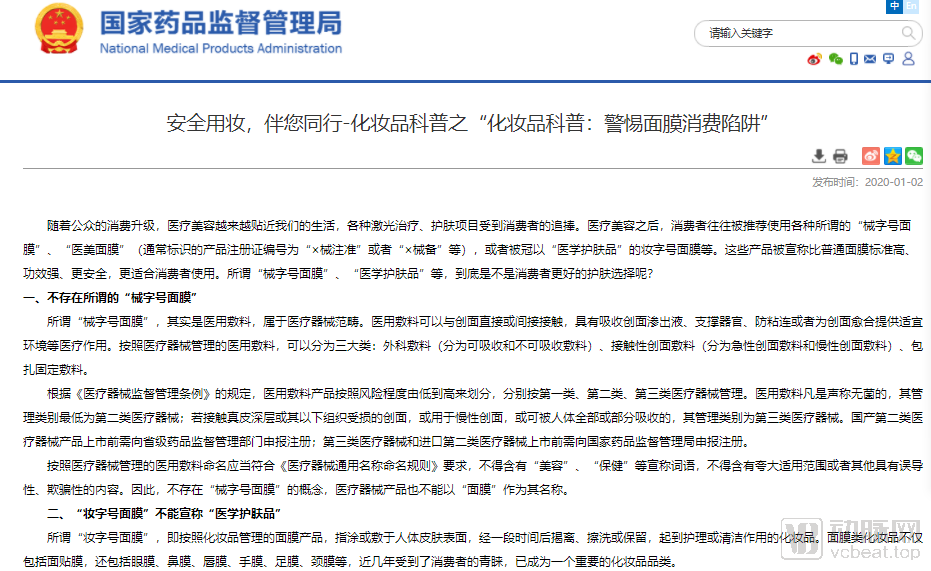
Subsequently, on July 21, the National Medical Products Administration drafted and released the “Administrative Measures for Cosmetic Registration (Draft for Comments)” and the “Administrative Measures for Supervision of Cosmetic Production and Operation (Draft for Comments),” and opened them to public consultation.
Since then, the regulation of medical-grade facial masks has entered the implementation phase, with regulatory authorities across China commencing crackdowns on false advertising in this sector.
Taking Shanghai as an example, last August, in response to issues such as false advertising and exaggerated efficacy claims in the marketing of medical-device-classified dressings, particularly facial dressings, Shanghai successively revoked the production qualifications of multiple manufacturers of Class I medical devices, involving a total of 255 companies. By November, the Shanghai Municipal Medical Products Administration issued the “Guidelines for Filing of Class I Medical Devices in Shanghai,” initiating strict regulation of Class I medical device products. The guidelines highlighted key areas for oversight of product filing and production filing, explicitly designating ingredients such as sodium hyaluronate and collagen as primary subjects of scrutiny.
Why are the primary entities involved Class I medical device manufacturers?
It is important to note that under China’s current Regulations on the Supervision and Administration of Medical Devices, the state implements a classification management system for medical devices based on their risk levels. Class I medical devices are those with low risk, whose safety and effectiveness can be ensured through routine administration; Class II medical devices are those with moderate risk, requiring strict control and administration to ensure their safety and effectiveness; and Class III medical devices are those with high risk, necessitating special measures and stringent control and administration to ensure their safety and effectiveness.
Currently, Class I medical devices are subject to product filing management; Class II medical devices are regulated by provincial-level food and drug administrations, while Class III medical devices are subject to product registration management by the China Food and Drug Administration (CFDA). For Class I medical devices, manufacturers only need to file with municipal-level drug regulatory authorities. This process does not involve extensive regulatory procedures or clinical trials, allowing the products to be directly used or sold in hospitals.
Given the relatively low entry barriers for Class I medical devices, various companies have flocked to contract manufacturers for production. It is important to note that “cosmetic-grade” products are subject to stricter regulatory review and approval processes. Consequently, some companies engage in opportunistic practices by registering their products under the medical device category while marketing them as cosmetics.
More importantly, in terms of business operations, the distribution of Class I medical devices is deregulated; sales do not require a medical device operation license or filing. Simply put, any merchant can distribute these products as long as their business scope, registered with the industrial and commercial authorities, includes the distribution of Class I medical devices. This is one of the key reasons for the uneven quality of medical facial mask products on the market.
In addition to targeting manufacturers, regulatory crackdowns have also focused on distribution channels.
In November last year, the State Administration for Market Regulation published the “Guidance on Strengthening Regulatory Oversight of Online Live-Streaming Marketing Activities” (hereinafter referred to as the “Guidance”) on its official website. The Guidance clarifies issues such as the scope of penalties and attribution of liability for illegal and non-compliant practices occurring in live-streaming e-commerce.
The “Opinions” state that beauty products marketed as having “medical” effects or used by medical institutions, as well as foods with health-care benefits, will no longer be permitted for sale via live-streaming channels. Violations shall subject relevant endorsers to administrative penalties, including confiscation of illegal gains and a fine of not less than one time but not more than two times the amount of such illegal gains; endorsers who have been administratively penalized for making recommendations or certifications in false advertisements shall be prohibited from engaging in endorsement activities for three years.
To put it plainly, live streaming platforms will no longer be permitted to endorse or promote any medical-grade facial masks.
Thus, from production to distribution, medical-grade facial masks have reached a crossroads under stringent regulatory oversight.
During the first two years of the industry’s blind and frenzied expansion, certain medical-grade facial masks indeed imposed a “stupidity tax” on consumers through false marketing, precipitating a significant reputational crisis for the entire sector. However, with strengthened regulatory oversight, the market for medical-grade facial masks is gradually moving toward greater standardization and maturity.
Is There Still an Opportunity to Enter the Medical-Grade Facial Mask (Medical Facial Dressing) Market?
First, as the medical aesthetics industry continues to expand, consumer spending on aesthetic procedures is increasing, which will drive growth in the niche market for medical-grade facial dressings. In particular, medical-grade facial dressings holding Class II or Class III medical device certifications are poised for rapid growth, driven by consumers’ higher willingness to pay for aesthetic treatments and their emphasis on post-procedure safety.
Furthermore, thanks to years of consumer education, medical-grade facial dressings have gradually gained public acceptance. Consumers have developed a deeper understanding of the distinction between “cosmetic-grade” and “medical-device-grade” products, leading to more rational purchasing decisions. In other words, beyond the skincare segment dominated by “cosmetic-grade” products—focused primarily on functional benefits such as hydration, acne treatment, and soothing—a new skincare niche has emerged, dedicated to alleviating conditions like “hormone-dependent dermatitis” and problematic skin.
According to Huatai Securities’ projections, the facial skincare market is expected to reach RMB 560.6 billion by 2025, with anti-aging, basic moisturizing, and medical-grade skincare accounting for 43%, 27%, and 11% of the market, respectively. It is evident that the market for medical-grade facial masks still holds considerable growth potential.
Meanwhile, stringent regulatory controls over distribution channels have driven medical-grade facial dressings back from live-streaming and other online platforms to traditional hospitals and medical aesthetic centers. Consequently, for R&D companies, securing a presence in hospitals and medical aesthetic centers has become the key to establishing a stable channel footprint.
Furthermore, following the industry consolidation phase, brand building will become a key focus for developers of medical-grade facial dressings in their competitive commercial strategies.
In summary, the medical-grade facial dressing sector continues to present significant opportunities, with considerable room for further market expansion. Looking ahead, leading enterprises will capture a greater share of the sector’s dividends, reinforcing the trend where the strong become stronger.
Despite the many challenges that remain to be addressed in the industry, medical-grade facial dressings—a sector dedicated to enhancing women’s beauty—remain highly attractive in today’s booming “beauty economy.”
After all, the business narrative of helping women combat aging has never gone out of style, from ancient times to the present.