

Lianxin Medical and Ping An Smart Healthcare's AskBob Doctor Join Forces to Advance AI-Powered Precision Radiotherapy for Widespread Patient Benefit
For years, China’s radiotherapy market has been dominated by imported products, with international equipment manufacturers holding a 90% market share and leading the development of radiotherapy technologies. In recent years, as artificial intelligence, big data, and other technologies have become increasingly integrated into radiotherapy, intelligentization has emerged as a major trend in radiation treatment. This shift toward intelligent solutions has also provided Chinese companies with an opportunity to leapfrog their competitors, giving rise to a cohort of leading domestic enterprises in the field of smart radiotherapy. By enhancing efficiency, improving precision, and innovating workflows, these companies have redefined the standards for radiotherapy treatment.
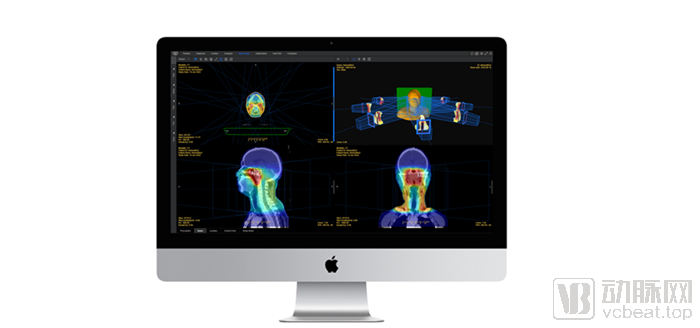
Lianxin Intelligent Radiotherapy Cloud Comprehensive Solution
Lianxin Medical is a prime example, covering more than 80 hospitals across China and serving over 8,000 patients weekly, establishing itself as a leading enterprise in the field of intelligent radiotherapy in China. In promoting the development of intelligent radiotherapy, Lianxin Medical has partnered with AskBob, the “super brain” of precision medicine under Ping An Smart Healthcare. Lianxin Medical’s cloud-based intelligent radiotherapy solution will integrate AskBob Doctor’s automated contouring products, which cover more than 80 organs at risk in head and neck, esophageal, and thoracic cancers, as well as gross tumor volume (GTV) for esophageal cancer and 12 lymph node stations in the thorax. This provides domestic physicians with an intelligent radiotherapy solution whose accuracy rivals that of international and national authoritative radiotherapy experts, thereby improving the quality and consistency of contouring in radiotherapy. By significantly reducing contouring time and enhancing diagnostic and treatment efficiency, it truly benefits patients.
Nowadays, radiotherapy is playing an increasingly important role in cancer treatment. According to WHO statistics, approximately 45% of tumors are curable, with about 40% of these cured cases attributed to radiotherapy. Around 70% of cancer patients require radiotherapy at various stages of their disease. Currently, the application rate of radiation therapy for cancer in Europe and the United States has reached 60–70%, whereas this proportion remains below 30% in China, indicating substantial room for growth.
As the large cancer patient population in China continues to grow, the domestic radiotherapy market is rapidly expanding, and the gap between China’s radiotherapy market and that of developed countries is being narrowed. China’s radiotherapy market is also witnessing dual opportunities: volume growth and intelligent upgrading.
The trend of market expansion is intuitively reflected in the data. According to the "Survey on the Basic Status of Radiotherapy Personnel and Equipment in Mainland China in 2019," the total number of beds in radiotherapy units in mainland China in 2019 was 97,836 (including some beds in oncology departments), with 1,259,602 annual treatment visits. Compared with the 2015 survey results (102,171 beds and 919,339 annual patients), the number of beds decreased by 4.2%, while the number of treatment visits increased by 37.0%. The top 15 most common diseases treated with radiotherapy were: lung cancer, esophageal cancer, breast cancer, cervical cancer, rectal cancer, nasopharyngeal carcinoma, brain metastases, bone metastases, gastric cancer, central nervous system tumors, laryngeal cancer, liver cancer, oral cancer, hypopharyngeal cancer, and oropharyngeal cancer.
The emergence of intelligent technologies, such as artificial intelligence and big data, has accelerated the process of market expansion.
Radiotherapy is, in fact, a highly mature technology; however, its primary challenge lies in accurately delineating the boundaries between tumors and normal tissues to minimize radiation exposure to healthy structures during treatment. Another significant challenge is that cancer therapy is a dynamic process, wherein tumor size, shape, and spatial relationships with surrounding organs may change throughout the course of treatment.
In clinical practice, to address these two major challenges and ensure the quality of radiotherapy, radiation oncologists need to spend several hours delineating target volumes and organs at risk (OARs), as well as designing dose prescriptions and defining target volume boundaries. These two tasks—target volume delineation and treatment plan design—consume a significant amount of physicians' time and energy. In radiotherapy target delineation, 50% of a radiation oncologist's daily workload involves contouring target volumes. Given the complex anatomical structures of tumors, physicians must also delineate the surrounding organs at risk while contouring the targets. Furthermore, physicians are required to possess strong spatial imagination based on anatomical structures and to anticipate potential pathways of tumor metastasis in advance.
AI-powered intelligent radiotherapy planning systems can automate target delineation, treatment plan design, and quality control, ensuring high-quality radiotherapy outcomes while freeing physicians from extensive, tedious, and time-consuming tasks. Although intelligence has become a major trend in the development of radiotherapy technology, current treatment plans are largely based on population-level or institution-specific protocols, lacking sufficient precision, granularity, and comprehensiveness. Enhancing the precision and efficiency of intelligent radiotherapy has consistently been a key direction for breakthroughs in this field.
Lianxin Medical chose Ping An Smart Healthcare’s AskBob Doctor for its automatic target volume delineation product because AskBob Doctor has elevated the precision of automated delineation to a new level. In broad clinical application, it enhances the standards and consistency of radiotherapy treatment. Taking nasopharyngeal carcinoma as an example, this cancer type presents significant challenges in target volume delineation. Dr. Ye Xianghua, Associate Chief Physician in the Department of Radiation Oncology at The First Affiliated Hospital, Zhejiang University School of Medicine, stated in a presentation: “The anatomical structures of the nasopharynx are particularly complex; even after repeatedly memorizing them five or six times, junior physicians may still fall short, requiring one to two years to achieve thorough familiarity. For a patient with nasopharyngeal carcinoma, we would not consider a treatment plan acceptable unless three to five hours had been devoted to its development.”
Ping An Medical Technology Research Institute, which powers Ping An Smart Healthcare’s AskBob Doctor, has developed automatic contouring models for 46 + 35 organs at risk (OARs) in radiotherapy, covering head and neck cancers (including oropharyngeal, nasopharyngeal, hypopharyngeal, oral cavity, laryngeal, and brain metastases) and thoracic cancers (including lung and esophageal cancers). These models constitute one of the most comprehensive and precise OAR automatic contouring solutions available worldwide. For esophageal cancer radiotherapy, a precise automatic contouring model for tumor target volumes has been developed. In thoracic lymph node station contouring, an unprecedentedly accurate automatic contouring model for 12 thoracic lymph node stations has been achieved. More than ten papers on these radiotherapy AI models have been published in top-tier artificial intelligence, medical imaging, and clinical medicine conferences and journals, including MICCAI 2019/2020 (all four accepted papers were highly competitive early acceptances), IEEE CVPR 2020, Medical Image Analysis 2021 (nominated for Best Paper at MICCAI 2019), SNMMI 2020, and RSNA 2020. The remarkable 100% acceptance rate at these highly competitive venues underscores the quality of the work, its innovative advancement, and its consistent recognition by both technical and clinical peer reviewers.
The medical imaging R&D team of Ping An Smart Healthcare’s AskBob Doctor is an elite group spanning both sides of the Pacific, with members located in the United States and across Greater China. The team has achieved significant recognition at top international conferences in artificial intelligence, computer vision, and medical imaging. Its Washington Research Institute was nominated for Best Paper awards at MICCAI for two consecutive years (2019 and 2020). The work on GTV (Gross Tumor Volume) delineation for esophageal cancer was selected as one of only five industry oral presentations at MICCAI 2019, and an extended version of this Best Paper-nominated work was published in the premier international journal Medical Image Analysis in 2021. Between 2019 and 2021, the Washington Research Institute published 15 papers at MICCAI and 10 papers at ECCV, CVPR, AAAI, and IPMI. Notably, it contributed four out of the total 23 biological and medical imaging papers accepted at ECCV 2020, accounting for nearly 20% of the global total. At CVPR 2021, whose results were recently announced, the team had three medical imaging papers accepted (a 75% acceptance rate), two of which addressed core challenges in cancer diagnosis and treatment, further demonstrating the team’s world-leading capabilities and achievements in medical technology innovation. Additionally, the team has published more than 10 articles in top-tier journals, including Nature Communications, Clinical Cancer Research, Medical Image Analysis, and IEEE Transactions on Medical Imaging. It has also presented 20 peer-reviewed clinical abstracts at major annual meetings of various clinical specialties, such as RSNA, EULAR, AASLD, ACR Convergence, SNMMI, and SABI, with 14 selected for oral presentation, and has filed 29 U.S. patents. From 2016 to 2020, team members won the Best Paper Award in the Clinical Big Data category at the RSNA (Radiological Society of North America, the world’s authoritative radiology annual meeting) for four out of five years. The team has earned substantial academic and clinical reputation internationally. In the realm of end-to-end AI solutions for precision oncology imaging—spanning cancer screening, precise diagnosis, treatment planning, patient prognosis, and treatment response assessment and management—Ping An Smart Healthcare’s AskBob Doctor ranks among the world leaders.
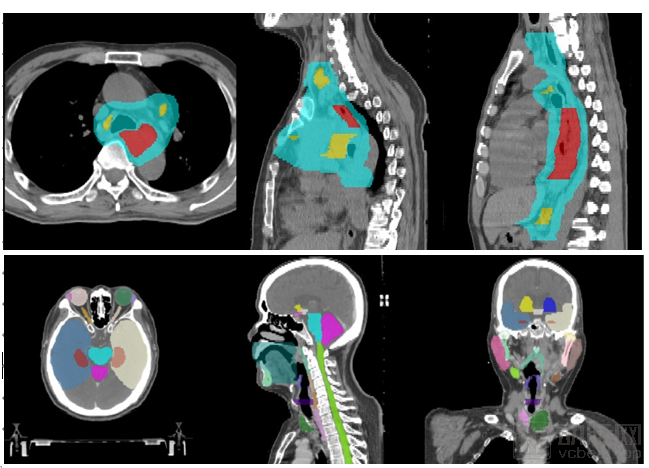
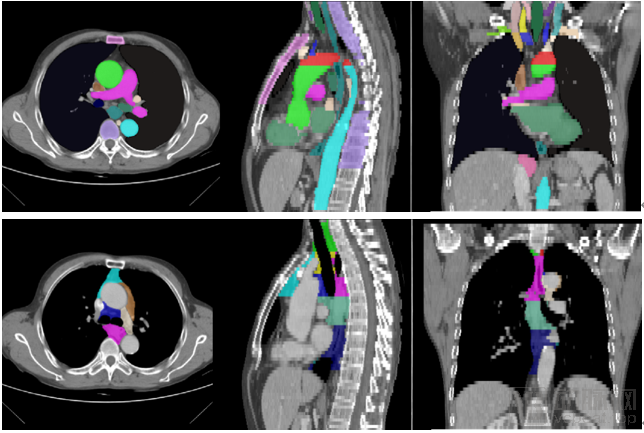 From top to bottom are the following services provided by AskBob Doctor of Ping An Smart Healthcare: (1) GTV and CTV target delineation for esophageal cancer; (2) segmentation of organs at risk (46 organs at risk) for head and neck cancers, applicable to oropharyngeal, nasopharyngeal, hypopharyngeal, oral cavity, laryngeal, and brain metastatic cancers; (3) segmentation of thoracic anatomical structures (35 organs/tissues); (4) segmentation of 12 lymph node stations for thoracic tumors.
Currently, Ping An Smart Healthcare’s AskBob Doctor is collaborating with Chang Gung Memorial Hospital in Taiwan, The First Affiliated Hospital of Zhejiang University School of Medicine, and two other hospitals (with physicians from a total of seven hospitals participating; Dr. Ye Xianghua, Associate Chief Physician at The First Affiliated Hospital of Zhejiang University School of Medicine, served as the first author) to conduct multi-center cross-institutional clinical trials. These trials have successfully completed a highly challenging multi-center clinical validation for the automatic delineation of the Gross Tumor Volume (GTV) in esophageal cancer. In both internal independent validation sets and external multi-center validation sets, nearly 90% of patients required no additional modification by physicians, or only minimal adjustments, to the automatically delineated GTV results. Esophageal tumors may be multi-focal, distributed at any single location or multiple locations along the upper or lower esophagus, and exhibit low contrast against surrounding soft tissues on radiotherapy CT (RTCT).(1) In quantitative validation, the automatic GTV delineation provided by Ping An Smart Healthcare’s AskBob platform can be completed in just 30 seconds. Both the RTCT-based and RTCT+PET-based automatic delineation models achieved accuracy within the inter-observer variability of senior second-line radiotherapy clinicians (corresponding to Dice scores of 81% and 83%, respectively).(2) The training data was sourced from Center A. For clinical validation, data from three other hospitals (Centers B, C, and D) were used, comprising 355 new patients. Among these, 88% of the validation cohort (312/355) had AI-delineated esophageal cancer GTVs that were deemed directly acceptable or requiring only minimal modifications by specialist second-line radiotherapy oncologists.(3) Specialist second-line radiotherapy oncologists can modify the AI-delineated targets, reducing the time required by 48%—from approximately 10 minutes to around 5 minutes. The overall accuracy is even higher than that achieved previously by specialist second-line radiotherapy oncologists performing manual delineation alone.(4) In international settings, these quantitative metrics, particularly in terms of time savings and efficiency improvements, would be even more significant.
The integration of AI and radiotherapy has redefined the radiotherapy workflow. However, for intelligent radiotherapy solutions to deliver greater value, they should not remain confined to a few top-tier hospitals or laboratories but must be deployed widely across general hospitals.
Bringing AI-powered radiotherapy into hospitals to reach a broader population is precisely why Ping An Smart Healthcare’s AskBob Doctor has chosen Lianxin Medical as its partner. In selecting Lianxin Medical, Ping An Smart Healthcare valued the company’s accumulated expertise in intelligent radiotherapy and its cloud-based smart solutions that cover the entire radiotherapy workflow.
Lianxin Medical has been deeply engaged in the field of AI radiotherapy for many years and is one of the earliest technology companies in China to apply artificial intelligence technologies to tumor radiation therapy. Its independently developed cloud-based intelligent radiotherapy solution provides AI-powered technical tools such as automatic organ segmentation, target volume delineation, adaptive radiotherapy planning, and radiotherapy quality control, along with a cloud service platform that offers professional remote collaboration and radiotherapy operational network services to a broad user base of radiation oncologists and medical physicists.
Furthermore, Lianxin Medical has been committed to providing cloud-based solutions. By leveraging a hybrid cloud model to enter hospitals, Lianxin Medical offers comprehensive technologies and solutions encompassing full data encryption, distributed storage and computing, and mobile interaction.
Cloud-based solutions enable extensive coverage, serving both tertiary hospitals and primary care facilities. Lianxin Medical adopts a SaaS model, eliminating the need for software downloads and installations as well as the storage of large volumes of patient data. This approach facilitates mobile work, remote contouring, and remote collaboration, optimizing the spatial and temporal efficiency of radiation oncology experts, improving workflow efficiency, and reducing operational and maintenance costs for radiotherapy departments. Furthermore, the application of cloud technology for remote contouring helps minimize physical contact and reduce personnel gatherings.
Cloud-based solutions facilitate the decentralization of AI in radiotherapy to primary care institutions. In China, standard cancer treatment modalities include radiotherapy, chemotherapy, and surgery; however, only 7% of county-level hospitals nationwide have a radiotherapy department. Lianxin Medical’s cloud-based solution leverages internet-enabled collaboration to allow physicians from large tertiary Grade A hospitals to provide high-quality treatment plans and recommendations to prefecture- and city-level hospitals, along with technical support for remote medical quality control. This approach not only enhances the operational efficiency of these leading tertiary hospitals but also extends their clinical expertise to a broader range of healthcare facilities.
A shortage of radiotherapy-related professionals, including radiation oncologists and medical physicists (radiotherapy physicists), is also a significant factor hindering the development of grassroots radiotherapy technology in China. Lianxin Medical has partnered with Ping An Smart Healthcare to integrate AskBob Doctor’s powerful AI-based automatic contouring system for radiotherapy into Lianxin Medical’s comprehensive solution covering the entire radiotherapy workflow. This provides hospitals with precise, intelligent, end-to-end radiotherapy solutions. Leveraging artificial intelligence, the system can automatically perform target volume contouring, generate radiotherapy plans, and conduct equipment quality assurance. By providing quality assurance support throughout the entire radiotherapy process for physicians and physicists, this approach enables limited human resources to benefit more patients. It facilitates the broader adoption of AI-enhanced radiotherapy in more hospitals, ensuring that intelligent radiotherapy services covering the full cycle and all scenarios reach a wider patient population.
Professor Lu Le from the Ping An Medical Technology Research Institute stated, “Through system deployments with Lianxin Medical and existing hospital systems, we are able to popularize and widely disseminate the world’s most advanced clinical medical AI technology, which we have jointly refined in close collaboration with top-tier physicians and hospitals. This technology plays a vital role in doctors’ diagnostic and treatment workflows, significantly enhancing the quality, accuracy, and consistency of tumor target and organ-at-risk delineation in precision cancer radiotherapy. By substantially reducing delineation time, it improves diagnostic and therapeutic efficiency, optimizes patient prognosis, and truly benefits a broad population of patients.”