

Huashan Hospital Pioneers Clinical Translation of Implantable Brain-Computer Interface with Global First NEO System

neuracle
Developer of Rehabilitation Assistance Systems
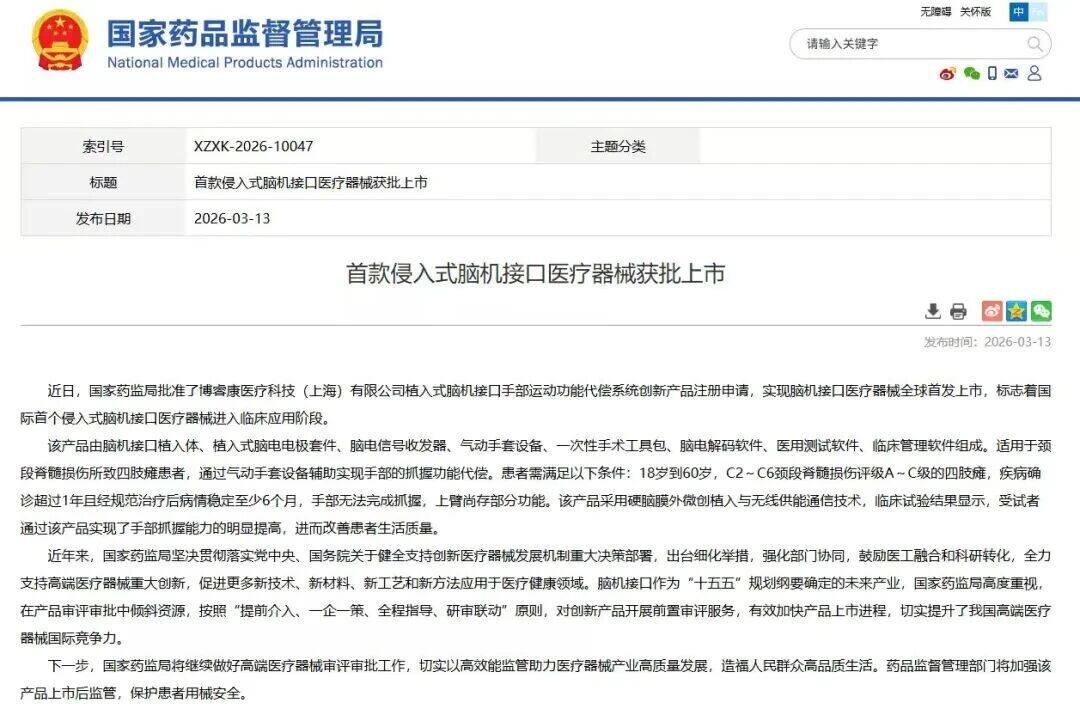
Recently, the National Medical Products Administration officially approved Neuracle Technology (Shanghai) Co., Ltd.'s implantable brain-computer interface hand motor function compensation system (NEO) Innovative product registration application. This is the world's first approved and marketed implantable brain-computer interface Class III medical device, marking that China's brain-computer interface technology is gradually moving from the laboratory to scaled clinical applications, providing a "Shanghai solution" for the treatment of neurological diseases globally.
As one of the leading institutions in this clinical trial, Huashan Hospital Affiliated with Fudan University leverages the strong capabilities of the National Neurological Disease Medical Center, collaborating across China.11Top medical institutions in China, completed32High-level clinical validation, using real and reliable clinical data, brings "China experience" to the global medical transformation of brain-computer interfaces, opening the door of hope for tens of millions of patients paralyzed due to spinal cord injuries.
After the Plateau Period, Brain-Computer Interface Facilitates Neural "Restart" in Rehabilitation
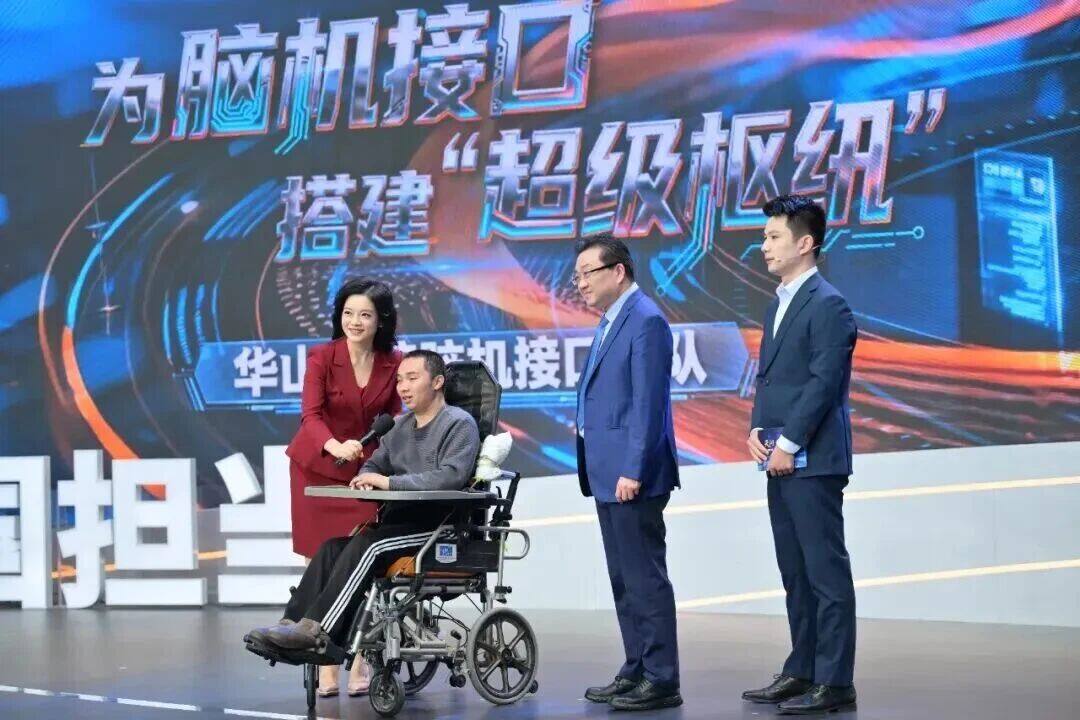
40The patient, Xiao Dong, is a witness to the integration of technology and life. Six years ago, a sudden car accident caused him to suffer from high cervical spinal cord injury. The functions of his body below the neck were severely damaged, completely losing the ability to grasp with his hands, and he found it difficult to stand. His rehabilitation process has lasted for a long time.4After years of plateau, traditional medicine holds that the chances of recovery may be minimal.2024Year11Month6Recently, after receiving a brain-computer interface implant at Huashan Hospital, Xiao Dong has been experiencing...6Hours of high-intensity precision training, assisted by brain-computer interfaces and airbag gloves, gradually rebuilt the neural connections between the brain and the hand. A month later, he lifted a cup for the first time with the help of an airbag glove. Two years later, after removing the brain-computer interface device, he used his left hand to steady his right hand and painstakingly wrote his name — “Xiao Dong” — and then solemnly added two words: “Thank you.”

“"This is not an accidental phenomenon. It suggests that the human brain's neural circuits can be reinforced through training after the installation of a brain-computer interface, leading to the formation of these circuits," said Mao Ying, President of Huashan Hospital and Executive Director of the National Neurological Disease Medical Center (Huashan). He emphasized that this is not an isolated case. The multi-center clinical trial led by Huashan Hospital in China has enrolled...32After a high cervical spinal cord injury, loss of hand function occurs, and the patient is in3-4Patients in the annual rehabilitation plateau period. Under a clinical trial system with unified standards and strict quality control, the improvement rate of patients' hand grip function reached100%"Some patients showed clear signs of neural remodeling after being off the device. 'The changes brought about by brain-computer interfaces in recent years have often surprised me beyond expectation. It has opened a crack of the door for us—we know there is light inside. Following this path, recovering lost brain functions is indeed possible!' said Mao Ying."
From Layout to Leadership
Many people are amazed by this "out-of-the-blue" breakthrough, but few know that Huashan Hospital has been quietly working in the brain-computer interface field for a decade.
Breakthroughs in brain-computer interface technology rely on the deep integration and collaborative efforts of multiple disciplines, including materials science, artificial intelligence, integrated circuits, and clinical medicine. This is a systematic project characterized by "patients posing questions, scientific research solving problems, and the government providing support," with hospitals and doctors occupying a central hub position, playing a vital "super hub" role that closely links patient needs, scientific innovation, and industrial application. Young doctors involved in related work stated that relying on more than seventy years of academic accumulation in neurosurgery at Huashan Hospital, the hospital boasts solid technical reserves and strong talent support.
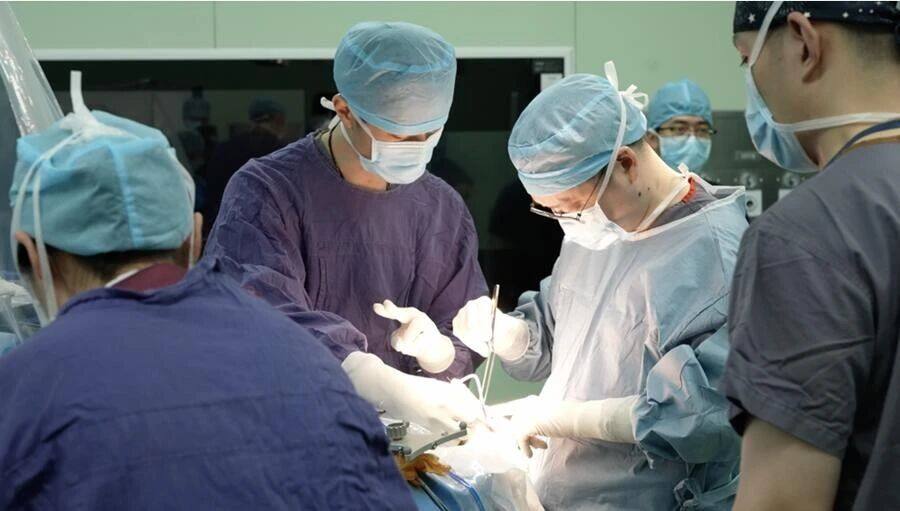
Huashan Hospital Team in the First Clinical Trial of Neuracle's Brain-Computer Interface Product in Shanghai
Over the years, the team has taken a "three-step approach" to become a bridge between patients and innovative enterprises. The first step is to independently develop a brain function positioning and navigation system, which reduces the time to locate implantation sites for brain-computer interfaces after craniotomy from several hours to3Minutes, led the establishment of "iBRAIN"Invasive EEG Data Consortium" in order to train its own brain science fieldChatGPTThe second step is to act as a "quality inspector" and set a three-step ladder-style path for brain-computer interface products with different levels of maturity. The third step, as one of the main units responsible for building the National Neurological Disease Medical Center, is to construct a "clinically-led...-Technological Breakthrough-The closed loop of "industrial implementation" has been achieved. In the past year, the team has worked with nearly10Neuracle cooperated with domestic brain-computer interface innovation enterprises to complete dozens of clinical trial surgeries.
“"The clinical demand has always existed, not just today. What we are waiting for is the formation of a complete technology and application loop," said Mao Ying. As early as a decade ago, Huashan Hospital had already started related layouts and communicated with multiple parties for collaboration. The reason it took ten years to achieve today's results is not accidental; rather, it is because the era has developed to a critical point where technological conditions such as chips, manufacturing, and algorithms have gradually matured, and costs and application scenarios have also aligned, ultimately leading to this breakthrough. Because of this, such achievements could not be collectively showcased in the public eye over the past two or three years, but have been continuously emerging in recent years, precisely because the industry and technology have reached the moment to "sound the horn." "This breakthrough has naturally fallen into place, thanks to everyone's joint efforts, and more importantly, due to the layout and ambition of the city of Shanghai."
Acoustic, Optical, Electrical, and Magnetic×EEG Signals: A New Future for Brain Science
The technological revolution starting with brain-computer interfaces has arrived. In Mao Ying's view, new technologies can indeed help promote rehabilitation, but scientists have already discovered that there are far more ways to solve many problems of the brain than just this one.
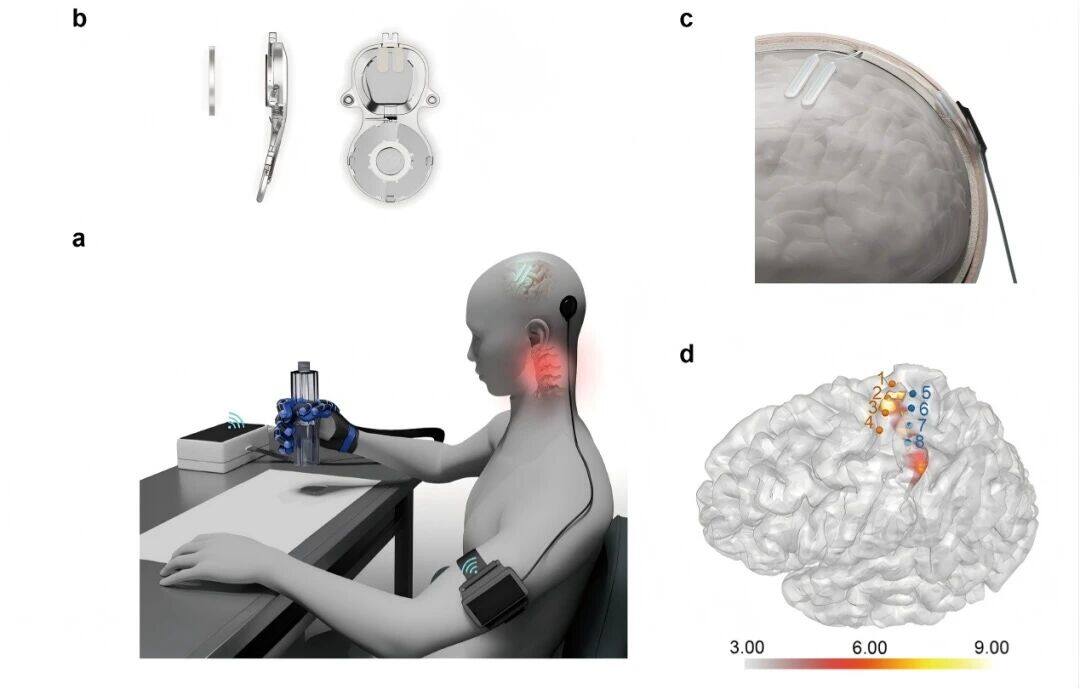
“In addition to EEG signals, physical means such as sound, light, electricity, magnetism, and bio-ultrasound are all expected to be integrated into the brain-computer interface system in the future. "We have only opened a window and seen the light of hope. The next step is to turn this window into a door, allowing patients to regain independence and freedom," the expert envisioned. To go further, it is essential to adhere to multi-technology collaboration and combined treatment, integrating the advantages of brain-computer interfaces, electrical stimulation, magnetic stimulation, cell therapy, gene therapy, and biomaterial implants to achieve "1+1>2”The effect is precisely the future direction of neurorehabilitation. Medical breakthroughs are never achieved by solitary efforts but through collaboration from multiple parties working together to turn dreams into reality. Behind this are the joint efforts of countless individuals, including clinical teams, research institutions, and enterprises.
More excitingly, clinical needs are driving innovation across the entire chain: dedicated chips are iterating faster, large models are upgrading algorithms, materials with higher precision and biocompatibility are continuously breaking through, and more sensitive signal detection technologies are constantly advancing. "At present, we are taking critical first steps with invasive technologies, but in the future, we will undoubtedly move towards safer and more convenient non-invasive approaches. Every step of exploration we take today is paving the way for accessible rehabilitation technologies tomorrow, allowing more patients to truly afford, access, and benefit from them."
Mao Ying finally mentioned that in the long history of human technological progress, there are two kindsstone(Stone) is indispensable, one of which ismilestone(Milestone), the second isstepping stone("Stepping stones"), "We hope that what we are doing today is not only a milestone, but also a stepping stone, enabling future generations to continuously make progress. In the vast world of brain science, the little glimmers of light we see now will turn from a crack into a window, and eventually lead to a bright future."