

Hainan Provincial Major Science and Technology Program: Successful Launch of the 'Pancreaticobiliary Confocal Laser Endomicroscopy Development' Project with First Expert Symposium

viestar
Precision Optical Biopsy Technology R&D and Manufacturer
Pancreatobiliary Stricture is a common condition in gastroenterology and hepatobiliary surgery, classified into benign and malignant strictures based on etiology. Endoscopic Retrograde Cholangiopancreatography (ERCP) is an important method for differentiating between benign and malignant pancreatobiliary strictures, but it has a low detection rate for malignant pancreatobiliary strictures.
Probe-based Confocal Laser Endomicroscopy (pCLE) is a novel endoscopic microscopic imaging system that employs state-of-the-art cytopathological analysis techniques, combined with advanced optical systems and proprietary algorithms, to achieve ultra-high resolution and ultra-fine observation capabilities. It provides clinicians with real-time, in vivo histopathological-level image information, playing a significant role in clinical diagnosis, treatment, and follow-up. By utilizing confocal laser endomicroscopy with corresponding pancreaticobiliary probes, physicians can visualize cellular-level microimages of strictures in real time during ERCP procedures, thereby enabling more timely and accurate assessment of the stenotic sites, as well as prompt diagnosis and appropriate therapeutic intervention.
In 2020, the Hainan Province Major Science and Technology Program initiated the project “Development of Confocal Microendoscopy for the Pancreaticobiliary Duct,” aiming to promote the application of confocal endoscopy in pancreaticobiliary diseases. On April 2, 2021, the first expert seminar for this project was officially held at Hainan University. The conference invited senior experts and scholars in related fields, including Professor Hou Xiaohua, Director of the Department of Gastroenterology at Union Hospital affiliated with Tongji Medical College of Huazhong University of Science and Technology; Professor Zhao Qiu, Director of the Department of Gastroenterology at Zhongnan Hospital of Wuhan University; Professor Yan Jun from the Department of General Surgery at Nanfang Hospital of Southern Medical University; and Professor Qu Yinzong from the Department of Gastroenterology at Hubei Provincial Hospital of Integrated Traditional Chinese and Western Medicine. They gathered at the School of Biomedical Engineering of Hainan University to jointly discuss the development of confocal endoscopy technology and its application in pancreaticobiliary diseases.
Confronted with the narrow anatomical space and specialized access routes of the pancreatobiliary ducts, probe-based confocal laser endomicroscopy (pCLE) faces higher technical and manufacturing barriers. Building upon existing technologies, it is necessary to further push the limits of technology and craftsmanship while achieving an optimal balance across various performance metrics. Attending clinical experts observed on-site demonstrations of domestically produced pCLE probes for the pancreatobiliary tract and engaged in in-depth discussions with the R&D teams from viestar Medical Technology (Wuhan) Co., Ltd. and Hainan University regarding key technical challenges. They provided numerous recommendations of significant value to advancing the project.
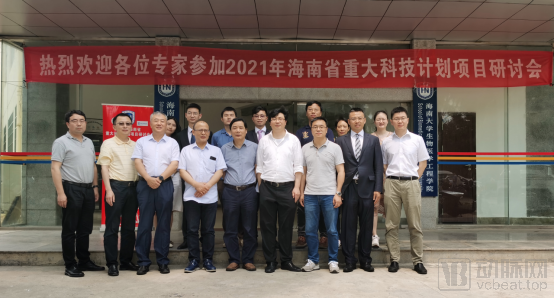
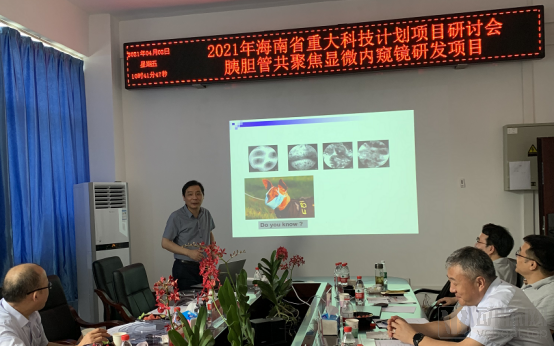
In addition to discussions on the application of confocal laser endomicroscopy in pancreaticobiliary diseases, the conference specially invited Professor Hou Xiaohua and Professor Yan Jun to share their insights on the use of confocal laser endomicroscopy in early cancer diagnosis and surgical procedures.
Extensive clinical data demonstrate that probe-based confocal laser endomicroscopy (pCLE) can significantly improve the detection rate of early-stage cancers. The imaging features of pCLE more closely resemble histopathological structures, making image interpretation more intuitive for clinicians. Meanwhile, it helps reduce unnecessary biopsy-related trauma in patients, while being simple to operate and easier to master. During surgical resection of intestinal lesions, pCLE enables more accurate determination of the resection margins. In low anterior resection for rectal cancer, where preservation of every millimeter of tissue is critical, maximizing the retention of intestinal tissue substantially enhances patients’ postoperative quality of life.
Since its establishment, viestar has been dedicated to the development of optical biopsy technology. As a pioneer in precision optical biopsy technology in China, viestar served as the lead entity for a National Key R&D Program special project during the 13th Five-Year Plan period. In collaboration with renowned domestic research institutions, quality testing centers, and authoritative clinical centers, it jointly developed China’s first “confocal endoscopy system” suitable for clinical use. It was the first in China to obtain medical device registration and production licenses, becoming the first company in China and the second globally to achieve commercial application of confocal microendoscopy. Its participation in Hainan Province’s Major Science and Technology Program marks viestar’s commitment to leveraging over a decade of technological expertise to further expand the clinical applications of confocal endoscopy. The aim is to advance cancer prevention, precise diagnosis, and efficient treatment, thereby improving quality of life, extending life expectancy, and contributing to the realization of the Healthy China vision.