

From Light Bulbs to Lifesaving: How Philips Transformed from a Century-Old Electronics Giant into a Global MedTech Leader

Philips Healthcare
Integrated service provider in healthcare, quality living, and lighting fields

Philips Medical
Medical System Developer

Philips
Healthcare Service Provider
First published on: Fenglun Fengmaniu, Author: Fenglun Fengmaniu,Reprinted with authorization from VCBeat.
On March 25, a piece of news sent shockwaves through the home appliance industry: Philips announced that it would sell its home appliance business to the investment firm Hillhouse for approximately €3.7 billion. Reports indicated that Chinese home appliance giants such as Gree, TCL, and Haier had previously expressed interest in bidding, with valuations reaching €3 billion. In addition to the premium acquisition price, Philips announced that it would sign an agreement allowing the acquirer to continue manufacturing, marketing, and selling home appliances under the Philips brand through a licensing arrangement. This 15-year license is valued at €700 million. In other words, the total value of the transaction amounts to approximately €4.4 billion, equivalent to nearly RMB 34 billion.
Philips is a foreign brand well known to the Chinese public. In recent years, it has been instrumental in popularizing home appliances such as electric toothbrushes and air fryers. Less widely recognized, however, is that this company from a small Dutch town not only owns a globally renowned home appliance brand but also exerts a profound influence on today’s semiconductor industry. The establishment of ASML, the world’s largest lithography machine manufacturer, and TSMC, the leading chip foundry, can both be traced back to Philips. Even the growth and success of consumer electronics giants like Apple and Sony are closely linked to it. So, what kind of company is Philips exactly? Given that its home appliance division ranks first globally in market share within China’s white goods sector, why would an investment firm go to great lengths to acquire it at a premium? Or, put differently, what sort of enterprise is it that can command €700 million in licensing fees through brand licensing alone?
01
“In those dark and sunless years, saving one person was saving the whole world.”
Schindler’s List, the Best Picture winner at the 66th Academy Awards, tells the following story: During World War II, after Germany invaded Poland and imposed centralized confinement and control over the Jewish population, German businessman Oskar Schindler opened a factory producing military supplies near a concentration camp, amassing considerable war profits. However, deeply shaken by witnessing the Nazis’ brutal massacre of Jews, he initially began employing Jews in his factory and ultimately compiled a list of 1,200 names, sparing no expense—even to the point of bankruptcy—to “buy” their lives from Nazi officers. After watching the film, many viewers wondered whether “Schindler’s List” was based on true events. In fact, on the other side of continental Europe, the Philips family, also businessmen, carried out a rescue operation no less dramatic than any cinematic plot. In May 1940, Germany formally invaded the Netherlands.
For the previous two years, rumors of war, both true and false, had been circulating throughout the Netherlands. As Germany remained inactive, many people let their guard down, with only the Philips family maintaining a state of high alert. This was a merchant family that always remained vigilant. In 1891, Frederik Philips Sr. founded the Philips company, with his eldest son, Gerard Philips, joining him in the venture. They were primarily engaged in the production and assembly of carbon-filament light bulbs. However, due to intense competition, the company hovered on the brink of bankruptcy during its initial years. It was not until 1895, when Gerard’s younger brother, Anton Philips, joined the company as a sales representative, that Philips was steered onto the right track.
In the decades that followed, brothers Gerard and Anton racked their brains to transform Philips from a producer of inexpensive carbon-filament light bulbs into the Netherlands’ leading home appliance company, expanding into vacuum tubes, electric shavers, and radios. Anton’s son, Frits Philips, also joined the company, began taking over the family business, and embarked on the development of new products.
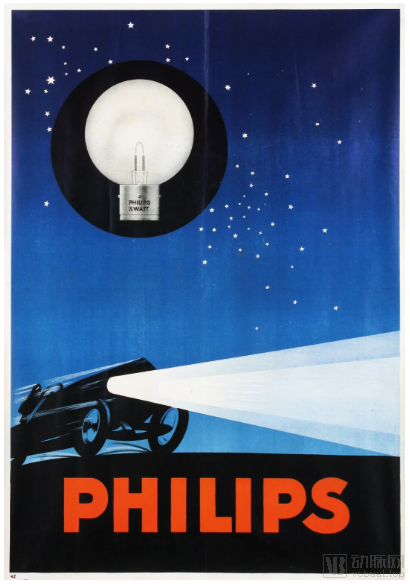
Philips 1923 Car Headlight Advertisement
It was at this juncture that the crisis unfolded. Anton, who had risen from a salesman to become the Chairman of Philips, excelled in interpersonal relations. Upon hearing rumors of a potential German invasion from several influential figures, he decisively chose to transfer assets and lead his family in fleeing to the United States. However, amidst the turbulent political climate, liquidating substantial fixed assets quickly proved difficult. Furthermore, with Philips deeply entrenched in the Netherlands and numerous new product research projects underway, someone needed to remain behind to safeguard these interests for the family. Ultimately, Anton decided that his only son, Frits, would stay to continue overseeing the operations of the Philips factories, while he took the rest of the family to the United States. This was a risky gamble: if successful, Philips would suffer no losses in terms of facilities or personnel, and might even continue to profit during the war; but if it failed, Anton would lose his only son, and Philips would lose the very “roots” upon which its empire was built.
At the time, Fritz was only 35 years old, yet fully capable of shouldering major responsibilities. After his family departed, he methodically concealed Philips’ critical research, organized the accounts, and calmly observed the Nazi invasion of the Netherlands. He continued the production of light bulbs and other daily necessities, ensuring that Philips remained indispensable to both the Dutch population and the occupiers. Upon learning that concentration camps were being established and that the company’s Jewish employees faced imminent deportation, he promptly negotiated with Nazi officers, emphasizing that these workers were essential to Philips’ manufacturing operations. As a result, all 382 Jewish employees survived.
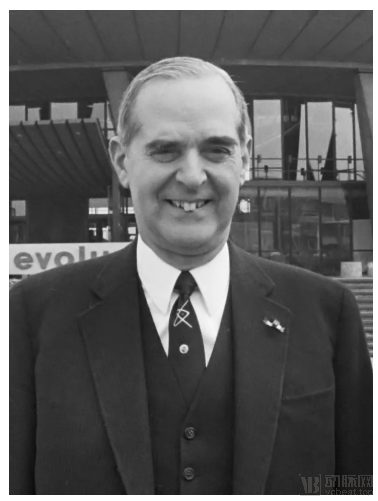
Frits Philips, Who Saved 382 Jews
During the prolonged occupation, employees at the Philips factory went on strike and took to the streets in protest. As a result, Fritz failed to deliver products on schedule due to the strike and became the only person from the factory to be imprisoned in a concentration camp. Fortunately, after Philips resumed normal operations in a timely manner, Fritz was ultimately released safely.
Meanwhile, other members of the Philips family leveraged assets transferred abroad early on to establish North American Philips in the United States. Light bulbs, vacuum tubes, radios… Philips replicated its successful Dutch product lines in the U.S., where they likewise enjoyed immense popularity. Anton’s bold gamble paid off: although Philips was born out of adversity, the family’s courage and entrepreneurial spirit allowed the blueprint for a multinational corporation to gradually unfold under the shadow of war.
Steve Jobs once publicly stated, “We admire Sony, we love Sony, and we aspire to be a company as excellent as Sony.” What captivated Jobs about Sony was the Walkman portable cassette player gifted to him by Sony co-founder Akio Morita. Perhaps Jobs never imagined that the source of inspiration behind the Walkman’s creation—and subsequently his own design inspiration—was not Japanese ingenuity, but rather the invention of the compact cassette (commonly known as the cassette tape).
On March 6 this year, shortly before Philips announced the sale of its home appliance business, Lou Ottens, the inventor of the cassette tape, passed away in the Netherlands at the age of 94. A veteran employee of Philips, Mr. Ottens joined the company in 1952 and remained with it for his entire career. He led the team that invented the cassette tape, enabling Philips to launch its first globally popular product, and witnessed the company’s rise to prominence as the world’s largest electronics corporation.
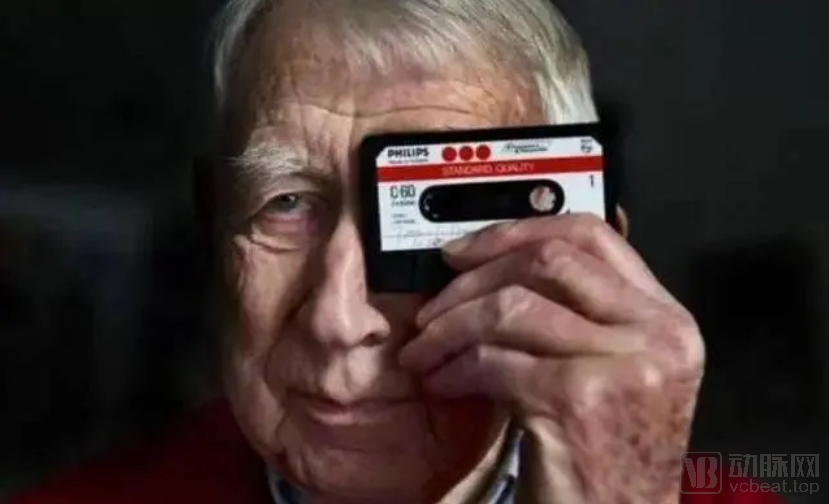
Lau Oden and Cassette Tapes
After World War II, members of the Philips family quickly returned to the Netherlands from the United States. Thanks to prudent advance planning, Philips not only avoided damage during the war but also saw a significant increase in profits. Consequently, the company acquired a plot of land and substantially expanded its Physics Laboratory. Established as early as 1914, the laboratory recruited leading physicists to oversee research efforts. The atmosphere at the Philips Physics Laboratory differed markedly from those of other corporate laboratories: it enjoyed ample funding and a strong academic culture. Although Philips was not yet an industrial giant, the company was generous in providing both personnel and financial resources, supporting not only applied research but also fundamental research conducted by its scientists. In 1923, Albert Einstein was even invited to visit the Philips Physics Laboratory. Before World War II, the laboratory had already invented the pentode vacuum tube, enabling Philips radios to far surpass competing products in quality. After the war, the Philips laboratory gained even greater prominence, becoming the most sought-after destination for researchers in Europe at that time.
“In their view, ‘the Philips Physics Laboratory enjoyed complete academic freedom, unburdened by administrative trivialities, with virtually unlimited research budgets and no specific research mandates. It was a paradise for innovation.’” In this environment, the laboratory produced numerous commercially significant research outcomes for Philips, including the compact cassette, camera sleeves, long-play optical discs, integrated injection logic (I²L), and LOCOS silicon oxidation technology. Today, people are so accustomed to digital electronic products that it is hard to imagine that just over 60 years ago, recording one hour of audio required two reel-to-reel tapes larger than a dinner plate. Philips put an end to this inconvenience. Lou Ottens, who was then a member of the Philips Physics Laboratory, designed the compact cassette in 1964 by gesturing to the size of his shirt pocket, successfully fitting tape of equivalent capacity into a small cassette housing.
This innovative invention quickly gained worldwide popularity. In 1966 alone, 250,000 cassette tape recorders were sold in the United States, and Japan’s Sony began to follow Philips’ lead by launching its own cassettes and recorders. To expand the format’s applicability, Otten, representing Philips, reached an agreement with Sony to standardize the production of compact cassettes according to the Philips format. In this way, Philips transformed the way people around the world record sound and listen to music. Statistics show that approximately hundreds of billions of Philips-format compact cassettes have been sold globally.
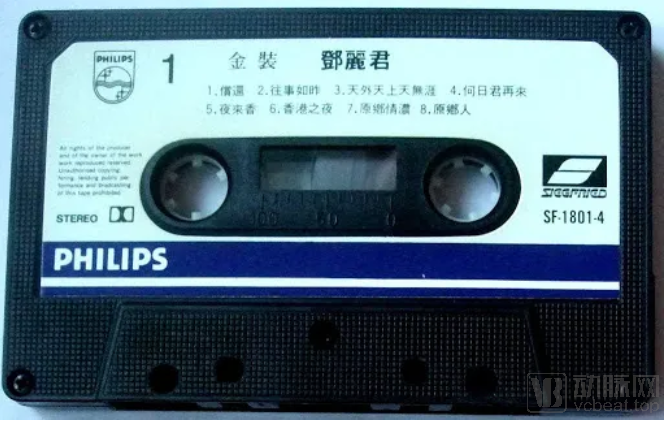
Teresa Teng’s voice reached mainland China, thanks in no small part to Philips cassette tapes.
Similar commercial research achievements are too numerous to count. In the more than two decades following the end of the war, Philips leveraged its core lighting products and innovative home appliances developed in its laboratories to become a preeminent electronics company in the industry. The world’s first cassette tape recorder, the first portable radio-cassette player, the first home video recorder, and the first commercially available LD (LaserDisc) format player all originated from Philips. It can be said that Philips’ esteemed reputation lies not in the magnitude of its sales or the extent of its fame, but in its foundational contributions to the entire electronics industry. Home appliances such as radios and cassette recorders were merely manifestations of Philips’ commercialization capabilities; it was the innovation-driven force represented by the underlying technologies that constituted the very foundation of Philips’ survival.
In 1973, the first oil crisis erupted, causing crude oil prices to skyrocket and plunging Western nations into economic recession. Philips, headquartered in the Netherlands and closely tied to the economies of developed countries, was no exception. Due to several consecutive years of sharp profit declines, Philips was forced to slash most of the budget for its Physics Laboratory and urgently seek commercial monetization. As the saying goes, “Haste makes waste; patience brings perfection.” Philips’ urgency not only failed to alleviate its profit woes but also left it unaware of significant historical opportunities, plunging the company into a period of confusion that lasted more than two decades. In 1984, in an effort to cut costs, Philips spun off its money-losing lithography equipment division for integrated circuit production and formed a joint venture with another company, establishing ASML. Three years later, again to reduce expenses, Philips divested its wafer packaging and testing operations, which it had previously invested in Taiwan, and formed a joint venture with Taiwan’s Industrial Technology Research Institute (ITRI), founding TSMC.
TSMC
Meanwhile, eager to monetize its technology, Philips partnered with Sony to develop an interactive optical disc format known as CD-i. To accelerate commercialization, Philips promptly launched compatible players. However, this haste led Philips to adopt a flawed marketing strategy: positioning the device as a video game console. The lack of compelling content alongside the hardware made the adoption of CD-i extremely difficult. Even after Philips later incurred substantial costs to produce games, the format remained largely ignored, resulting in significant financial losses for the company.
On one hand, long-term investments in semiconductors yielded no returns; on the other, its core consumer electronics business suffered severe setbacks, with profit margins falling below 1%. Even Philips, with its substantial capital reserves, could not withstand such losses. By 1990, Philips had incurred losses exceeding $2 billion (approximately RMB 9.56 billion at the then exchange rate), marking the largest corporate loss in Dutch history. Under pressure from competitors such as Siemens and Sony, Philips quickly lost the leading position in the electronics industry that it had worked hard to build.
In the 21st century, Philips has clearly entered a period akin to turning around a giant ship. Looking forward, internet giants such as Apple, Google, and Microsoft are rapidly expanding, benefiting from the foundational inventions and innovations originally pioneered by Philips. Looking backward, countless competitors are accelerating their entry into the various niche sectors where Philips operates, poised to carve up the market share ceded by Philips.
Philips has only one way to regain its leading position in a certain field: streamline operations and accelerate growth. Consequently, Philips began to divest its businesses on a large scale. Before seeing the dawn brought by smartphones, it first shed its semiconductor division, offloading its stakes in joint ventures ASML and TSMC in quick succession, thereby perfectly missing the wave of mobile internet. Its renowned audio and video business was sold to a Japanese company for merely €150 million, while large-scale manufacturing operations such as Funai Electric were retained only through brand licensing arrangements. Even its traditional core business, lighting, was spun off.
To many observers, Philips’ strategic pivot has been a painful process. Bearing the weight of its century-old brand, the company has not only faced widespread public skepticism but also had to endure the regret of missing key market opportunities. To this day, Philips has yet to conclude this “radical cure” journey, but the divestiture of its white goods business may well be its last major move.
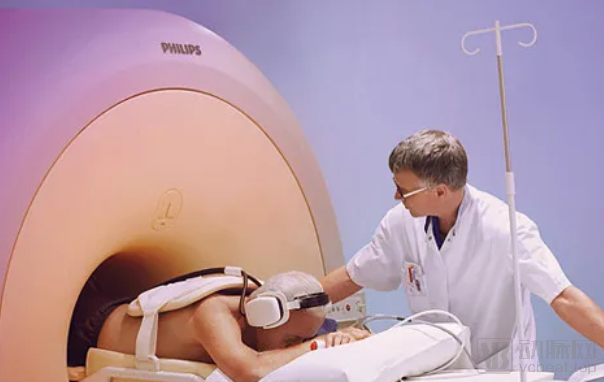
Philips Medical Devices
Philips has chosen to focus its development on the healthcare sector. According to data from the Boston Consulting Group, Philips ranked first among medical technology companies in the “50 Most Innovative Companies” list of 2020, and together with GE Healthcare and Siemens Healthineers, it constitutes the three multinational medical device giants (collectively known as GPS).
This year, despite the severe impact of the pandemic on many companies, Philips emerged as the company with the highest total revenue and the fastest profit margin growth among the top three players, achieving annual sales of €19.535 billion (approximately RMB 153.625 billion). A century after its arduous beginnings in the lighting industry, Philips is now repeating that journey in the healthcare sector, which demands greater investment and presents higher barriers to entry. A review of Philips’ development history reveals that this century-old enterprise has tenaciously grown amidst the sweeping tides of change, standing at the forefront of innovation driven by its unique capabilities. However, it also made missteps due to profit pressures, fell from its leading position, and had to spend decades realigning its strategic direction. Regardless, Philips remains a company worth studying. Its 130-year history encompasses the family’s courage in the face of war, entrepreneurs’ reverence for science, and the confusion and resilience displayed under survival pressures. Most remarkably, even after divesting all its dominant businesses to embark on a new path, Philips has managed to rapidly grow into a global leader once again. In this era of rapid change, while speed is undoubtedly important, the ability to catch up and regain competitiveness after switching tracks—as Philips has demonstrated—may be even more critical.
Source:
[1]Philips-museum.com:History
[2]CNA:Once bleeding billions, how Philips reinvented itself for the digital age
[3]WSJ:Philips Exits Consumer Electronics
[4]CNBC :CNBC Transcript: Frans van Houten, CEO-Royal Philips
[5]Financial Review:Why Philips got out of TVs and into health