Microfluidics Enters Fast Lane of Development, Accelerating the Deployment and Upgrade of Rapid Diagnostics
This article firstPublished by: DAS Capital, Author: Jie Fanjun,Authorized for republication by VCBeat.
The overall trend in the in vitro diagnostics (IVD) industry is moving toward greater convenience, intelligence, lower costs, and improved accuracy. Large manufacturers are well-suited for developing integrated systems and automated assembly lines, while startups are better positioned to focus on point-of-care testing (POCT). Microfluidics can be applied to various diagnostic technologies, including clinical chemistry, immunoassays, nucleic acid testing, and cell analysis. Currently, clinical chemistry and immunoassay sectors have entered a phase of full automation with rapidly declining costs. In contrast, molecular diagnostics remains characterized by low levels of automation and high product prices. Due to their integration, miniaturization, and automation capabilities, microfluidic chips show strong potential to replace assembly-line-style molecular diagnostic systems. They are particularly suitable for nucleic acid and cell-based assays, and also offer opportunities to enter the immunoassay market by developing specialized tests.
1. Overview of the Molecular Diagnostics Market
In 2019, the overall market size of China's in vitro diagnostics (IVD) industry reached RMB 71.3 billion, with a compound annual growth rate (CAGR) of 21.2%. Among this, the molecular diagnostics market was valued at RMB 13.2 billion, accounting for 18.5% of the total, and registered a CAGR of 32%, making it the fastest-growing segment within the IVD market. Currently, it is primarily applied in fields such as infectious diseases. Infectious disease testing includes the detection of bacteria, viruses, parasites, and other pathogens using methods such as PCR and mNGS.
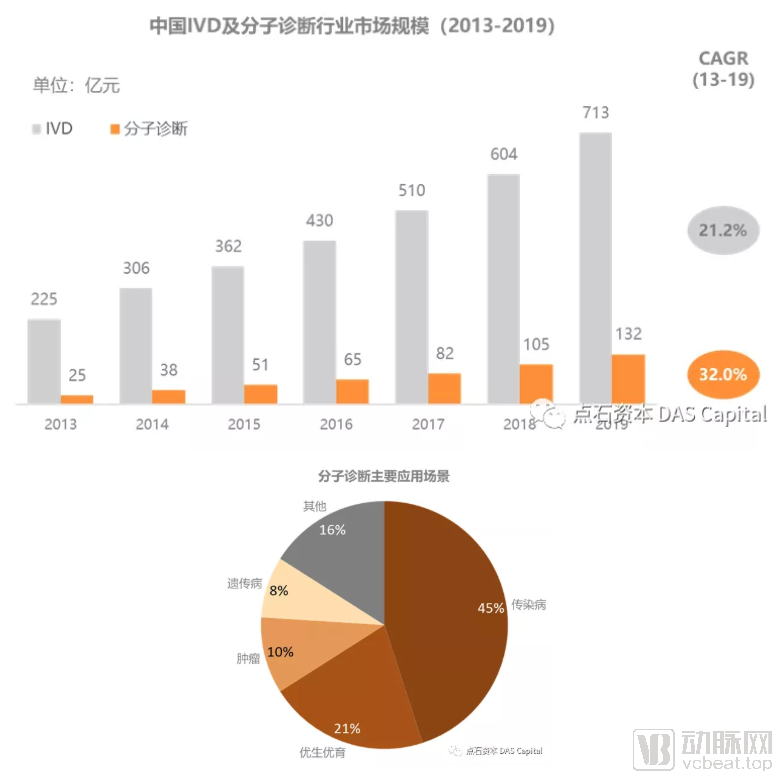
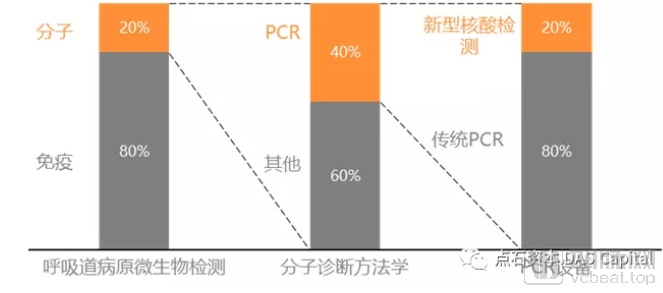
In the current market for pathogenic microorganism detection, immunoassays account for 80%, while molecular diagnostics account for 20%, with PCR-based methods comprising 40% of the latter. Immunodiagnosis relies on specific biomarker antibodies and optical sensing to detect corresponding pathogenic microorganisms; however, it presents certain limitations, such as inability to detect trace amounts, lack of signal, high background noise, and inconsistent results between replicate samples and controls. In contrast, molecular diagnostics has expanded to encompass proteomic and genomic approaches, including mass spectrometry (MS), polymerase chain reaction (PCR), isothermal amplification, and high-throughput next-generation sequencing (NGS).
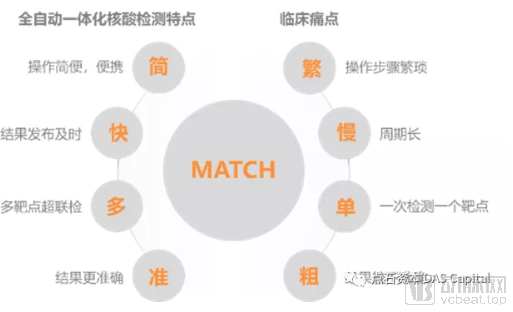
As simplified extraction techniques mature and high-throughput, high-efficiency nucleic acid extraction systems become widely adopted, nucleic acid detection methods such as PCR and LAMP will remain the mainstream in clinical diagnostics for the foreseeable future. Fully automated, integrated nucleic acid detection technologies are rapidly developing, with their market growth rate expected to surpass that of traditional PCR. As demands increase for streamlined procedures, shorter turnaround times, multiplex testing, and ease of operation, convenient and efficient detection methods are becoming the prevailing trend. Fully automated, integrated nucleic acid detection technologies offer advantages such as portability, rapid results, ultra-multiplex multi-target detection, and high accuracy, thereby addressing current pain points in clinical practice.
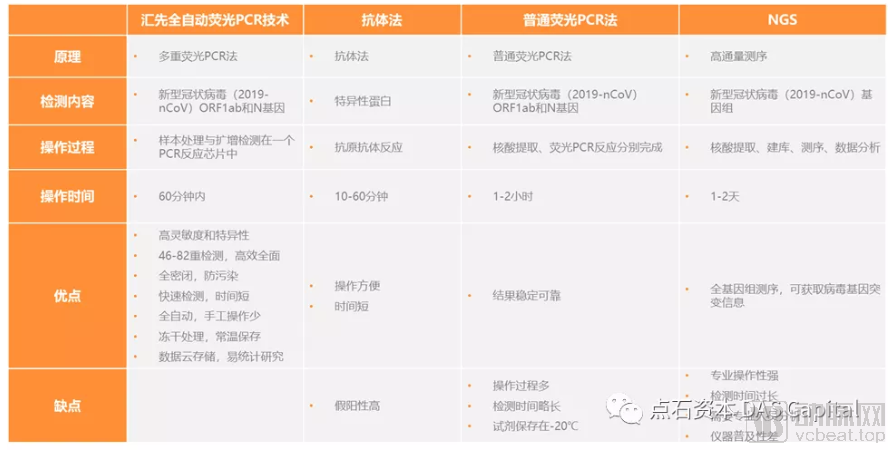
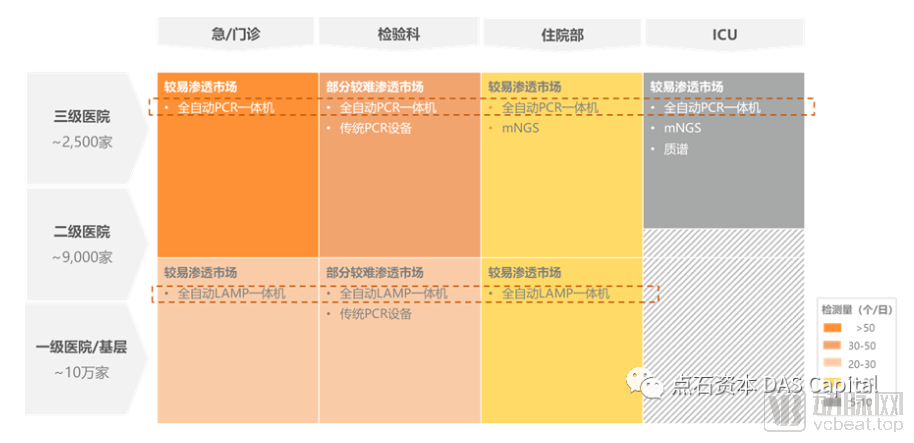
Taking SARS-CoV-2 testing as an example, fully automated integrated PCR technology offers the advantages of a fully closed system, rapid turnaround time, high throughput, and low cost, making it more suitable for point-of-care testing (POCT) in infectious disease scenarios.
The fully automated nucleic acid testing integrated system can cover 90% of application scenarios under the existing infection classification framework, demonstrating significant technical advantages in emerging settings outside the clinical laboratory, such as emergency departments and inpatient wards.
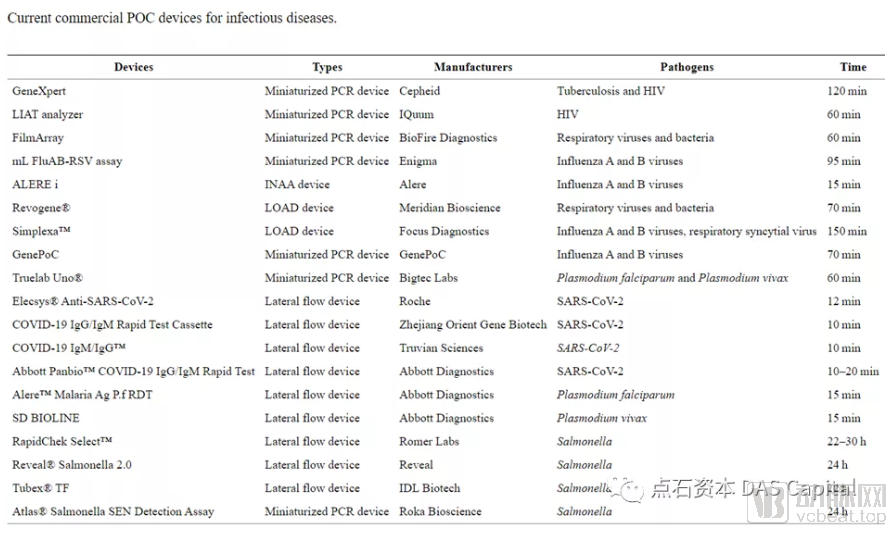
In addition to SARS-CoV-2 testing, point-of-care (POC) devices are also utilized by major manufacturers for the detection of other pathogens. The table below summarizes selected well-known POC instruments, including their types, manufacturers, target pathogens, and turnaround times.
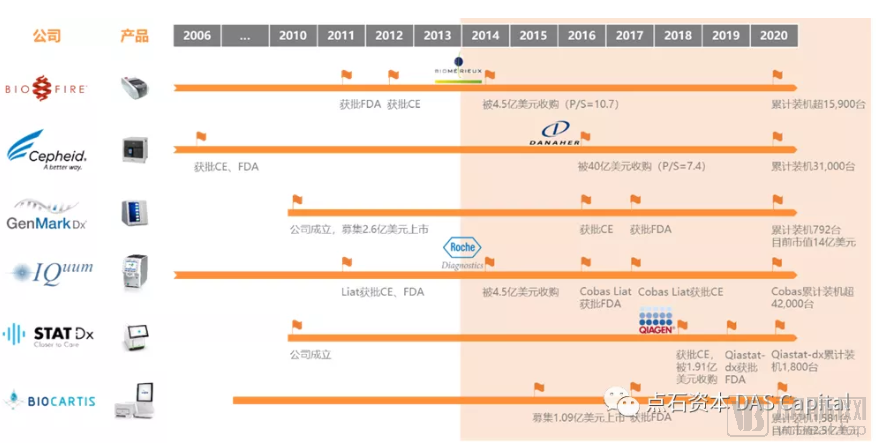
A virtuous market cycle is underway, with major diagnostic companies competing to make acquisitions. These corporations typically introduce successful microfluidic solutions within their extensive product portfolios. Companies such as Abbott, Alere, bioMérieux, and Roche have witnessed growth in at least one market segment, driven by their microfluidic solutions. Among the numerous companies developing microfluidic products, the most promising ones are often acquired by large diagnostic firms, as seen with Alere, IQuum, BioFire, Cepheid, and Nanosphere. Meanwhile, GenePOC has received significant investment from Debiopharm.
2. Microfluidics Technology
Early detection and monitoring of diseases are essential for optimizing treatment to reduce mortality and improve overall cost-effectiveness. Rapid and more accurate diagnostic techniques and tools are critical for the identification of pathogenic microorganisms—including prokaryotic bacteria, eukaryotic fungi, viruses, parasites, and protozoa—for clinical diagnostic purposes.
Microfluidic systems are automated manipulation devices that comprise microchannels (10–100 μm) allowing liquid flow, along with several other components, including micropumps, micro-inlet valves, and miniaturized outlet drainage devices, integrated with various instruments for content analysis. Microfluidic chips have been employed in the detection of pathogenic microorganisms, identification of microbes in food, and discovery of new antibiotics. Microfluidic systems represent a new generation of conventional diagnostic methods that rely on steps such as specimen preparation, reagent handling, biological reactions, and detection, all of which can be integrated into a single platform known as “lab-on-a-chip” (LOC).
Infectious diseases and cancer are the primary conditions targeted by microfluidic diagnostic technologies. Biomarkers, tumor cells, pathogens, or viral particles can typically be detected in patients’ circulating blood. With advances in sequencing technologies, microfluidics is also increasingly being applied to the detection of genetic disorders. Furthermore, neurodegenerative diseases and diabetes, whose incidence rates are rising day by day, represent substantial market opportunities for microfluidic technologies.
The advantages of microfluidic systems for diagnostic purposes include rapid detection, ease of use, cost-effectiveness, and high accuracy in identifying infectious diseases. The use of microfluidic chips in medicine can significantly shorten the time interval between testing and clinical treatment, which is critical for patient survival. The benefits offered by portable microfluidic kits are particularly pronounced in regions with limited access to healthcare services.
Conventional methods for detecting pathogenic microorganisms primarily include immunological assays and molecular biology techniques. Among these, traditional biochemical identification and bacterial culture are considered the "gold standard" due to their simplicity, intuitiveness, low cost, and ability to accurately characterize pathogenic microorganisms in samples. However, these methods suffer from low specificity, long turnaround times (5–7 days), and are labor-intensive. Furthermore, they impose stringent requirements on culture conditions and operational expertise, making them unsuitable for the rapid diagnosis of pathogenic microorganisms.
Atypical pathogens, such as *Mycoplasma pneumoniae* and *Chlamydia pneumoniae*, are typically detected using serological antibody assays or molecular testing. Viral detection differs, as traditional culture and serological methods struggle to overcome limitations in performance and the range of detectable types. For pathogen detection, traditional culture methods fail to address the need for rapid viral diagnosis.
Immunological detection methods leverage antigen-antibody recognition and binding, offering greater specificity and speed compared to culture-based methods. As a comprehensive technique capable of both qualitative and quantitative analysis, it commonly employs approaches such as the Enzyme-Linked Immunosorbent Assay (ELISA), chemiluminescent immunoassay, and colloidal gold immunochromatography. However, immunological testing is subject to a diagnostic "window period." Samples with low pathogen load often require an enrichment step, which prolongs the detection time. In major cities equipped with advanced medical centers, such delays are unacceptable, necessitating the use of Point-of-Care (POC) technologies to shorten turnaround times.
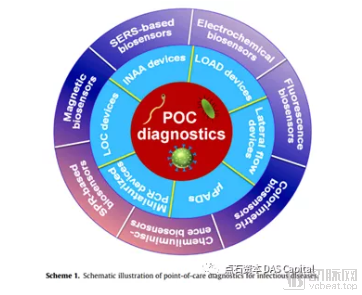
Lab-on-a-chip devices or micro total analysis systems, with microfluidics at their core, provide a highly advantageous technical platform for point-of-care testing (POCT). The high performance, compact size, and portability of microfluidic systems, combined with the capability for on-chip measurement and optical monitoring, enable the optimization of diagnostic methods. On one hand, microfluidic technology allows for the integration of multifunctional units and automation of operations involved in complex analyses on miniaturized devices, thereby eliminating the need for specialized laboratories and trained personnel required by traditional, complex, multi-step bioassays. On the other hand, microscale reactions and analyses offer rapid processing speeds, reduced consumption of samples and reagents, and ease of achieving high-throughput analysis. These characteristics align closely with the development needs of POCT, making microfluidic technology increasingly the core technology for constructing POCT systems.
With technological advancements, high-throughput microfluidic products, as the next-generation testing technology, aim to retain the advantages of conventional POCT (speed and compactness) and large-scale instruments (superior performance and high automation), while addressing the drawbacks of conventional POCT (suboptimal performance) and large-scale instruments (bulky size, complex hardware, and high cost).
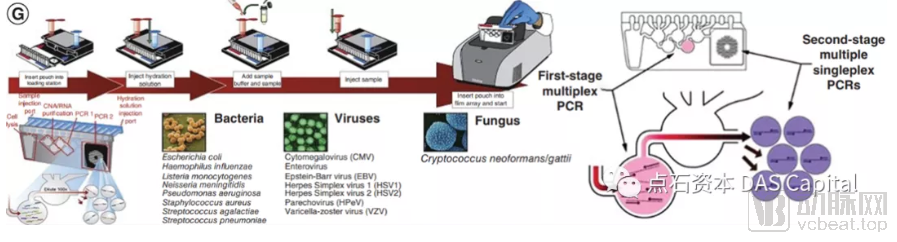
Current Status of Microfluidics Technology DevelopmentIn terms of technical principles, microfluidics technology has been fully matured. However, due to the involvement of multiple disciplines (such as micro-electromechanical systems, materials science, and optics), integration is highly challenging, resulting in relatively high production costs for manufacturers. The per-chip production cost exceeds RMB 20 for many companies, and some face difficulties in mass production due to complex chip structure designs. Through continuous technological improvements and optimizations, costs are steadily declining. A few manufacturers have managed to control the bulk production cost per chip to within RMB 5, or even lower. Driven by reduced manufacturing costs, multiplex PCR is becoming increasingly widespread, with numerous companies both domestically and internationally launching multi-analyte and ultra-multiplex diagnostic panels.
Additionally, due to the high precision required for micromanipulation, there remains a certain performance gap compared with large-scale equipment, although this gap is continuously narrowing. Existing technologies generally seek market breakthroughs through the following two approaches:
(1) Conventional methods are still unable to achieve automated detection, such as molecular testing. Routine molecular testing requires the use of multiple devices housed in separate spaces to prevent cross-contamination. The use of fully enclosed, integrated microfluidic chips for molecular diagnostics can achieve the goal of “Sample in, Result out.”
(2) For high-value testing items, given the application scenarios of POCT (rapid, compact, and flexible), relatively high-cost microfluidic products still have a certain market space. This allows manufacturers, distributors, and end customers to maintain a certain profit margin without incurring losses.