

Amid the Golden Era of Biopharma, Taimei Medical Technologies Drives Clinical Trial Digital Transformation with Innovative Solutions
Taimei
Life Sciences Industry Digital-Intelligence Operations Platform
Data collection in clinical trials is a core component of drug clinical research. Authentic, accurate, timely, and standardized data collection can significantly enhance the quality of clinical trials and shorten study cycles. With the widespread adoption of Electronic Data Capture (EDC) systems, an increasing number of clinical studies are employing electronic methods for data collection.
However,The scope of functionality and the issues addressed by existing EDC systems can no longer meet the evolving models of clinical research.Data shows that from 2017 to 2020, the frequency of Case Report Form (CRF) changes and data migration increased rapidly from an average of less than once per project to more than five times per project, while the number of data fields collected per project grew by over 50%.
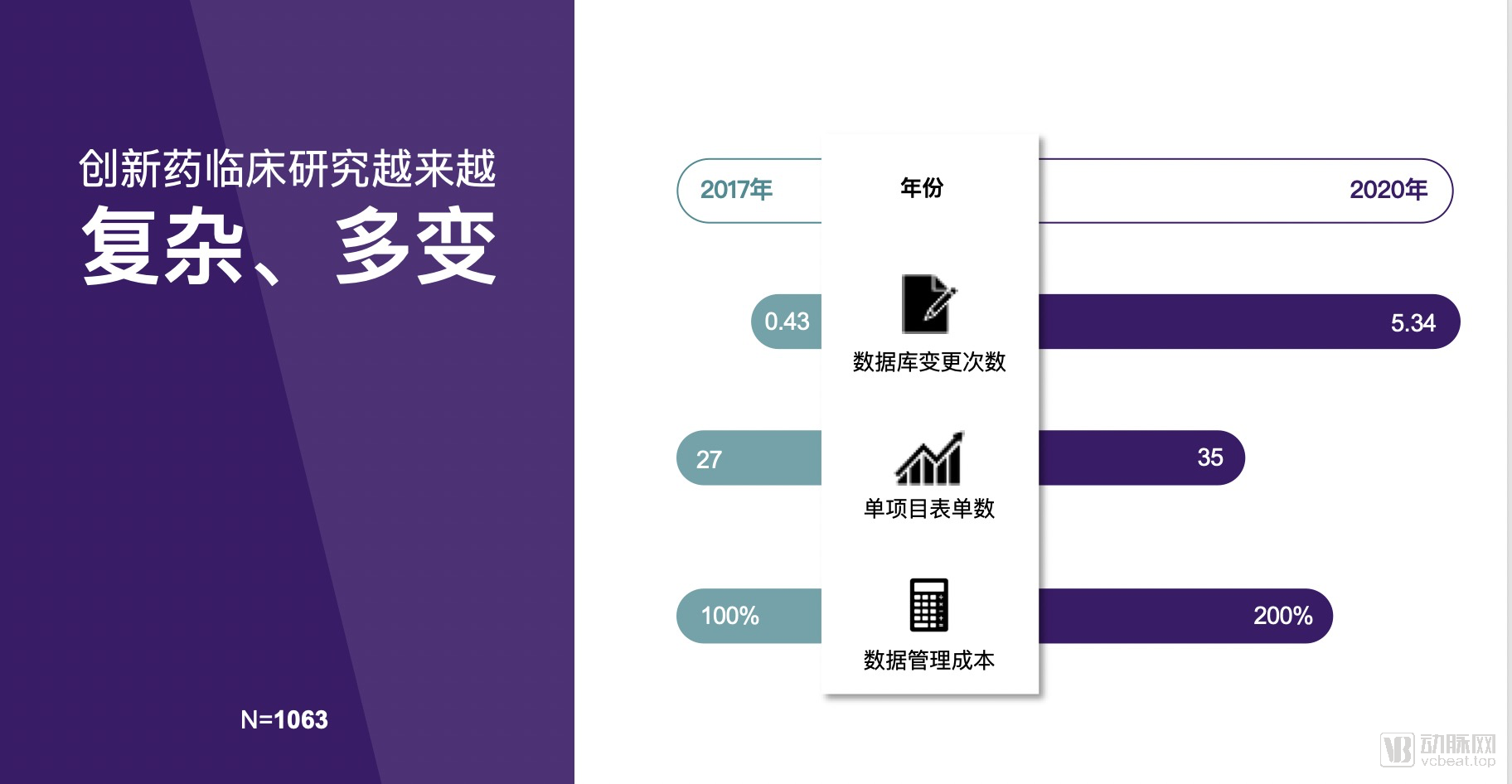
(Image source: provided by the company)
These data indicate that,As clinical research on innovative drugs is increasingly conducted, the design of such studies has become correspondingly more complex, dynamic, and uncertain.In addition to imposing increasingly stringent requirements on EDC systems themselves in areas such as CRF changes, data migration, visit design, automated checks, and workflow design, this trend has also generated more urgent and complex demands for large-scale data processing at both the corporate and product levels, including SDTM data conversion and medical analysis.
Therefore, a new generation of clinical data processing solutions that go beyond current EDC products is needed to more efficiently address the challenges enterprises face in clinical research data processing.
Drawing on the execution of thousands of clinical research projects and a deep understanding of the industry, Taimei has keenly identified customers’ urgent need for next-generation clinical data processing solutions. In response, it has launched an integrated solution suite for “End-to-End Automated Processing of Clinical Research Data,” encompassing three core components: a CRF design platform, an Electronic Data Capture (EDC) system, and data analytics technologies. Characterized by standardization, automation, and intelligence, this solution optimizes workflows and enhances the efficiency of clinical research data processing. It delivers highly analyzable, standardized data from both medical and statistical perspectives, while enabling enterprises to fully leverage and analyze EDC data to provide deeper medical insights for the conduct of clinical studies.
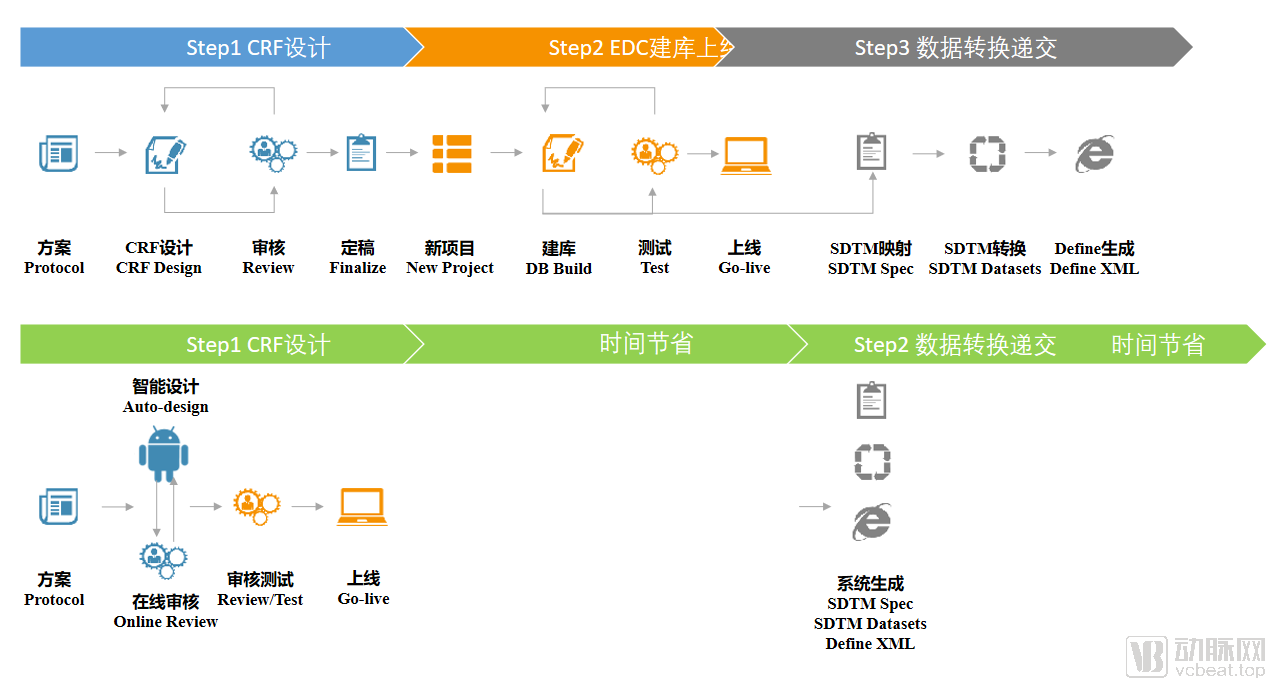
Optimization of Processes by Automated Clinical Data Processing Solutions (Image source: Provided by the enterprise)
The introduction of new product portfolios better helps pharmaceutical companies address the evolving demands of clinical projects. The next-generation EDC system significantly reduces the time required for CRF form design, reporting, and other processes, thereby substantially lowering study costs. According to internal surveys, adopting standardized database designs can reduce study costs by approximately half compared to the fragmented use of EDC systems.
Since its founding in 2013, Taimei has been cultivating the field of clinical informatics for nearly eight years. Although it was not among the first wave of digital vendors to enter this space, Taimei has distinguished itself from domestic competitors and aligned itself with international players by adopting a holistic approach, engaging in strategic market reflection, and deeply uncovering customer needs.
In terms of product design and business evolution, Taimei has established its own logic:By building a collaborative platform that connects multiple industry stakeholders—including hospitals, pharmaceutical companies, service providers, regulatory authorities, and patients—we have integrated previously isolated information silos and fragmented data to facilitate seamless data flow and close collaboration among all parties involved in pharmaceutical R&D. Tasks that once required extensive on-site visits, such as trial applications and data verification, can now be easily completed online. To date, Taimei has over 8,000 projects running on its online platform, benefiting millions of people.
In terms of uncovering user needs,Taimei has dedicated teams to follow up on each project. Any issues encountered by clients during use can be promptly reported to the team responsible for that project, and then conveyed to Taimei’s R&D requirement pool, enabling R&D personnel to conduct regular project evaluations and develop updates.
Furthermore, Taimei regularly visits major pharmaceutical companies, CROs, and hospitals to continuously identify pain points in their clinical data collection and management processes, as well as the informatics requirements for specific application scenarios across the entire business chain, thereby gathering comprehensive insights into the industry’s real-world needs. Of course, staying abreast of the latest industry developments and innovations is an essential measure for Taimei Medical Technology to maintain its leading advantage in the informatics sector.
In July 2020, the new version of Good Clinical Practice (GCP) was released, in which the Chinese government updated the responsibilities and operational procedures for sponsors, investigators, clinical trial institutions, and ethics committees in safety information management, and put forward higher requirements for information analysis and management.Taimei has established integrated online communication channels in compliance with new regulatory requirements, digitizing the end-to-end workflow for serious adverse event (SAE) reporting. This encompasses the entire closed-loop process, from investigators submitting SAEs to sponsors, through sponsor assessment and reporting, to feedback dissemination to applicants, institutions, ethics committees, and regulatory authorities. As a result, the time required for investigators to complete SAE reports and the volume of communications related to report queries have been significantly optimized.
From a longitudinal perspective, the digitalization of future clinical research will inevitably converge toward greater specialization and the fulfillment of more diverse personalized scenarios. As national healthcare reform policies are progressively implemented, the wave of transition from generic drugs to innovative drugs has already arrived:
As new drug research designs become more innovative and study management more complex, pharmaceutical companies are placing increasingly high demands on customized solutions for specific clinical data management scenarios, as well as on automation across the entire workflow. Taimei’s automated updates to clinical data streams are designed to address this challenge.
Today, China, the world’s largest fertile ground for pharmaceutical investment, is experiencing a golden age of biopharmaceutical development. However, the high costs, long timelines, and substantial risks associated with new drug development remain significant pain points for most pharmaceutical companies, with the clinical trial phase being particularly challenging. Therefore, improving the quality and efficiency of clinical trials while reducing costs is a shared mission for clinical digitalization providers such as Taimei Medical Technology. This also presents a valuable opportunity for them to achieve rapid growth and secure a strong long-term position in the era of big data.
The application of integrated information technology will help pharmaceutical companies integrate and optimize clinical research processes, and efficiently manage their product R&D pipelines based on insights and analysis of clinical data.
We believe that all professionals in the pharmaceutical industry share the same aspiration as Taimei Medical Technology: “To make good medicines readily accessible.”