

Chemclin Diagnostics Soars 178% on STAR Market Debut: How This Chemiluminescence Leader Sustains Long-Term Competitive Edge

Chemclin Diagnostics
Clinical Immunology Diagnostic Product R&D, Production, and Sales Company
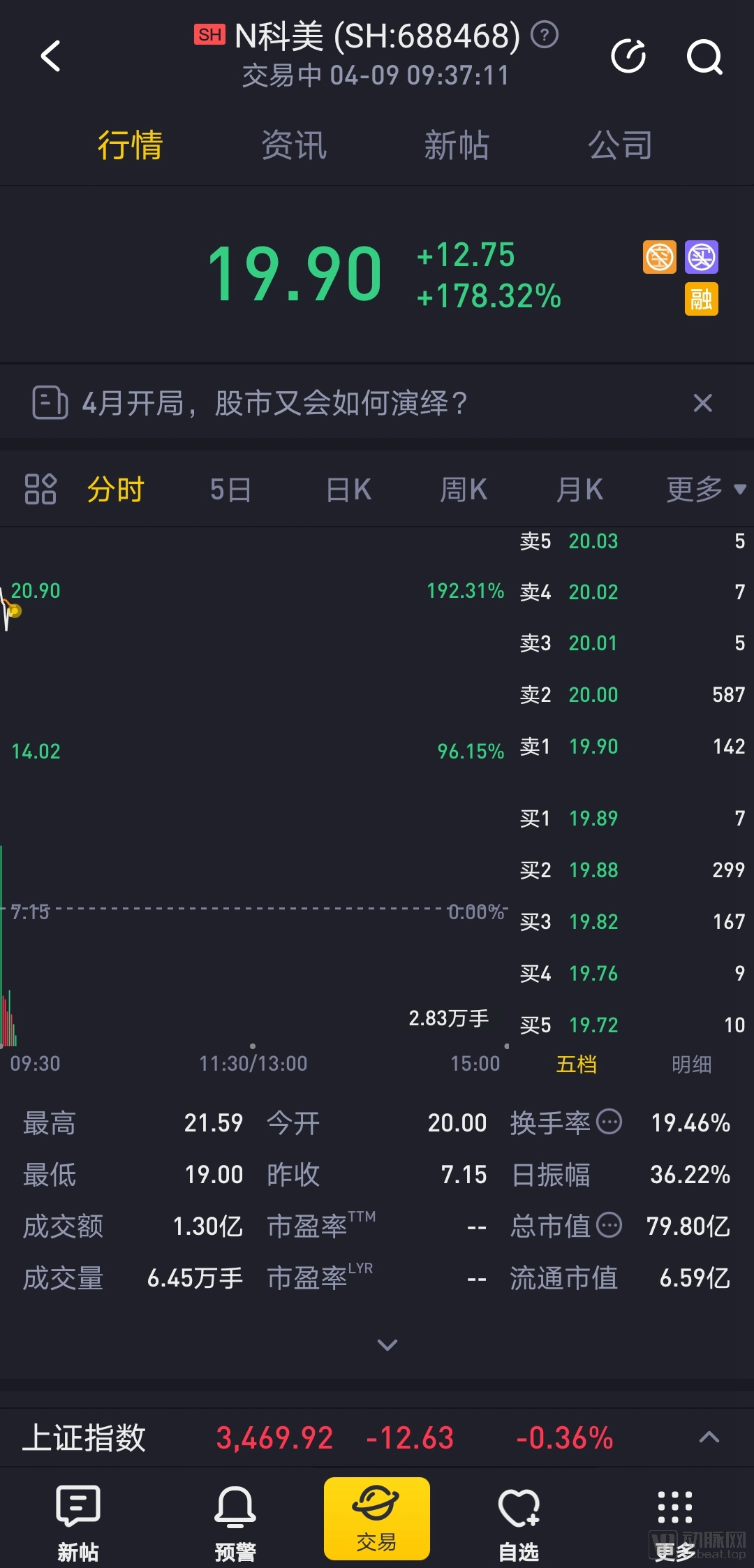
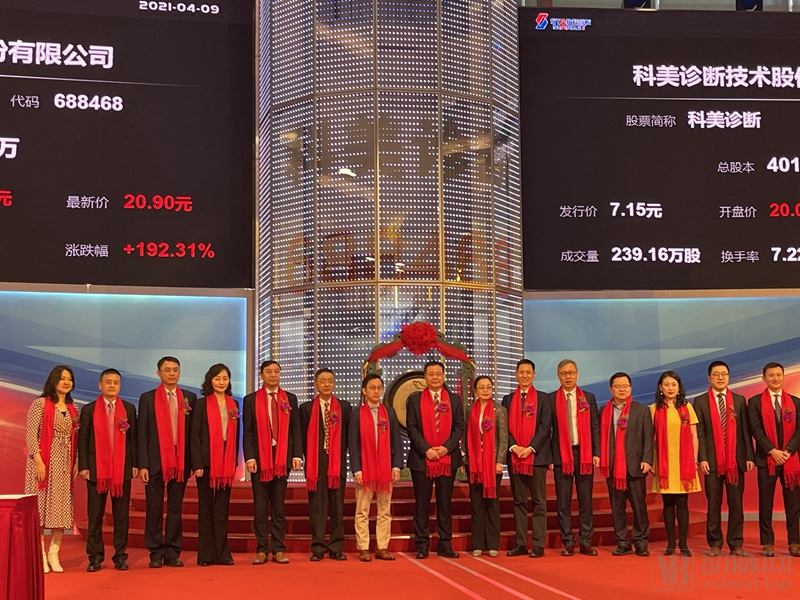
On April 9, Chemclin Diagnostics, a leader in the field of chemiluminescence diagnostics, officially listed on the STAR Market of the Shanghai Stock Exchange. The company’s IPO price was RMB 7.15 per share, with an opening price of RMB 20. As of press time, its stock price stood at RMB 19.9, representing a surge of 178.32%, and its market capitalization approached RMB 8 billion.
Chemclin Diagnostics is one of the earliest companies in China to strategically position itself in the field of clinical immunodiagnostic products. As a high-tech enterprise, it is primarily engaged in the research and development, manufacturing, and sales of reagents and instruments for clinical immunochemiluminescence diagnostics. Its product portfolio includes the LiCA series of diagnostic reagents based on photo-initiated chemiluminescence, as well as the CC series of diagnostic reagents and instruments based on enzyme-catalyzed chemiluminescence. These products are mainly applied in the detection of markers for infectious diseases (such as hepatitis B, hepatitis C, HIV/AIDS, syphilis, hepatitis A, and hepatitis E), tumor markers, thyroid hormones, reproductive endocrine hormones, cardiac markers, and inflammatory indicators.
In 1999, Ying Xitang, a renowned immunodiagnostic expert in China, founded the predecessor of Chemclin Diagnostics—Beijing Kemai Biotechnology Co., Ltd. (Kemai Biotech). In 2006, Kemai Biotech’s chemiluminescent HIV diagnostic reagent, developed with an investment of tens of millions of yuan, was approved for market launch. In September 2019, Kemai Biotech underwent shareholding reform and was wholly converted into Chemclin Diagnostics, with Li Lin appointed as Chairman of the Board and General Manager of the company.
After years of development, Chemclin Diagnostics holds 178 domestic medical device registration certificates. Its products have been adopted by more than 1,000 hospitals across China, with over 80% being secondary-level hospitals or above. The company’s consolidated financial statements reported operating revenues of RMB 151 million for January–June 2020, RMB 455 million for 2019, RMB 366 million for 2018, and RMB 319 million for 2017, demonstrating strong performance and establishing it as one of the leading enterprises in the chemiluminescence sector.
Meanwhile, Chemclin Diagnostics has also garnered favor from numerous investors.
In 2007, the company secured angel investment;
In 2008, it received investment from Softbank China Capital, United Group of Chinese-American Venture Capital (UCVC), and Siemens China.
In 2017, the company increased its capital and introduced two major shareholders: Ningbo Yingweili and Ningbo Kebiao.
In February 2018, the company completed itsLegend CapitalandHuaxing Medical Industry FundCo-led the RMB 2 billion major financing round, with participation from Ping An Ventures, Honghui Capital, Matrix Partners China, and others, setting a record for the largest private equity transaction in China’s in vitro diagnostics sector at that time;
In October 2018, the company received investment from Colorful Stones, WEALTH HORIZON, and WANG CHENGRONG.
Legend Capital is Chemclin Diagnostics’ largest institutional investor and a key force behind the company’s restructuring. Following its investment, Legend Capital assisted Chemclin in optimizing corporate governance and improving shareholder and board structures to comply with the listing requirements of China’s A-share market. Commenting on Chemclin Diagnostics’ successful IPO, Zhou Hongbin, Co-Chief Investment Officer at Legend Capital, stated: “Congratulations to Chemclin Diagnostics and its management team led by CEO Mr. Li Lin. Chemclin boasts a top-tier international team with extensive industry experience and strong R&D capabilities in the IVD sector, as well as exceptional prowess in industry consolidation. We deeply admire the strategic vision and leadership of the company’s core executive team. We are confident that under Mr. Li Lin’s leadership, Chemclin will continue to exceed expectations, drive advancements in medical diagnostic technology in China, and benefit more patients.”
Zhang Junjie, Founding Partner of Huaxing Medical Industry Fund, stated, “Our team has been honored to accompany Chemclin Diagnostics on its growth journey since 2012 and has witnessed the successful integration and commercialization of its LiCA technology. Chemclin’s path of innovation has been arduous. Amid China’s aging population trend, precision diagnostics and import substitution present the greatest opportunities. Only by persistently investing in and building robust core underlying technologies, and continuously innovating, can we develop exceptional diagnostic products and truly achieve import substitution in competition with multinational corporations in the high-end immunodiagnostic sector. Leveraging years of accumulation, Chemclin’s LiCA series diagnostic products and new instruments have been aggressively rolled out to the market since 2020. We maintain a long-term positive outlook on companies like Chemclin that possess strong core products. Congratulations to Chemclin Diagnostics on its successful listing on the STAR Market today. This day marks a new starting point for Chemclin. We believe that as Chemclin reaches this new stage, it will continue to enhance its independent innovation capabilities and remain at the forefront of the in vitro diagnostics market.”
Wang Hui, founder of Honghui Capital, stated, “Our team at Honghui is delighted to join other distinguished institutions in serving Chemclin Diagnostics. We wish Chemclin continued success and robust performance under the leadership of Mr. Li, leveraging its IPO as a new starting point to better serve society and customers with an expanded portfolio of high-quality products.”
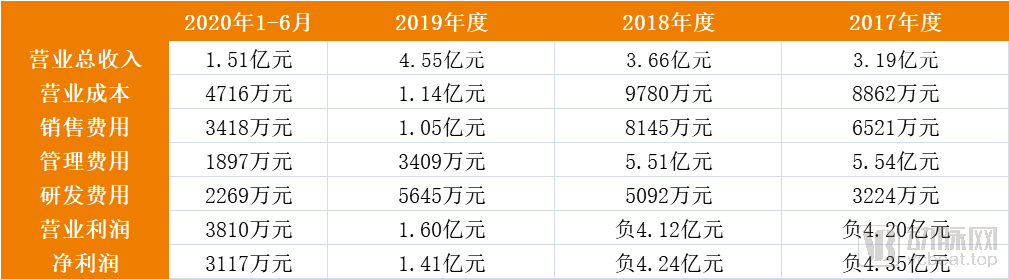
According to the prospectus, Chemclin Diagnostics reported consolidated operating revenues of RMB 151 million, RMB 455 million, RMB 366 million, and RMB 319 million for the period from January to June 2020, the full year 2019, the full year 2018, and the full year 2017, respectively, demonstrating strong revenue performance.
From 2017 to 2019, the company’s compound annual growth rate (CAGR) for operating revenue was 19.46%. Among its product lines, the LiCA series, as a strategic focus in recent years, experienced rapid growth with a CAGR exceeding 45%. From January to June 2020, the company’s operating revenue amounted to RMB 151 million, representing a year-on-year decline of 25.95%.
2020 was a unique year for the in vitro diagnostics (IVD) industry. The COVID-19 pandemic presented both opportunities and challenges. From 2020 to the present, the IVD industry has exhibited two starkly contrasting trends under the impact of the pandemic. Companies involved in SARS-CoV-2 testing, such as third-party medical laboratories and nucleic acid molecular testing firms, have reaped substantial profits, with revenues multiplying several times over. For instance, Sansure Biotech reported revenue of RMB 4.763 billion in 2020, representing a year-on-year growth rate of 1,203.53%; Da An Gene achieved revenue of RMB 5.314 billion in 2020, a year-on-year increase of 386.35%; and Wondfo Biotech recorded revenue of RMB 2.811 billion in 2020, up 35.64% year on year.
Chemiluminescence companies were more negatively affected by the COVID-19 pandemic. After the outbreak spread across China in January 2020, patient visits and routine medical activities declined, healthcare resources were redirected toward epidemic prevention and control, and demand for routine disease testing and health check-ups decreased. The normal operations of many chemiluminescence companies were disrupted by the pandemic, leading to a decline in their performance.
Chemclin Diagnostics was no exception. In the first quarter of 2020, when the COVID-19 epidemic was most severe in China, Chemclin Diagnostics’ operating revenue decreased by 41.76% year-on-year. Its operating revenue for the first half of 2020 amounted to RMB 151 million, representing a 25.95% decline compared with the same period in 2019, while net profit dropped by 48.25%. For the full year 2020, sales revenue reached RMB 418 million and net profit stood at RMB 117 million, down by 8.02% and 16.77%, respectively, from the previous year.
Chemclin Diagnostics’ flagship LiCA product series also experienced a certain degree of decline amid the pandemic. Previously, revenue from the LiCA series grew from RMB 139 million in 2017 to RMB 299 million in 2019, representing a compound annual growth rate (CAGR) of over 45%. In the first half of 2020, revenue from the LiCA series amounted to RMB 118 million.
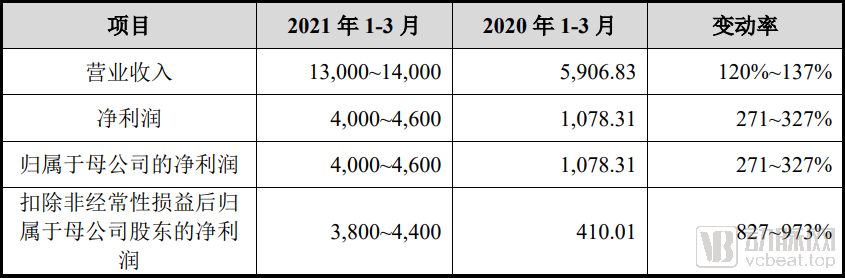
As the domestic epidemic situation stabilized, Chemclin Diagnostics’ operating revenue began to recover, with a significant year-on-year increase in revenue from January to March 2021 compared to the same period in 2020.
However, the risk of sporadic cases, localized outbreaks, and imported infections persists. Should the epidemic resurge, Chemclin Diagnostics will once again face the risk of declining revenue.
Furthermore, in contrast to the year-on-year growth in revenue, Chemclin Diagnostics reported substantial net losses in 2017 and 2018, amounting to RMB 435 million and RMB 424 million, respectively. The company stated that these losses were primarily attributable to two large share-based payment expenses, which reached RMB 524 million and RMB 520 million in 2017 and 2018, respectively.
Regarding gross profit margin, the prospectus shows that Chemclin Diagnostics’ comprehensive gross profit margins were 72.18%, 73.28%, 74.98%, and 68.85% in 2017, 2018, 2019, and the first half of 2020, respectively. The company’s gross profit margin has remained generally stable at a high level.
In terms of R&D investment, Chemclin Diagnostics’ R&D expenses amounted to RMB 33.24 million, RMB 50.92 million, RMB 56.45 million, and RMB 22.69 million in 2017, 2018, 2019, and the first half of 2020, respectively. Although the company’s R&D expenses grew rapidly from 2017 to 2019, with year-on-year growth rates of 57.96% in 2018 and 10.86% in 2019, its overall R&D spending remains at the tens-of-millions level. In contrast, many peer companies in the industry have already exceeded RMB 100 million in R&D investment, indicating that Chemclin Diagnostics’ R&D expenditure is relatively insufficient.
To expand its chemiluminescence product portfolio and enhance its R&D capabilities, Chemclin Diagnostics acquired Boyang Bio in 2017, resulting in goodwill amounting to RMB 154 million. According to the prospectus, the carrying value of the company’s goodwill remained constant at RMB 153.7561 million from 2017 through 2019 and during the first half of 2020, accounting for 52.91%, 54.63%, 54.16%, and 52.11% of non-current assets, respectively.
Although the acquisition of Boyang Bio generated a significant amount of goodwill, Chemclin Diagnostics successfully leveraged this transaction to expand its light-activated chemiluminescence immunoassay platform on top of its existing enzyme-catalyzed chemiluminescence technology platform, thereby establishing a dual-platform chemiluminescence capability.
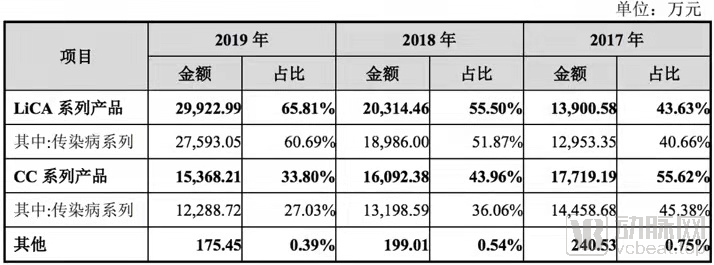
In recent years, Chemclin Diagnostics has been shifting its business strategic focus from enzyme-catalyzed chemiluminescence to the LiCA series products based on photo-initiated chemiluminescence. The prospectus reveals that Chemclin Diagnostics has ceased R&D investment and sales channel development for the CC series products based on enzyme-catalyzed chemiluminescence. The revenue contribution of the CC series products is declining. At the end of each period from 2017 to 2019 and the first half of 2020, the proportion of operating income from the company’s CC series products in its total operating income was 55.62%, 43.96%, 33.80%, and 20.39%, respectively, showing a successive decrease over each period.
Fortunately, the LiCA product series has lived up to expectations. Revenue from the LiCA product series grew from RMB 139 million in 2017 to RMB 299 million in 2019, representing a compound annual growth rate (CAGR) of over 45%. Its contribution to the company’s total operating revenue increased from 43.63% in 2017 to 77.99% in the first half of 2020 (January–June). It is expected that the LiCA product series will play an even more significant role in boosting the company’s overall revenue in the future.
Photochemiluminescence is a novel chemiluminescent immunoassay method, regarded as the fourth-generation technology leading the field of chemiluminescence. It has been gradually accepted in clinical and laboratory settings and is being applied to a certain extent.
Unlike heterogeneous chemiluminescent immunoassays that use magnetic microparticles as solid-phase carriers, such as electrochemiluminescence, direct chemiluminescence, and enzyme-promoted chemiluminescence, photo-excited chemiluminescence employs luminescent microspheres and photosensitive microspheres covalently cross-linked with antigens or antibodies, respectively. Through antigen-antibody binding, the distance between the two types of microspheres is reduced to within 200 nm, enabling the transfer of singlet oxygen and inducing a "separation-free" immunoassay method based on photo-excited chemiluminescence. Featuring nanotechnology, wash-free operation, and photo-excitation, this approach creatively addresses issues associated with heterogeneous immunoassays, such as detection errors caused by multi-step washing procedures and increased difficulty in reagent development.
It should be noted that the clinical application of light-activated chemiluminescence technology emerged relatively late. Currently, only a few companies, such as Chemclin Diagnostics and Siemens, offer products developed based on this technological platform in both domestic and international markets.
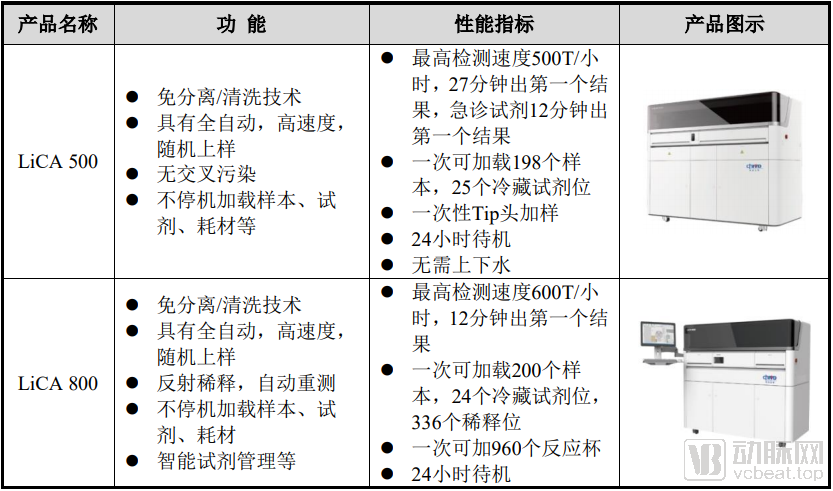
Chemclin Diagnostics pioneered the establishment of a Light-Activated Chemiluminescence Assay (LiCA) technology platform with independent intellectual property rights in China. Leveraging this platform, Chemclin Diagnostics has developed the LiCA series of products. The LiCA series instruments are characterized by simplified operational procedures and high testing throughput; specifically, the LiCA 500 and LiCA 800 instruments achieve maximum single-unit detection speeds of 500 tests/hour and 600 tests/hour, respectively. The upcoming LiCA Smart is designed to better meet the clinical diagnostic needs of emergency departments and small-to-medium-sized hospitals. Meanwhile, the LiCA 4000, currently under development, features random-access testing capabilities and supports online connectivity, thereby better addressing the demands of end-users requiring a wide variety of tests and high testing volumes.
Regarding reagent products, Chemclin Diagnostics currently offers nearly 50 LiCA series reagent products, covering commonly tested clinical parameters such as infectious diseases, tumor markers, thyroid hormones, reproductive endocrine hormones, cardiac markers, and inflammation. The breadth of its test menu is now comparable to that of imported brands such as Abbott, Siemens, and Beckman Coulter.
Infectious disease diagnostic assays are Chemclin Diagnostics’ primary reagent products on the market, with the company’s sales revenue predominantly concentrated in the infectious disease sector, accounting for approximately 90% of total sales. In 2019, the revenue from its infectious disease product series reached nearly RMB 400 million.
Infectious disease testing is the largest segment in China’s chemiluminescence market, accounting for approximately 40% of the market by size. As a country with a high prevalence of infectious diseases, China has a substantial number of patients affected by conditions such as viral hepatitis, and both the number of cases and the incidence rate continue to rise. It is estimated that there are currently around 86 million hepatitis B virus carriers and approximately 1 million hepatitis C virus carriers in China, indicating that the epidemic situation of viral hepatitis remains severe. Meanwhile, with the continuous improvement of China’s healthcare standards, greater emphasis is being placed on infectious disease prevention and control; tests for infectious diseases such as hepatitis B, HIV, and syphilis have become mandatory preoperative screenings for surgical patients. Driven by the dual demands of diagnosis and prevention, the demand for infectious disease testing in China is expected to continue growing, maintaining its significant position in the chemiluminescence market.
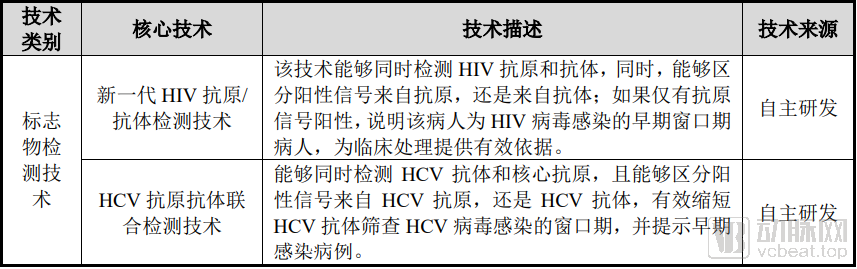
However, due to the high accuracy requirements for infectious disease testing, this market has long been monopolized by leading international brands. Chemclin Diagnostics is committed to breaking the import monopoly in infectious disease testing and has established a leading advantage in this field, forming core technologies in the detection of infectious disease markers. Among these, “Next-Generation HIV Antigen/Antibody Detection Technology” and “HCV Antigen-Antibody Combined Detection Technology” are typical representatives of the company’s leading marker detection technologies.
Chemclin Diagnostics’ infectious disease testing assays are comparable to leading imported products. Published comparative studies have demonstrated that the accuracy of Chemclin Diagnostics’ LiCA series in detecting hepatitis B surface antigen (HBsAg), syphilis antibodies, and human immunodeficiency virus antigen/antibody (HIV Ag/Ab) is highly consistent with that of the Abbott Architect i2000SR platform; its accuracy in estradiol testing is highly consistent with that of the Siemens IMMULITE 2000 platform. Furthermore, the LiCA series outperforms the Abbott Architect i2000SR platform in terms of accuracy for hepatitis C antibody (HCV Ab) testing, early infection detection capability for HIV Ag/Ab, and Hook effect sample identification capability for HBsAg testing.
In recent years, Chemclin Diagnostics’ LiCA series has been deployed in over 1,000 end-user hospitals, with approximately 80% being secondary-level hospitals or above. The systems have been installed and are in use at numerous Grade A tertiary hospitals, including Shanghai Changzheng Hospital, Fudan University Shanghai Cancer Center, the International Peace Maternity and Child Health Hospital, and Shanghai Integrated Traditional Chinese and Western Medicine Hospital.
Leveraging its diversified instrument models, superior reagent performance, and an increasingly comprehensive test menu, Chemclin Diagnostics is poised to enter a phase of rapid growth amid the prevailing trend of import substitution in the in vitro diagnostics industry.
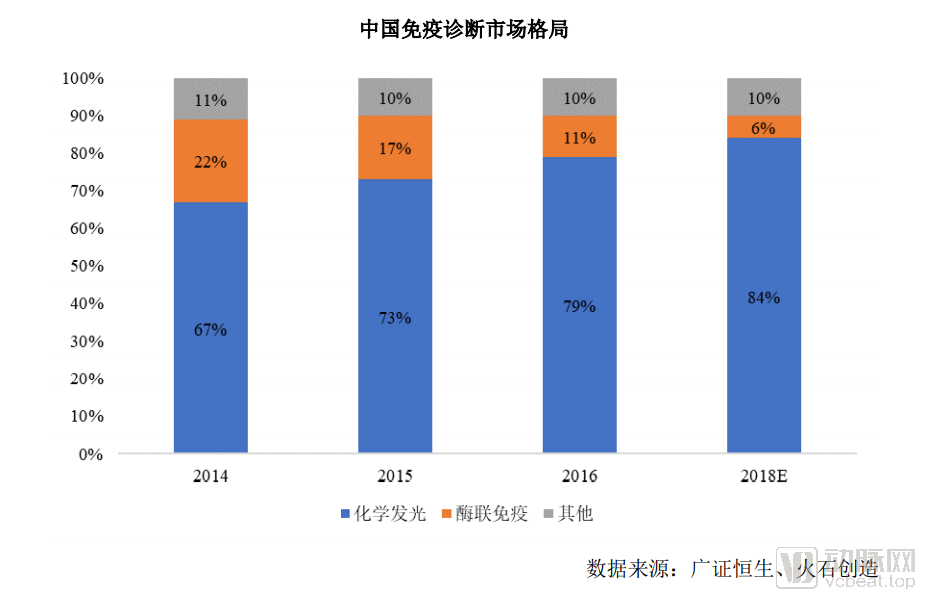
Immunodiagnostics, characterized by high sensitivity and low cost, is the fastest-growing and largest segment of the in vitro diagnostics (IVD) market in recent years. From 2010 to 2018, the market share of clinical chemistry diagnostics in China’s IVD market decreased from 27% to 19%, while that of immunodiagnostics increased from 27% to 36%, far surpassing other subsectors.
Chemiluminescence has become the mainstream of global immunoassay diagnostics, owing to its advantages such as high sensitivity, excellent specificity, high level of automation, good precision, and high accuracy. It is widely used in the detection and diagnosis of infectious diseases, tumors, endocrine function, hormones, and other fields.
While the market outlook is promising, the multiple challenges facing the industry cannot be overlooked.
First, in China's chemiluminescence market, imported manufacturers hold over 80% of the market share, with in vitro diagnostics (IVD) giants such as Abbott, Roche, Beckman, and Siemens accounting for approximately 70%, placing significant competitive pressure on domestic enterprises. Second, the implementation of policies such as medical insurance cost containment has intensified competition within the IVD industry, driving companies to develop higher-quality, lower-cost IVD products. Furthermore, severe product homogenization is a major issue in China's chemiluminescence industry, necessitating that enterprises strengthen their independent innovation capabilities.
In the highly competitive chemiluminescence industry, how to maintain long-term competitive advantages is a question that Chemclin Diagnostics always needs to consider.
Next, Chemclin Diagnostics will strengthen the research and development of product-related technologies and conduct fundamental technical research. The company will focus on the rapid growth and structural transformation opportunities in the chemiluminescence market, leverage its technological advantages in the light-activated chemiluminescence platform to further enrich its existing product portfolio, and increase investment in the development of biological raw materials.
In terms of instrumentation, the company is committed to further expanding the LiCA series portfolio to meet the diverse needs of customers across various application scenarios. Among these, the LiCA Smart features random access testing and a compact design, making it well-suited for settings with lower test volumes but high accuracy requirements, such as primary healthcare institutions, emergency departments, and international market expansion. The LiCA 4000 offers random access testing and connectivity capabilities, with a single-module throughput of up to 400 tests per hour. It can be linked in multi-unit configurations to process large batches of samples in a short time, or integrated with biochemistry analyzers to achieve combined biochemical and immunological testing. This model effectively addresses scenarios requiring a wide variety of tests, high sample volumes, and rapid turnaround times, such as those found in tertiary hospitals and large secondary hospitals.
In terms of reagents, the Company will continue to upgrade and optimize its existing products to enhance product performance and consolidate its competitiveness in areas of strength. It will leverage the advantages of Luminescent Immuno-Chemiluminescence Assay (LiCA) in small molecule detection to supplement and improve the LiCA product portfolio, including in the field of reproductive health. In addition, the Company will utilize its technological advantages in nanomaterials to develop biochemical products based on enhanced immunoturbidimetry, thereby expanding its high-value biochemical product line.