

Lianren Health: Integrating Big Data into Real-World Research to Pioneer Innovative Models in Medical Research
From April 7 to 9, 2021, the 6th Chinese Medical Affairs Conference (CMAC), the largest annual industry event in the field of medical affairs, was grandly held in Beijing. Under the theme “Pooling Strength for Innovation, Breaking Through in Medicine,” this year’s CMAC focused on current hot topics in the medical community and attracted more than 2,000 medical affairs professionals.
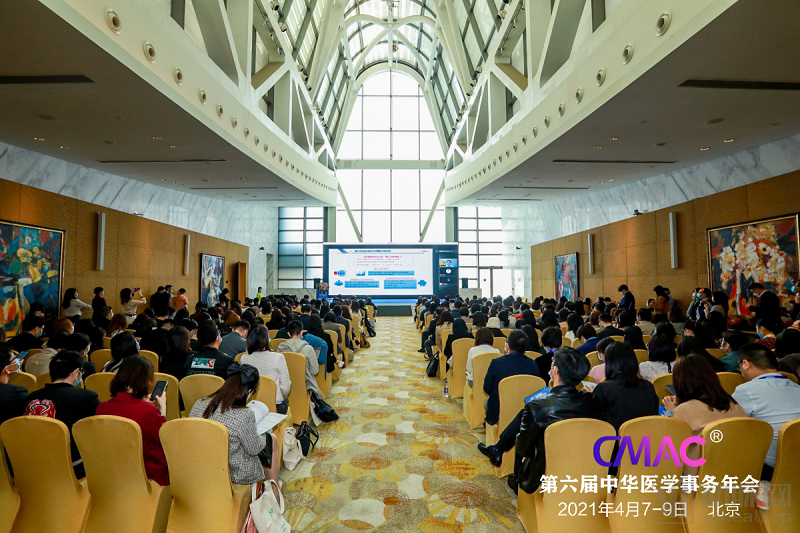
As a key partner of the CMAC Annual Conference, Lianren Health was invited to attend and delivered a cutting-edge report on real-world study (RWS) research, proposing innovative multi-center RWS solutions for discussion.
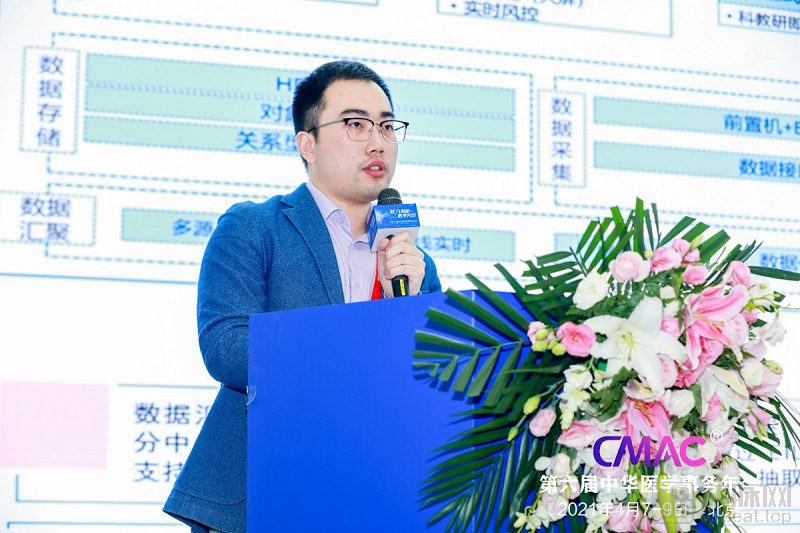
On the first day of the conference, Zhou Zhen, a clinical research collaboration expert at Lianren Health, led a technical discussion centered on the theme “Medical Big Data Empowering Multi-Center Real-World Studies (RWS): Top-Level Design, Data Governance, and AI Development” during the on-site forum session.
Zhou Zhen stated that in recent years, the generation of real-world evidence (RWE) in China has become increasingly standardized, thanks to reasonable and lawful data collection, secure and compliant data governance, rigorous and comprehensive research methodologies, as well as robust and feasible process design. Meanwhile, the scope of real-world studies continues to expand, with the dimensions and breadth of real-world data sources constantly widening, thereby presenting new challenges for professionals in the field.
In fact, even single-center real-world studies (RWS) require the integration of multiple disparate systems, including health information systems, medical insurance databases, disease registries, and adverse event monitoring systems. Multi-center RWS surpasses single-center studies in terms of scale, robustness of conclusions, and implementation complexity. Conducting multi-center RWS presents significant challenges, particularly in addressing data silos and information security. By integrating big data technologies into the field of real-world research, Lianren Health has innovatively addressed these medical research difficulties, opening up new avenues for leveraging big data to facilitate multi-center RWS.
This report presents a case study of the “5G+AI Key Technology Innovation Project for Breast Cancer Diagnosis,” jointly conducted by Lianren Health, China Mobile Chengdu Industrial Research Institute, the National Cancer Center/Cancer Hospital of the Chinese Academy of Medical Sciences, and multiple Grade-A tertiary hospitals across China. It outlines the research framework and data governance processes for leveraging medical big data to support multi-center real-world studies (RWS), along with the top-level design and technical implementation roadmap. The report highlights the multifaceted advantages of integrating medical big data with RWS, including technological strengths in data sharing, hardware advantages in data storage, core competencies in data governance, and algorithmic benefits in data development.
Zhou Zhen noted that leveraging 5G communication and artificial intelligence technologies can innovatively empower remote prediction, diagnosis, treatment, and prognosis of breast cancer. This approach not only integrates internal medicine, surgery, and pathology but also fosters the convergence of doctors with patients and of medicine with technology. In the specific context of breast cancer care, it breaks down data silos across multiple centers, achieving standardized data formats and seamless interoperability.
Currently, Lianren Health is engaging in extensive collaborations with medical institutions, pharmaceutical companies, and industry partners to explore innovative models for medical research development. It empowers hospitals, scientific research, and pharmaceutical clinical trial operations, jointly building an ecosystem for healthcare big data. As China’s first healthcare big data industrial group characterized by “central state-owned enterprise leadership, participation from local governments, financial institutions, and healthcare IT enterprises, with state-owned capital as the main body and market-oriented mechanisms,” Lianren Health will actively implement national deployments regarding “new infrastructure” represented by big data and artificial intelligence, as well as “market-based allocation of factors of production.” The company strives to achieve deep integration between the two national strategies of healthcare big data application development and artificial intelligence, making every effort to support the construction of a “Healthy China.”