

Repertoire Immune Medicines Files for IPO: Harnessing Dual Platforms DECODE and DEPLOY to Reprogram T Cells for Cancer, Autoimmune, and Infectious Diseases

Flagship Pioneering
Venture Capital Firms
When T cells recognize cancer antigens or virus-infected cells, they become activated and function as potent immunotherapeutic agents. Repertoire believes that harnessing the power of T cells will represent the next breakthrough in biotechnology and immunology.
Repertoire Deciphers T Cell Immune Mechanisms via the DECODE Platform and Engineers T Cells via the DEPLOY Platform. Can the Dual-Platform Approach Bring New Breakthroughs to Immunotherapy?
On March 12, 2020, Flagship Pioneering announced the launch of Repertoire Immune Medicines, a biotechnology company that harnesses the therapeutic power of the human immune system to prevent and treat cancer, autoimmune diseases, and infectious diseases.
At the inception of Repertoire,Flagship Adds $220 Million in New Investment。
The new company was formed through the merger of two biotechnology startups: Cogen Immune Medicine, founded in 2017, and Torque Therapeutics, established in 2015. Previously, both companies were active in the field of immunotherapy, researching the mechanisms by which the immune system protects humans from disease.
Cogen is dedicated to developing T-cell analysis technologies to decipher how the human immune system meets patient needs, leveraging its proprietary Cogen Engine in clinical trials to accelerate drug development. Torque is pioneering novel cellular immunotherapies that profoundly reprogram patients’ immune cells through its independently developed Deep-Priming platform.
Since 2019, the two companies have been considering merging into a new entity. This merger represents a convergence of distinct domains within immunotherapy: leveraging Cogen’s immune decoding platform to gain deep insights into cells during early discovery, and utilizing Torque’s immuno-oncology platform to engineer T cells for the development of novel immunotherapies in later-stage R&D.
To this end, Repertoire has developed two platforms. One is the DECODE discovery platform, which deciphers the immunological synapse—the foundation for targeting antigen-specific cellular immunity—by learning the immune code that protects humans from disease and detecting and isolating relevant T cells based on their responses to specific pathogenic antigens. The other is the DEPLOY deployment platform, which leverages immunological knowledge to clone T cells and design novel immunotherapies for cancer, autoimmune diseases, and infectious diseases.
John Cox, CEO of Repertoire, once said,One Plus One Is Far Greater Than Two。
John Cox, CEO of Repertoire, previously served as CEO of Torque Therapeutics and spearheaded its merger with Cogen Immune Medicine. Prior to joining Repertoire, he began leading Bioverativ, a spin-off subsidiary of Biogen, in 2017.
He transformed this company from a startup with two drugs for treating hemophilia A and BBuilding a Global Organization with Revenue Exceeding $1 Billion, and was subsequently acquired by the pharmaceutical and healthcare company Sanofi for $11.6 billion in 2018.
Since September 2020, Dr. Anthony Coyle has served as President of R&D at Repertoire, bringing over 25 years of experience in drug development across academia, early-stage biotechnology companies, and global pharmaceutical organizations. Previously, Dr. Coyle was Senior Vice President and Chief Scientific Officer at Pfizer, where he established Pfizer’s Center for Therapeutic Innovation (CTI). He has authored more than 200 peer-reviewed publications, holds 13 issued U.S. patents, and has over 30 published patent applications.
On March 25, 2020, JDRF T1D Gene announced an investment in Repertoire, with the specific amount undisclosed.
Using the DECODE platform, researchers are able to map the full landscape of immune synapses, analyze how T cell receptors (TCRs) recognize their unique antigens, and determine which T cells detect specific antigens presented by individual major histocompatibility complex (MHC) molecules.
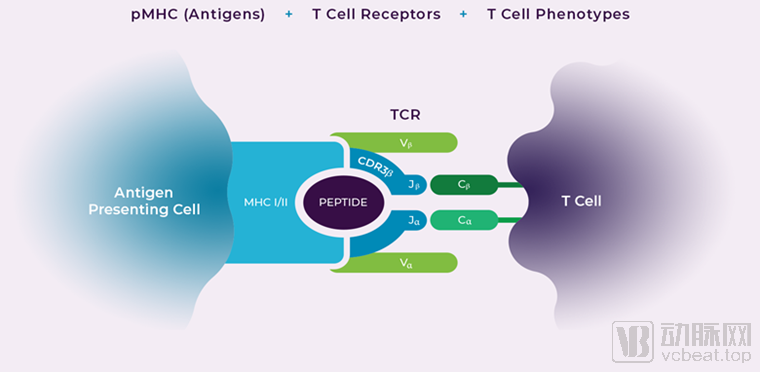
After processing disease-associated antigens, antigen-presenting cells (APCs) present them to T cells. Upon recognition by the T cell receptor (TCR), T cells are activated. This process occurs daily in our body as it defends against pathogenic antigens. Harnessing this power requires a deep understanding of the activation code, which is determined by the immunological synapse.
Source: Repertoire Official Website
The immunological synapse is a specialized structure formed at the site of cell-to-cell contact during the interaction between antigen-presenting cells (APCs) and T cells. Tight contact between T cells and adhesion molecules on the APC surface is mediated by receptor–ligand interactions, resulting in a transient structure. This structure, characterized by a central cluster of the TCR–MHC–antigen peptide ternary complex surrounded by a peripheral ring of adhesion molecules, is termed the immunological synapse.
The immunological synapse defines the interaction between T cells and antigen-presenting cells (APCs), wherein antigenic peptides are displayed in the context of MHC class I or II molecules and recognized by the T-cell receptor (TCR). The TCR is a specific receptor on the surface of T cells responsible for recognizing antigens presented by MHC molecules. Its primary function is to activate T cells upon recognition of specific antigens.
Each T cell develops its own unique T-cell receptor (TCR), which confers specificity for a particular antigen. T cells continuously scan other cells in the body to detect their corresponding antigens. Upon recognizing the specific antigen, T cells become activated and can directly kill infected host cells, activate other immune cells, and modulate immune responses.
Antigen-presenting cells (APCs) are a class of immune cells capable of taking up, processing antigens, and presenting the processed antigens to T cells. Exogenous antigens bind to APCs and are internalized to form endosomes. In the acidic environment of phagolysosomes, these antigens are degraded into peptides; a small fraction of these peptides binds to MHC molecules to form antigen peptide–MHC complexes.
Antigenic peptides generally refer to immunogenic polypeptides or antigen-derived peptides. MHC, or Major Histocompatibility Complex, is a collective term for a group of genes that encode major histocompatibility antigens in animals.
For exogenous antigens, antigenic peptides bind to MHC class II molecules to form antigenic peptide–MHC class II complexes. These complexes are expressed on the surface of antigen-presenting cells (APCs) and can be recognized by CD4+ T cells. CD4+ T cells are important immune cells that orchestrate the body’s defense against microorganisms.
For endogenous antigens, antigenic peptides bind to MHC class I molecules to form antigen peptide–MHC class I complexes. These complexes are expressed on the surface of APCs and can be recognized by CD8+ T cells. Upon activation, CD8+ T cells typically differentiate into CTLs (cytotoxic T lymphocytes), which are capable of specifically killing target cells.
The immunological synapse functions as an immune code that instructs T cells to become cytotoxic and eliminate infected tissues. The formation of this structure facilitates the discrimination of potential antigens by T cells and enhances the affinity between the T cell receptor (TCR) and the MHC–antigen peptide complex, thereby initiating antigen recognition and T cell activation.
Using the DECODE platform, researchers first identify the antigenic peptides presented by MHC-I and MHC-II on APCs that are recognized by TCRs. Subsequently, TCRs recognize disease-specific pMHC antigens (MHC-I/II–peptide complexes), and finally, the phenotype and function of the responsive T cell clones are determined.
The DECODE platform can decipher the antigen specificity of TCRs from CD4+ and CD8+ T cell subsets in patients and healthy individuals.
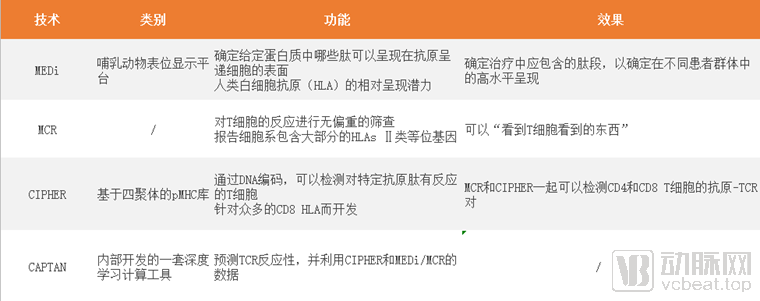
The DECODE platform features four proprietary technologies, enabling researchers to conduct clinical trials in a fundamentally different and more effective manner. By developing patient-specific clonotype-targeted products and verifying drug delivery to lesion tissues, it makes small-scale, highly efficient human biological studies possible.
Previously, Repertoire acquired Tepthera, a company spun out of the Institute for Molecular Health Sciences at ETH Zurich, thereby gaining access to Tepthera’s novel MEDi and MCR technologies and enhancing Repertoire’s ability to more effectively measure and predict T-cell antigen responses.
Using the DEPLOY platform, researchers can collect T cells and APCs from patients’ peripheral blood, then leverage immune mechanisms elucidated by the DECODE platform to activate these T cells against specific cancer antigens. The activated T cells are expanded manyfold, creating a novel immunotherapeutic agent known as the PRIME polyclonal T-cell product.
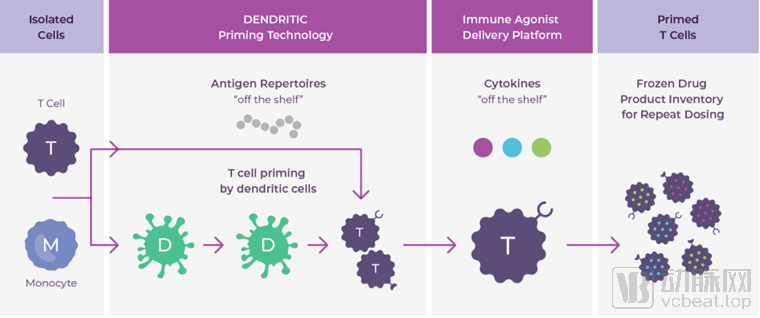
The First Novel Immunotherapy Drug in Development Source: Repertoire Official Website
Antigens from the patient’s autologous antigen repertoire are processed by dendritic cells (DCs), the most potent antigen-presenting cells, and presented to T cells. Upon activation, T cells mount specific responses against particular antigens. These T cells are then combined with immunomodulatory agents, resulting in a final product of activated T cells enriched with potent cytokines, suitable for sustained cryopreserved therapeutic delivery.
During the T-cell activation phase, DEPLOY employed priming technology. Deep-Priming is a cellular immunotherapy previously developed by Torque Therapeutics.
The ingenuity of this therapy lies in its design whereby, whenever engineered T cells enter the tumor and recognize tumor cells, the anchoring proteins and reversible linkers within them can sense the corresponding biological responses of the engineered T cells. This triggers the timely release of immunomodulatory drug molecules into the tumor microenvironment, thereby prompting the engineered T cells to unleash potent anti-tumor immune responses.
This therapy has the potential to overcome a key limitation of existing genetically engineered cell therapies, wherein modified T cells become dysfunctional upon re-encountering tumor immunosuppressive signals within the tumor microenvironment.
Repertoire has developed a new technology—immunomodulator technology,For attaching potent immunomodulators to T cellsImmunomodulators are substances that can inhibit or activate the body's immune response, typically classified into two categories: immunosuppressants and immunostimulants.
Using this technology, researchers are able to leverage the homing capability of T cells to directly deliver potent cytokines such as IL-15 and IL-12 to tumors, thereby targeting diseased tissues. The DEPLOY platform also enables the combination of PRIME IL-15 and PRIME IL-12.
Cytokines (CKs) are small-molecule polypeptides produced by various cells upon induction by immunogens, mitogens, or other stimulants. They play diverse roles in regulating innate and adaptive immunity, hematopoiesis, cell growth, and tissue repair following injury. IL-12 and IL-15 utilized by Repertoire are both effective immunomodulators.
IL-15 (Interleukin-15) is a pleiotropic cytokine that activates T cells, B cells, and natural killer (NK) cells, and stimulates the proliferation of these cells. Furthermore, IL-15 can activate and expand CD8+ memory T cells without activating regulatory T lymphocytes (Tregs), which possess immunosuppressive functions. Upon activation by specific antigens, T cells undergo division and proliferation, differentiating into memory T cells and effector T cells. Memory T cells will again destroy pathogen- or virus-infected cells upon subsequent antigen exposure, thereby releasing antigens.
IL-12 (Interleukin-12) can stimulate the proliferation of activated T cells and promote the differentiation of Th0 cells into Th1 cells. Antigen-sensitized CD4+ Th (helper T) cells can selectively differentiate into Th1 or Th2 cells under the influence of the local microenvironment. It induces the cytotoxic activity of CTLs (cytotoxic T lymphocytes) and NK cells, and promotes their secretion of cytokines such as IFN-γ, TNF-α, and GM-CSF.
Given the pivotal role of interleukin-12 (IL-12) in anti-tumor and anti-infectious immunity, high expectations have been placed on its clinical applications. In particular, IL-12 can synergize with interleukin-2 (IL-2) to promote the generation of cytotoxic T lymphocytes (CTLs) and lymphokine-activated killer (LAK) cells; therefore, the combination of IL-12 and IL-2 holds promise as a more effective approach to tumor immunotherapy.
Repertoire’s immunomodulator technology serves as the foundation for the DEPLOY platform and underpins the company’s first novel targeted immunotherapy. Repertoire’s technology for conjugating cytokines to cells encompasses three formats.
One type is a nanogel designed to bind IL-15 with PRIME T cells. The IL-15 nanogel has currently entered clinical trials in the PRIME IL-15 program.
One approach is fusion protein technology, which the company uses to attach cytokines to T cells and is currently employing in its PRIME IL-12 program. Meanwhile, Repertoire is also exploring the application of this technology for the delivery of injectable targeted cytokines.
A lipid nanoparticle technology that Repertoire is using for early discovery.
Repertoire’s BRIDGE cytokine, currently under development, is a novel and targeted immunomodulator for cancer immunotherapy.
This cytokine can bind to T cells and participate in various T-cell therapies, helping to enhance the efficacy of adoptive cell therapy. Adoptive cell therapy refers to the process of isolating autologous or allogeneic immunologically active cells, activating or genetically modifying them in vitro, expanding them to obtain a sufficient quantity of functional immune cells, and performing functional characterization before reinfusing them into the patient. This approach can directly kill tumor cells or activate the patient’s immune system.
Cytokines optimize the directional, controlled, and localized activation of immune cells, endowing T cells with enhanced activity upon cytokine binding.
These targeted cytokines are optimized to precisely localize and concentrate on selected immune cell subsets within the human body.Moreover, it is simple to use and can be administered directly via injection.
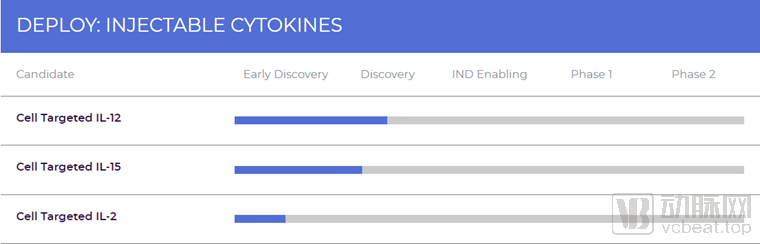
Injectable Cytokine Candidates Source: Repertoire Official Website
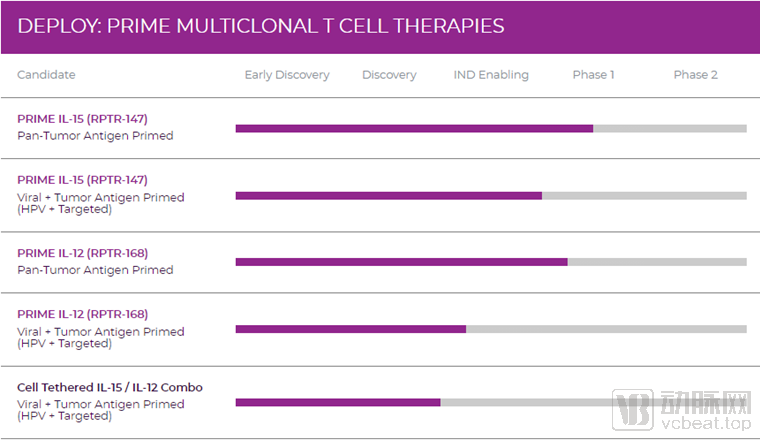
Currently, Repertoire’s T-cell therapy portfolio is shown in the figure below; PRIME IL-15 has entered Phase I clinical trials.
Source: Repertoire Official Website
PRIME IL-15 (RPTR-147) is a novel autologous, non-genetically modified polyclonal T-cell therapy candidate loaded with IL-15Fc nanogels. These T cells are activated against a panel of tumor-associated antigens known to be overexpressed on solid tumors. Repertoire’s preclinical work demonstrates that the therapy can deliver IL-15 in vivo, promote T-cell proliferation, and enhance their tumor-killing potency.
Currently, the Phase I study of PRIME IL-15 is ongoing. Clinical data from this study show that 10 out of 17 patients with advanced tumors achieved stable disease, with 4 of these patients maintaining stable disease for over six months. Interim results indicate that PRIME IL-15 (RPTR-147) has a favorable safety profile.
In the Phase II trial, Repertoire collaborated with the Dana-Farber Cancer Institute to introduce new antigen sequences, including viral antigens associated with human papillomavirus (HPV) and head and neck cancers.
PRIME IL-12 (RPTR 168) is an investigational autologous multi-target T-cell therapy. By targeting five distinct tumor-associated antigens (TAAs), it elicits potent anti-tumor immune responses across a broad range of cancer indications.
Based on preclinical studies, Repertoire believes that PRIME IL-12 can both provide an autocrine response to enhance the cytotoxic function of T cells within the immunosuppressive tumor microenvironment and stimulate neighboring immune cells to engage in endogenous immunity.
On February 12, 2021, the FDA accepted Repertoire’s Investigational New Drug (IND) application to study the safety and tolerability of PRIME IL-12 in patients with HPV-associated solid tumors and advanced metastatic melanoma.
Following surgery, chemotherapy, and radiotherapy, immunotherapy has emerged as the fourth pillar of cancer treatment. Adoptive cell therapy is a prominent area within this field, encompassing modalities such as CAR-T, TCR-T, and TIL therapies.
In February 2021, Breyanzi, a novel CAR-T cell therapy developed by Juno Therapeutics, a subsidiary of Bristol Myers Squibb (BMS), received FDA approval for marketing, becoming the fourth approved CAR-T cell therapy.
As of April 2021, the FDA had approved a total of four CAR-T cell therapies for market entry. All these cell therapies target hematologic malignancies with CD19 as the therapeutic target and have demonstrated favorable treatment outcomes.
However, the highly popular CAR-T therapy in immunotherapy has a longer treatment cycle and is more expensive.
Repertoire has launched its second-generation manufacturing process, significantly increasing the number of active T cells. The company’s multi-target T cells exhibit potent activity and are engineered with potent cytokines, enabling them to overcome suppression within the tumor microenvironment. By leveraging autoantigens and cytokines, this approach helps avoid patient rejection responses.
Since its founding over a year ago, Repertoire has leveraged existing technologies to develop novel therapies, pioneering new pathways in the field of immunotherapy. As immunotherapies advance rapidly, this “old-technology” newcomer may well achieve new breakthroughs.
About Flagship Pioneering
Flagship is a venture capital firm founded in 2000, with investment focuses primarily in biotechnology, healthcare, and information technology. Since its inception in 2000, the firm has launched and nurtured more than 100 science-based companies. To date, it has secured over $3 billion in total committed capital.