

Intellia Therapeutics Files Prospectus: CRISPR Pioneer Co-Founded by Nobel Laureate Jennifer Doudna Advances In Vivo Gene Editing Pipeline
Intellia Therapeutics
Gene Editing Therapy Developer
“In January 2015, at a conference on human germline gene editing, I heard a striking remark: ‘One day, we will consider it unethical not to use germline gene editing to alleviate human suffering.’ This comment completely shifted the direction of the discussion. Now, whenever I encounter parents with children affected by genetic disorders, this statement always comes to mind.”
Excerpted from: A Crack in Creation: The New Power to Control Evolution—by Jennifer Doudna (USA) and Samuel Sternberg (USA)
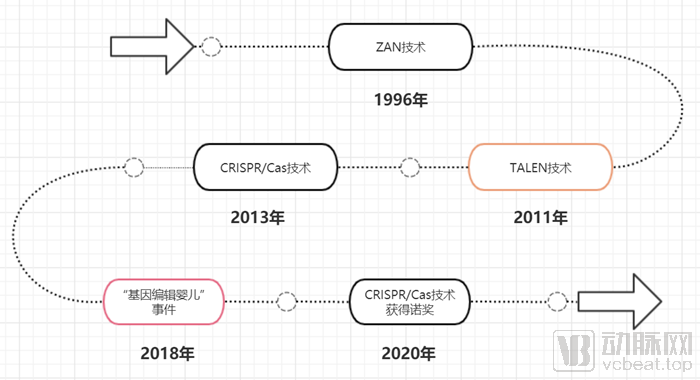
Development Process of Gene Editing Technology
Any great medical invention should aim to benefit humanity and alleviate suffering, and gene editing is no exception. Its emergence and development have brought new hope for the treatment of certain genetic diseases at the genomic level.
Gene editing technologies can be categorized into three generations based on their technological development. The first generation is ZFN (Zinc-finger nuclease) technology. This technology emerged in 1996 and was initially monopolized by Sangamo, a leading company in gene therapy. Sangamo has been researching ZFN gene-editing technology for over two decades and is the primary patent holder of this technology.
This technology is relatively mature and exhibits high specificity, with efficiency superior to that of passive homologous recombination. However, ZNF technology design depends on flanking sequences, resulting in a high off-target rate that can easily lead to cell death or additional mutations.
TALEN (Transcription Activator-Like Effector Nuclease) technology is a second-generation gene-editing technology. TALEN technology emerged in 2011 and was listed by Science as one of the Top 10 Breakthroughs of the Year in 2012.
Compared with ZFN technology, TALEN technology features simpler design, higher specificity, and lower cost. However, the assembly of TALEN-encoding plasmids is a lengthy and labor-intensive process.
It was not until 2013, with the emergence of third-generation CRISPR/Cas technology, that gene editing truly entered the public spotlight. The precision, cost-effectiveness, and ease of use inherent to CRISPR/Cas technology spurred rapid growth across the industry.
In 2018, the “gene-edited babies” incident sparked public outcry and violated medical ethics, rapidly introducing the general public to the specialized term “gene editing” and its immense potential.
In 2020, American scientist Jennifer Doudna and French scientist Emmanuelle Charpentier were awarded the Nobel Prize in Chemistry for their contributions to the development of methods for genome editing. This gene-editing method is the third-generation gene-editing technology, known as CRISPR/Cas technology.
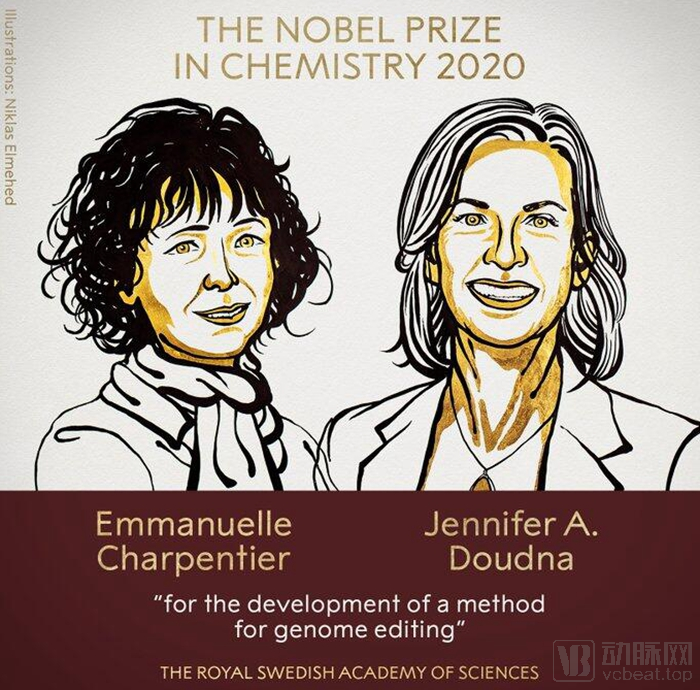
Image source: Official website of the Nobel Prize Committee
When it comes to Nobel laureate Doudna, she is not only an outstanding scientist in the field of gene editing but also an entrepreneur who flexibly applies scientific research technologies to meet practical needs. She co-founded Intellia Therapeutics (hereinafter referred to as "Intellia"), a pioneer in the development of CRISPR/Cas9 genome editing.
Intellia is a gene-editing company dedicated to transforming patients’ lives by developing therapies for genetic diseases through its genome editing platform. The company is committed to rapidly translating CRISPR/Cas9-based drug candidates into clinical applications and developing novel engineered cell therapies for various cancers and autoimmune diseases.
The company was founded in 2014 and is headquartered in Cambridge, Massachusetts, USA. It listed on the NASDAQ on February 3, 2016, with its initial public offering (IPO) completed on May 6, 2016. Its stock ticker symbol is NTLA, and its market capitalization stands at $756 million.
Founded in 2014 and listed in 2016, Intellia’s rapid growth over just two years can be attributed to three factors: its world-leading scientists in the field of gene editing, the promising investment prospects of gene editing within the sci-tech innovation sector, and the clinical applications of gene editing coupled with Intellia’s collaborations with numerous major pharmaceutical companies.
Below, we will gain a comprehensive, multi-perspective understanding of Intellia and the CRISPR/Cas9 gene-editing technology from these three aspects.
Anyone curious about the field of gene editing has likely heard of the “Big Three” in gene editing. They are Chinese-American biologist Feng Zhang, French scientist Emmanuelle Charpentier, and American scientist Jennifer Doudna. Feng Zhang and Jennifer Doudna leveraged their CRISPR/Cas patent technology to co-found Editas Medicine, while Emmanuelle Charpentier founded CRISPR Therapeutics.
Later, due to patent disputes, Doudna left Editas to co-found Intellia, which went public within two years of its establishment.
When Intellia is mentioned, people immediately think of Nobel laureate Jennifer Doudna, who is currently a professor at the University of California, Berkeley, and an investigator at the Howard Hughes Medical Institute. She previously conducted postdoctoral research in Thomas R. Cech’s laboratory at the University of Colorado Boulder, studying under Thomas Robert Cech, the 1989 Nobel Prize winner in Chemistry.
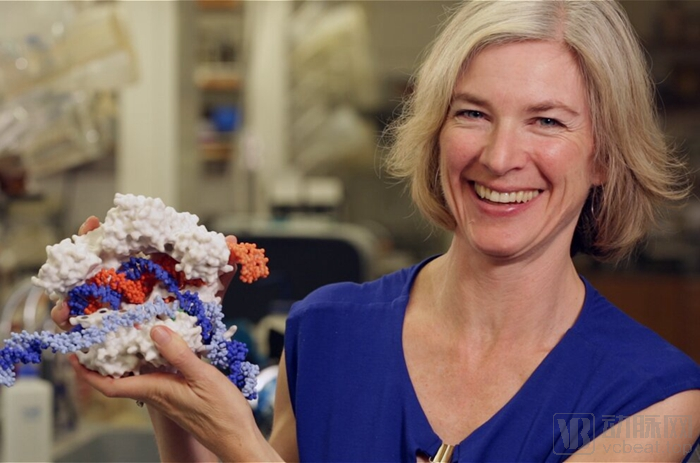
Jennifer Doudna. Image source: Official website of the Nobel Prize Committee
Doudna has received numerous prestigious awards, including the 2015 Breakthrough Prize in Life Sciences, the 2016 L’Oréal-UNESCO For Women in Science Award, and the 2020 Nobel Prize in Chemistry. However, Intellia boasts not only Doudna but also a team of other co-founders who are leaders in the pharmaceutical industry.
Andy May, Founder and Advisor, holds a B.A. in Chemistry from the University of Oxford and a Ph.D. in Molecular Biophysics, and was a Wellcome Trust International Postdoctoral Fellow at Stanford University. Prior to co-founding Intellia Therapeutics, Andy served as Chief Scientific Officer at Caribou Biosciences, where he oversaw the development of the CRISPR/Cas9 technology platform. He also led the development team at Fluidigm, making pioneering contributions to single-cell genomics, high-throughput sequencing, and structural proteomics.
John Leonard, M.D., President and Chief Executive Officer. After 30 years in pharmaceutical research and development, John retired from his position as Chief Scientific Officer and Senior Vice President of Research and Development at AbbVie in 2013, and subsequently joined Intellia to lead its R&D efforts.
John previously served as the Global Head of Drug Research and Development at Abbott Laboratories, where he oversaw the development of numerous novel therapies. His team was twice awarded the Prix Galien Award—often referred to as the “Nobel Prize of the pharmaceutical industry”—in recognition of their outstanding achievements in drug research. Currently, in addition to serving on the Board of Directors of Intellia Therapeutics, John is also a board member of IQVIA and IFM Therapeutics.
In addition, Luciano Marraffini, a Simons Investigator at the Howard Hughes Medical Institute and Associate Professor of Bacteriology at The Rockefeller University in New York, and Nessan Bermingham, a Venture Partner at Atlas Venture, Managing Partner at Omega Funds, and member of the independent advisory boards of the California Institute for Regenerative Medicine (CIRM) and Merck Serono KGaA, were among those involved in founding Intellia Therapeutics.
With the dual advantages of world-leading scientists in the field of genetics and managers with extensive experience in the pharmaceutical industry, it has naturally attracted the attention of major investors.
On November 18, 2014, Intellia secured $15 million in Series A financing, led by Atlas Venture and Novartis.
Lead investor Atlas Venture, founded in 1980, is a venture capital firm specializing in early-stage investments, primarily in life sciences and technological innovation. It has extensive investment holdings in the high-tech and life sciences sectors across the United States, Europe, and Asia. Since its establishment in 1980, its partners have helped build more than 300 companies in over 15 different countries. To date, Atlas Venture has raised eight funds and manages over $2.5 billion through offices in Boston, London, Munich, and Paris.
The other lead investor is Novartis, one of the world’s top three pharmaceutical companies, with operations in more than 150 countries and regions worldwide and a workforce of 138,000 employees. The Novartis Group boasts a diversified business portfolio spanning innovative patented medicines, eye care, generic drugs, consumer health, and vaccines and diagnostics, maintaining a global leadership position across all these sectors.
In less than a year, on September 1, 2015, Intellia secured $70 million in Series B financing, led by OrbiMed HealthCare Fund Management. Fidelity Management and Research Company, Janus Capital Group, and other corporate and institutional investors participated as co-investors. Founding investors Atlas Venture and Novartis also took part in this funding round.
Lead investor OrbiMed, founded in 1989, is the world’s largest investment firm dedicated to the healthcare and life sciences sector. Its investment portfolio spans biopharmaceuticals, life technologies, medical devices, healthcare services, and diagnostics, covering stages from early-stage startups and growth-phase companies to mature enterprises and post-IPO entities. The firm manages approximately $13 billion in net assets.
Since last year, amid the varying degrees of impact of the COVID-19 pandemic on industries worldwide, Intellia Therapeutics has seen continuous increased holdings by fund manager Catherine Wood, known as the “female Warren Buffett.” Wood stated that genomics stocks will be the primary source of returns for her portfolio over the next five years.
In an interview with Bloomberg News, she stated, “She and her team believe that the next generation of FANG (Facebook, Amazon, Netflix, Alphabet/Google) will emerge from the genomics sector, as the convergence of DNA sequencing, artificial intelligence, and gene therapy will cure diseases.”
ARKK, the flagship product under Cathie Wood’s management, surged 170% in 2020, with its net asset value climbing from $50 to a recent high of $134.81. As Ark Invest’s largest fund by assets under management, ARKK saw its total assets swell by over $17.2 billion, making it one of the largest actively managed ETFs globally.
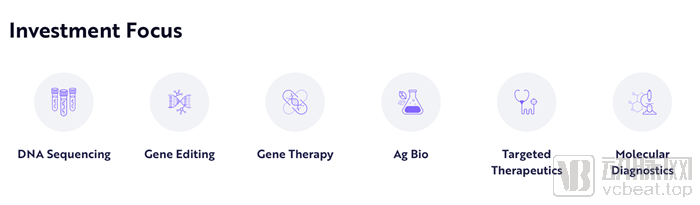
ARK’s Investment Focus on Genes | Image Source: ARK Invest Official Website
With capital backing, Intellia’s gene therapy projects are also progressing vigorously:
Agreement Signed with Novartis; FDA Accepts IND Application
In its founding year, Intellia Therapeutics attracted the attention of Novartis with its gene-editing platform. In December 2014, it entered into a strategic collaboration and licensing agreement with Novartis, committing to accelerate the development of novel ex vivo therapies based on CRISPR/Cas9 by leveraging CAR-T (chimeric antigen receptor T-cell) and HSC (hematopoietic stem cell) technologies.
In March 2020, the U.S. Food and Drug Administration accepted Novartis’s Investigational New Drug (IND) application for a therapy targeting sickle cell disease. The therapeutic candidate is based on genomic editing of hematopoietic stem cells (HSCs), utilizing CRISPR/Cas9 RNA guides identified through the cell therapy research collaboration between Intellia Therapeutics and Novartis. As a result, Intellia is also eligible to receive additional royalties from this program.
Mutual Benefit: Collaborative Project with Regeneron Enters Phase I Clinical Stage
A year and a half after its establishment, in April 2016, Intellia entered into a license and collaboration agreement with Regeneron. Under this agreement, the two companies primarily focused on developing and commercializing therapeutic products related to liver genome editing based on CRISPR/Cas technology, while simultaneously improving the CRISPR/Cas technology during the development process to enhance the capabilities of their genome editing platforms.
In June 2020, Regeneron and Intellia Therapeutics expanded the scope of their collaboration and extended the term from 2022 to April 2024. As part of this expansion, Regeneron paid a total of $100 million, comprising a $70 million upfront cash payment and a $30 million equity investment.
As part of the updated 2020 agreement, Intellia and Regeneron will jointly develop potential therapies for hemophilia A and hemophilia B through their co-owned targeted transgene insertion platform.
Under the terms of the original 2016 agreement, Regeneron held exclusive rights to up to 10 target genes for the treatment of this disease, with these targets primarily focused on gene editing in the liver. In June 2020, Regeneron developed five additional in vivo liver targets, raising its target cap to 15.
Intellia also receives royalties for in vivo targets developed by Regeneron and shares proportionally in any profits generated from co-developed products. Regeneron also obtains royalty-free licenses to certain Intellia intellectual property rights to independently develop and commercialize related ex vivo CRISPR/Cas9 products.
Under a mutually beneficial collaboration, NTLA-2001, the first in vivo candidate drug jointly developed by Intellia and Regeneron, entered Phase 1 clinical trials in November 2020. The drug is indicated for the treatment of transthyretin amyloidosis (ATTR).
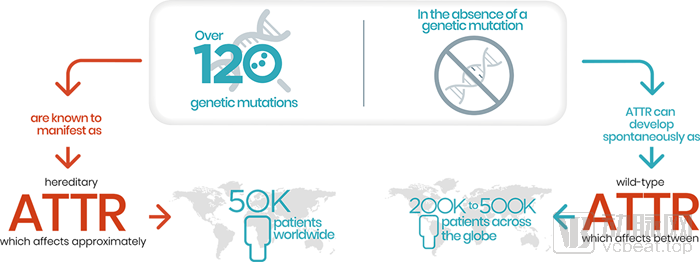
Image source: Intellia Therapeutics official website
Exclusive License to Intellectual Property Rights Related to OSR Collaboration
In June 2017, Intellia entered into a three-year research collaboration with Ospedale San Raffaele (OSR) to jointly develop T cell-based cancer therapies. This collaboration led to the development of Intellia’s first ex vivo candidate drug, utilizing a T cell therapy targeting Wilms’ tumor protein (WT1) for acute myeloid leukemia. In December 2019, Intellia obtained an exclusive license to the OSR intellectual property developed under the collaboration, including patent applications for WT1-specific T cell receptors.
Foreign Companies Remain Sluggish Due to the Pandemic, While Intellia Signs Partnership Agreements for Two Consecutive Months
In June 2020, Intellia and Teneobio announced a research collaboration and license agreement to incorporate Teneobio’s heavy-chain antibodies into Intellia’s next-generation engineered cell therapies. Furthermore, Teneobio will leverage its proprietary platform to develop novel heavy-chain antibodies targeting specific antigens, enabling engineered cell therapies for various life-threatening diseases. Intellia has secured an exclusive license under this collaboration to develop and commercialize the novel antibodies.
Just one month later, in July 2020, Intellia entered into a collaboration agreement with another company, GEMoaB, to conduct joint research. The partnership aims to combine GEMoaB’s proprietary RevCAR technology platform with Intellia’s proprietary genome editing technologies to develop allogeneic cell immunotherapies for hard-to-treat cancers and inflammatory diseases. The two companies will focus on immunotherapies targeting selected antigens. Under this collaboration, Intellia will lead the research and be responsible for clinical development and commercialization.
To date, Intellia has accelerated the research and development as well as commercialization progress of its projects through technological and financial collaborations with other enterprises. By applying and optimizing its CRISPR/Cas9 genome editing platform, Intellia is engaged in the development of both in vivo and ex vivo gene editing therapies.
In the realm of in vivo gene editing drug development, Intellia leverages systemic lipid nanoparticle (LNP) delivery systems to unlock therapeutic solutions for genetic diseases, enabling selective knockout of pathogenic genes and restoration of essential genetic functions through targeted insertion.
In the development of ex vivo gene-edited cell therapies, Intellia focuses on engineering T-cell therapies with specific enhanced attributes to enable more effective treatment of tumors and immune disorders. Intellia aims to improve the safety and efficacy of treatments through more precise, effective, and durable engineered cell therapies.
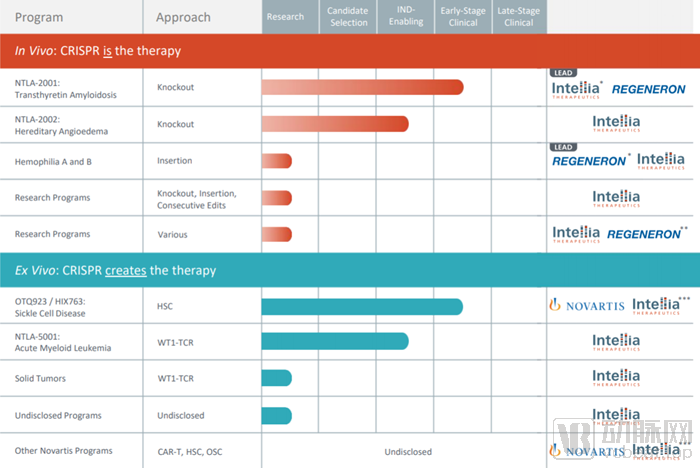
Intellia Product Line | Image Source: Intellia Official Website
Nowadays, the gene sector is booming, with industry leaders continuously increasing their investments. Previously, the "Big Three" in genomics took the lead by each founding more than one gene company:
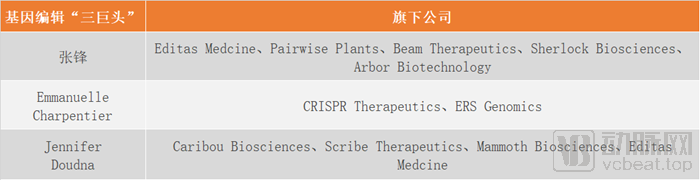
Later, global pharmaceutical giant Bayer made a significant investment of RMB 2 billion to acquire AskBio’s gene-editing projects in biopharmaceutical development. Amid the continued global economic downturn caused by the pandemic, Catherine Wood, known as the “Female Warren Buffett” on Wall Street, has been steadily increasing her holdings in gene therapy company stocks:
In 2021, a consolidated view of the equity holdings under Wood’s management revealed that they held at least 25% stakes in three gene-related companies: Compugen, Organovo Holdings, and Intellia Therapeutics. Additionally, they collectively held more than 20% stakes in another ten gene-related companies.
Furthermore, many well-established large corporations (such as Pfizer, Novartis, Sanofi, and WuXi AppTec) either have collaborative research projects with gene editing companies or maintain their own in-house gene editing R&D programs. The immense appeal of gene editing stems from its powerful capabilities, akin to a scalpel in the hands of God, bringing new hope to patients with previously hopeless genetic disorders and rare diseases.
Let us strive to unlock the full potential of genes within an ethical framework, ushering in the next wave of the genetic revolution!