

Shanghai Xinwan Biotech: Precision Broad-Spectrum Immunotherapy to Reprogram the Tumor Microenvironment and Convert 'Cold' Tumors into 'Hot' Ones!
In 2017, Novartis’ self-developed CAR-T cell therapy, Kymriah, received FDA approval for the treatment of acute lymphoblastic leukemia. In August of the same year, the U.S. FDA approved Kite Pharma’s cell therapy, Yescarta, for the treatment of large B-cell lymphoma. Since then, CAR-T cell therapy has gained clinical validation for curing hematologic malignancies, ushering in an era of accelerated development for cancer cellular immunotherapy.
Currently, some patients with hematologic malignancies have found relief through CAR-T cell therapy. However, hematologic cancers account for only 10% of all cancer cases, while the remaining 90% are solid tumors. Solid tumors refer to those that form tangible masses, such as lung cancer, colon cancer, and breast cancer. These tumors tend to aggregate in specific locations, creating a unique microenvironment that makes it difficult for immune cells to reach or recognize them. This has left the novel CAR-T cell therapy somewhat ineffective against solid tumors.
Tumors that contain no or very few immune cells in the surrounding tissue are vividly referred to by the academic community as “cold tumors” due to their lack of immunogenicity; conversely, tumors that are immunogenic and can be precisely recognized by immune cells are known as “hot tumors.” “A cold tumor is like a castle surrounded by a moat: T cells are blocked by the moat and struggle to attack the castle, while there are very few T cells inside the castle. Therefore, the efficacy of checkpoint inhibitors may be inferior to that observed in hot tumors,” stated Dr. Laurie H. Glimcher, a renowned immunologist, when explaining why conventional immunotherapies struggle to overcome cold tumors.
However, also in 2017, a biotechnology company was established in Shanghai, targeting the field of solid tumors that are difficult to treat with traditional immunotherapy. This company is Shanghai Xinwan Biotechnology Co., Ltd. (hereinafter referred to as “Xinwan Bio”). Even before 2017, Xinwan Bio’s founding team had conducted several years of scientific research on solid tumors, attempting to activate cytotoxicity within the tumor microenvironment to convert “cold tumors” into “hot tumors.” In 2017, this scientific achievement entered the stage of industrialized R&D through the establishment of the company.
Xu Jianqing, founder of Xinwan Biology, is a Distinguished Professor/Researcher at Fudan University and an internationally renowned immunologist. Professor Xu has been dedicated to medical research from his undergraduate studies through his postdoctoral training. He previously served as a Senior Research Assistant at the Institute for Genetics and Human Disease in the United States and as an Associate Research Fellow at the AIDS Prevention and Control Center of the Chinese Center for Disease Control and Prevention.

Professor Xu Jianqing, Founder of Xinwan Biotech
In 1997, Professor Xu Jianqing conducted three years of postdoctoral research at the Institute for Genetics and Human Disease in the United States, followed by three years as a Senior Research Assistant at the same institute. After returning to China in 2004, Professor Xu successively engaged in medical-related work for eight years.
From scientific research to clinical practice, Professor Xu Jianqing has amassed extensive experience in the medical field, enabling him to keenly identify genuine clinical needs. “Medicine requires scientific technologies, products, and services that can solve practical application problems; therefore, the ultimate goal of us medical professionals is to address the root causes of disease,” said Professor Xu. His background in pure medicine allows him to better understand the pathogenesis and characteristics underlying diseases. This profound understanding gives him an advantage over entrepreneurs without formal medical training. Furthermore, his deep engagement with the scientific and industrial communities in both China and the United States has enabled Professor Xu to build a broader professional network and gain a wider perspective.
Starting in 2012, Professor Xu Jianqing’s team embarked on applied research in tumor immunology and the tumor microenvironment, a endeavor that spanned five years. As an immunology expert, Professor Xu was well aware of the societal value of cellular immunology in curing cancer. “If we want our research to truly benefit more people, I believe that establishing a company to pursue industrialized R&D is an inevitable path,” Professor Xu told VCBeat. With the Chinese government placing increasing emphasis on the tumor cell therapy industry, Professor Xu’s team completed the formation of their first startup, Xinwan Bio, in 2017, hailed as the inaugural year of cell therapy.
Dr. Song Ruijiang, Chief Technology Officer of Xinwan Biotech, is a former FDA scientific reviewer and a global expert in oncology immunotherapy and antibody therapy. The patented products he helped develop have entered Phase III clinical trials. In addition to the founding team’s strong technical expertise, Xinwan Biotech’s advisory board also boasts an impressive lineup of leading experts.
As is well known, cellular immunotherapy primarily leverages the immune cells naturally present in the human body, enhancing their capabilities through ex vivo engineering to enable precise recognition and destruction of tumor cells, thereby achieving cancer treatment. The key to enabling immune cells to accurately identify tumors lies in the specific targets on the surface of tumor cells; once the immune cell receptors specifically recognize these tumor antigens, cancer cells are left with nowhere to hide.
However, this anticancer mechanism appears to be more effective against hematologic malignancies disseminated throughout the body, while showing limited efficacy against solid tumors localized in a specific site. Professor Xu Jianqing explained that there are three main reasons for the suboptimal outcomes of immune cell therapy in treating solid tumors:
First, solid tumors lack completely specific targets; their surface targets often overlap with those of normal tissues. This means that cell therapies developed to target these antigens may also kill normal cells expressing the same targets, leading to adverse effects and raising concerns about safety. Meanwhile, immune cells expend most of their activity in the tumor periphery rather than within the tumor itself.
Second, solid tumors, being aggregates of a large number of tumor cells, create a specialized microenvironment that suppresses the function of immune cells. This microenvironment, characterized by hypoxia, mild acidity, and multiple negative regulatory mechanisms, establishes a “moat” that protects solid tumors from immune cell attack.
Third, immune cells must overcome several homing barriers to infiltrate solid tumors, resulting in very limited infiltration of immune cells into the tumor interior.
It is precisely due to these three factors that immune cell therapies have struggled to effectively treat solid tumors. Professor Xu Jianqing introduced that Xinwan Biotech has strategically addressed these three major pain points with targeted solutions.
Professor Xu Jianqing introduced to VCBeat several strategies employed by Xinwan Biologics for the treatment of solid tumors. On one hand, recognizing that hypoxia is a distinctive feature of the tumor microenvironment compared to normal tissues, Xinwan Biologics has developed an approach wherein immune cells targeting solid tumors are activated to attack only under hypoxic conditions, while sparing cells expressing the same target under normoxic conditions. This ensures that cell-based immunotherapies do not inadvertently kill normal cells that express the same target but reside in oxygenated environments, thereby completely avoiding drug safety issues associated with cross-reactive targets.
Currently, Xinwan Biotech has some preclinical research data that demonstrates the safety of this anticancer strategy.
On the other hand, Xinwan Biologics takes an approach targeting the antagonistic tumor microenvironment by introducing specific co-stimulatory signals into immune cells, thereby enabling them to resist suppression by the tumor microenvironment. Professor Xu Jianqing added that Xinwan has also developed a class of technologies with anticancer mechanisms similar to, yet significantly distinct from, those of oncolytic viruses, namely T-cell-enhancing viruses. This technology is based on adenovirus and vaccinia virus vectors, and it replicates, exerts cytotoxic effects, and induces T-cell homing exclusively within the tumor environment rather than in normal tissues, thereby facilitating the conversion of “cold” tumors into “hot” tumors.
These two anticancer strategies are complementary and synergistic, capable of “heating up” immunologically “cold” tumors with low immunogenicity. In theory, this hypoxia-activated tumor microenvironment technology can exert cytotoxic effects against all solid tumors characterized by a hypoxic microenvironment, thereby achieving the effect of precise, broad-spectrum immunotherapy.
Currently, Xinwan Biologics has established three core clinical pipelines based on the aforementioned anticancer strategies. Among these, the strategy leveraging high-specificity tumor-targeting navigated cellular immunotherapy—utilizing CD16+ immune cell-engaging antibody-based navigational molecules and affinity-enhanced antibody-based targeting molecules to achieve precise tumor targeting and efficient cytotoxicity—is advancing most rapidly, with Investigational New Drug (IND) application expected to be completed in 2021.
In 2015, the iNKT cell combination therapy product, independently developed by Professor Xu Jianqing’s research team, was licensed and transferred. Currently, this therapeutic product has initiated Phase Ib clinical trials in the United States, achieving a response rate of up to 60% in patients with advanced-stage cancer.
In 2017, following its establishment, Xinwan Biotech initiated the research and development of its inaugural cell therapy technology—the Xinwan High-Specificity Navigational Molecular Cellular Immunotherapy. In 2019, this technology was evaluated in an unregistered clinical trial targeting CD20 for patients with diffuse large B-cell lymphoma (DLBCL). The results demonstrated a significant reduction in tumor volume after treatment with XW1001 (a navigational molecule comprising CD16+ immune cells linked to a CD20-targeting antibody), thereby fully validating its technical advantages. Currently, this technology is being investigated in an unregistered clinical study for patients with advanced hepatocellular carcinoma.
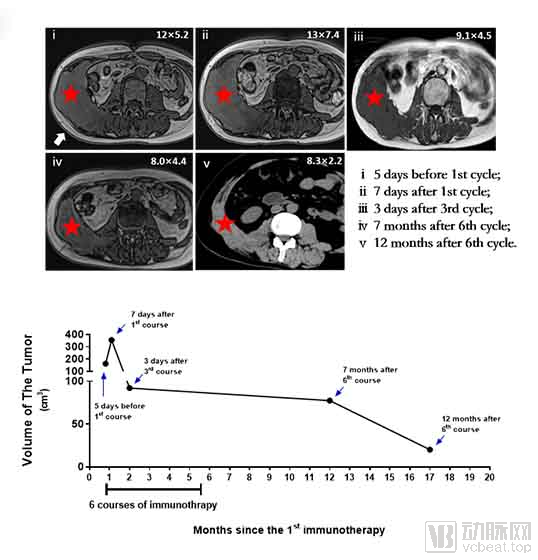
XW1001: Non-Registration Clinical Trial Results in Patients with Diffuse Large B-Cell Lymphoma
Looking ahead, Professor Xu Jianqing stated that the company will remain committed to the research and development of high-end technologies. As its products gradually enter the market, the company will also focus on downstream market deployment, such as establishing regional cell preparation centers. Currently, the company is planning to conduct clinical trials simultaneously in China and Melbourne, and has launched a new round of Series A financing to accelerate the Investigational New Drug (IND) applications for its clinical pipeline.