

GE Healthcare Launches SIGNA™ 7.0T MRI in China and Hosts 'MRI Master Forum on Scientific Research'
On April 10, 2021, GE Healthcare Grandly Unveiled the Next-Generation Ultra-High-Field SIGNA in Chengdu, ChinaTM7T MRI. This currently world-leading 7T MRI system has achieved significant breakthroughs across three major dimensions: hardware, technology, and platform.
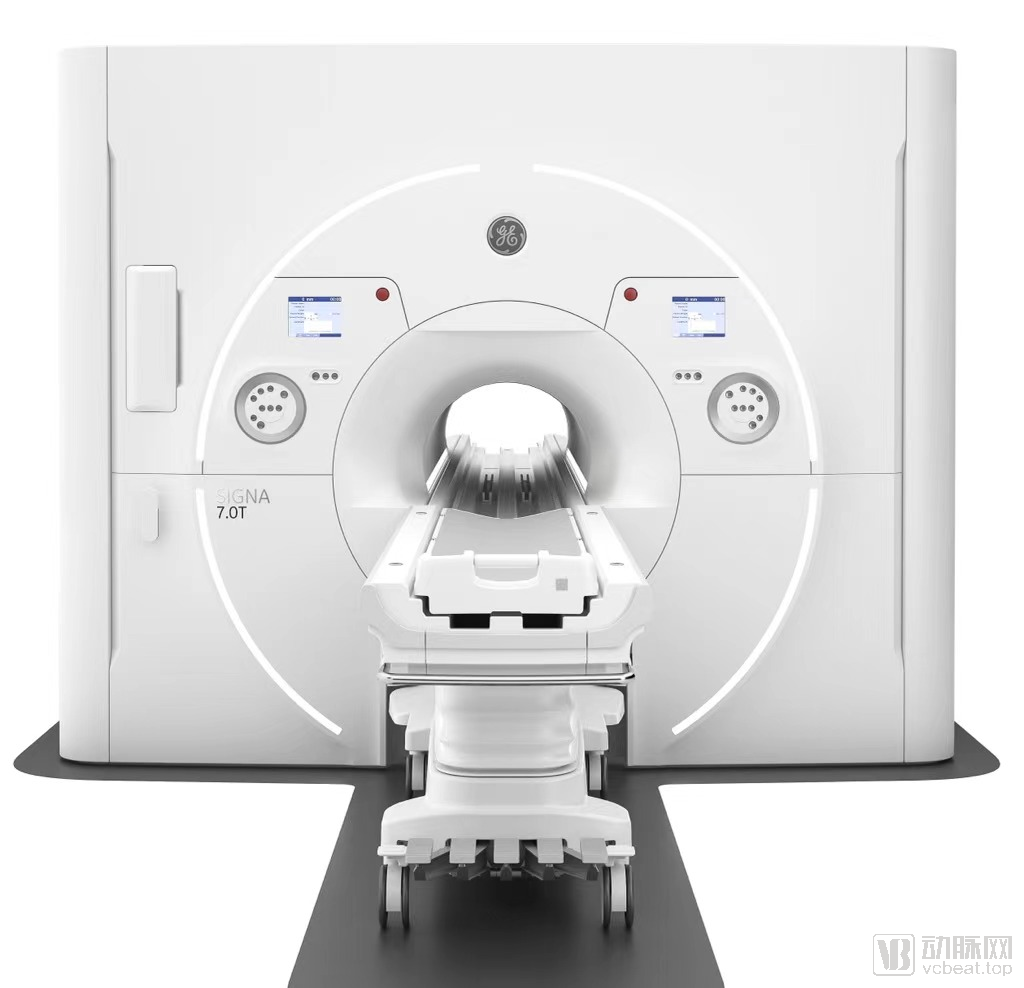
7T MRI Product Image – Courtesy of GE Healthcare
7T MRI is not only equipped with the first FDA-cleared AIRTMThe AI platform features the industry-exclusive silent brain functional imaging technology and superior hardware specifications, enabling stronger gradient performance and enhanced overall capabilities.
Achieving nanometer-level resolution and finer detail visualization in image quality, it drives precise imaging of anatomy, function, metabolism, and microvasculature, ushering in an epoch-making transformation in magnetic resonance-based brain functional scanning. This advancement further assists research-oriented medical institutions in China in establishing the China Brain Project and translational medicine platforms, thereby promoting the development of precision medicine in our country.
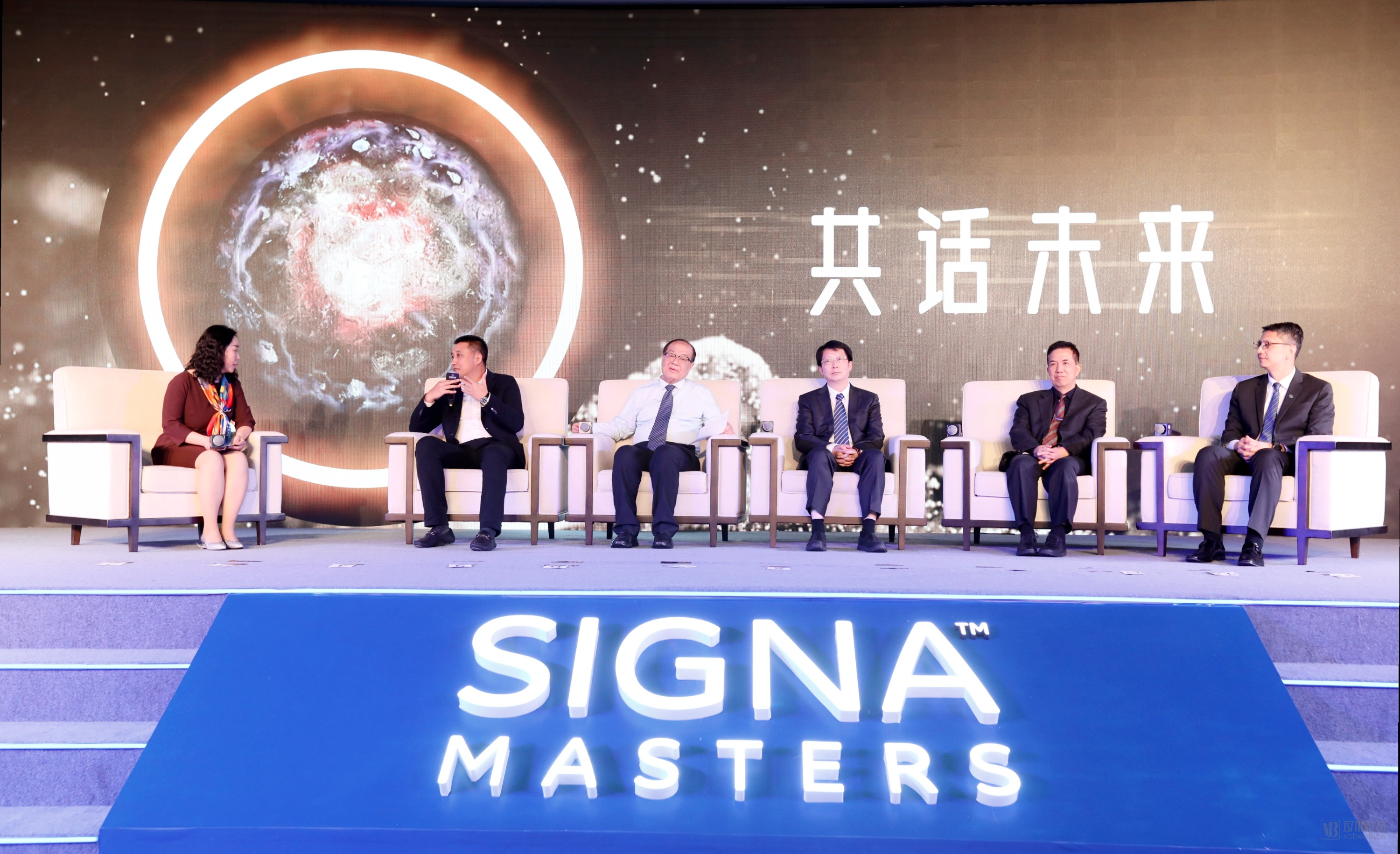
On the same day, the “Practice · Reach Far – MRI Masters’ Summit: Research High-Level Forum,” jointly hosted by GE Healthcare China and West China Hospital of Sichuan University, was also held concurrently.
Both parties focused on the clinical application of magnetic resonance technology, based on GE Healthcare’s innovative AIRTMThe discussion featured in-depth exchanges on how AI platforms and magnetic resonance imaging (MRI) technology platforms, including 3T and 7T series, can meet the clinical needs for precise imaging diagnosis of diseases in the liver, intestine, nervous system, and other fields; explore higher-level scientific research demands such as mesoscopic imaging; transcend MRI technology itself to drive the development of precision medicine at levels such as biological metabolism; and assist in establishing the Translational Medicine Center of West China Hospital, thereby enhancing the medical care standards based in Chengdu and radiating across western China.
In recent years, population aging in China has been accelerating. Over the next five years, the country will enter a stage of moderate aging. In the foreseeable future, the number of middle-aged and elderly individuals living with chronic diseases will continue to rise, and the high prevalence of major conditions such as cardiovascular and cerebrovascular diseases, neurological disorders, and malignant tumors remains a serious concern.
The “Outline of the 14th Five-Year Plan for National Economic and Social Development and the Long-Range Objectives Through the Year 2035” sets forth higher requirements for the prevention and control of critical illnesses, aiming to build and continuously upgrade China’s advanced medical capabilities through medical technology innovation, the establishment of National Medical Centers, and Regional Medical Centers.
Compared with foreign countries, the development of magnetic resonance imaging (MRI) in China started relatively late, and there is still a certain gap in the ownership of high-end equipment compared to developed countries worldwide. Therefore, how to accelerate the clinical application of cutting-edge technologies, achieve earlier and more precise control and prediction of disease progression, promote the forward shift of prevention and control for major diseases, and implement precision medicine are key issues that the industry urgently needs to breakthrough.
Zhang Yihao, President and CEO of GE Healthcare Chinastated: “At the level of imaging equipment, GE Healthcare has been committed to continuously enhancing image accuracy and integrating AI technologies to enable earlier and more precise diagnosis of lesions. What excites us is that this SIGNATMThe approval of 7T MR for market launch in China not only introduces the most advanced, leading-edge magnetic resonance technology to the Chinese market and supports the development of high-end, core medical capabilities in China, but also partners with top-tier Chinese medical institutions such as West China Hospital. This collaboration integrates the world’s most advanced technological platforms with China’s most capable research teams, promoting collaborative innovation in the application of cutting-edge MRI technologies for early detection and precise diagnosis of neurological and oncological diseases. It further assists in establishing China’s first batch of translational medicine centers, helping to shift the focus of severe disease prevention and control to earlier stages.
As a core leader in the field of magnetic resonance, GE Healthcare has achieved numerous milestone innovations in MR hardware and applications since the last century. These include inventing the world’s first 1.5T superconducting medical MR system in 1983, launching the first 3T MR SIGNA Horizon in 1999, introducing the industry’s only non-contrast quantitative volumetric perfusion imaging technique, 3D ASL, in 2010, and pioneering the deep learning-based MRI technology AIR Recon DL in 2019.
Technological innovation is the innate, deeply ingrained DNA of GE Healthcare, fully demonstrated in the field of magnetic resonance imaging (MRI), where it continues to lead the revolutionary iteration of MRI technology.
The newly released SIGNATM7T MRI has also achieved breakthrough innovations in both hardware and applications. First, SIGNATMThe 7T system adopts GE Healthcare’s latest gradient technology and design, breaking through the industry’s existing gradient limit of 80 mT/m to achieve 113 mT/m, representing a 40% improvement in gradient performance.
Meanwhile, SIGNATM The 7T gradient system is also equipped with GE’s proprietary torque balance technology, which prevents artifacts caused by mechanical vibrations and, more importantly, avoids vibration-induced changes in diffusion patterns within the human brain, making it an essential technology for high-definition diffusion imaging.
Additionally, the integrated AIRTMAI Platform: Enabling the Industry’s Only Instant, Seamless Switching Between Clinical and Research Modes.
AI Reconstruction Platform AIRTMDL Recon significantly enhances image signal-to-noise ratio and contrast while substantially reducing scan time. The AI-powered automatic positioning platform, AIRx, ensures consistent positioning and scanning of the same plane regardless of patient placement, including cases of misalignment or deviation. This absolute reproducibility of the scanning plane is critical for comparative, evaluative, and follow-up scientific studies.
In terms of applied innovation, SIGNATMThe 7T system features the industry’s exclusive silent functional brain imaging capability, enabling fiber tract imaging of the cerebral cortex. Leveraging deep learning-based image reconstruction technology, it facilitates functional brain imaging in infants and investigation of functional brain activity mechanisms in awake animals, thereby filling a gap in the industry.
Its ultra-high resolution enables sub-millimeter-level imaging of brain diffusion structures, including detailed tracking of small white matter fibers and U-fibers, thereby reconstructing fine prototypes of white matter fiber architecture. This holds significant clinical value for investigating the pathogenesis of schizophrenia, Parkinson’s disease, Alzheimer’s disease, and other conditions.
Zhao Xia, General Manager of the MRI Product Division, GE Healthcare Chinastated: “As the exclusive partner of the U.S. BRAIN Initiative (Brain Research through Advancing Innovative Neurotechnologies) and the sole designated medical imaging supplier for the initiative, GE Healthcare is committed to advancing comprehensive research into brain activity, mechanisms, and underlying principles within the frameworks of translational medicine and precision medicine.”
Zhao Xia continued, “The Center for Translational Medicine represents the direction of technological advancement in healthcare. GE Healthcare boasts extensive collaborations and robust technical support in the global development of translational medicine. We are committed not only to bringing the most disruptive technologies from around the world to Chinese users in sync with global launches, but also to sharing our globally leading expertise in translational medicine with them. This will help establish a research community for domestic Centers for Translational Medicine and assist in advancing both the level of magnetic resonance imaging technology and scientific research in China.”
It is reported that GE HealthCare has already established collaborations with numerous renowned translational medicine centers worldwide, including the Lucas Center at Stanford University in the United States, Byers Hall at the University of California, San Francisco (UCSF), Duke University, and the Medical College of Wisconsin (MCW), assisting them in building world-class translational medical imaging centers.
SIGNATMThe world’s first 7T MRI system was installed at Duke University in the United States for clinical research. “We believe that, with SIGNATM“The launch of the 7T MRI technology platform in China, coupled with the country’s top-tier scientific research capabilities, means that cutting-edge research outputs made in China and contributing back to the world are just around the corner,” Zhao Xia added.