

Gene Therapy Sector Raises Over $2.7 Billion in Q1 2021: Key Trends and Innovations to Watch
Apr 14, 2021 16:40
CST Updated
16:40
This article firstPublished on: PharmCube Pro, Author:Li Yuan,Authorized for republication by VCBeat.
According to the PharmaInvest database by PharmaCube, there were 26 financing and investment events in the gene therapy sector in the first quarter of 2021, with a total investment amount exceeding $2.7 billion, along with 11 collaborative transactions. Since many companies disclosed imprecise financing amounts, such as “tens of millions,” “nearly 100 million,” or “hundreds of millions,” we have included these cases for reference only without providing precise counts.
Table 1 Overview of Gene Therapy Investment and Financing Events in Q1 2021
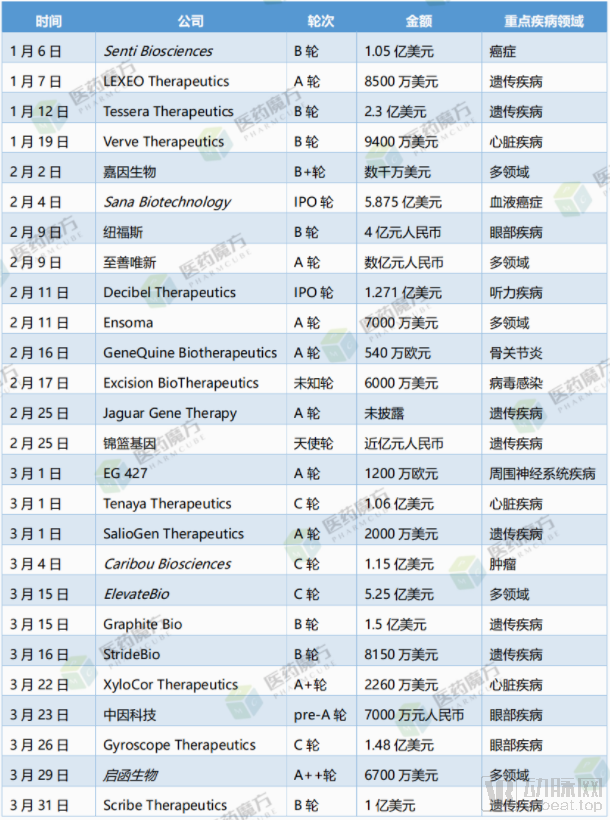
Italicized entries in the table indicate that the company has developed gene engineering technologies, but its pipeline primarily consists of or includes various cell therapies or other niche therapeutic modalities; the same applies below.
Among the 26 financing and investment events, most rounds were early-stage Series A and B. A total of six domestic companies secured funding, accounting for 23% of the total; these companies are Jiayin Biotechnology, Nuofusi (Nuofoce), Zhishan Weixin, Jinlan Gene, Zhongyin Technology, and Qihan Biotechnology.
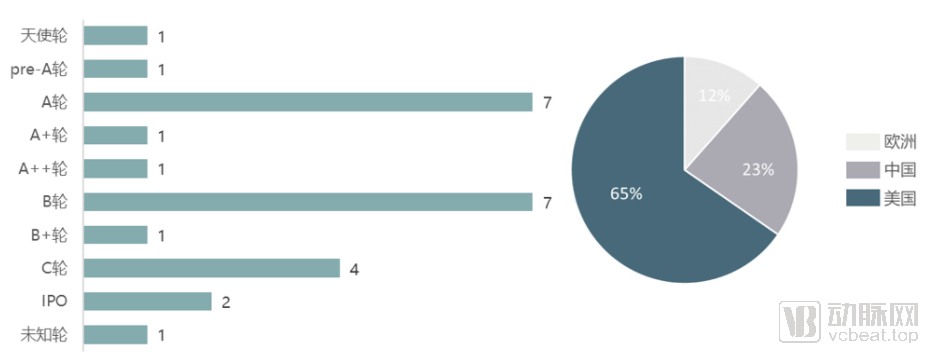
Gene Therapy: Financing Rounds and Geographic Distribution in Q1 2021
In addition, Caribou Biosciences and Scribe Therapeutics, two CRISPR technology companies co-founded by Dr. Jennifer Doudna, the 2020 Nobel Laureate in Chemistry, completed $115 million in Series C financing and $100 million in Series B financing, respectively. For other financing details, see Table 1.
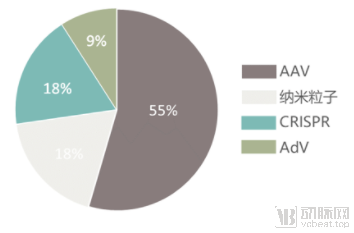
Distribution of Technology in Gene Therapy Transactions and Collaborations, Q1 2021
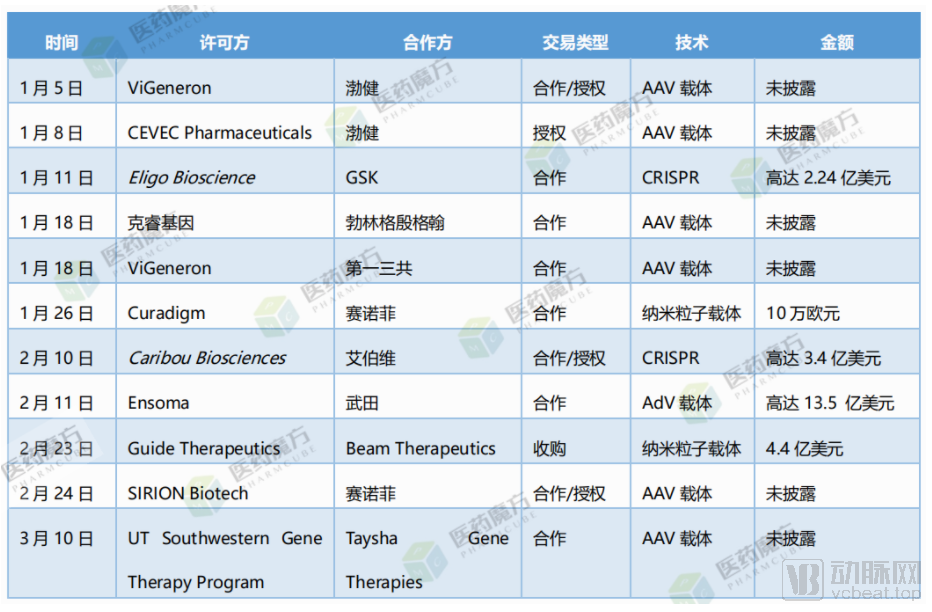
In the first quarter of 2021, there were a total of 11 transaction collaborations in the gene therapy field, focusing on various gene therapy delivery technologies. Among these, transactions involving AAV vector technology accounted for the highest proportion, at 55%. For details on other transactions, please refer to Table 2.
Table 2 Overview of Gene Therapy Transaction and Collaboration Events in Q1 2021
Gene editing based on CRISPR technology and AAV gene therapy remain the two most capital-attractive sectors. The companies that secured financing or closed deals in Q1 each possess unique characteristics within their respective niche markets. Take two of these technologies as examples. The first is “gene writing,” developed by Tessera Therapeutics, a gene engineering company incubated by Flagship Pioneering and headquartered in Boston, USA. This technology focuses on mobile genetic elements (MGEs) in somatic cells, such as plasmids, transposons, and insertion sequences. Transposons, discovered by Barbara McClintock, the 1983 Nobel Laureate in Physiology or Medicine, were the first MGEs to be identified.
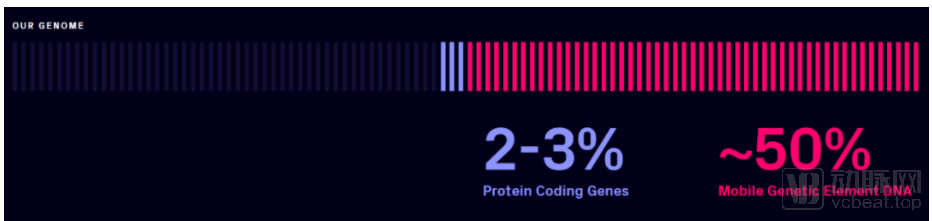
Approximately 50% of the genome consists of DNA derived from MGEs (Source: Tessera official website)
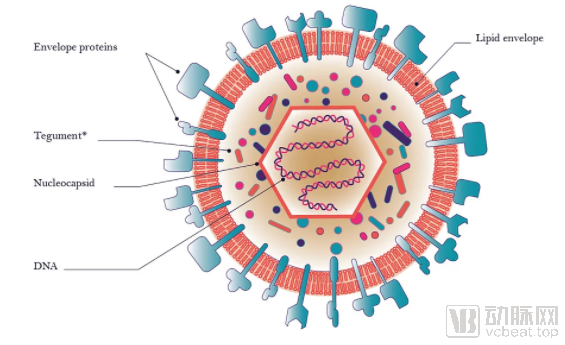
Unlike traditional gene therapy and gene editing, gene writing utilizes mobile genetic elements (MGEs) to “write” genes into the somatic cell genome at the RNA or DNA level. Another technology, developed by EG 427 based in Paris, France, employs herpes simplex virus type 1 (HSV-1) as a gene delivery vector. By leveraging the virus’s ability to establish lifelong latency in peripheral neurons, this approach ensures highly specific and durable transgene expression.
Source: EG427 Official Website
Furthermore, HSV-1 is a large DNA virus with a 153-kb linear genome, capable of carrying complex therapeutic constructs exceeding 30 kb in length. Therefore, it can accommodate not only single or multiple large transgenes but also complex promoters and regulatory elements. Moreover, this vector is suitable for repeated administration when necessary.
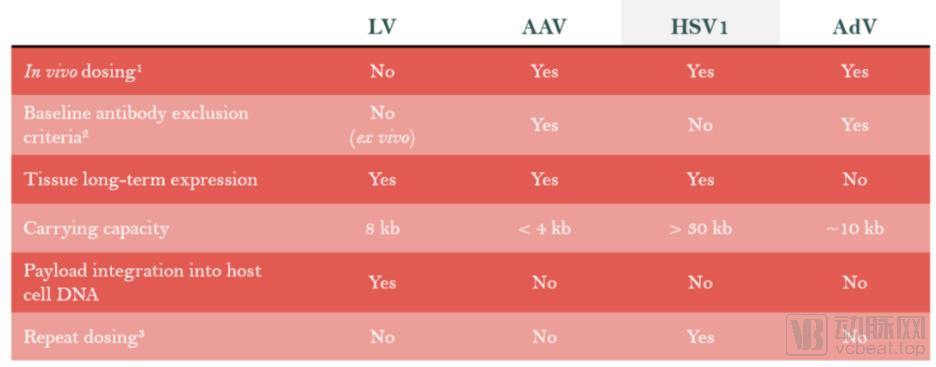
Comparison of Various Viral Gene Therapy Vectors (Source: EG 427 Official Website)
EG 427 is developing replication-defective HSV-1 vectors to prevent the reactivation of latent HSV-1 in peripheral neurons or damage to peripheral tissues.
bluebird bio Received One Piece of Bad News and One Piece of Good News in the First Quarter of 2021. On February 16, bluebird bio suddenly announced the suspension of two clinical trials (HGB-206 and HGB-210) of its gene therapy LentiGlobin in patients with sickle cell disease. This decision was prompted by the diagnosis of acute myeloid leukemia (AML) in one patient from Cohort A of the HGB-206 trial who had been treated more than five years earlier. Additionally, in the week prior to the announcement, one patient in Cohort C of HGB-206 exhibited symptoms of myelodysplastic syndrome (MDS). Although there was no clear evidence linking the lentiviral vector used in LentiGlobin to these adverse events, the news reignited widespread concern regarding the oncogenic safety risks associated with gene therapy vectors. Following the announcement, bluebird bio’s stock price plummeted by nearly 38%.On March 10, after nearly a month of investigation, bluebird bio announced that the previously reported case of AML was unlikely to be related to the lentiviral vector used. The rationale was that the patient presented with significant chromosomal abnormalities and carried gene mutations commonly associated with the development of AML. Furthermore, while the lentiviral vector had integrated into the VAMP4 gene, there is no known evidence linking VAMP4 to AML development, cell proliferation, or genomic instability. The cause of the MDS case remains under investigation.Although bluebird bio’s efforts to clarify the situation had some effect, the LentiGlobin trials remain suspended. Safety concerns surrounding gene therapies have garnered significant attention before; as an exogenous vector performs therapeutic functions within the body, more data are needed to demonstrate its safety profile.Apart from the setbacks in clinical trials, bluebird bio also received good news on March 26: idecabtagene vicleucel, developed in collaboration with Bristol Myers Squibb (BMS), received FDA approval for marketing. This marks the first CAR-T cell therapy targeting B-cell maturation antigen (BCMA), approved for the treatment of adult patients with relapsed or refractory multiple myeloma.
Overall, Q1 demonstrated robust investment enthusiasm in the gene therapy sector, with a pronounced focus on vector technologies highlighting the key challenges currently requiring optimization in the field. Beyond companies developing gene therapies for rare diseases that secured funding, new entrants are continuously emerging and advancing in areas such as cardiovascular diseases, hearing disorders, and joint diseases. With the continued refinement of “legacy” tools and the constant emergence of novel technologies, we anticipate strong performance from the gene therapy sector in the subsequent quarters.