

MedLumics Files for IPO: Pioneering Real-Time Optical Imaging for Atrial Fibrillation Ablation

MedLumics
Medical Imaging Equipment Developer
MedLumics is a privately held medical technology company based in Madrid, Spain. Founded in 2009, the company developed AblaView®, an optically guided radiofrequency (RF) catheter ablation system for the treatment of atrial fibrillation (AF). By integrating photonics and micro-optics, the system enables guided device placement and contact, as well as real-time, direct lesion assessment, thereby providing hospitals with a solution for AF treatment. On February 10, 2021, MedLumics announced that it had secured €18 million in venture capital funding, led by the prominent hedge fund Asabys Partners.
What Exactly Makes MedLumics Competitive? Let’s Uncover the Secrets.
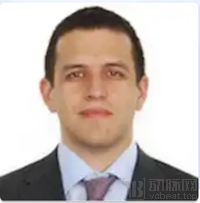
Jose Luis Rubio, Chief Technology Officer

James Greene Chief Executive Officer
Eduardo Margallo Balba earned his Ph.D. from Delft University of Technology in the Netherlands. Through his collaboration with Jose, he has filed more than 30 patents in total. As the founder of MedLumics, he maintains a low profile; indeed, no personal photographs of him can be found online.
Jose Luis Rubio holds two doctoral degrees. He earned a Ph.D. in Telecommunications from the Technical University of Madrid and completed a second doctorate in the field of biomedical imaging at the same institution. Over the past eight years, he has focused on the modeling and simulation of biomedical imaging systems, research into reconstruction algorithms, and medical image processing. Meanwhile, he has participated in multiple national and European projects in this field and collaborated with universities, research centers, and hospitals in Spain, France, and the United States.
Jose co-founded MedLumics with Eduardo in 2009.
In 2017, MedLumics announced the appointment of James Greene as Chief Executive Officer and Giovanni Leo as a member of its Board of Directors. Meanwhile, MedLumics founders Eduardo and Jose assumed the roles of Chief Operating Officer and Chief Technology Officer, respectively, continuing to spearhead the company’s scientific innovation and product development.
Jim serves as Chief Executive Officer and a member of the Board of Directors at MedLumics, bringing 30 years of extensive operational experience in the design, development, and commercialization of medical devices. Prior to joining MedLumics, Jim was a Partner at Seroba Life Sciences Limited, a venture capital firm based in Dublin. He has held director-level positions at global medical device companies such as Medtronic, AVE, and Guidant. Jim holds a Bachelor of Arts degree from Furman University in Greenville, South Carolina, and served in the U.S. military for seven years after graduation.
The catheter ablation system developed by MedLumics is called AblaView®. It can monitor the specific conditions of lesion sites in real time by emitting light beams, analyze visualized medical images, and thereby rapidly draw conclusions to assist physicians in diagnosis. The process of traditional atrial fibrillation treatment remains highly complex and, to some extent, unpredictable. Furthermore, extensive surveys have shown that the recurrence rate of atrial fibrillation within one year of follow-up is as high as 60%. MedLumics effectively addresses these pain points.
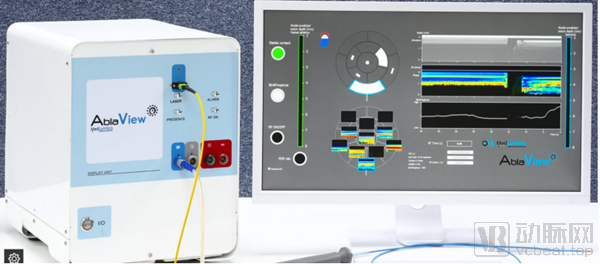
Image source: MedLumics official website
AblaView is the first imaging system to directly assess lesion formation, enabling operators to confidently determine contact stability and catheter position on the atrial wall. Recent preclinical studies have successfully demonstrated its ability to reliably monitor the continuity and transmurality of cardiac tissue ablation in real time.
AblaView is a catheter-based radiofrequency (RF) ablation technology that guides catheter positioning and ablation treatment strategies using an Optical Coherence Reflectometry (OCR) system. AblaView’s proprietary multi-beam technology provides real-time, direct, and intuitive catheter positioning, ensures stable tissue contact, confirms transmurality of lesions during tissue ablation, reduces recurrence rates and procedural complexity, and enhances procedural safety. The company is currently finalizing the development of the AblaView multi-beam catheter and preparing for its first-in-human clinical study.
According to Dr. Mei Ju, Chief Physician of the Department of Cardiothoracic Surgery at Xinhua Hospital Affiliated to Shanghai Jiao Tong University School of Medicine, catheter ablation has several limitations. First, each ablation point in catheter ablation is difficult to achieve transmural injury; as a result, 80% of patients with recurrent atrial fibrillation are found to have recovered electrical potentials in the pulmonary veins. Second, during catheter ablation, it is not possible to create extensive and complete ablation lines. Since ablation lines are formed by connecting individual ablation points, it is challenging to ensure that each point is accurately connected to form a continuous line capable of achieving thorough bidirectional block. Third, catheter ablation cannot effectively address the left atrial appendage, which is the primary culprit behind thromboembolic complications in patients with atrial fibrillation. Finally, the ligament of Marshall and autonomic ganglia are important factors triggering atrial fibrillation; however, catheter ablation cannot target epicardial autonomic ganglia or the ligament of Marshall, thereby compromising surgical outcomes.
AblaView technology enhances transmurality during ablation, improves the continuity of ablation lines, guides physicians, and ensures real-time procedural success. Furthermore, AblaView is fully compatible with existing radiofrequency ablation catheters on the market, thereby increasing catheter utilization rates.
In 2015, MedLumics, a developer of optical tomography systems, announced its first skin diagnostic solution, which received CE certification in Europe. MedLumics’ product, NITID, miniaturizes an optical coherence tomography (OCT) system into a small chip through integrated optics. As a breakthrough in dermatology and a cutting-edge diagnostic imaging solution, NITID provides physicians with user-friendly operational guidance and delivers accurate analytical results in real time, thereby streamlining the patient diagnostic workflow and bringing pathological analysis closer to the point of care.
NITID integrates three imaging modalities (clinical camera, digital dermoscopy, and optical coherence tomography) into a truly portable device. This imaging system provides robust data management linked to a secure cloud platform, enabling access to selected patient data and allowing users to share cases with other members of the global clinical community. By simultaneously acquiring images using all three technologies, NITID supports non-invasive diagnosis in dermatopathology, thereby improving workflow efficiency and diagnostic accuracy.
Optical Coherence Tomography (OCT) MarketThe optical coherence tomography (OCT) market is projected to experience growth from 2020 to 2027. According to Data Bridge Market Research, the market is expected to reach USD 1.55 billion by 2027, growing at a compound annual growth rate (CAGR) of 9.1% during the forecast period. The increasing awareness among physicians and patients regarding the benefits associated with the use of optical coherence tomography has directly contributed to this market growth.
Since its founding, MedLumics has completed multiple rounds of financing, raising a total of €59.4 million. The latest round, closed in February this year, was led by Asabys Partners and amounted to €18 million.
In early 2017, MedLumics announced a €34.4 million financing round to help drive the product and clinical development of its AblaView catheter. This was the largest financing in the history of Spain’s medical technology sector and one of the largest in Europe in 2017.
What is the unique appeal of MedLumics that has kept investors steadfastly committed? The answer lies entirely in its AblaView imaging system. After a decade of dedicated development, the technology has now come to the forefront. MedLumics, which specializes in optical coherence tomography (OCT), announced its first public presentation of this technology on January 28, 2021, at the 26th International Atrial Fibrillation Symposium (AF Symposium 2021). During the symposium, the technology received high acclaim from renowned cardiologist Dr. Atul Verma.

MedLumics’ Historical Funding Rounds (Data Source: Crunchbase)
Dr. Atul Verma commented, “To optimize ablation for the treatment of atrial fibrillation and other arrhythmias, we need real-time insight into how lesions are formed. The key questions are whether the lesions are sufficiently deep and whether we have adequate contact with the tissue. PS-OCR enables us to assess what is happening within the tissue in real time, thereby allowing us to titrate and optimize our energy delivery to achieve the appropriate lesion size and depth.”
VCBeat • VCBeat Institute, from the perspective of entrepreneurs, has conducted the following analysis and reflections on whether startup cases like MedLumics can be replicated and adapted in China, for readers’ reference:
1) Market Size: Is there such demand in China?
Atrial fibrillation is the most common type of arrhythmia. It is estimated that 33.5 million people worldwide had atrial fibrillation in 2011, and its prevalence is expected to rise further as the population aged 65 and older continues to grow. Although numerous technologies have emerged in recent years to improve catheter ablation therapy for atrial fibrillation, these advancements remain insufficient to address the current clinical challenges. The recurrence rate of atrial fibrillation remains high even after initial successful treatment.
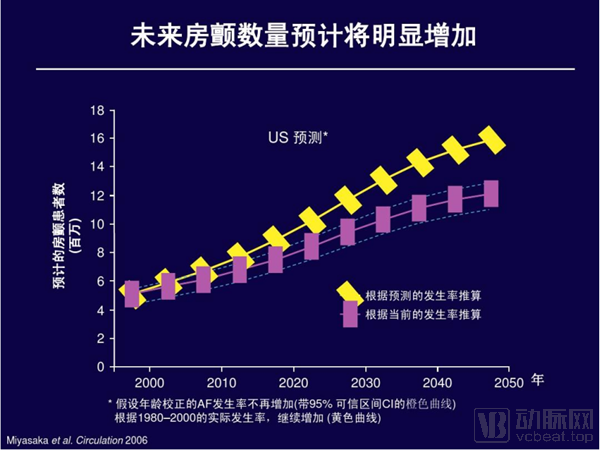
Estimated Growth in the Number of Patients with Atrial Fibrillation Source: Wuyou Documents
Recently, the journal *Heart* published the findings of a study investigating the prevalence, awareness, and current status of anticoagulation therapy for atrial fibrillation in the Chinese population. This epidemiological survey, initiated by Professor Ma Changsheng’s team at Beijing Anzhen Hospital, Capital Medical University, and conducted jointly by expert teams from eight provinces and municipalities across China, revealed that the age-standardized prevalence of atrial fibrillation among Chinese adults (aged ≥45 years) is approximately 2%.
Low awareness of atrial fibrillation (AF) was also identified as a major issue in this epidemiological study. More than one-third of AF patients aged 45–54 years, and nearly half of those aged over 75 years, were newly diagnosed during the current epidemiological survey, indicating that these patients were previously unaware of their condition. Awareness rates were particularly low among men and individuals residing in rural areas.
Furthermore, the survey revealed that only approximately 6% of atrial fibrillation (AF) patients at high risk for embolism received anticoagulant therapy. The article calls for greater emphasis on AF prevention, screening, and treatment from a public health perspective to improve the comprehensive management of AF in China. Consequently, the market prospects for AF detection and treatment are promising. With an estimated 8 to 11 million AF patients in China and over one million annual deaths due to cardiac arrest, the AF patient population is projected to grow substantially as the country’s aging crisis intensifies. Therefore, AF treatment holds vast potential market opportunities.
2) Chinese Companies: Where Are the Breakthrough Directions for Atrial Fibrillation Catheters?
On December 23, 2020, the CardioPulseTM pulsed field ablation system, independently developed in China, was successfully deployed at Yunnan Fuwai Cardiovascular Hospital. Currently, the primary modalities for catheter ablation are radiofrequency ablation and cryoablation, both of which are prone to causing complications. Pulsed field ablation offers the following advantages:
1. Selective action without damage to surrounding tissues
2. Non-thermal ablation methods, with virtually no thermal injury
3. Does not cause pulmonary vein stenosis
4. Low contact requirements and short discharge time
3) Technical Feasibility: Is the technical model feasible in China?
This technology primarily provides visualized treatment for atrial fibrillation through medical imaging, thereby reducing the complexity of the procedure.
According to the National Health Commission, by the end of 2018, new healthcare service models such as medical imaging diagnostic centers and medical laboratories had developed rapidly across China, reaching 633 and 1,495 facilities, respectively. These figures represent increases of 115.3% and 148.3%, respectively, compared to the end of 2015.
China’s medical imaging companies boast strong R&D capabilities and are poised to accelerate the localization process, driven by supportive policies and expanding demand.