

AI-Powered Healthcare Innovation: A Brainstorming Session Hosted by Merck China Accelerator
As the digital transformation of the healthcare industry deepens, artificial intelligence (AI) technology is increasingly highlighted within this traditional sector. AI has already demonstrated significant potential in areas such as drug discovery, medical image interpretation, and genomic data mining, and its application is gradually expanding to more segments of the industry.
As a global leader in technology, Merck has long been focused on artificial intelligence.Last month, Merck China Innovation Center also hosted a themed panel discussion on this field. The event brought together numerous innovative forces, with Merck China Innovation Center serving as the organizer.Also present were representatives from investment firms such as ZhenFund, the international startup community Startup Grind, and Beijing-based startup Touse Imaging.
At the forefront of Merck’s external collaborative innovation, the Merck China Accelerator has been connecting with innovative forces in the ecosystem through such open exchanges since its inception.AI-enabled solutions for pharmaceuticals and healthcare remain one of their key areas of focus.And most recently, they have been busy with the new 2021 edition of the Merck China Accelerator Program.
Invited by Merck China Accelerator, Dr. Wang Shuhao, CTO of Touche Imaging, moderated this high-profile dialogue. Seated opposite him were Dr. Xiong Geng, Senior Manager at Merck China Innovation Center, and Dr. Chen Gaopeng, Investment Vice President at ZhenFund.
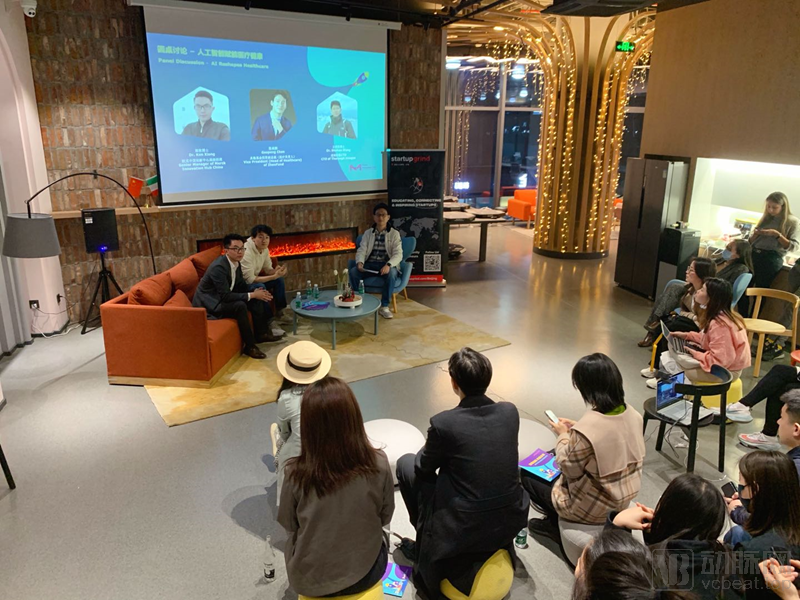
From left to right: Dr. Geng Xiong, Senior Manager at Merck China Innovation Center; Dr. Gaopeng Chen, Vice President of Investment at ZhenFund; and Dr. Shuhao Wang, CTO of Touche Imaging.
If we were to identify the common ground among these three parties, it would undoubtedly converge on one key point: open innovation. Tcheou Imaging is an innovative startup that has just reached the Pre-A financing stage, dedicated to leveraging big data and artificial intelligence to provide intelligent identification, diagnosis, and prediction for pathology images, as well as offering optimized solutions. ZhenFund is a well-known angel investment fund in China, specializing in identifying valuable early-stage innovative enterprises. The Merck China Innovation Center is an important part of Merck’s global innovation network, continuously establishing partnerships with startups, academic institutions, industry partners, and local governments within the sector.
The topic of this dialogue combines one of the hot topics in recent years, artificial intelligence, and aligns with Merck's key focus on innovation: AI-enabled healthcare solutions.
“Artificial intelligence is a major trend, with industries across the board actively embracing AI integration. In the healthcare sector, AI applications are primarily focused on cost reduction and efficiency improvement. For instance, in R&D, we observe many companies exploring this area to shorten drug development cycles and control both time and financial costs. Other applications, such as AI-powered medical imaging, help bridge the experience gap between large hospitals and smaller ones, as well as between senior specialists and junior physicians,” said Dr. Xiong Geng.
Merck has long been committed to AI-empowered healthcare solutions. Across its three business sectors—Healthcare, Life Science, and Electronics—the Healthcare sector is actively exploring the integration of artificial intelligence (AI) in areas such as oncology, chronic diseases, and assisted reproduction. As one of the key innovation domains established by Merck China Innovation Center, “AI-Empowered Health Solutions” aims to leverage AI to transform the entire value chain of the medical and healthcare industry. Particular emphasis is placed on using AI-assisted tools to improve early diagnosis rates in certain therapeutic areas, supporting patient follow-up and clinical decision support systems for individuals with chronic conditions, and facilitating AI-assisted clinical research and development.
“Merck has always maintained an open mindset in seeking opportunities for innovative collaboration. Within our business units, we frequently identify commercialization needs. If a company can access certain data and has a team capable of transforming that data into solutions, there is room for collaboration between us. Through equal dialogue, both parties can leverage their respective strengths: the enterprise provides technical support and handles development, while we provide resources and manage commercialization. For instance, in assisted reproduction, embryos prior to transfer have traditionally been graded by experts through visual inspection. We are currently incubating projects that utilize computer vision and AI for embryo grading, aiming to encode the expertise of top-tier specialists into algorithms. This approach allows us to extend these capabilities to more assisted reproduction institutions, thereby promoting greater standardization across the industry,” said Dr. Xiong Geng.
Within Merck, there are many similar projects. The participants in these projects include not only Merck itself but also startups that have established deep connections with Merck through the Merck Accelerator.In previous cohorts of the accelerator program, there were also several alumni companies that were AI-based startups, such as Xingkangyuan and Xingyao Technology, which focus on new drug development.Both are alumni companies of the second cohort of the Merck China Accelerator. neoX Biotech has developed a robust R&D platform by characterizing protein-protein interactions (PPIs), focusing on the development of macromolecular and multispecific molecular drugs, particularly in the field of tumor immunotherapy; while Star Pharmaceutical Technology leverages its proprietary Pyxir artificial intelligence platform to help drug R&D scientists significantly reduce the time and cost involved in drug development.
“I believe that successful teams can, in fact, be highly diverse. At times, success is driven by technological leadership; at other times, by strong business acumen; sometimes, by a deep understanding of clinical needs; and yet other times, by exceptional team-building capabilities. All these pathways have the potential to ultimately lead to success.” As a managing partner at an angel investment firm, Dr. Chen Gaopeng demonstrates an open-minded approach when evaluating startups.
The hype surrounding a technology does not equate to industry maturity. Currently, the prevailing situation is that expectations for artificial intelligence exceed its actual value generation at present. Several challenges remain to be addressed before these technologies can mature into practical applications, particularly in the healthcare sector, which tends to be highly conservative toward new innovations.
However, these implementation challenges have not dampened confidence in the healthcare industry. “I see two sources of confidence. The first is confidence in Chinese society, the Chinese government, and China’s creativity. The second stems from the fact that an aging population will generate greater demand for medical services. For those among you who are committed to delving deeper into the healthcare sector—whether through entrepreneurship, research, or other related work—I believe this industry is worth pursuing, as it affects nearly everyone around us,” Dr. Chen Gaopeng continued.
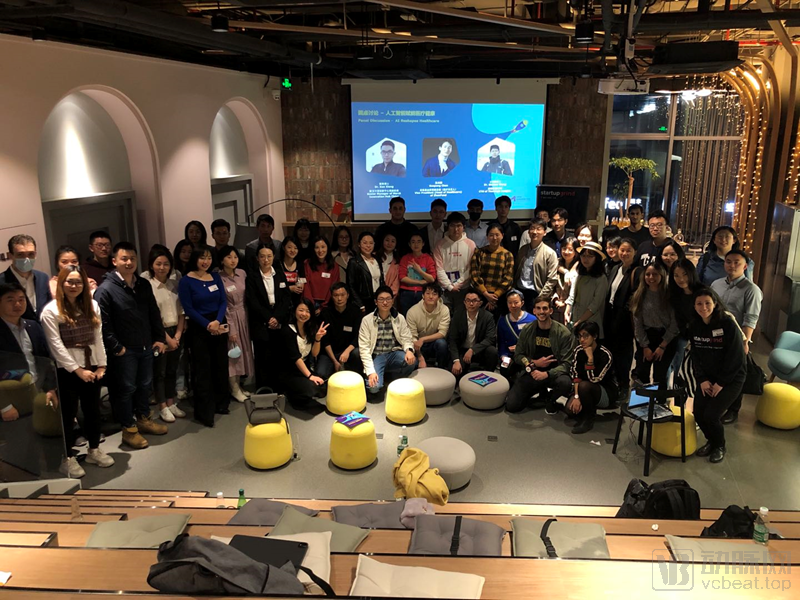
Event Group Photo
As the organizer of this event, Merck China Accelerator connects with a large number of startups each year, facilitating in-depth exchanges with Merck to implement innovative project collaborations. The accelerator program, which focuses on enterprise aggregation and recruitment, has successfully completed three cohorts with remarkable achievements.
At the event, the Merck China Accelerator team briefly presented the 2021 recruitment brochure for the Merck Accelerator:The duration of the 4th Merck China Accelerator program has been extended from 3 months to 6 months. Meanwhile, as this year’s activities have been consolidated from two cohorts into one, the number of participating projects has correspondingly expanded from 6 to 12.Concurrently with the registration process, Merck China Accelerator will conduct rolling evaluations internally; the shortlisted companies will undergo targeted acceleration and incubation over a six-month period.Engage in in-depth discussions with Merck on collaboration opportunities and implement pilot project partnerships during the acceleration period.
A project’s success cannot rely solely on theoretical planning; it requires practical implementation. Therefore, the mechanism established for Merck China’s Accelerator Program is,Selected companies will engage with experts from the Merck China Innovation Center and its three business sectors to explore collaboration models, evaluate project value from a practical standpoint, and integrate Merck’s industry insights with the cutting-edge technologies of startups, thereby delivering novel solutions for the Chinese market and global operations.
Here, Dr. Xiong Geng further explained how Merck ensures the authenticity and feasibility of projects: “When I previously worked at a venture capital firm, my focus was primarily on technology and the team. Now, as a member of Merck, I place greater emphasis on the strategic fit with our existing business portfolio. Merck often seeks out projects driven by commercialization objectives. For instance, in therapeutic areas such as diabetes and thyroid cancer, we first leverage internal expertise to understand market and clinical needs, and then identify suitable external partners—those with leading-edge technologies or substantial data inflows. This approach significantly enhances the likelihood of successful project advancement.”
Of the six projects in the previous cohort of the Merck China Accelerator, 83% of the startups established project collaborations with various Merck business units and innovation centers. The Merck China Accelerator has built a communication platform between startups and Merck’s internal teams, providing startups with opportunities to further engage with different Merck business units and innovation ecosystem partners. Thus, the entire accelerator program is dedicated to exploring comprehensive collaboration opportunities for startups.
Technology and demand are like twin stars; without either, ultimate success is difficult to achieve. This underscores the significant value of the Merck China Accelerator, which connects Merck’s needs with innovative technologies to jointly build solutions grounded in real-world demands.
As this article is published, the fourth cohort of the accelerator program is in a critical recruitment phase. Startups are continuously inquiring about relevant information through various application channels, and the Merck Accelerator team is likely still intensively consolidating project application data. This situation is expected to continue for another week.Until the April 22 deadline. If you also wish to receive professional guidance during the early stages of your startup, while exploring and implementing innovative collaborations with Merck’s global experts, it is not too late to register now.
Click here to learn more about the Merck China Accelerator
Registration Link:www.merckaccelerator.com