

GE HealthCare Completes $2.3 Billion Acquisition of Intelerad to Accelerate Cloud and AI-Driven Imaging Platform Strategy

Intelerad Medical Systems
Medical Imaging Solutions Provider

GE Healthcare
Digital Solution Provider
March 18, 2026GE HealthcareCompletion of the acquisition of imaging software company Intelerad for $2.3 billion (approximately RMB 16 billion). This acquisition is not merely a product enhancement but more of a clear strategic signal:The core of competition in the imaging industry is shifting from "equipment performance" to "data and platform capabilities."
Among global imaging giants, this shift has been ongoing for many years, and this transaction has further brought this trend to the forefront.
# From Selling Equipment to Selling Platforms: A Typical Strategic Catch-Up
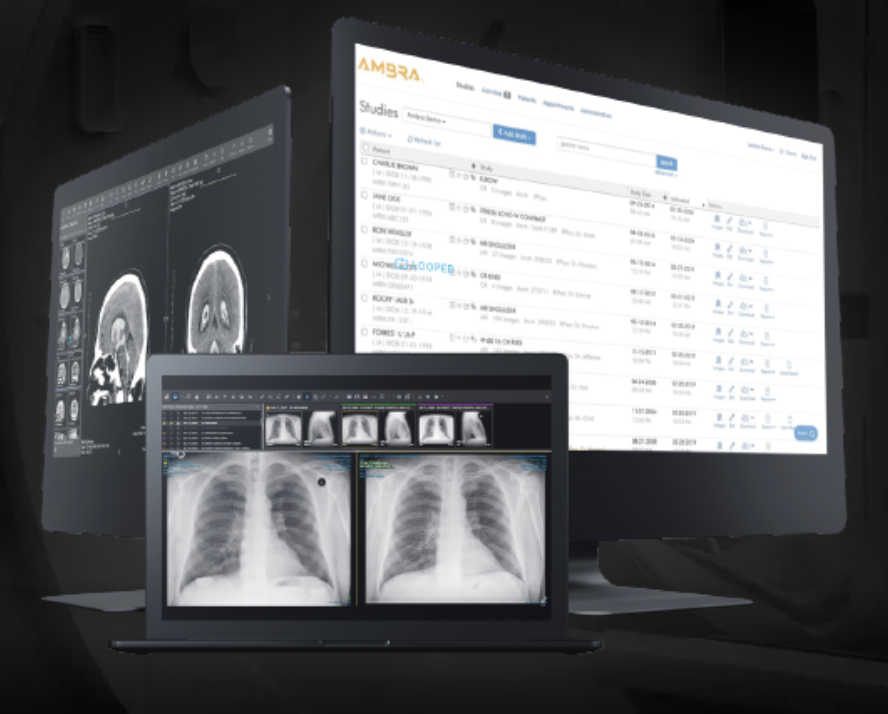
This acquisitionIntelerad, essentially a medical imaging IT company, with core products including PACS (Picture Archiving and Communication System), imaging workflow management systems, and cloud-based solutions for radiology and cardiology.
Unlike traditional imaging equipment manufacturers, these companies do not directly produce CT or MRI machines but instead serve as the intermediary layer connecting "equipment—data—doctors."
GE Healthcare's acquisition logic is very clear:
Building a "Cloud-First" Imaging Platform
Embed AI Capabilities into Imaging Workflow
Connect the in-hospital and out-of-hospital sectors (especially outpatient clinics and independent imaging centers)
From the perspective of business structure, Intelerad has two key characteristics worth noting:
Approximately 90% of revenue is recurring income (subscription/services).
Mainly covering off-hospital imaging scenarios (such as independent imaging centers)
This precisely fills a long-standing gap for GE Healthcare — its strength lies in large hospital equipment, while it has been relatively weak in the circulation of imaging data and the layout of scenarios outside hospitals.
In other words, this is not a horizontal expansion but a vertical integration "from hardware to platform."
# The Underlying Logic of Imaging IT: Whoever Controls the Data, Defines the Ecosystem
From the perspective of industry structure, imaging IT (especially PACS and VNA) has long been regarded as an "auxiliary system," but its strategic value is being reassessed.
The reason lies in three changes:
1. Imaging Data Becomes the AI Gateway
The core of AI imaging lies not in the algorithm, but in data acquisition and annotation capabilities. The PACS system naturally controls the data entry point, becoming a key node for AI deployment.
2. Medical Scenarios Expand from In-Hospital to Out-of-Hospital
In the European and American markets,Independent Imaging CenterThe demand for outpatient imaging is growing rapidly. Traditional equipment manufacturers have limited coverage in this scenario, while cloud imaging platforms have more advantages.
3. Business Model Shifts from One-Time Sales to Subscription
Equipment sales belong to low-frequency transactions, while imaging IT has the ability for continuous revenue generation. This is also emphasized by GE Healthcare."Recurring Revenue"The core reason.
Therefore, the deeper logic behind this acquisition is:
Whoever controls the flow of imaging data has the opportunity to define AI applications and future service models.
# Three Insights for the Chinese Market
Despite structural differences between China's imaging market and those in Europe and the U.S., this deal still holds clear reference value.
1. The "platform capability短板" of China-produced imaging manufacturers is being exposed.
Chinese manufacturers (such as United Imaging, Mindray, etc.) are already competitive in equipment, but in the imaging IT ecosystem, most still rely on third-party vendors (such as Winning, Eastsoft, etc.).
The future problem lies in:
Whether to continue with the "Equipment + External IT Collaboration"
Or build a "proprietary platform" like GE?
This will directly impact long-term competitive barriers.
2. The strategic position of PACS vendors is on the rise
In the past, PACS companies were more often regarded as hospital IT suppliers rather than key medical device players.
But with the advancement of AI and cloudification, its value is changing:
From "System Supplier" to "Data Entry Controller"
From "Project-Based" to "Platform Subscription Model"
This means that, in the future, Chinese PACS manufacturers may see:
Acquired and Integrated by Giants
Or transform itself into a platform company
3. The off-premises imaging market may become the next variable
GE Healthcare particularly emphasized "outpatient and independent imaging centers" this time, a trend that has not yet fully erupted in China.
But the trend is already emerging:
Chain imaging centers begin to emerge
Increased Demand for Medical Imaging at the Grassroots Level
Graded Diagnosis and Treatment Promotes the Outflow of Imaging
If policies and payment systems are further liberalized,
Off-site Imaging + Cloud Platform + Remote DiagnosisMay become a new growth curve.
# Conclusion: The competition in the imaging industry is changing to a new set of rules
In the past two decades, the core competition in the imaging industry has been equipment parameters: higher resolution, faster scanning speed, and lower radiation dose.
But today, the rules are changing:
Devices are no longer endpoints, but data entry points.
Software Is No Longer an Add-On, but the Core Value
Sales is no longer a one-time event, but a continuous service.
GE Healthcare’s $16 billion acquisition is not just a purchase, but a confirmation of direction:
The endgame of the imaging industry is not "selling equipment," but "operating a data and AI-driven platform."
For Chinese companies, this transformation has already begun, but the window of opportunity is rapidly narrowing.