

Future Doctor Completes Strategic Rebranding from Penguin Xingren, Files IPO Prospectus
On April 15, Penguin Almond Group announced that, in line with its strategic upgrade, the company has been rebranded as Future Doctor Integrated Medical Services Group. The former general practice and specialty outpatient services under the Penguin Doctor brand have also been upgraded to the Future Doctor brand.
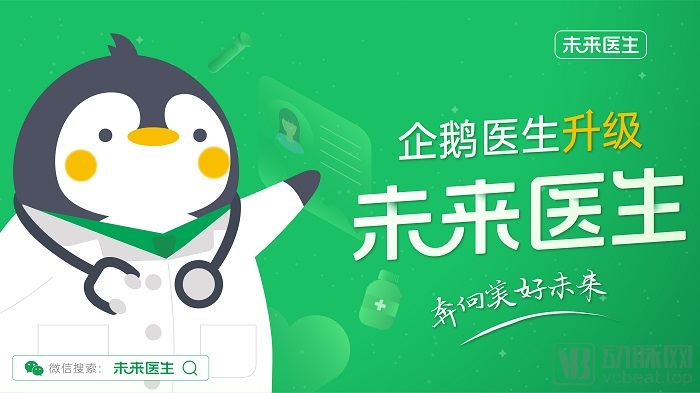
This may be seen as another footnote to the strategic upgrades within the internet healthcare sector. Last September, the Ali Health app was renamed Yilu; also in September, Ping An Good Doctor launched a new sub-brand, Ping An Yijia, and officially announced in early January this year that the Ping An Good Doctor app would be renamed Ping An Health.
The rebranding of both Alibaba Health and Ping An Good Doctor reflects strategic considerations. The renaming of the Alibaba Health app to “Yilu” signals Alibaba Health’s intent to strengthen its healthcare services in a new arena. The rebranding of Ping An Good Doctor represents a comprehensive upgrade from medical services to integrated “medical + health” services, while further enhancing its synergy with Ping An Group’s healthcare ecosystem.
The strategic upgrade and renaming of Penguin Almond Group is no exception. Why has Penguin Almond Group chosen this moment to strategically evolve into Future Doctor Integrated Medical Services Group? What layout strategies lie behind the name change? Following the strategic upgrade, what differences will Future Doctor Integrated Medical Services Group bring?
Amid the Normalization of Epidemic Prevention and Control, Penguin Almond Enters a New Phase of Business Development
During the 2020 pandemic, numerous hospitals suspended outpatient services to prevent cross-infection associated with in-person visits. To meet the medical service needs of patients requiring chronic disease management and other care, some public hospitals that previously lacked online operations launched telemedicine services by establishing their own internet hospitals or joining third-party digital health platforms. Meanwhile, certain internet platforms not originally involved in healthcare recognized the significant opportunities presented by the pandemic and expanded their non-medical businesses into core medical services, such as online consultations.
During the pandemic, Penguin Almond Group also ushered in an upgrade of its product lines. Compared with the past, it has achieved significant improvements in terms of scale, data, business operations, and reputation. The group launched a 24/7 free consultation service for novel coronavirus pneumonia and introduced a smart monitoring platform for home isolation, which not only alleviated public anxiety but also supported grassroots epidemic prevention and control efforts.
In addition to leveraging the inherent value of its internet platform, Penguin Almond Group has continued to advance its offline expansion. After acquiring 25 Zhengfu Dental clinics in December 2019, the group partnered with Mommy Knows Best in April of the following year to fully integrate the latter’s pediatric services at its Shenzhen clinic into Penguin Almond Group’s network. The collaboration extends beyond offline operations; the Mommy Knows Best online platform also provides operational support for offline pediatric services, helping to strengthen Penguin Almond Group’s specialized medical network.
In terms of urban expansion, on April 8, 2020, the day Wuhan resumed normal operations, Penguin Almond directly signed a cooperation agreement with Donghu District in Wuhan to provide citizens with general practice clinic services, family doctor services, medical referrals, physical examinations and laboratory tests, as well as online health mall and online consultation services. In June of the same year, MOB Comprehensive Medical Center, under the Penguin Almond Group, established its presence in Yuzhong District, Chongqing, located adjacent to the Jiefangbei business district.
In July 2020, Penguin Doctor’s Hangzhou Ophthalmology Clinic commenced soft opening. Then, in February of this year, Penguin Almond Group acquired a controlling stake in Shanghai Quankang Medical, further expanding its footprint in the healthcare sector.
Amid the normalization of epidemic prevention and control measures and the continuous expansion of its service scale, 2021 marked a new developmental stage for Penguin Almond Group. Embarking on milestone explorations has also prompted the group to reflect on its brand identity. It is therefore no surprise that Penguin Almond Group has adopted a new brand name to reaffirm its commitment to serious medical care and in-depth disease management.
Multi-Business Synergy: Future Doctors Build Healthcare Services
Why Future Doctor Integrated Medical Services Group, and not others?
Perhaps we can adopt a simpler, more direct, and purer understanding. The former name of Penguin Almond Group was actually inherited from the pre-2018 merger names of Penguin Doctor and Almond Doctor, combining “Penguin” and “Almond.” However, neither the animal imagery of a penguin nor the food imagery of an almond effectively encapsulates or evokes the concept of a “comprehensive medical industry group.” Judged purely by its literal meaning, the newly adopted brand name aligns more closely with and better summarizes the characteristics of a “comprehensive medical industry group.”
As a “core portfolio” company invested by Tencent, the relationship between the two parties will no longer remain merely at the textual level but will become further “internalized” following the strategic upgrade and renaming of Penguin Almond Group. This trend is also evident from their continuously deepening collaboration in the past: Future Doctor Integrated Medical Services Group will be more closely tied to Tencent.
On July 15 last year, Tencent released version 2.0 of its Smart Community solution, known as Tencent Cloud Future Community. As an early participant in the project, Penguin Almond Group entered into a strategic partnership with Tencent Cloud Future Community to jointly enhance the quality of health management services in smart communities. Penguin Almond Group empowers the comprehensive health services of Tencent Cloud Future Community through its matrix of intelligent health devices under the Penguin Doctor brand. The two parties have collaborated across three key scenarios: health monitoring, video consultations, and self-service medication purchasing. Leveraging Tencent Cloud Future Community, Penguin Almond Group has established an integrated online-to-offline closed-loop health management service model for community residents.
On March 28 this year, Tencent officially launched “Tencent Cloud Doctor,” a one-stop cloud-based workspace designed for physicians. At the launch event, Penguin Almond Group, as an attending guest, signed a strategic cooperation agreement with Tencent. It is reported that Tencent Cloud Doctor and Penguin Almond Group will engage in operational collaboration, further highlighting the mutual support between the two parties.
The “Future Doctor” brand does more than just spark imagination about the future of healthcare. The positioning of Future Doctor Integrated Medical Services Group inherently aligns with the technological and futuristic connotations of its name—empowering physicians through big data, cloud computing, artificial intelligence, and other advanced technologies to deliver higher-quality medical services that are accessible to all. Technology, healthcare, physicians, and patients are seamlessly integrated within Future Doctor Integrated Medical Services Group.
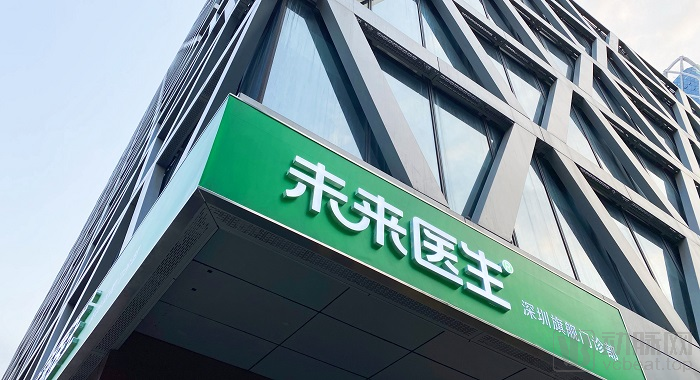
This strategic upgrade by Penguin Almond Group is not limited to merely rebranding the group as Future Doctor Integrated Medical Services Group. The original general practice and specialty outpatient services have also been upgraded from the Penguin Doctor brand to the Future Doctor brand. This highlights the future multi-business synergy of Future Doctor Integrated Medical Services Group, where sub-brands such as Future Doctor, which cover offline outpatient services, will play an increasingly important role under the umbrella of the master brand.
From Penguin Doctor to Future Doctor
Amid the Group’s strategic upgrade, where is Future Doctor Integrated Healthcare Services Group headed?
"The future is always deeply embedded in history."
We may still need to revisit the well-trodden history of Future Doctor Comprehensive Medical Services Group to better identify its potential future direction.
Wang Shirui, CEO of Medlinker and Penguin Doctor Group, pointed out at the Medical Sub-forum of the 2017 China “Internet+” Digital Economy Summit that the inception of Penguin Doctor stemmed from his prolonged contemplation on whether it was possible to build a bridge and serve as a converter among the internet, traditional medical care, and conventional hospitals. This converter focuses exclusively on one core aspect: addressing high-frequency yet long-neglected areas such as health maintenance, prevention, and rehabilitation.
In 2017, Wang Shirui further emphasized that Penguin Doctor planned to rapidly expand its offline-centric entry points. At that time, Penguin Doctor sought to build a customer-centric health management service system through a series of product lines, including online service products for users, information management systems for institutions, offline intelligent hardware testing terminals, and general practice Penguin Doctor clinics.
Prior to the merger, Penguin Doctor had completed the construction and deployment of 23 Penguin Clinics in Beijing, Chengdu, and Shenzhen. Meanwhile, its merger partner, Almond Doctor, already boasted 430,000 real-name verified physicians and had begun exploring entry into the offline clinic market as early as 2016. On August 9, 2018, the two parties signed a strategic merger agreement. The newly formed group was collectively named “Penguin Almond,” while the existing platforms of “Penguin Doctor” and “Almond Doctor” continued to operate under their original names.
The merged Penguin Almond Group accelerated its pace, partnering with the Zhang Qiang Doctor Group in October 2018 to establish a venous disease center. In November, it added 11 new clinics in Chengdu and acquired the Shui’an Youlin Clinic during the same month. In April 2019, Penguin Almond Group secured $250 million in a new round of financing, which was allocated to building a one-stop comprehensive medical service platform, constructing a health service system, and facilitating rapid offline expansion.
As previously mentioned, the subsequent expansion warrants emphasis on the fact that when Penguin Almond Group acquired 25 Zhengfu Dental clinics in 2019, it began to systematically construct its “City Model.” This model focuses on primary care deployment with family physicians at the core, providing one-stop healthcare coverage that spans from basic medical services and specialized care to referrals to tertiary hospitals. The later integration of Mommy Knows’ pediatric clinic business in Shenzhen followed a similar approach. Penguin Almond plans to replicate the “City Model” established in Shenzhen in other regions.
Ultimately, Penguin Almond Group has established an offline business portfolio comprising flagship general practice clinics, satellite clinics, specialty centers (including dentistry, ophthalmology, and traditional Chinese medicine), and ambulatory surgery centers.
Offline clinics and other diversified business formats are undoubtedly a critical component in the development of Penguin Almond Group. Currently, Future Doctor, which has undergone a strategic upgrade from Penguin Doctor, may further integrate its original general practice and specialty outpatient services.
For Future Doctor Integrated Medical Services Group, its online platform connects with 450,000 contracted and certified physicians, while its offline network links a multi-format clinic ecosystem encompassing primary care, specialized medical services, surgical centers, and corporate health services. This infrastructure enables the company to continuously pursue business model innovations based on online-offline integration and to make forward-looking strategic deployments. Whether online or offline, Future Doctor will remain closely aligned with the Group, achieving business synergy by addressing the diverse needs of different population segments.
How Can Internet Healthcare Break Through Severe Homogenization?
The brand strategy upgrade of Future Doctor Integrated Medical Services Group remains inseparable from the current backdrop of booming internet healthcare.
From the perspective of the internet healthcare industry, with the standardized development driven by policies, the development and construction of internet hospitals have reached a new high. On March 23, Mao Qun’an, Director of the Planning Department of the National Health Commission, stated that, according to incomplete statistics, more than 7,700 secondary and tertiary hospitals across China have established appointment-based diagnosis and treatment systems and provide online services. The number of internet hospitals built nationwide has exceeded 1,100.
A variety of companies engaged in internet healthcare continue to emerge in the market. Rapid growth itself implies rapid replication of business models. The similarity among these businesses is increasing: online consultations, pharmaceutical services, and green-channel services at offline physical hospitals have nearly become standard offerings. The fundamental factor that distinguishes one company from another lies in areas requiring long-term, substantial investment of time, money, and effort to aggregate resources, such as online physician networks and offline physical institutions like hospitals and clinics.
Future Doctor, under the Future Doctor Integrated Medical Services Group, focuses on building offline clinic resources, which also represents a continuation of its previous strategy. Compared with online internet entry points, offline channels offer unique advantages. In terms of user conversion, the conversion rate for offline users is significantly higher than that of online paying users.
“Clinics serve as the entry point, generating not only registration fees but also medication and health management costs. From this perspective, offline services are the gateway,” Wang Shirui once stated.
The integration of online and offline services enables Future Doctor Comprehensive Medical Services Group to establish a one-stop, experience-oriented healthcare service model encompassing “pre-consultation consultation, diagnosis and treatment support, home delivery of medications, and post-diagnosis guidance.” This constitutes a unique advantage compared to other platforms.
Currently, Future Doctor operates over 100 offline clinics across 15 cities, encompassing a diverse range of formats including general practice clinics, specialty clinics, surgical centers, and infirmaries. As its network continues to expand, the advantages of the Future Doctor Integrated Medical Services Group will become increasingly prominent.
By integrating online physician consultation services with offline clinics and other multi-format offerings, we are crafting a future-ready healthcare journey characterized by experiential, scenario-based, and full-lifecycle health management. This one-stop medical service closed loop—encompassing prevention, diagnosis, treatment, and rehabilitation—represents the core focus of Future Doctor Comprehensive Medical Services Group’s strategic upgrade, offering a distinctive response to the current landscape of highly homogenized internet healthcare models.