

Rubius Therapeutics Files for $200M Public Offering, Bringing Total Funding to Over $700M in Seven Years
Rubius Therapeutics
Developer of Novel Therapeutics
Recently, Rubius TherapeuticsAnnounced a public stock offering, with expected proceeds of $200 million. Including this financing, over the past seven yearsRubius Therapeutics, Inc. has successfully secured over $700 million.
In 2014,Rubius Therapeutics first proposed the concept of “red blood cell therapy.” Using its RCT technology, Rubius Therapeutics engineers human hematopoietic stem cells into specialized drug-loaded red blood cells. After ex vivo expansion, these red blood cells are infused back into patients in a manner akin to a blood transfusion, thereby treating cancer, autoimmune diseases, metabolic disorders, and other severe conditions.
This innovative therapy initially failed to make much of a splash. It was not until 2017, when Rubius was named one of the “Fierce 15” global biotech startups by FierceBiotech, that Rubius took the medical community by storm and garnered widespread attention.
In 2018,RubiusSuccessfully listed on NASDAQ with an initial market capitalization of $1.8 billion.

Rubius has risen to prominence in recent years, but it remained relatively obscure in its early days.
Rubius traces its origins back to 2010. At that time, the United States was engaged in war. Where there is war, there is bloodshed; where there is bloodshed, blood transfusions are required. The demand for blood on the battlefield was continuous, yet the shelf life of blood was extremely limited. Excluding the time required for collection and transportation, blood could only be stored for four weeks under battlefield conditions at that time.
To address this dilemma, the U.S. Defense Advanced Research Projects Agency (DARPA) issued a call for proposals aimed at directly producing blood through stem cell differentiation, thereby extending its shelf life in battlefield settings. In response, Professor Harvey Lodish and his colleagues at the Whitehead Institute for Biomedical Research at the Massachusetts Institute of Technology embarked on relevant research.
During the research process, they found that the success rate of synthesizing red blood cells using an in vitro differentiation system for stem cells could reach 70%. However, the blood produced by this method is relatively expensive. Thus, they began to envision:Can red blood cells be engineered? For example, by modifying membrane surface proteins to enable red blood cells to carry drug payloads.
In response, they conducted extensive research. Ultimately, this concept was successfully tested in both mouse and human red blood cells.
In 2013, Dr. Noubar Afeyan, founder of the renowned venture capital firm Flagship Pioneering, took notice. At that time, Flagship was just embarking on its pioneering journey and had not yet earned its reputation as a “top-tier venture creator.” Two nascent yet vibrant concepts thus converged, successfully sparking synergy.
In 2014, Flagship formally launched Rubius Therapeutics and introduced the concept of “Red Cell Therapeutics.”
Pablo Cagnoni is an executive with extensive experience in medical research. In 2018, he joined Rubius Therapeutics as President and Chief Executive Officer. Dr. Cagnoni graduated from the University of Buenos Aires School of Medicine and completed his fellowship in hematology and oncology at Mount Sinai Medical Center in New York.
In addition, Pablo completed stem cell transplantation research at the University of Colorado Anschutz Medical Campus. There, he participated in a bone marrow transplantation program and served as an Assistant Professor of Medicine, responsible for the care of patients undergoing stem cell transplantation.

Image source: Rubius Therapeutics official website
Prior to joining Rubius, Pablo served as President and Chief Executive Officer of Tizona Therapeutics, a privately held biotechnology company focused on immunotherapy. As Tizona’s first employee, Pablo built and organized the team that filed the company’s initial Investigational New Drug (IND) application. In 2020, Gilead Sciences acquired Tizona for $1.5 billion.
In March 2013, Pablo joined Onyx Pharmaceuticals as Executive Vice President of Global R&D and Technical Operations. In October of the same year, Onyx was acquired and became a subsidiary of Amgen. At that time, Pablo was appointed President of the subsidiary, primarily responsible for the development of Onyx’s product portfolio and overseeing its global commercialization strategy.
Prior to this, Pablo served as Senior Vice President of Oncology and Global Head of Clinical Development at Novartis. From 2007 to 2009, he was Senior Vice President and Chief Medical Officer at Allos Therapeutics (acquired by Spectrum Pharmaceuticals). Earlier in his career, he also served as Chief Medical Officer at OSI Pharmaceuticals (acquired by Astellas).
Throughout Pablo’s career as an oncologist and pharmaceutical executive, he has developed and commercialized more than 20 therapies, including Afinitor, Kyprolis, and Tarceva.He serves on the boards of directors of Fusion Pharmaceuticals, Repertoire Immune Medicines, and Synthekine. He is also a board member of the Bay Area Discovery Museum and a member of the Council on Foreign Relations.
In addition, Pablo serves as a board member of CRISPR Therapeutics, Harpoon Therapeutics, Tizona Therapeutics, and Tango Therapeutics, and as Executive Chairman of Blade Therapeutics.
Red blood cells are the most abundant type of blood cell in human blood.The primary functions of red blood cells are transport and immunity.It is responsible for transporting oxygen to various tissues throughout the human body and removing carbon dioxide, a metabolic byproduct, from these sites. Red blood cells are an indispensable “transport team” in the human body.
When red blood cells undergo immune adherence with microorganisms such as bacteria and viruses, they exert a direct cytotoxic effect on these pathogens via peroxidase. Furthermore, they can enhance the phagocytosis of microorganisms by phagocytes. Based onImmunity of Red Blood CellsAdhesion function; red blood cells can also recognize and carry antigens, clearing circulatingImmune Complexesand enhance T cell-dependent responses.
MammalianMature red blood cells are anucleate.。Thismeaning that they lack DNA and are unable to self-replicate。Isotope experiments have confirmed that the lifespan of red blood cells is generally 100–120 days.Compared with synthetic drug carriers,Red Blood CellsCharacterized by a long circulation half-life, ease of acquisition, large specific surface area and volume, high biocompatibility, and a safe elimination mechanism.。
Leveraging these unique intrinsic properties of red blood cells, Rubius Therapeutics selected them as drug carriers. After years of research, the company developed the RED PLATFORM™.
Through the RED platform,RubiusCD34+ hematopoietic progenitor cells are collected from healthy O-type blood donors, purified, and genetically modified using lentiviral vectors or gene cassette technology. The cells are then cultured in a medium to proliferate and differentiate into mature enucleated red blood cells, ultimately forming a cell therapy product for the treatment of diseases.
In Rubius’s projections, a single donation from an O-negative donor can yield hundreds to thousands of doses. By modifying the gene cassettes encoding biotherapeutic proteins, the company generates a pipeline capable of producing RCT candidates.。
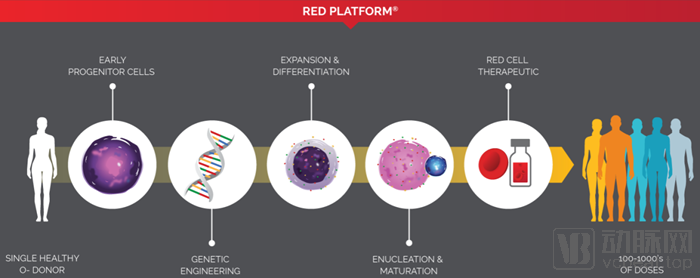
Image source: Rubius Therapeutics official website
At this stage, the technological approaches of companies involved in red blood cell therapies mainly revolve around two methods: ①Direct drug loading using intact red blood cells;②Engineered Red Blood Cells Derived from Stem Cells for Drug Delivery.
Rubius Therapeutics' red blood cell therapy requires first identifying the disease, and thenStem cells are genetically engineered to express specific therapeutic proteins. Subsequently, the stem cells are cultured and induced to differentiate into red blood cells that synthesize these protein-based therapeutics. Finally, the nucleus is extruded from the cell, while the drug remains either intracellularly or associated with the cell membrane. By expressing the drug intracellularly, this approach effectively evades attack by the human immune system.
Red blood cell therapy ingeniously leverages the characteristic that red blood cells discard their nuclei during maturation. Due to the absence of a nucleus, drug-loaded red blood cells do not trigger allogeneic rejection, thereby broadening patient eligibility and expanding therapeutic applications. Furthermore, there is no concern regarding adverse effects from genetic modifications on the human body.
Through continuous development and research of red blood cell therapies, Rubius Therapeutics is advancing a broad pipeline of RCT candidate products. Currently, Rubius is exploring the application of red blood cell therapies across multiple therapeutic areas, starting with cancer and autoimmune diseases.
Rubius leverages its proprietary RED PLATFORM to develop applications in three distinct directions:
① Expression of metabolic enzymes within red blood cells for rare diseases;
② Red blood cells express immune activation signals or tumor-killing agents on their surface for use in cancer immunotherapy;
③ Expression of immune tolerance or neutralizing agents on the surface of red blood cells for the treatment of autoimmune diseases.

PTX-134 is one of Rubius Therapeutics’ earliest pipeline candidates, primarily targeting phenylketonuria (PKU), a rare inborn error of metabolism. PKU is a common amino acid metabolism disorder caused by a deficiency in the enzyme responsible for phenylalanine metabolism, which impairs the conversion of phenylalanine to tyrosine. This leads to significant accumulation of phenylalanine and keto acids, which are subsequently excreted in the urine.
This is a common autosomal recessive genetic disorder. The clinical manifestations of phenylketonuria (PKU) are diverse, primarily characterized by intellectual disability, neuropsychiatric symptoms, eczema, excoriations, hypopigmentation, and a musty or mousy odor. Patients with PKU require lifelong consumption of special foods that are free from or low in phenylalanine. Additionally, patients need to consume specialized medical formulas to ensure adequate nutrition; otherwise, it may lead to impaired brain development, and in severe cases, death.
Currently, the most effective treatment for phenylketonuria is strict dietary control to reduce phenylalanine levels in the body.
Pablo J. Cagnoni stated, “Phenylketonuria is a devastating metabolic disorder that, if improperly treated, can lead to severe cognitive impairment.” Pablo also expressed his hope that RTX-134 will become the first off-the-shelf red blood cell therapy product.
Unfortunately, RTX-134 failed in its Phase I clinical trial for phenylketonuria. Rubius Therapeutics provided the following explanation: “No adverse events were observed in the clinical trial, and RTX-134 was well tolerated. However, the unexplained data from patients in the clinical trial may be attributed to insufficient dosing or limitations in the sensitivity of flow cytometry.”
In March 2020, Rubius Therapeutics announced the discontinuation of clinical trials for its red blood cell therapies targeting phenylketonuria and other rare diseases, shifting its focus to oncology and autoimmune diseases.

Agonist antibodies and recombinant cytokines face significant constraints in clinical applications for three reasons: 1)Severe toxicity results in a narrow therapeutic index;2)Agonist antibodies exhibit reduced activity compared to natural ligands;3)Lack of the multiple signals required to effectively activate most cell types.
To address these limitations, Rubius Therapeutics has developed an allogeneic cell therapy, RTX-240. RTX-240 is genetically engineered to express the natural ligand 4-1BBL and IL-15TP (a fusion of IL-15 and IL-15Rα) on the surface of red blood cells.
RTX-240 mimics human biology by broadly stimulating adaptive and innate immunity, thereby eliciting anti-tumor responses. Rubius Therapeutics also stated that RTX-240 has the potential to deliver the following advantages:Activate existing agonist pathways to enhance potency; improve anti-tumor activity; overcome resistance to immunotherapy; and reduce toxicity based on biodistribution.
Currently, Rubius Therapeutics is conducting a Phase 1/2 clinical trial of RTX-240 in patients with solid tumors (relapsed/refractory or locally advanced). Furthermore, the clinical trial of RTX-240 in patients with acute myeloid leukemia (relapsed/refractory) has progressed to the Phase 2 assessment stage.

RTX-321 is a synthetic antigen-presenting cell product. It has received IND approval from the U.S. FDA for the treatment of HPV 16-positive cancers.
Laurence Turka stated, “RTX-321 has a dual mechanism of action. It not only functions as antigen-presenting cells to promote HPV 16 antigen-specific T-cell responses, but also broadly stimulates the immune system by activating both innate and adaptive immunity.”
This capability retrains the immune system through acquired immunity, restoring its function to recognize and counteract the “deceptive tactics” of tumors. By reactivating its robust immunological memory, the immune system retains a record of the tumor’s identity, thereby providing long-term protection against recurrence in patients after curative treatment.
In addition to RTX-240 and RTX-321, Rubius Therapeutics is continuously developing other products, including RTX-224 for the treatment of solid tumors and RTX-T1D for the treatment of autoimmune diseases (type 1 diabetes).
Clinical-Stage, Fully Owned Pipeline:
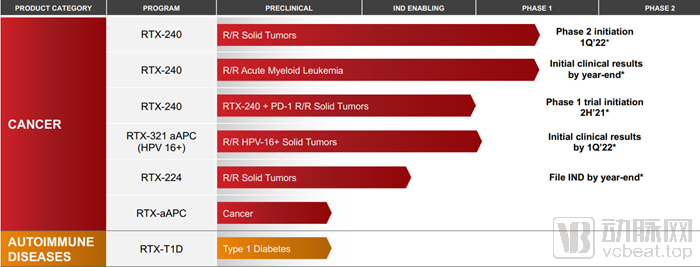
Image source: Rubius Therapeutics official website
Currently, the major companies researching mature red blood cell engineering within global red blood cell therapy technology platforms include: EryDel, EryTech, Anokion, Arytha Biosciences, Orphan Technologies, NanoBlood, Cello, and RxMP.
EryDel leverages patients’ own blood to develop and commercialize therapies for rare diseases. The company’s proprietary technology platform is an easy-to-use, rapid, and automated process that encapsulates molecules of various sizes within red blood cells, including therapeutic enzymes loaded into the patient’s erythrocytes.
EryDel reinfuses these cells into patients, thereby extending their half-life and reducing immunogenicity. EryDel currently has eight products in the research pipeline. To date, the company has completed two financing rounds, raising a total of €29 million.
Compared with the mature red blood cell engineering technologies that have been developed for many years, the use of hematopoietic stem cells and gene editing technologies to “create new red blood cells” is still an emerging technology. In recent years, with the advancement of cell therapy technologies, engineered red blood cell technologies derived from stem cells have also experienced rapid development. Examples include today’s featured company, Rubius Therapeutics, as well as other emerging companies such as Plasticell Limited and Westlake Biopharmaceutical Science & Technology.
Westlake Biopharmaceutical Technology is the first project to commercialize an independently developed scientific achievement since the establishment of Westlake University. The company employs targeted engineering of red blood cells to enable them to carry therapeutic agents for the treatment of various serious conditions, including rare diseases, cancer, metabolic disorders, and autoimmune diseases.
Xihu Biotech’s core technologies originate from the laboratory of Professor Gao Xiaofei at the School of Life Sciences, Westlake University.The REDx platform developed by the company is China’s first red blood cell drug platform and the second red blood cell therapy technology platform globally, following Rubius Therapeutics.Additionally, the products developed by Xihu Biology through this platform are still in the preclinical research stage.
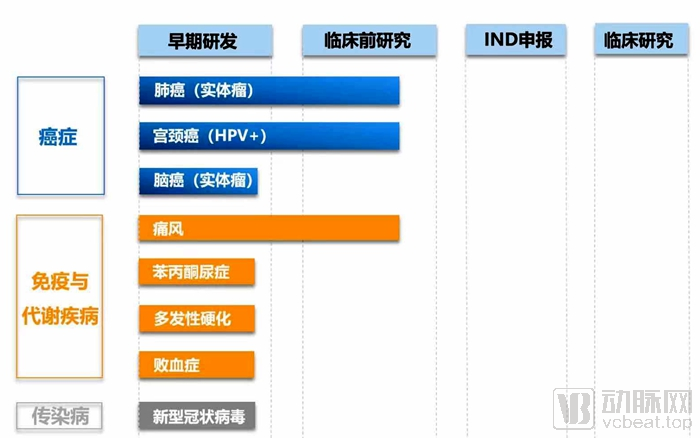
Image source: Westlake University of Life Sciences official website
To date, Westlake Biology has completed two rounds of financing, with a total amount of nearly RMB 200 million.
Rubius Therapeutics has garnered both acclaim and attention along its journey, while also facing skepticism.
Biotechnology analyst Madhu Kumar believes that Rubius’s red blood cell therapy has flaws in cancer treatment and is inherently unlikely to work. Madhu Kumar argues that RTX-240, which operates solely within the circulatory system, lacks sufficient potency to stimulate the immune system to act effectively deep within tumors.
Subsequently, Rubius also responded. Rubius stated that a growing body of research indicates that the optimal site for cell activation is outside the tumor, with initial responses occurring in the vascular system and spleen before exerting effects on the tumor itself.
The human body holds infinite mysteries, and the pursuit in the field of biology is endless. Let us stay tuned to see whether Rubius Therapeutics can successfully develop its products!