

Kaleido Biosciences: Pioneering Over 1,500 Microbiome Metabolic Therapies with a Chemistry-Driven Approach
Kaleido BioSciences
Innovative Drug Developer

Flagship Pioneering
Venture Capital Firms
The human body harbors hundreds of millions of microorganisms, with a total weight reaching up to 6 pounds, which is heavier than the human brain. The microbiome refers to the entirety of microorganisms within the human body, including the sum of their genetic information such as DNA sequences, and is known asThe Human Body's Second Genome. It is associated with a variety of human diseases, profoundly influencing the treatment of human diseases and clinical research.
Previously, microbiome therapeutics focused primarily on increasing or decreasing bacterial populations. Kaleido was the first company to employ a chemistry-driven approach to systematically modulate the metabolic output and function of the microbiome.
Kaleido adopts a chemistry-driven, differentiated approach to modulate microbial metabolic processes, harnessing the potential of microbes to treat diseases and improve human health. Currently, the company has more than 1,500 microbiome metabolic therapies (MMTs).
Microorganisms, including bacteria, viruses, archaea, and fungi, reside on and within the human body.The vast majority of these microorganisms are distributed in the gastrointestinal tract, accounting for more than 80% of the total weight of the human microbiota.The gut is not only a vital site for digestion and absorption in the human body, but also the largest immune organ.
Microorganisms are associated with many human diseases and health conditions. Many foods cannot be digested and absorbed by the human body alone; certain microorganisms synthesize vitamins and other essential nutrients to facilitate digestion and absorption. Furthermore, microbial communities can metabolize drugs and toxins, modulate innate and adaptive immunity, and protect the host from infection or immune dysregulation.
Microbial metabolism refers to a series of chemical reactions by which microorganisms absorb nutrients to sustain life and proliferation, and degrade substrates, encompassing both the degradation of organic matter and microbial growth. In catabolism, macromolecules are broken down into smaller molecules, generating energy in the process. Anabolism refers to the process by which cells synthesize complex macromolecules from simple small molecules, a process that consumes energy.
Gut bacteria carry out metabolic processes, generating small-molecule metabolites. Some of these metabolites are beneficial to human health, promoting digestion and immune responses. However, other metabolites, such as ammonia, can cause fatal harm to the human body when blood ammonia levels become excessively elevated.
In late 2007, the U.S. National Institutes of Health (NIH) announced an investment of $115 million to officially launch the Human Microbiome Project, aiming to elucidate the impact of changes in microbial community structure on human health and disease. Over the past decade, research into the influence of the microbiome on human health has gradually gained momentum, encompassing a wide range of conditions including cardiovascular disease, cancer, diabetes, Parkinson’s disease, and allergies.
Kaleido Biosciences was founded in 2015, a period when microbiome research was flourishing and various microbiome therapeutics companies were being established.Over the past seven years since its establishment, Kaleido has independently developed more than 1,500 MMT candidate therapies, leveraging specific compounds to modulate gut microbiota structure and drive functional shifts in the microbiome for the treatment of diseases and the improvement of human health.
As an experienced chief executive officer, Dan Menichella assumed the role of President and CEO of Kaleido in October 2020. He previously served as CEO of CureVac’s U.S. subsidiary, a German biotechnology company, and later became CEO of CureVac itself after more than a year in the former position. Founded in 2000, CureVac was the first biopharmaceutical company to develop vaccines using mRNA technology. During Mr. Menichella’s tenure, CureVac secured patent grants from the European Patent Office.
Since 2019, William Duke has served as Chief Financial Officer of Kaleido Biosciences. Previously, he was CFO of Pulmatrix, a publicly listed biopharmaceutical company. At Pulmatrix, he helped negotiate the company’s first product collaboration and led it through several initial public offerings. He previously held the position of Senior Finance Director at Genzyme, a world-renowned biopharmaceutical company, where he played a key role in facilitating its acquisition by Sanofi, making it a subsidiary of the Sanofi Group.
Dr. Johan van Hylckama Vlieg has served as Chief Scientific Officer at Kaleido BioSciences since 2019, bringing over 25 years of leadership and R&D experience in the fields of gut microbiology, probiotics, and biotherapeutics. He previously led the microbiome program and the Human Health Innovation organization at Chr. Hansen in Denmark, where he was responsible for developing probiotics and novel strains for therapeutic applications.
Kaleido is capable of manufacturing synthetic glycans with diverse and complex structures, wherein each targeted glycan represents a collection of composite carbohydrates. Monosaccharides, oligosaccharides, and polysaccharides are combined through various peptide bonds and branching configurations to form a wide array of chemical structures.Kaleido modulates microbial metabolism through the targeted synthesis of diverse glycans to drive specific biological responses, a approach known as Microbiome Metabolic Therapy (MMT).
As of 2021, Kaleido Biosciences had developed more than 1,500 MMT candidate therapies.
MMT candidate products are a collection of molecules with diverse structures,It is highly soluble and can be administered orally.They have limited exposure in the human body, minimizing off-target effects. These candidate products utilize compounds with GRAS (Generally Recognized As Safe, a safety assessment indicator for food additives evaluated by the U.S. FDA) certification, enabling rapid advancement into human clinical trials.
Furthermore, Kaleido holds numerous intellectual property (IP) rights, and its diverse library of synthetic glycans aids researchers in elucidating structures and disease pathways.
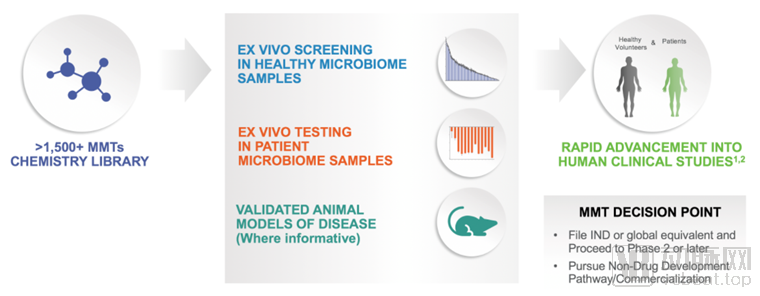
Kaleido is disrupting traditional discovery and development models, enabling its MMT candidates to rapidly advance into human clinical studies. The company has established a proprietary, human-centric discovery and development platform that facilitates the rapid and cost-effective development of new products.
In accordance with regulations supporting food research, Kaleido has rapidly advanced its MMT candidate product into non-Investigational New Drug (non-IND) clinical trials to evaluate safety, tolerability, and potential efficacy in subjects. Investigational New Drug (IND) clinical trials require FDA authorization and institutional review board approval before initiation and must be conducted under FDA oversight. In contrast, non-IND trials may proceed under the oversight of the investigational site following institutional review board approval, without the need for additional notification to the FDA.
Conduct non-IND studies first to enable Kaleido Biosciences, Inc. to gain valuable insights into the impact of its MMT candidate products on the microbiome and human health, before allocating additional time and funding to either develop drug candidates under an IND or commercialize non-drug products.
For MMT candidate products intended for further development as therapeutic drugs, the Company will file Investigational New Drug (IND) applications or their regulatory equivalents for clinical trials outside the United States, with development proceeding from Phase II onward.
Source: Kaleido Biosciences Official Website
In certain cases, Kaleido employs in vivo models prior to initiating human clinical studies to enhance researchers’ understanding of disease mechanisms and biomarkers.
Kaleido conducts R&D across various diseases and therapeutic areas, dedicated to addressing unmet medical needs.
Source: Kaleido Biosciences Official Website
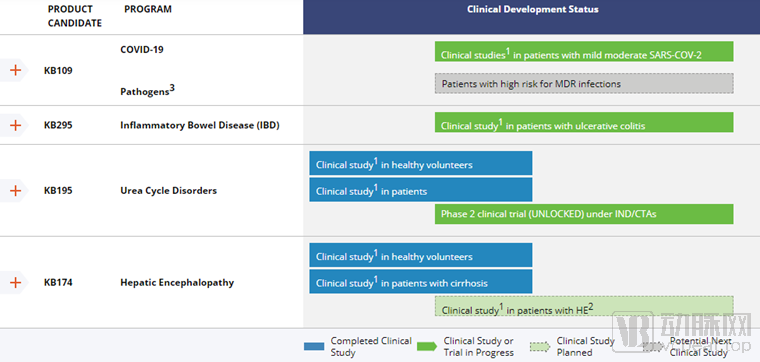
Its candidate drug, KB195, for the treatment of urea cycle disorders, has undergone clinical studies in healthy volunteers and patients. Phase II clinical trials are currently underway under an Investigational New Drug (IND)/Clinical Trial Application (CTA).
The urea cycle is a metabolic pathway in which the body converts "toxic" ammonia, produced by various metabolic processes, into "non-toxic" urea, which is then excreted in urine. Urea cycle disorders are diseases caused by genetic defects or mutations that lead to deficiencies in enzymes required for the urea cycle, resulting in impaired ammonia metabolism and elevated blood ammonia levels.
This Phase II clinical trial enrolled patients aged 12 to 70 years with urea cycle disorders whose needs were not met by standard of care. The study will evaluate the efficacy of KB195 in reducing blood ammonia levels, as well as its safety and tolerability.
The investigational drug KB174 is indicated for the treatment of hepatic encephalopathy. Clinical studies have been conducted in healthy volunteers and patients with liver cirrhosis. Currently, Kaleido is planning to conduct clinical trials in patients with hepatic encephalopathy (HE).
Hepatic encephalopathy is a syndrome of central nervous system dysfunction caused by severe liver disease and based on metabolic disturbances. It is observed in patients with acute liver failure, and its main clinical manifestations include impaired consciousness, behavioral abnormalities, and coma.
The candidate drug KB295, indicated for the treatment of inflammatory bowel disease (IBD), is currently undergoing Phase I clinical trials. Inflammatory bowel disease is an idiopathic inflammatory disorder of the gastrointestinal tract involving the ileum, rectum, and colon. It encompasses ulcerative colitis (UC) and Crohn’s disease (CD), with clinical manifestations including diarrhea, abdominal pain, and in some cases, hematochezia.
Inflammatory bowel disease (IBD) is a chronic inflammatory intestinal disorder caused by multiple factors, including genetic predisposition, gut microbiota, and the host immune system; however, its exact etiology and pathogenesis remain unclear. A common alteration in the gut microbiota of patients with IBD is an increase in facultative anaerobes and a decrease in obligate anaerobes that produce short-chain fatty acids (SCFAs).
MMT’s candidate drug KB109 can be used to treat patients with mild-to-moderate COVID-19; Kaleido is prioritizing the development of KB109 and has suspended certain research projects accordingly.
The candidate drug KB109 is an orally administered, targeted glycan developed by Kaleido Biosciences based on its Microbiome Metabolic Therapy (MMT) platform for the treatment of multidrug-resistant bacterial infections. It increases the abundance of specific bacteria in the gut to address infections caused by drug-resistant bacteria.In the treatment of COVID-19 patients, KB109 can increase the production of short-chain fatty acids by gut microbiota and modulate immune responses.
To treat novel coronavirus pneumonia, Kaleido initiated two non-IND clinical studies, K031 and K032.
On July 23, 2020, Kaleido Biosciences, Inc. announced a collaboration with Massachusetts General Hospital to conduct a controlled clinical study evaluating the efficacy of KB109 as an adjunctive therapy to improve health outcomes in outpatients with mild-to-moderate COVID-19.
On January 4, 2021, Kaleido announced that its Phase 3 clinical trial (Study K031) evaluating the investigational drug KB109 for the treatment of patients with mild-to-moderate COVID-19 had enrolled 350 participants. In this study, patients with mild-to-moderate COVID-19 were randomized to one of two home-based treatment groups: standard self-care or self-care plus oral KB109.
The K031 study is a multicenter, non-IND clinical trial designed to evaluate whether the investigational drug KB109 can alleviate clinical symptoms in COVID-19-positive patients.
On March 24, 2021, Kaleido reported positive results from a non-IND study of KB109 in patients with mild-to-moderate COVID-19.The results showed that KB109 demonstrated overall favorable safety and durability, with no unexpected treatment-related adverse events.
Dan Menichella, CEO of Kaleido, stated that despite historic progress in advancing COVID-19 vaccination, new strains of the virus continue to emerge, necessitating safe, oral treatments for patients worldwide.
If current studies in patients with mild-to-moderate COVID-19 are successful, Kaleido will conduct further research or initiate commercialization preparations for KB109.
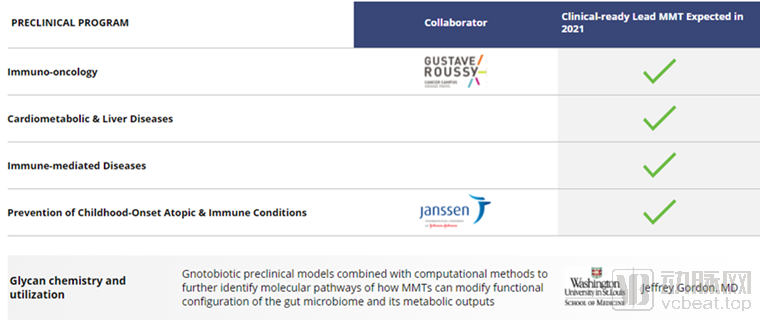
In September 2019, Kaleido partnered with Gustave Roussy, Europe’s largest cancer treatment center, to develop MMT therapy in immuno-oncology.
This collaboration aims to identify MMT candidates that may enhance the efficacy of cancer immunotherapy by altering microbiome composition and metabolic output, thereby increasing the number of patients who respond to immune checkpoint inhibitors such as CTLA-4 and PD-1.
“Professor Zitvogel, Director of the Cancer Immunology and Immunotherapy Program at Gustave Roussy, stated, ‘We are interested in Kaleido’s unique microbiome-based therapies and believe they may provide optimized and personalized treatment for cancer patients.’”
This collaboration marks Kaleido’s entry into the immuno-oncology field, helping to advance treatment and care for cancer patients.
Clinical Programs Source: Kaleido Biosciences Official Website
In January 2020, Kaleido Biosciences entered into a drug development agreement with Janssen Pharmaceuticals, a subsidiary of Johnson & Johnson, to develop microbiome metabolite therapy (MMT) for the prevention of pediatric allergies and other specific immune and metabolic disorders using Kaleido’s screening platform.
This collaboration aims to leverage Kaleido’s in vitro screening platform to identify MMT candidates capable of modulating the growth of specific microbes, and to further evaluate the potential of these MMT therapies in disease prevention.
Since its establishment in 2015, Kaleido has completed four rounds of financing, totaling $230.9 million. In January 2019, Kaleido was listed on the NASDAQ.
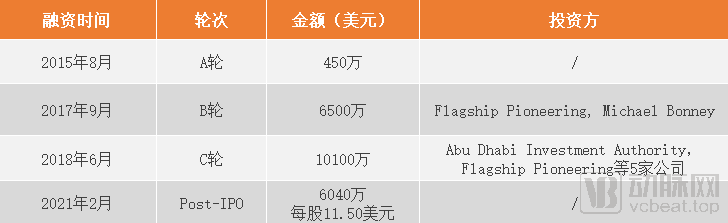
On February 4, 2021, Kaleido Biosciences, Inc. raised funds through a public stock offering at a price of $11.50 per share. The offering raised a total of $60.4 million.
Kaleido will use the net proceeds from this offering, together with its existing cash resources, to fund its research and development activities, including ongoing clinical studies of KB109 in patients with mild-to-moderate COVID-19 and of KB295 in patients with mild-to-moderate ulcerative colitis.
Over the past decade, microbiome-based drug development and genetic testing have witnessed unprecedented growth. The human microbiome, often referred to as the “second genome” of the human body, plays a crucial role in disease treatment and overall health. Countries around the world have successively launched microbiome initiatives, including the United States’ National Microbiome Initiative (NMI), which began in 2016, and China’s Chinese Academy of Sciences Microbiome Initiative, which commenced in 2017.
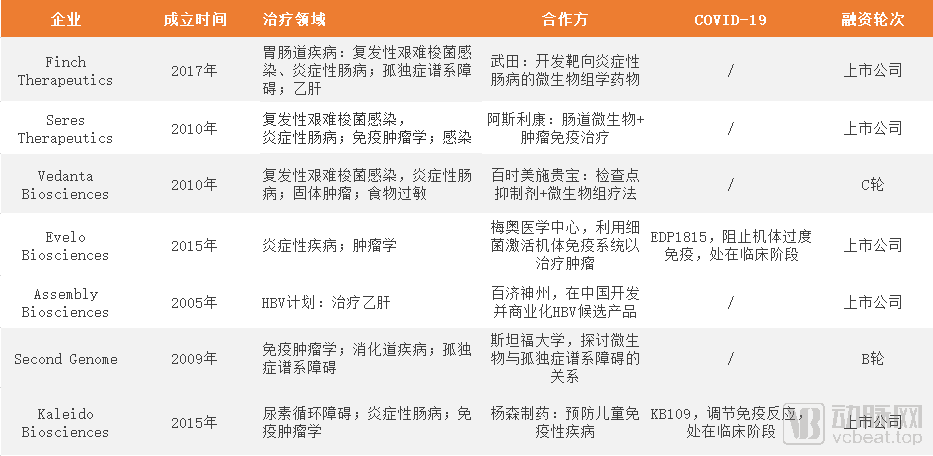
Currently, U.S. biotechnology companies leveraging the microbiome for therapeutic purposes are thriving and going public one after another. China entered the field of microbiome-based therapeutics at a later stage, with its focus primarily on microbiome testing and health management.
Kaleido has demonstrated the potential of microbiome-targeted therapy by treating COVID-19 through modulation of immune responses. Undoubtedly, human microbiomics will be the next major frontier in precision medicine.