

Propeller Health: FDA-Cleared Digital Therapeutics Leader in Chronic Respiratory Disease Management

Propeller Health
Developer of Digital Health Platforms for Chronic Respiratory Diseases
It is reported that the theme for World Asthma Day 2021 (the first Tuesday in May) has been determined as “Uncovering Asthma Misconceptions.” During this period, local asthma alliances, member institutions of the National Asthma Research Collaborative Group, and specialized asthma clinics will conduct activities under epidemic prevention and control measures to popularize knowledge about asthma and promote standardized treatment.
Regarding asthma, this non-communicable respiratory disease is characterized by recurrent episodes of dyspnea and wheezing. More than 339 million people worldwide suffer from asthma. The Global Burden of Disease Study reported that an estimated 3.17 million deaths globally were attributable to asthma in 2015, accounting for 5% of all deaths worldwide that year.
Chronic obstructive pulmonary disease (COPD) is also associated with asthma, and both are global respiratory health concerns.
Regarding COPD, this is a lung disease characterized by persistently reduced airflow, with symptoms of gradually worsening and exertional dyspnea that ultimately leads to shortness of breath at rest. The more common terms for this condition are chronic bronchitis and emphysema. In the World Health Organization's 2020 list of the top ten global causes of death, chronic obstructive pulmonary disease ranked third, accounting for 6% of all deaths.
Traditional disease management approaches for asthma and COPD struggle to provide timely tracking of patients’ symptoms, triggers, and medication adherence. In contrast, digital therapeutics, which are currently gaining significant momentum, offer patients novel ways to manage asthma and COPD through smart inhalers and trigger-monitoring devices.
Among digital therapeutics companies in this field, Propeller Health, founded in Wisconsin, USA, in 2007, is a representative example. This digital health company is dedicated to the management of chronic respiratory diseases, primarily providing solutions for patients with chronic obstructive pulmonary disease (COPD) and asthma.
Independently developed for over 10 years, acquired by ResMed in 2018
Notably, in VCBeat’s analysis of financing activities for digital therapeutics targeting asthma and COPD, the top two spots among the top five are closely associated with it. The number one spot is held by ResMed, and the number two spot is occupied by Propeller Health itself. In 2018, Propeller Health was acquired by ResMed for $225 million, becoming its wholly-owned subsidiary.
According to Crunchbase, Propeller Health had completed seven rounds of funding, raising a total of $69.9 million, prior to its acquisition in January 2019.

Source: Crunchbase
Following the acquisition, Propeller Health operates as an independent business within ResMed’s respiratory care portfolio. Its co-founder and CEO, David Van Sickle, continues to serve in his original role, reporting to ResMed President Richie McHale.
Senior executives at ResMed stated that they aim not only to leverage Propeller Health’s digital medication adherence solutions to enhance their core business, but also value the partnerships Propeller Health has established with pharmaceutical companies, healthcare providers, and payers.
Robust Partnership Network
Propeller Health boasts a robust collaborative network in the healthcare sector, with over 60 commercial projects spanning 16 countries worldwide. Its partners include pharmaceutical and medical technology companies, health systems, and healthcare providers. Since 2013, Propeller Health has established partnerships with Boehringer Ingelheim (2013), GSK (2015), Aptar Pharma (2016), Vectura (2016), Novartis (2017), and Walgreens (2019).
To date, Propeller Health continues to expand its commercial partnerships. In January 2020, it partnered with Signant Health to integrate the TrialMax® electronic Clinical Outcome Assessment (eCOA) platform with Propeller’s digital health platform for asthma and COPD, thereby collecting accurate data related to these conditions and helping improve patient adherence to inhaled medications.
40+ peer-reviewed studies, multiple FDA approvals
Propeller HealthAtIts clinical outcomes have been demonstrated in 60+ clinical studies and 40+ peer-reviewed studies.。According to its official website, in a 6-month randomized controlled trial (RCT) involving asthma patients, medication adherence among those using Propeller increased by 58%; data collected from sensors showed that the overall medication usage rate rose from 0.66 to 0.82. In clinical settings, the average daily inhaler use per patient decreased by 84% over 12 months.
For COPD patients, Propeller’s digital therapy can also reduce their use of inhalers. Studies show that after 12 months of use, symptom-free days increased by 34%, average daily inhaler use decreased by 63%, and nighttime inhaler use decreased by 73%.
To date, the company has obtained 9 FDA approvals. The FDA approvals for digital therapeutics targeting asthma and COPD are listed in the table below:

Source: Artery Orange
Stand Out Among Hundreds of Digital Solutions
Propeller Health holds a prominent market position in the digital respiratory care sector. Although there are hundreds of digital respiratory solutions worldwide, Propeller Health stands out for its exceptional service quality and comprehensive scope of services.Its solution comprises a sensor, a mobile application, a patient management platform, and corresponding data analytics and services. The solution is designed not only for patients but also for physicians and healthcare providers.
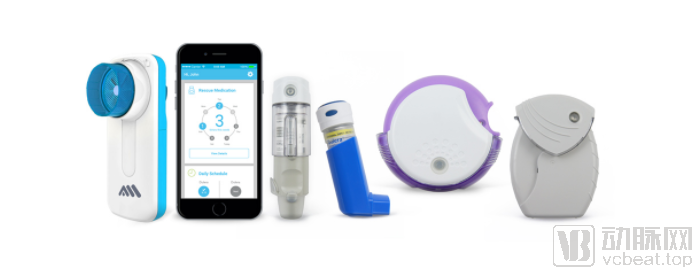
Source: Propeller Health Official Website
Usage and Solutions
First, users register online.Users can select either the asthma or COPD program based on their individual condition and answer a few questions about their current medications. Propeller Health supports both self-registration and in-clinic registration, with automated follow-up to ensure successful user enrollment.
Second, acquire the device and conduct monitoring.Propeller Health will deliver the sensor to users’ homes within 5–7 business days. The sensor is compatible with more than 90% of inhalation medications on the market and has a battery life of up to 1.5 years.
Users simply need to attach the sensor to their inhaler. Each time medication is administered, the sensor automatically tracks and records the location, time, and frequency of use, transmitting this information to the user’s mobile app. The sensor can also issue reminders if the user forgets to use their inhaler.
Third, provide reports and manage conditions.Over time, the Propeller Health app generates monthly reports based on users’ medication usage and other data. These reports are then delivered to users via mobile app notifications, email, and other channels, helping them better manage their symptoms and identify triggers. When a patient’s inhaler usage spikes, the app also alerts the patient to seek timely medical attention.
The application also provides information to healthcare organizations and physicians. Specifically, the healthcare providers responsible for each patient can stay abreast of the patient’s condition by receiving reports that include medication adherence, symptom trends, and corresponding ACT or CAT scores, thereby enabling them to identify patients experiencing disease exacerbation and adjust their treatment plans as needed.
Furthermore, Propeller Health user data is not only scientifically analyzed but also protected under the HIPAA regulations before reports or corresponding results are generated, ensuring that users need not worry about the leakage of their health privacy.
Reduced Healthcare Costs, High Patient Satisfaction
The preceding text highlighted Propeller Health’s significant efficacy in improving medication adherence and reducing inhaler usage. Furthermore, its service quality is also reflected in two additional areas: healthcare cost savings and patient satisfaction.
Relevant studies indicate that for asthma, each patient with uncontrolled asthma incurs approximately $1,349 in excess costs annually; compared to patients with controlled asthma, they experience a 12.7% loss in normal working hours. With the use of Propeller Health’s digital therapy, 72% of patients achieved asthma control. Additionally, 57% of patients reduced their hospitalizations and emergency department visits, thereby lowering their healthcare costs.
For COPD, the total cost in the United States was approximately $50 billion in 2010, with hospitalization expenses accounting for the majority. Data from the Propeller platform can identify patients at increased risk of COPD exacerbations, enabling physicians to intervene in a timely manner and reduce hospital admissions or emergency department visits. According to data from the Propeller Health website, the use of Propeller reduced COPD-related healthcare utilization by 35%.
Propeller Health Achieves High Patient Satisfaction. Both asthma and COPD patients reported satisfaction with their Propeller experience. In a satisfaction survey, 79% of users expressed high satisfaction with the Propeller sensor device, while 20% reported moderate satisfaction. Furthermore, 93% of users were satisfied with the user reports generated by the Propeller platform, noting that these reports helped them better understand their condition.
Original Aspirations Meet a Favorable Moment for the Development of Digital Therapeutics
Propeller Health is dedicated to improving the lives of everyone affected by chronic respiratory diseases. It offers a free tool called Air to the public. By analyzing collected data, Air identifies where, when, and why asthma attacks are likely to occur, helping individuals understand asthma patterns in their communities so they can better prepare for prevention.
Currently, Propeller Health believes that the era of digital health is imminent. By integrating internet-enabled devices and data science with patient experience and services, digital health can deliver superior services to users while helping companies build their brands in a highly competitive market.
According to data from Arterial Orange, 2018 and 2019 marked the peak of global financing activity in digital therapeutics for asthma and COPD. In 2019, global funding in this field exceeded $500 million. The top five recipients included Propeller Health and its parent company ResMed, as well as Spirosure, which is dedicated to researching innovative monitoring technologies for asthma diagnosis and disease management; Chengyi Renjia, which focuses on the management of chronic respiratory diseases; and the digital health company Cohero Health.
About ResMed
ResMed, founded in 1989 and headquartered in California, USA, is a global leader in medical devices, specializing in the development of equipment for diagnosing and managing sleep-disordered breathing and other respiratory diseases. The company has over six million cloud-connected devices for daily remote patient monitoring, with operations in more than 120 countries worldwide. ResMed was listed on the New York Stock Exchange in 1995 under the ticker symbol: RMD.
Previously, VCBeat covered this company; for details, see the article “30 Most Notable Healthcare Startups to Watch in 2015: Propeller Health Monitors Your Every Breath.”