

Acceleration in the Heart Valve Sector: Domestic Substitution Becomes Irresistible (Part II)
This article was first published on Siyu Medical Device Observation, authored by Lily, and reposted with permission by VCBeat.
Previous Review:The Heart Valve Sector Accelerates, with Domestic Substitution Becoming Unstoppable (Part 1)
The previous section introduced heart valves, the selection of prosthetic valves, and the heart valve market. The next section will provide an overview and summary of representative companies in China and abroad.
(I) International Representatives
1. Edwards
Edwards Lifesciences is widely regarded as the undisputed industry leader and a premier global provider of solutions for heart valve disease, critical care, and surgical monitoring. Its history dates back to 1958, when the company’s founder embarked on the development of artificial heart valves. In 1975, Edwards successfully launched the world’s first porcine bioprosthetic heart valve.
In 1960, Edwards Lifesciences began researching the transformation of heart valve technology and launched its first commercialized heart valve in the same year. This was followed by the introduction of the first bioprosthetic valve (porcine aortic valve) in 1965, and later, bovine pericardial valves. In 2004, Edwards acquired the Israeli company Percutaneous Valve Technologies (PVT), entering the TAVR field. In 2007, Edwards’ first TAVR product, Sapien, received CE marking, and it obtained FDA approval for market launch in the United States in 2011. Subsequently, iterative TAVR products, Sapien XT and Sapien 3, were introduced.
Edwards currently has a market capitalization of $53 billion in the United States, nearly ten times that of Venus Medtech and HeartTone Medical. During the 2020 pandemic, Edwards achieved sales revenue of $4.4 billion, still maintaining a 1% growth. The company expects its full-year sales revenue for 2021 to be in the range of $4.9 billion to $5.3 billion.

(Image source: Edwards official website)
2. Medtronic
Medtronic, founded in 1949 and headquartered in Minneapolis, Minnesota, USA, is a global leader in providing lifelong therapeutic solutions for patients with chronic diseases. Medtronic’s main products span multiple fields, including cardiac arrhythmias, heart failure, vascular diseases, heart valve replacement, extracorporeal cardiac support, and minimally invasive cardiac surgery.
Medtronic has long held the top position in the global medical device industry, but its full-year revenue for fiscal year 2020 declined due to the impact of the pandemic. Global revenue for fiscal year 2020 was $28.913 billion, a 5.38% decrease from the previous fiscal year’s revenue of $30.557 billion. Revenue from its Coronary and Structural Heart business, which includes heart valve products, amounted to $3.541 billion, representing a year-over-year decline of 5.4%. On March 30 this year, the U.S. Food and Drug Administration (FDA) approved Medtronic’s Harmony transcatheter pulmonary valve (TPV), the world’s first non-surgical heart valve. It is indicated for the treatment of congenital heart disease and is specifically designed for severe pulmonary regurgitation (backflow of blood into the right lower chamber of the heart).

(Image source: Medtronic official website)
3. Abbott (acquired St. Jude Medical)
In April 2016, Abbott acquired St. Jude Medical, a cardiac device manufacturer, for $25 billion, marking Abbott’s largest acquisition in its history. A pioneer in the field of cardiovascular medical technology since 1976, St. Jude Medical primarily operates in two business segments: cardiac rhythm management and heart valve disease management. Through independent innovation, strategic acquisitions, and product line expansion, the company has evolved from its origins as a heart valve manufacturer into a global leader in the heart valve sector.
In 2020, Abbott’s global sales reached $34.6 billion, representing a year-on-year increase of nearly 10%. Last year, multiple heart valve products were successively approved in markets such as Europe and the United States, including TriClip, the world’s first transcatheter tricuspid valve repair system, and Tendyne, an innovative heart valve replacement system.

(Image source: public information)
(2) Domestic Representatives
1. Venus Medtech
Venus Medtech was founded in 2009 as the first interventional valve company in China to obtain clinical trial approval from the China Food and Drug Administration (CFDA), focusing on the research, development, and commercialization of interventional valve products. The company boasts a robust R&D pipeline, with key areas of investigation including transcatheter aortic valve series, transcatheter pulmonary valve series, and other ancillary products. In December 2019, it successfully listed on the Main Board of the Hong Kong Stock Exchange, becoming the first publicly traded company in China’s interventional valve sector.
In 2020, Venus MedTech achieved sales revenue of RMB 276 million, a year-on-year increase of 18.3%, with a stable gross profit margin of 82.3%. Last year, Venus MedTech had several innovative products approved for market launch. In November 2020, its second-generation transcatheter heart valve system, VenusA-Plus, received approval from the National Medical Products Administration (NMPA), becoming China’s first retrievable transcatheter heart valve system. In March 2021, the VenusP-Valve transcatheter pulmonary valve system obtained special use authorization in the United Kingdom, allowing early market entry. Leveraging its first-mover advantage and comprehensive product portfolio, the company ranks among the leading tier of domestic manufacturers in the field of transcatheter valve interventions.

(Image source: Venus Medtech official website)
2. MicroPort CardioFlow
MicroPort CardioFlow, established in 2015 in Zhangjiang, Shanghai, is a holding subsidiary of Shanghai MicroPort. It specializes in the research, development, and commercialization of innovative transcatheter and surgical solutions for valvular heart disease. Currently, the company primarily focuses on aortic, mitral, and tricuspid valve products, as well as other ancillary devices, through independent R&D and strategic collaborations.
Among these, the aortic valve product line is the company’s current key strategic focus. The company currently has four products that have received marketing approval, with VitaFlow™ being the most mature. As of July 31, 2020, 872 units had been sold, and more than 120 hospitals in China had adopted VitaFlow™ for minimally invasive interventional procedures.
According to MicroPort’s 2020 annual report, its heart valve business delivered outstanding performance, generating revenue of USD 152 million, a year-on-year increase of 383.4%. It is projected that MicroPort CardioFlow will capture a 40% market share by 2030. Currently, the ex-factory price of CardioFlow’s products in 2020 was RMB 80,000, with the expected sales volume ranging from RMB 3.2 billion to RMB 5.6 billion.

(Image source: MicroPort CardioFlow official website)
3. BaiRen Medical
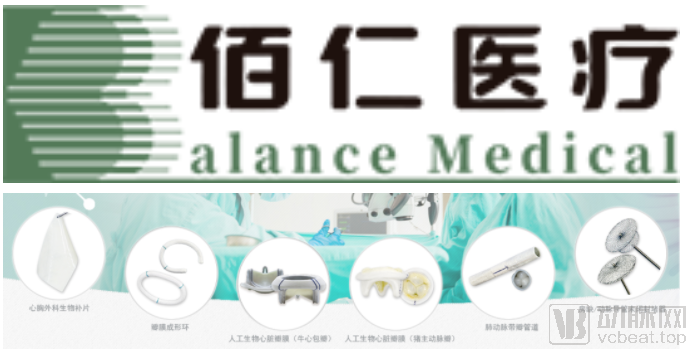
Baoren Medical’s predecessor was Beijing Baorensi Biotechnology Co., Ltd., established in 2001. Baoren Medical’s approved products, including bovine pericardial valves, porcine aortic valves, and valve annuloplasty rings, have filled gaps in the domestic cardiac surgery market. The company’s current business spans three major areas: heart valve replacement and repair, interventional and implantable treatments for congenital heart disease, and surgical soft tissue repair. Its main products include surgical bioprosthetic valves, valve annuloplasty rings, cardiac surgery patches, and neurosurgery patches. In 2020, the company reported total annual operating revenue of approximately RMB 182 million, representing a year-on-year increase of 24.58%.
Bairui Medical’s novel bioprosthetic heart valve—the bovine pericardial valve—was first registered and launched in 2003, marking the company’s inaugural approved product. It received re-approval for registration from the China Food and Drug Administration (CFDA) in 2016. With over a decade of clinical application involving more than 4,000 cases across 260 hospitals, the bovine pericardial valve has demonstrated exceptional performance in both surgical success rates and postoperative recovery, establishing itself as one of the few premium products of its kind in China.
Bairen Medical possesses core technologies for processing xenogeneic materials, which not only enable animal tissues to resist rejection and calcification after implantation into the human body, thereby meeting long-term therapeutic expectations, but also allow these tissues to be fabricated into various implantable products to address the repair and replacement needs of different tissues or organs in the human body.
(Image source: Pericardial Biomedical official website)
4. Peijia Medical
Since its establishment in 2012, Peijia Medical has been deeply committed to transcatheter valve therapy, striving to build a globally renowned medical device platform in the field of high-end cardiovascular and cerebrovascular interventional treatments. The company boasts extensive technological expertise and a robust product pipeline in the field of interventional valves, and is currently developing transcatheter aortic valve systems, mitral valve systems, tricuspid valve systems, and related surgical accessories. Its first-generation transcatheter aortic valve, TaurusOne, and the second-generation TaurusElite are currently in pre-market clinical trials and have entered the “Green Channel” for approval by the National Medical Products Administration (NMPA).
In 2020, the company achieved an operating revenue of RMB 38.66 million, representing a year-on-year increase of 106.7%. The development of its cardiac valve pipeline products is progressing in an orderly manner, with TAVR products nearing commercialization: The Company’s first-generation TAVR product, TaurusOne®, submitted its registration application in September 2020 and is expected to receive approval in Q2 2021. Meanwhile, patient enrollment for the clinical trial of the Company’s second-generation product, TaurusElite®, which features retrievability, has been completed, with approval anticipated in Q3 2021. The third-generation TAVR product, TaurusNXT®, has completed animal studies and type testing, and clinical trials are scheduled to commence in Q2 2021.

(Image source: Peijia Medical official website)
5. Lepu Medical
Lepu Medical was established in 1999 and listed on the ChiNext board in 2009, focusing on serving patients with cardiovascular diseases. According to its 2020 preliminary earnings report, the company’s operating revenue was approximately RMB 8.057 billion, representing a year-on-year increase of 3.35%.
Lepu Medical began as a single-business company focused on cardiac stents in the cardiovascular field, becoming one of the earliest companies in China to develop cardiovascular stents. Leveraging its deep insights into the clinical needs of cardiology departments and the advantages of its team and distribution channels, the company gradually built a comprehensive product portfolio in the cardiac sector through an “investment + M&A” strategy. It has continuously launched innovative products, including cardiac occluders, heart valves, and AI-ECG artificial intelligence electrocardiogram diagnostic and analysis systems. Its strong innovation capability has solidified its leading position in the cardiac field.

(Image source: Lepu Medical official website)
6. Jianshi Biotech
Ningbo Jianshi Biotech is an innovator in the field of minimally invasive interventional therapy for heart valves in China, focusing on innovation in this area and committed to becoming a world-class technological leader in interventional heart valve therapy. The company's management team is led by overseas-returnee PhDs with extensive R&D experience in areas such as bioprosthetic valve manufacturing processes and stent design.
Jianshi Biotechnology has developed the Lux-Valve®, an internationally leading and domestically first-of-its-kind transcatheter tricuspid valve replacement system, filling the gap in domestic tricuspid valve replacement products. Additionally, the company has successfully developed the Ken-Valve®, a domestically leading transcatheter aortic valve replacement system. Its unique design ensures that the valve can be used not only for treating aortic stenosis but also for aortic regurgitation (insufficiency).

China’s heart valve industry is in a phase of rapid growth, with substantial untapped potential in surgical volume, product development, and market education. As population aging intensifies and the prevalence of cardiovascular diseases rises, driving greater market demand, the sector is experiencing a new wave of investment enthusiasm. Supported by national policies and accelerated through green approval channels that streamline the journey from R&D to market launch for innovative products, China’s heart valve industry is steadily narrowing the gap with imported brands and gradually emerging on the global stage.
The path to domestic substitution is fraught with challenges. Like many high-end medical devices, the development of artificial heart valves is undoubtedly a difficult journey. However, China’s substantial demand for artificial heart valves, coupled with a robust foundation in raw material supply, has created significant opportunities for domestic enterprises. As Venus Medtech, Jiecheng Medical, and MicroPort accelerate their R&D and commercialization efforts, artificial heart valves are poised to become one of the fastest-growing segments within the innovative medical device sector in the coming years. With an increasing number of companies entering the field, there is high expectation that domestic firms will continue to innovate, expedite the replacement of imported products with domestically produced alternatives, and bring more innovative products to market.