

Exclusive Interview with Ying Xitang, Founder of Chemclin Diagnostics: What Lessons from Over a Decade of Entrepreneurship Inform His Second Venture?
Although Ying Xitang, the founder of Kemai Diagnostics, has left the company’s executive team and embarked on his second entrepreneurial journey, he continues to closely monitor Kemai’s development. On April 9, 2021, Kemai Diagnostics successfully listed on the STAR Market, with its market capitalization once exceeding RMB 10 billion. As a participant who personally experienced Kemai’s founding and four rounds of financing, Ying Xitang is well aware that today’s achievements are inseparable from the strong support of customers, employees, partners, and investors, as well as the diligent efforts of the current management team.
As a star enterprise in the field of chemiluminescence, Kemei has attracted considerable external curiosity about its years of development since going public. There is also significant interest in Ying Xitang’s departure from Kemei’s executive team to embark on a second entrepreneurial venture in the field of accelerated recovery for cancer treatment. To this end, VCBeat recently conducted an exclusive interview with Ying Xitang, founder of Kemei Diagnostics and Kangai.
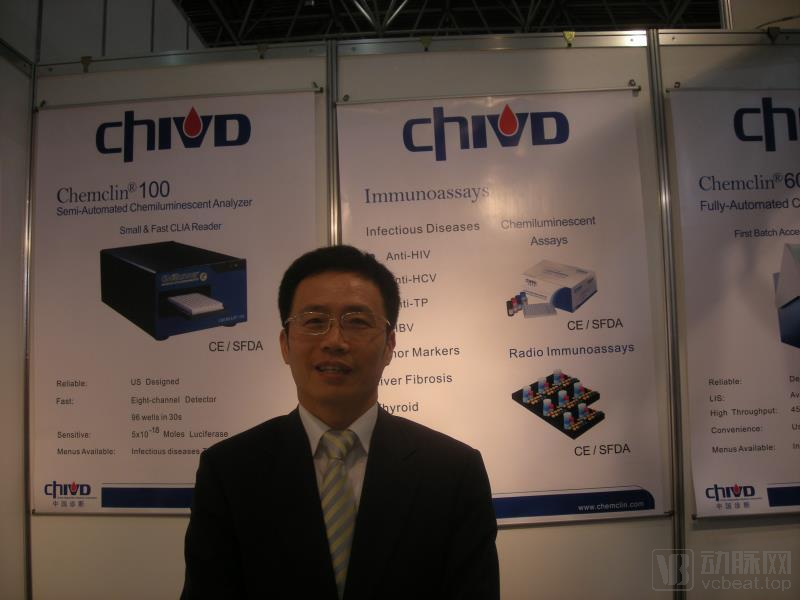
Ying Xitang, Founder of Kemei Diagnostics and Kang'ai
In 1988, Ying Xitang joined the Beijing North Institute of Biotechnology (North Institute), one of the earliest institutions in China engaged in the research and development and production of radioimmunoassay diagnostic reagents, and the largest high-tech enterprise in China specializing in radioimmunoassay in vitro diagnostics.
Recalling the impetus behind founding Kemei, Ying Xitang said: “At that time, Beijing Xuanwu Hospital was one of the major clients of the Northern Institute. However, one day, Xuanwu Hospital suddenly halted its procurement of 28 assay kits from the Northern Institute. I made a special trip to Xuanwu Hospital and learned that the hospital had purchased an imported automated chemiluminescence immunoassay analyzer from the United States. With this system, staff only needed to load specimens into the instrument, and results were generated rapidly, significantly simplifying the workflow and reducing labor requirements. As a result, it was highly favored by personnel in the Department of Laboratory Medicine.”
This sharp insight led Ying Xitang to realize that immunodiagnostic technology was entering a new cycle of innovation and iteration, with legacy products such as radioimmunoassay soon to be phased out, thereby presenting a significant market opportunity for chemiluminescence.
Therefore, in 1999, Ying Xitang and more than 20 individuals, including several professors from the Chinese PLA General Hospital, jointly contributed RMB 500,000 to establish Kemey Dongya, the predecessor of Kemey Diagnostics, with chemiluminescence technology as its core innovation.
When Kemai was first founded, the domestic chemiluminescence industry landscape was barren, lacking both supporting upstream and downstream supply chains and instrument engineering capabilities; everything had to be built from scratch. Meanwhile, due to a lack of experience in his first entrepreneurial venture, Yingxitang encountered typical startup challenges during Kemai’s early development, including issues in R&D management, insufficient funding, and operational management.
First, there were issues with R&D management. “In its early days, Kemei took many detours in research and development. Although the products had obtained registration certificates, customer requirements were clearly higher than the regulatory standards. During the trial sales phase, customers pointed out multiple issues, including unstable product quality, inaccurate measurement results, and poor reproducibility.” In response, Kemei replaced two successive R&D department managers, yet the problems remained unresolved. “Later, I began to reflect and realized that it was not a personnel issue, but rather a flaw in the company’s R&D management system.”
Consequently, Ying Xitang studied the R&D management systems of major global enterprises. In 2006, Kemai drew on Huawei’s experience and introduced Integrated Product Development (IPD), a mature R&D management framework widely adopted in Europe and the United States. This helped Kemai standardize its R&D management processes and significantly improve the speed and quality of product development. Soon after, Kemai secured more than 100 patents and over 160 medical device registration certificates, becoming one of the companies with the most comprehensive product portfolios in the chemiluminescence sector.
In 2006, Kemai pioneered the development of the world’s first microwell plate chemiluminescence assay kit for HIV antibody diagnosis and was the first to obtain a registration certificate. This innovation enhanced detection sensitivity, addressed the critical challenge of transfusion-transmitted HIV infection, and solidified the company’s leading position in the infectious disease testing market. Its HIV test kits received outstanding ratings for six consecutive years from the National Center for AIDS/STD Control and Prevention’s Quality Reference Laboratory.
Next was the issue of funding. After the first batch of products completed R&D in 2006, there was no capital available for marketing. Ying Xitang began seeking investors to accumulate more funds. Subsequently, Kemei successfully completed four rounds of financing, with investors including Siemens Healthineers, SoftBank China, United Capital (UCAP), Matrix Partners China, Legend Capital, and HighLight Capital. During this period, iCapital Group, serving as the financial advisor for Kemei’s first three rounds, and China Renaissance, acting as the financial advisor for the fourth round, made highly effective contributions, resolving the company’s funding needs through these four financing rounds. In addition, in 2008, Kemei significantly alleviated its cash flow shortages by transforming its business model from direct sales to a distribution-based approach.
Furthermore, Ying Xitang places great emphasis on talent selection and appointment, recognizing that different stages require different types of talent. He firmly believes that “suitable” talent is more important than “outstanding” talent.
In the early stages of the startup, resilience and a strong work ethic were Ying Xitang’s primary criteria for selecting personnel. As Kemei reached a certain stage of development, particularly after introducing international capital, higher demands were placed on corporate management. Starting in 2008, Kemei gradually recruited professional managers from well-known international companies, established processes for marketing, sales, and after-sales service, and aligned its financial management and legal compliance more closely with international standards. In 2010, Ying Xitang stepped back from day-to-day operations to assume the role of Chairman.
After stepping back to a secondary role, Kemei did not disappoint Ying Xitang’s expectations. The company has since grown into one of the leading domestic players in chemiluminescence immunoassay, holding 178 medical device registration certificates. Its products have been adopted by more than 1,000 hospitals across China, with over 80% being Tier-II hospitals and above. In 2021, Kemei successfully went public, with its market capitalization once exceeding RMB 10 billion.
Although Kemai Diagnostics’ leading position in the chemiluminescence and infectious disease testing markets is unquestionable, there is a significant gap between it and its peers in terms of listing date and market capitalization. Regarding the listing timeline, Autobio Diagnostics went public as early as 2016, while Kemai listed in 2021. In terms of market capitalization, Kemai’s value approaches RMB 10 billion, whereas Autobio Diagnostics and Snibe have surpassed RMB 50 billion, and Beijing Wantai Biological Pharmacy has exceeded RMB 100 billion.
Ying Xitang stated that this was due to Kemei’s early financing rounds, which introduced foreign investment structures involving investors such as Siemens Healthineers. The company had initially planned to list in the United States, but encountered obstacles for various reasons, leading it to shift its focus to Hong Kong with preparations for an IPO there. “At that time, we made thorough preparations and spent tens of millions of yuan completing a series of pre-listing tasks. However, just before the listing, one shareholder disagreed, forcing us to reluctantly halt the IPO process in Hong Kong.”
After completing its fourth round of financing in 2018, Kemai completed the dismantling of its red-chip structure and established an equity framework compliant with domestic standards, successfully listing on the STAR Market of China’s A-share market. Ying Xitang stated, “Kemai boasts a high level of professionalism and a rich product portfolio, in no way inferior to its peers. Following the IPO, Kemai still has significant room for future growth.”
Ying Xitang, who stepped back from the front line at age 45, did not retire; instead, he enrolled in the School of Economics and Management at Tsinghua University to pursue advanced studies in business administration.
After graduating from the School of Economics and Management at Tsinghua University, Ying Xitang had been contemplating his next career move. Ying believed that innovation entails doing what others have not done before; however, innovation also implies introducing new products and technologies, which often encounter greater difficulties than existing products during the initial market expansion phase. For instance, Kemei obtained China’s first approval for a chemiluminescent diagnostic reagent for HIV in 2006. However, hospitals informed the company that, according to national blood transfusion testing regulations, only enzyme-linked immunosorbent assay (ELISA) methods could be used. Consequently, Kemei had to communicate with the competent authorities and conduct clinical validations for over two years in accordance with regulatory requirements, ultimately securing market access permission due to its superior quality. At this point, a new challenge emerged: many hospitals lacked established pricing standards for HIV chemiluminescence testing, as the medical service fees for new technologies and projects in each region required approval from the price control authorities. Kemei therefore had to apply for price approvals region by region. The entire process, from obtaining registration approval to commercial launch, took four years—a prolonged and costly period for a startup company.
To this end, Ying Xitang advises entrepreneurs in the healthcare industry to take into account industry standards, government pricing policies, and other factors when initiating product research and development projects.
Drawing on medical practices from both domestic and international sources, as well as from China’s Taiwan region, Ying Xitang ultimately chose to enter the niche market of accelerated recovery in tumor treatment, founding Kang’ai and embarking on his second entrepreneurial journey. Kang’ai adopted a business model combining medical devices with software. This approach was chosen for two main reasons: first, medical devices have clear registration procedures with standardized and efficient approval processes; second, there are established pricing standards for clinical use, enabling initial sales to acquire customers and generate cash flow.
"As the national assessment of public hospitals advances year by year, reducing average length of stay and improving medical efficiency and patient satisfaction have become critical issues that hospital administrators must address."
In China, the number of cancer patients is second only to those with cardiovascular diseases. A high proportion of these patients are diagnosed at advanced stages, resulting in five-year survival rates that are significantly lower than international standards. Furthermore, due to the vast patient population and overcrowded hospitals, the internationally recognized Multidisciplinary Team (MDT) model is difficult to implement domestically. Medical departments often operate in an assembly-line fashion, functioning independently; surgical teams focus solely on surgery, while radiation oncology departments handle only radiotherapy. Consequently, optimizing treatment plans cannot be effectively achieved within a single department. Additionally, cancer treatments such as surgery, chemotherapy, and radiotherapy cause substantial damage to bodily functions and immune competence. Therefore, continuous rehabilitation during and after treatment has a profound impact on therapeutic outcomes and quality of life.
Meanwhile, China faces a scarcity of high-quality medical resources, with fewer than 200,000 oncology beds available—insufficient to meet the annual demand of nearly 4 million new cancer patients. In terms of average length of stay (ALOS), data from the 2019 Health Statistical Bulletin shows that China’s ALOS (9.1 days) is significantly longer than that of the United States (4–6 days), indicating substantial room for optimization. If a hospital with 1,000 beds could reduce its ALOS by one day, it would effectively increase capacity by more than 100 beds, thereby greatly alleviating the difficulty of securing inpatient admissions.
Ying Xitang hopes that Kangai will help oncology patients complete their inpatient treatment and rehabilitation and be discharged earlier by providing hospitals with accelerated recovery solutions for inpatient care, thereby improving patients’ treatment tolerance, reducing stress responses, minimizing potential complications such as infections, and ensuring timely risk prevention and rehabilitative therapy.
Having gained successful experience at Kemei Diagnostics, Ying Xitang has accumulated richer expertise in market insight, talent development, cash flow management, and product R&D. Nevertheless, he constantly reminds himself to avoid making assumptions; instead, he must start from customer needs, validate his hypotheses through clinical studies, begin with benchmark clients to set examples, and then build a sales team for market promotion. Lean operations are even more critical for his second entrepreneurial venture!
Currently, Kangai has developed China’s first clinical nutrition testing and analysis analyzer, which obtained medical device registration certification during the 2020 pandemic. This medical device integrates equipment software with intelligent prescription capabilities, increasing the efficiency of previously manual nutritional risk screening and assessment by tenfold. By collecting 128 data points from patients and processing this information, the system intelligently calculates personalized nutrition prescriptions. To date, Kangai has applied for over 60 intellectual property rights, and its product has been adopted by more than 30 tertiary hospitals across China, earning recognition from clients.
As the founder of Kemai Diagnostics, Ying Xitang’s second entrepreneurial venture has undoubtedly attracted attention from investors, with many extending investment offers. However, drawing on his previous fundraising experience, Ying has developed a clearer understanding of the financing pace for Kang’ai. In terms of capital raising, Kang’ai has consistently adopted a strategy of making steady, incremental progress. The company completed its first round of financing, amounting to tens of millions of yuan, before the pandemic. Although the COVID-19 outbreak impacted the development of medical enterprises not directly related to coronavirus testing, Kang’ai has already initiated its second round of financing to support new product research and development, product registration, and market promotion.
“Entrepreneurship is arduous. As a seasoned entrepreneur, Ying Xitang is well aware of the challenges along the way. However, developing innovative products and services that resonate with the market, enhancing healthcare efficiency, and facilitating patients’ faster recovery make the endeavor truly worthwhile.”