

Julikang Ranks on Future Healthcare 100 List for Three Consecutive Years and Files IPO Prospectus
4Month16Day, by VCBeat,VB100, organized by VBInsight and VCBeat, and co-organized by the People's Government of Wujiang District and the Guangdong Zhong Nanshan Medical FoundationThe 5th Future Healthcare 100 ConferenceInSuzhou Wujiang Kicks Off。
At the forum, the “2020 Top 100 Future Healthcare Companies Main List” was officially released. Shanghai Julikang Investment Co., Ltd. was listed on the Top 100 Future Healthcare Innovative Medical Services List and was invited to attend the awards ceremony.
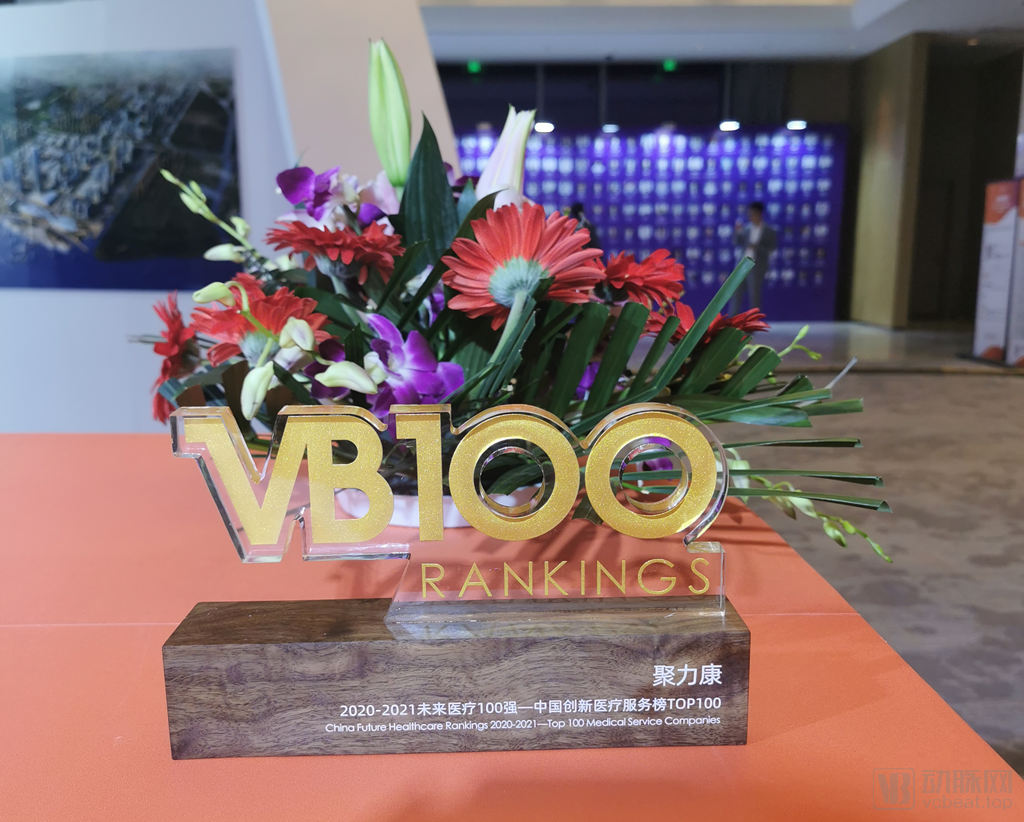
The Main List of the Future Healthcare Top 100 is the first domestic ranking focused on innovative healthcare companies that are not publicly listed, launched by VCBeat and VBInsight. It aims to select Chinese innovative healthcare enterprises that truly represent the future of healthcare and identify the core forces driving China’s future healthcare industry. The 2020 Future Healthcare Top 100 Main List comprises six sub-lists: the China Healthcare Services List, the China Digital Healthcare List, the China Innovative Medical Devices List, the China Innovative Pharmaceuticals List, the China Healthcare Commercial Services List, and the Overseas Innovative Enterprises List.
Looking at the "Top 100 Future Healthcare Companies" list over the years, we can observe that the valuations of listed companies have been rising steadily, accompanied by increasingly robust development. Meanwhile,As the only enterprise in the third-party sterile supply center industry to be listed for three consecutive years, Julikang has developed rapidly, with its ranking climbing steadily.
In 2018, Julikang ranked 94th on China's Medical List;
In 2019, Julikang ranked 69th on China's Medical Services List.
In 2020, Julikang ranked 57th on China’s Innovative Medical Services List.
Why Has Julikang Been Listed for Three Consecutive Years? Why Has Its Ranking Continued to Climb? Based on VCBeat’s selection criteria and Julikang’s development trajectory, we have uncovered its “secret.”
Based on relevant policies and industry development trends, we categorize the third-party sterile supply industry into three developmental stages: the inception stage, the exploration stage, and the growth stage.
In 2016, the "Standard for Hospital Central Sterile Supply Department (2016)" was released.Public medical institutions are explicitly permitted to adopt outsourced sterile supply services.
In 2017, the “Notice on Deepening the Reform of ‘Delegating Power, Improving Regulation, and Upgrading Services’ to Stimulate Investment Vitality in the Medical Field” was issued, adding five new categories of independently established medical institutions, including sterilization supply centers.Disinfection service enterprises now hold the status of a medical institution practice license.
In 2018, the “Basic Standards for Medical Disinfection and Supply Centers (Trial)” and the “Management Specifications for Medical Disinfection and Supply Centers (Trial)” were issued, providing detailed provisions on departmental setup, staffing, infrastructure, and other aspects.Third-party medical sterilization supply centers are becoming more standardized.
The release of the aforementioned policies has accelerated the development of the third-party sterile supply industry, leading us to define the period from 2016 to 2020 as the golden era for third-party Central Sterile Supply Departments (CSSDs).
During the golden period of development, the market size of third-party sterile supply centers has continued to grow rapidly driven by policies. Third-party sterile supply centers such as Julikang have seized the opportunity to actively expand their markets and gain recognition from more medical institution clients through high-quality services. In addition, industry players like Julikang are accelerating the layout of third-party sterile supply center construction with the support of technology and capital, thereby serving more medical institutions.
Taking Julikang as an example: In 2016, Julikang established and operated the Xiamen Center, Hefei Center, and Foshan Center;
In 2017, Julikang established and began operations at the Shanghai Julikang Dongmao Center;
In 2018, Julikang established and commenced operations of its Chongqing Center, Nanyang Center, and Xi’an Center;
In 2019, Julikang established and began operating the Guangxi Center and the Zhumadian Center.
By establishing third-party sterile supply centers on a large scale, Julikang has begun to serve an increasing number of healthcare institution clients. Meanwhile, Julikang has gained recognition and preference from healthcare institutions and infection control experts due to its professional capabilities and service quality. For example, Julikang continuously upgrades its hardware facilities and optimizes its traceability platform, obtaining the source code certificate for traceability management software used in sterile supply centers. Through this traceability platform, hospital administrators and infection control experts can achieve independent oversight of sterilization quality.
Overall, driven by factors such as policy, technology, and capital, the third-party sterile supply center industry has achieved healthy growth. Companies represented by Julikang have keenly seized opportunities, actively deployed strategies, and rapidly expanded their market presence, ultimately enabling leapfrog development in the third-party sterile supply sector.
The selection criteria for the Future Healthcare Top 100 Main List encompass not only corporate market capitalization but also industry growth potential, market size, and corporate development prospects.
“Data published in the China Health and Health Statistical Yearbook (2020) shows that the number of healthcare institutions in China increased from 917,000 in 2009 to 1.008 million in 2019, representing a growth rate of 9.93%. Among these, the number of hospitals rose from 20,300 in 2009 to 34,400 in 2019, marking an increase of 69.31%.”
Meanwhile, with China’s economic development and the improvement of residents’ living standards, consumer healthcare sectors such as medical aesthetics and dentistry have rapidly expanded, leading to a significant increase in the number of related medical institutions.
On the other hand, in response to the risk of deficit in the basic medical insurance fund, the National Healthcare Security Administration has vigorously promoted new healthcare reforms. In 2019, it completed the top-level design for Diagnosis-Related Group (DRG)-based payment, planned to conduct trial operations in 30 pilot cities in 2020, and initiated actual DRG-based payments in 2021.
DRG-based payment refers to a prospective payment system based on Diagnosis-Related Groups. For instance, for the treatment of a specific disease, the Healthcare Security Administration sets a maximum reimbursement rate of 1,000 yuan. If a medical institution spends 900 yuan treating the patient, it realizes a profit of 100 yuan; if it spends 1,100 yuan, it incurs a loss of 100 yuan. Consequently, DRG-based payment imposes higher requirements on cost control and refined management in medical institutions. It should be noted that DRG-based payment will inevitably be rolled out nationwide, making effective cost control a critical consideration for all medical institutions across China.
Currently, some medical institutions have reduced costs by outsourcing non-core business operations, with significant results. For example, Shanghai Julikang Investment Co., Ltd. has taken over the disinfection services for a certain medical institution, providing sterilization and disinfection solutions. Benefiting from Julikang’s corporate management and refined operational practices, the institution has seen a notable decrease in instrument-related costs and a substantial improvement in management effectiveness.
One leaf heralds the autumn; in this light, an increasing number of healthcare institutions will face challenges in cost control, and outsourcing non-core services such as disinfection and sterilization will prove to be a highly effective solution—a significant boon for third-party sterilization centers.
Overall, the growth in the number of healthcare institutions signifies a continuously expanding customer base for third-party sterile supply centers. As policies are implemented, customers’ willingness to purchase continues to rise. The synergy between these two factors will rapidly expand the market size of third-party sterile supply centers, enabling companies in the industry to achieve rapid performance growth.
In addition to the external environment, a company’s internal decision-making and operations are equally critical. In this regard, Julikang, as a leading third-party sterile supply center provider, holds significant advantages. For instance, the third-party sterile supply centers established by Julikang feature a professional quality management system, staffed with skilled professionals and equipped with advanced sterilization equipment. Through specialized information management software, Julikang achieves comprehensive traceability of the entire workflow for sterile packs, ensuring product compliance and safeguarding patient safety during clinical use.
Given these advantages, the rapid development of Julikang is a natural outcome, and its future growth potential is promising.