Five Key Players Compete in Real-World Research as Clinical Studies Undergo Digital Transformation: 2021 Real-World Research Industry Report
With the growing demand for precision medicine, clinicians and patients are placing increasingly higher expectations on diagnostic and therapeutic solutions. There is a need for clinical evidence that more closely reflects real-world clinical practice, to provide more actionable guidance for formulating patient treatment plans.
Traditional randomized controlled trial (RCT) methodologies have revealed their limitations in this context. Although RCTs can generate more accurate clinical evidence under ideal conditions, they fail to encompass the complex cases encountered in broader real-world settings. Consequently, while RCTs offer significant advantages in evaluating the safety and efficacy of pharmaceutical and medical device products, they provide limited support for clinical decision-making in actual clinical practice.
Under such circumstances, real-world studies have gradually emerged as a novel approach for researchers in the excavation of clinical evidence. With the continuous liberalization of policies, they have become an indispensable component in the lifecycle management of pharmaceutical and medical device products. In China, the real-world study industry has ushered in a new wave, driven by the ongoing refinement of clinical consensus and guidelines.
So, what stage of development is China's real-world study industry in? What is its market potential? Which companies have already entered the field, and what challenges and development trends will it face in the future?
To clarify the above issues,VCBeat Research Institute conducted extensive surveys of enterprises engaged in real-world studies and, integrating its own research findings, authored the “2021 Real-World Study Industry Report: Regulatory Implementation and Comprehensive Application from Pharmaceuticals to Medical Devices.” This report aims to provide a comprehensive, multi-dimensional analysis of the real-world study industry—covering policy, market dynamics, industry stakeholders, representative case studies, and development trends—to offer industry participants more holistic industry insights.
Core Viewpoints
1. Five major players are competing in the sector, each leveraging their own advantageous resources; however, as the market remains a blue ocean, competition is not yet intense.
2. The Empowering Role of Digital Technologies in Clinical Research Is Key to the Industry’s Qualitative Transformation
3. The application scenarios are primarily focused on post-marketing studies, with limited contribution to the development of new products.
4. It can replace or supplement randomized controlled trials in certain scenarios, while also generating new application scenarios throughout the full lifecycle management of pharmaceutical and medical device products.
5. As regulatory guidelines are implemented, this sector is increasingly becoming an essential requirement for pharmaceutical and medical device companies, poised for further expansion.
6. The industry has not yet reached a bottleneck, but multifaceted challenges—including policy, compliance, and data silos—may become constraints on its future development.
First, we need to clarify the three most important concepts in real-world studies: Real-World Study (RWS), Real-World Data (RWD), and Real-World Evidence (RWE). Given that clear policies have already been issued, we will first cite the definitions of real-world study, real-world data, and real-world evidence from the original policy text, followed by further explanation.
The National Medical Products Administration (NMPA) defines real-world studies in the "Guiding Principles for Real-World Evidence to Support Drug Development and Review (Trial)" as follows: Real-world studies refer to the research process that, in response to pre-specified clinical questions, collects health-related data on study subjects (real-world data) or aggregated data derived from such data in real-world settings, and obtains clinical evidence on drug utilization and potential benefit-risk profiles (real-world evidence) through analysis.
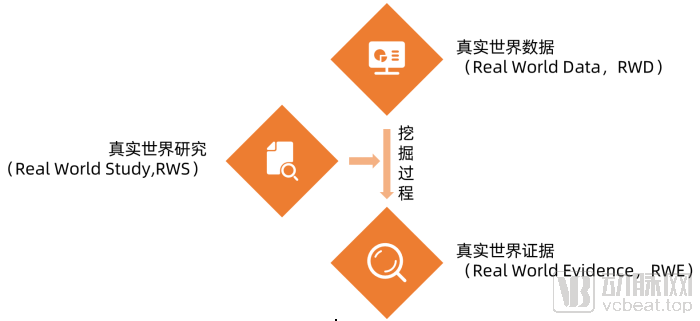
Real-World Studies, Real-World Data, and Real-World Evidence
Real World Data (RWD) refers to data related to the health of study subjects collected in real-world settings. The dimensions covered by RWD are extensive, encompassing physiological indicators, lifestyle habits, comprehensive diagnosis and treatment information, and medical history.
Real World Evidence (RWE) refers to clinical evidence regarding the clinical benefits and risks of medical products, derived from the analysis of real-world data. Such clinical evidence can directly characterize the benefits and harms of various healthcare solutions—including pharmaceuticals, medical devices, and surgical procedures—for specific patient populations under real-world usage conditions.
Real World Study (RWS) refers to the entire research process, from the collection of Real World Data (RWD) to the generation of Real World Evidence (RWE).
Therefore, the core objective of real-world studies is to collect and analyze data from real-world settings to generate real-world evidence as conclusions, thereby supporting clinical decision-making or demonstrating the clinical value of drugs or medical devices.
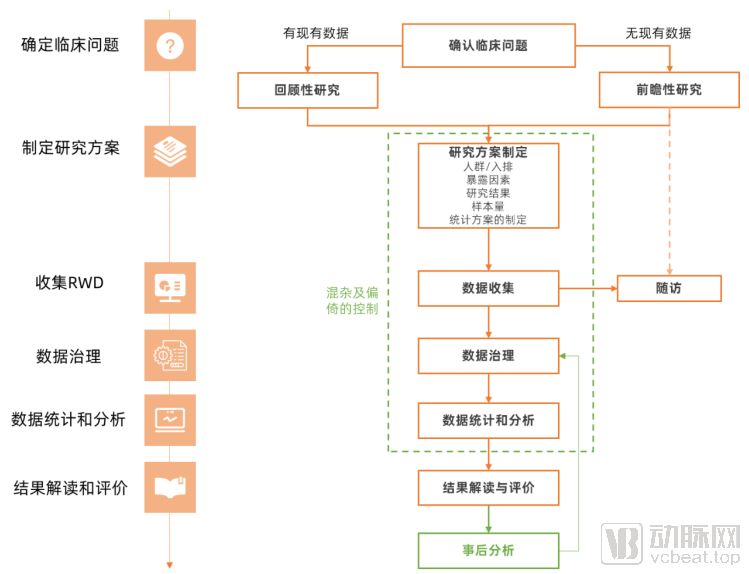
Real-World Study Process
According to the "Guidelines for Real-World Studies (2018 Edition)" released in 2018, the complete process of real-world studies can be broadly divided into six stages: defining clinical questions, developing study protocols, collecting real-world data (RWD), data governance, statistical analysis, and interpretation and evaluation of results. In different stages, the rapid development of various emerging industries has made the corresponding stages easier to implement.

Key Technological Drivers in the Real-World Study Process
Confirming Clinical Questions: Big Data
The development of the big data industry has played a pivotal role in identifying clinical issues.
For real-world study (RWS), a research approach that originates from and returns to clinical practice, the initial clinical question must align with actual clinical needs and address the pain points encountered by physicians during diagnosis and treatment. In this way, the resulting real-world evidence (RWE) can better empower clinical practice.
In real-world studies (RWS) that combine retrospective and prospective designs, the objective of the retrospective component is to identify valuable clinical questions from existing data. In this process, long-accumulated big medical data proves instrumental. Clinical questions derived from such big data can precisely align with the needs of clinical practice for clinical evidence.
In actual research practice, the research questions in real-world studies (RWS) may sometimes lack precision or even be highly ambiguous. Examples include “the effectiveness of a certain drug in treating a specific disease,” “evaluating the clinical safety of a certain drug and its associated risk factors,” and “elucidating the specific utilization patterns of a certain drug in the real world.” Such vague research objectives naturally do not entail clearly defined clinical endpoints; instead, they aim to derive real-world evidence (RWE) from collected clinical data that can inform and support clinical decision-making.
This further demonstrates that the actual research process of Real-World Studies (RWS) is not as rigorous or rigid as that of Randomized Controlled Trials (RCTs). In practice, adjustments can be made flexibly based on the RWS study design and the specific clinical questions to be addressed. The step of defining clinical questions may be deferred due to their initial lack of specificity, becoming gradually clarified during the data analysis process.
Developing Research Protocols: A Mature Clinical Research System
As part of clinical research, the study design of Real-World Studies (RWS) benefits significantly from the well-established methodology of Randomized Controlled Trials (RCTs). However, due to differences in research paradigms between RWS and RCTs, there are substantial discrepancies in certain specific aspects.
This is particularly evident in the inclusion and exclusion criteria (eligibility criteria) for case selection. The strict eligibility criteria of randomized controlled trials (RCTs) are clearly unsuitable for real-world studies (RWS). However, in the actual conduct of RWS, it is still necessary to apply a certain degree of screening to included cases based on the specific clinical questions under investigation. Patients with clear diagnoses can be precisely enrolled, while those with uncertain diagnoses may be included as complex or challenging cases through specialized approaches.
In addition, data sources, data standardization methods, and the statistical methods employed should all be considered during the development of the study protocol. In these areas, the experience accumulated over years in randomized controlled trials (RCTs) can effectively empower real-world studies (RWS), enabling the establishment of RWS-related systems to build upon RCT methodologies rather than starting from scratch.
RWD Acquisition and Data Governance: Digital Solutions for Clinical Research
The acquisition of real-world data (RWD) and data governance are critical components of real-world studies (RWS). High-quality datasets are a prerequisite for ultimately generating valuable real-world evidence (RWE).
In the acquisition of real-world data (RWD), retrospective studies and prospective studies are distinctly different. Retrospective studies rely on existing data, so there is virtually no further data collection process for RWD; instead, existing clinical datasets are used directly. In contrast, prospective studies require continuous collection of clinical data through patient follow-up.
For prospective studies, the data collection process requires greater caution. If the quality and structural integrity of the collected data can be effectively enhanced, subsequent data governance will become significantly easier. In this context, digital clinical research solutions offer an efficient and high-quality method for collecting real-world data (RWD). Through digital solutions, data dimensions can be highly customized, enabling researchers to monitor in real time the quality of data entered by physicians or enrolled patients. This allows for timely resolution of substandard data entries, eliminating the need to address such issues only after final data aggregation.
For existing data, the more critical phase lies in subsequent data processing. Data collected by hospital Hospital Information Systems (HIS) often suffer from insufficient structuring or suboptimal quality. Therefore, data obtained directly through clinical pathways must undergo comprehensive data governance before being applied to Real-World Studies (RWS). Key steps in this data governance process include data preprocessing, handling of missing data, and construction of datasets. Furthermore, based on specific research objectives, particular attention should be paid to the quality of data dimensions that are closely aligned with and highly relevant to the study goals.
Data Statistics and Analysis: Artificial Intelligence Technology
Data statistics and analysis are key steps in extracting real-world evidence (RWE) from real-world data (RWD). The pivotal role of artificial intelligence in data statistics and analysis is primarily reflected in two aspects: first, the high-efficiency processing of large-scale datasets using AI technologies; and second, the mining of correlations within data when targets are not fully defined.
RWS datasets are generally large and encompass complex data dimensions. It is difficult to achieve comprehensive data observation through manual analysis. Therefore, machine learning techniques based on artificial intelligence are required to process these datasets.
Furthermore, due to the uncertainty of research objectives in Real-World Studies (RWS), it is often necessary to identify correlations between complex data dimensions and patient outcomes. Similarly, given the large volume and complexity of Real-World Data (RWD), it becomes extremely difficult to manually identify data dimensions associated with patient prognosis from multidimensional datasets. Machine learning methods are well-suited for clinical evidence mining in such scenarios.
At this stage, the efficiency of AI intervention in data analysis is further influenced by prior data governance efforts. If data governance is effective, resulting in a high degree of data structuring and clearly defined fields across various data dimensions, model training will proceed more smoothly. Conversely, if data governance is inadequate, the trained models may yield erroneous research findings, thereby undermining the entire study.
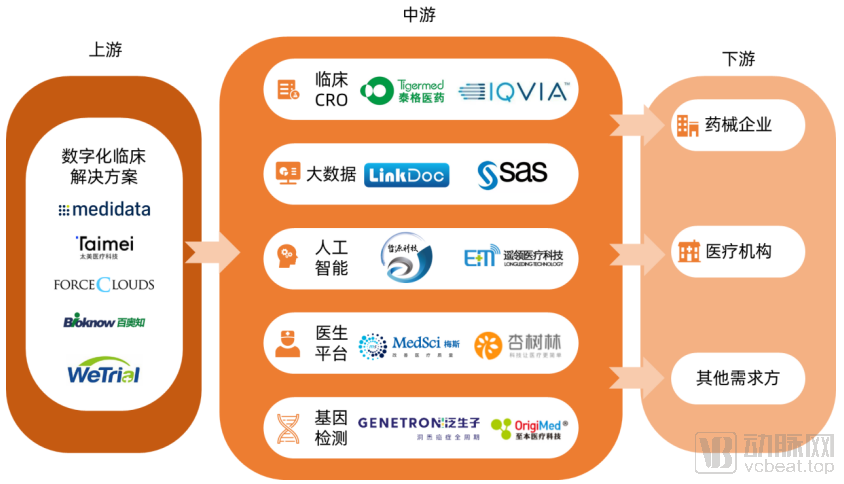
Key Industry Players in Real-World Studies
Conventional clinical studies rely heavily on extensive manual involvement. However, for real-world studies (RWS), which are characterized by large volumes of data and multi-center designs, relying primarily on manual labor is evidently inefficient. In this context, highly advanced digital clinical trial solutions have become a crucial enabler for conducting RWS and represent a key upstream segment of the RWS industry.
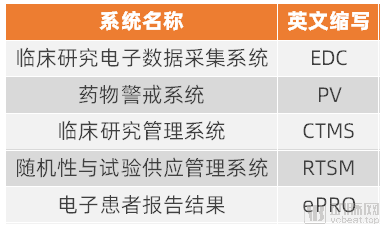
Common Digital Clinical Research Solutions
Digital solutions consistently aim to enhance clinical trials by improving the efficiency, security, standardization, and accuracy of data circulation. This helps reduce the administrative burden of clinical trial management, improve trial quality and safety, and ultimately lower costs.
Over the past two decades, management systems related to clinical trials have kept pace with digitalization, with digital solutions emerging across multiple stages of clinical trials. In real-world studies (RWS) with different research objectives, digital solutions that provide core value also vary. Electronic Data Capture (EDC) systems and Clinical Trial Management Systems (CTMS) are widely used in clinical RWS; pharmacovigilance systems play a significant role in RWS related to drug safety; and electronic Patient-Reported Outcomes (ePRO) can assist in RWS involving substantial patient home-based management.
In practice, clinical CROs that extensively deploy digital solutions are commonly referred to within the industry as “digital clinical CROs.” This segment shares certain overlaps with real-world studies (RWS) but is not entirely synonymous. Digital clinical CROs have disrupted the traditional, labor-intensive model of clinical research management by leveraging digital systems to enhance the efficiency of clinical trials. While digital clinical CROs often undertake RWS-related projects, they primarily engage in randomized controlled trials (RCTs) in the capacity of clinical research managers.
Given the unique nature of Real-World Studies (RWS), diverse industry players can enter the RWS domain by leveraging their core competitive advantages from within their respective sectors. Such advantages may include expertise in designing robust study protocols, highly efficient execution teams, or advanced AI-driven data research methodologies.
In fact, during our comprehensive review of the entire industry, we identified five distinct industry players all attempting to enter this uncharted territory through their own unique approaches. Naturally, the differing advantages held by these various industry players do not imply that they are responsible for only a single, specialized segment of the Real-World Study (RWS) research process. Each player offers end-to-end RWS research services, while possessing particular strengths in specific stages.
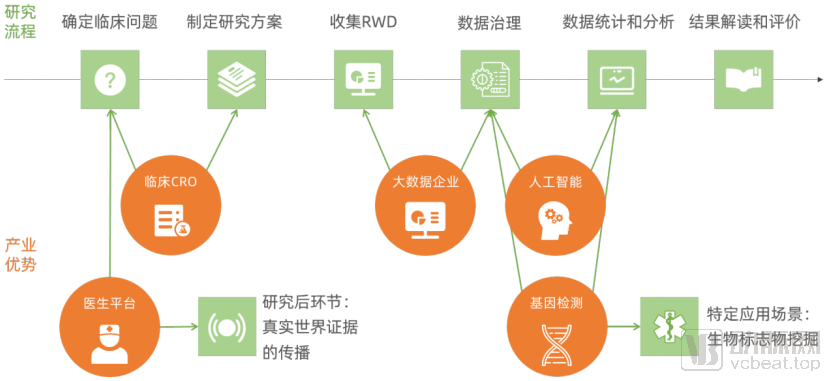
Key Areas Where Relevant Companies Enter Real-World Studies
1. Clinical CRO Company
The transition between the clinical CRO industry and Real-World Studies (RWS) can be described as seamless. Many elements of RWS align with those of clinical CROs, such as serving pharmaceutical companies, maintaining communication with hospitals, and sharing similar logical frameworks in study protocol design. Therefore, when upstream pharmaceutical companies express demand for RWS, downstream service providers in the clinical CRO industry naturally seize this “new market opportunity.”
Advantages: Close communication with clinical teams; strong research design capabilities.The greatest advantage of clinical CROs lies in the extensive clinical resources they have accumulated over years of clinical research, enabling them to handle multi-center, large-scale Real-World Studies (RWS) with greater ease and proficiency. Meanwhile, their expertise in designing clinical study protocols can also be applied to RWS.
Weaknesses: Low level of digitalization and weak capability in handling large volumes of data.Clinical CROs have traditionally operated as labor-intensive systems. A large number of functional personnel responsible for different tasks—such as Clinical Research Associates (CRAs) who ensure that clinical trials are conducted in compliance with regulations, Quality Assurance (QA) specialists who oversee and manage the clinical trial processes, and Clinical Research Coordinators (CRCs) who participate in and coordinate trial progress—are distributed across various regions to ensure the smooth conduct of the entire study. However, this labor-intensive research model is not well-suited for real-world studies and may significantly compromise research efficiency. Furthermore, clinical CROs lack a strong foundation in artificial intelligence technologies, which may result in insufficient capability in evidence mining when dealing with large-sample data studies.
2. Big Data Enterprises
As medical big data centers are established across various regions in China, the nation’s medical big data resources are becoming increasingly abundant. The consequent challenge lies in identifying suitable scenarios where these data can effectively leverage their value. Real-World Studies (RWS) evidently represent a highly appropriate application scenario. Particularly in retrospective RWS, data held by big data enterprises can be rapidly applied to research after undergoing appropriate cleaning and structuring aligned with the study objectives.
Advantages: Data ready for immediate use, with extensive experience in big data analytics and structured data.The core advantage of big data companies lies in their vast and detailed data repositories. Therefore, in practical applications, even if some data are excluded from studies due to failure to meet research requirements (such as not meeting inclusion criteria, poor quality, or missing key data), there is still sufficient data available for analysis. Moreover, big data companies have accumulated extensive experience in data governance and analytics, giving them a significant advantage in the data analysis phases of various types of real-world studies (RWS).
Disadvantages: Data with local characteristics; insufficient clinical research experience.Although big data companies have acquired substantial amounts of clinical data, they clearly lack experience in clinical research. This limitation means that while they may perform well in retrospective cohort studies, they hold no significant advantage in prospective cohort studies. Furthermore, the data sources for most big data companies are derived from patient populations in specific geographic regions. Evidence generated from such localized patient cohorts may exhibit regional characteristics and cannot necessarily be generalized smoothly to broader clinical contexts.
3. AI Companies
AI companies place greater emphasis on technology empowerment. Given the large volumes of data in Real-World Studies (RWS), AI technologies can precisely empower the data analysis phase, thereby enhancing the efficiency of transforming Real-World Data (RWD) into Real-World Evidence (RWE) or generating more insightful RWE. These companies enter the RWS industry through a technology-driven approach, emerging as a new force within the sector.
Advantages: Strong data analysis capabilities and a high level of digitalization.Artificial intelligence’s greatest strength lies in data processing, which also constitutes the core competitive advantage for AI companies entering the real-world study (RWS) industry. Furthermore, technology-driven enterprises typically maintain a more open mindset; as new entrants to the industry, they are less constrained by the entrenched paradigms of clinical research and are thus more receptive to integrating digital methodologies into the research process.
Disadvantage: There may be a certain cognitive divide between the medical team and the technical team.The disadvantages of AI companies are also quite apparent. Technology-driven enterprises in the healthcare sector typically have both professional medical teams and specialized technical teams. However, communication between the medical and technical teams may not always achieve a perfect workflow. This can lead to certain biases in the generation of final evidence during the research process by the technical team.
4. Physician Platform
Physician platforms represent another form of clinical resource integration. The connection between clinical CROs and clinical practice is evident at both the physician and institutional levels. In contrast, resources on physician platforms are more concentrated at the physician level, offering broader physician coverage. In multicenter studies such as Real-World Studies (RWS), a larger network of connected physicians translates into greater flexibility in selecting clinical research sites, thereby providing more possibilities for RWS study design.
Advantages: Clinical resource connectivity, research protocol design, and further dissemination of evidence.The greatest advantage of physician platforms lies in their extensive clinical resources. Furthermore, as most physician platforms possess strong academic attributes, they offer unique methodological advantages in the design of clinical research protocols. After acquiring real-world evidence (RWE), these platforms can also serve as channels for RWE dissemination, rapidly promoting valuable RWE to a broad physician community and directly supporting clinical decision-making in practice.
Weaknesses: Insufficient clinical research experience and weak data processing capabilities.Although physician platforms demonstrate strong capabilities in designing research protocols, their clinical research experience may be limited, with many initiatives remaining purely theoretical. Furthermore, as the routine operations of physician platforms typically do not involve large-scale data processing, there is a need to significantly enhance their data handling capabilities.
5. Genetic Testing Companies
Genetic testing companies represent a distinct category within the application of Real-World Studies (RWS). Leveraging their genomic data processing capabilities accumulated through other business operations, these companies hold a significant advantage in a specific RWS application scenario: biomarker discovery. In pharmaceutical research, there is an increasing emphasis on using biomarkers to enhance population precision, thereby significantly improving drug efficacy in target populations. By analyzing genomic data from patient cohorts accumulated in previous clinical trials, genetic testing companies are capable of identifying biomarkers that can stratify responsive patient subgroups, thus further refining patient selection for drug therapies.
Advantage: Genomic data analysis capabilities.
Disadvantages: Limited application scenarios.
Biomarker discovery occupies a unique niche within Real-World Study (RWS) applications, resulting in clearly defined strengths and weaknesses. In this context, corporate clinical research capabilities are not heavily emphasized. The role of genetic testing companies differs significantly from that of other industry players. Their primary task involves extracting genomic data from samples provided by pharmaceutical companies and then conducting comprehensive analyses that integrate these genomic findings with patients’ clinical manifestations to identify biomarkers potentially influencing patient prognosis. These candidate biomarkers subsequently undergo further clinical studies to validate their clinical utility. Consequently, the competitive advantage of genetic testing firms lies in their accumulated expertise in genomic data analysis developed over many years; however, their disadvantage is that their application scenarios in RWS are difficult to extend to other contexts.
The primary stakeholders for Real-World Studies (RWS) are pharmaceutical and medical device companies, which represent the key industry players empowered by institutions responsible for conducting RWS. Additionally, driven by clinical research objectives, certain medical institutions and other organizations also generate demand for conducting RWS.
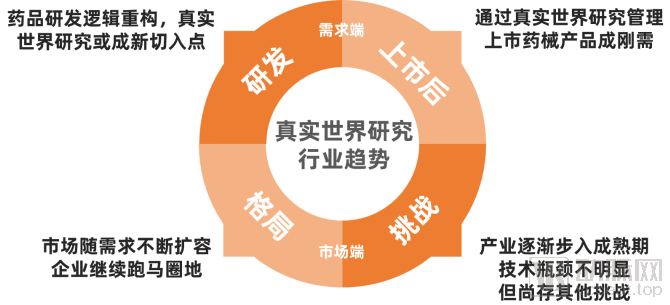
Real-World Study Industry Trends
Reconstructing the Logic of Drug Development: RWS May Emerge as a New Entry Point
There is no such thing as the “best” drug; rather, there are optimal treatment regimens tailored to specific clinical scenarios. For indications that currently lack effective clinical solutions, many drugs have gained regulatory approval even with clinical response rates of only 20–30%, provided they demonstrate significant superiority over existing standard-of-care options.
Therefore, in the process of drug development, there is an increasing emphasis on the precision of patient populations. This precision is reflected not only in the selection of drug mechanisms but also in the screening of patient populations during clinical use. Real-World Studies (RWS) hold significant application value in both aspects. In terms of drug mechanism selection, RWS can mine potentially effective drug targets from historical patient data, providing recommendations for early-stage drug design. In clinical practice, RWS can identify common characteristics among patients who respond effectively to existing medications by analyzing real-world drug usage data, thereby facilitating the precise targeting of patient populations.
Although the application of real-world studies (RWS) is currently mainly concentrated in post-marketing drug research, it is foreseeable that with the continuous expansion of RWS, its empowering role in the drug development process will gradually become more prominent.
RWS Management Becomes a Necessity for Marketed Drugs and Medical Devices
The implementation of guidelines related to Real-World Studies (RWS) will directly drive substantial demand among pharmaceutical and medical device companies during the regulatory review and approval phase. Such review and approval processes extend beyond new drug applications; in other key registration submissions—such as consistency evaluations for generic drugs, supplementation of clinical evidence for innovative drugs, and indication expansions for marketed drugs—Real-World Evidence (RWE) can serve as supplementary clinical evidence to support product registration. The same applies to medical devices.
On the other hand, in scenarios unrelated to the registration and filing of pharmaceutical and medical device products, Real-World Studies (RWS) can also serve to supplement clinical evidence. Amid the current trend of continuously rising demand for pharmaceutical marketing, pharmaceutical companies must prioritize not only their own product marketing strategies but also the education of physicians. Education targeted at professional groups naturally requires robust data support. In this context, clinical Real-World Evidence (RWE) represents the optimal choice. RWE can help physicians gain a more precise understanding of drug dosage, administration, and indications based on specific patient diagnosis and treatment information. Consequently, when selecting among similar therapeutic agents, physicians are naturally inclined to choose the drug products in which they have greater confidence.
In the future, contingent upon data accessibility, all marketed pharmaceutical and medical device products should continuously collect and consolidate real-world data from clinical use. Currently, clinicians increasingly emphasize the evidence-based medicine underpinning their prescribing decisions. With comprehensive real-world datasets coupled with appropriate data mining tools, rapid analysis can be performed on specific cases encountered in clinical practice, helping physicians identify relevant evidence for medication use and deliver personalized clinical solutions for patients.
The Market Continues to Expand with Demand as Companies Race to Capture Territory
As demand from pharmaceutical and medical device companies grows, it will directly translate into market space for Real-World Studies (RWS), leading to further expansion of the RWS market. For an industry that has just emerged from its initial stage and is beginning to grow rapidly, clear demand is undoubtedly a significant benefit.
With the existing market not yet fully tapped and demand continuing to surge, the overall industry remains in a blue-ocean state. Therefore, although five major industry players have entered the Real-World Study (RWS) sector leveraging their respective advantageous resources, competition is not yet intense. Each player has its own strengths and weaknesses across different segments of the value chain, with no single entity holding a dominant position. Consequently, the RWS industry is expected to remain in a phase of rapid expansion and market grabbing in the near term. Companies already established in this space have gained certain first-mover advantages.
The industry is gradually entering its maturity phase; while technological bottlenecks are not prominent, other challenges remain.
After several years of development, the Real-World Study (RWS) industry has largely moved beyond its nascent stage and is gradually entering a mature phase of growth. In the early stages of industrial development, the predominant research paradigm involved conducting retrospective studies using existing medical big data, which consequently led to certain bottlenecks in data structuring. As the industry has matured and prospective studies have been more widely adopted, the current solution ecosystem has become increasingly robust, with no significant technical bottlenecks remaining.
However, as analyzed in Section 5.1 of this report, the industry currently faces other challenges, including issues related to policies, regulations, and data silos. These challenges may become bottlenecks impeding industrial development at certain future stages.
The above is an excerpt of the main content of the report. The complete framework of the report is as follows. Scan the QR code to access the mini-program and read the full report for free.
Chapter 1: Concepts Related to Real-World Studies
1.1 RWS, RWD, and RWE
1.2 Real-World Studies (RWS) and Randomized Controlled Trials (RCTs)
1.3 Prospective Studies and Retrospective Studies
Chapter 2 The Surge in Real-World Studies Driven by New Technologies
2.1 Large Volume of Data Closely Aligned with Clinical Practice, Serving as a Substitute for Randomized Controlled Trials in Specific Scenarios
2.2 Digital Technology Lays the Industrial Foundation, and Policy Boosts Industry Development
2.3 Comprehensive Technological Support for the Perfection of Real-World Study Systems
Chapter 3: Policy Barriers Lifted, Five Major Industry Players Compete in Real-World Research
3.1 Multiple Pilot Policies Have Been Introduced, Providing Comprehensive Coverage of the Review and Approval Process for Drugs and Medical Devices
3.2 The Five Major Players Leverage Their Unique Strengths to Gain a Foothold in the Core Arena of Real-World Studies
Chapter 4: Real-World Studies Facilitate Drug Lifecycle Management
4.1 Post-Marketing Re-evaluation of Drugs
4.2 Providing Evidence for Drug Review and Approval
4.3 Precise Targeting of the Intended Population
4.4 Guidance on Clinical Trial Design
Chapter 5: Rising Demand, Market Expansion, and Lingering Challenges in a Vast Blue Ocean
5.1 Policy Improvement, Industry Regulation, and Data Silo Issues Remain to Be Addressed
5.2 Rising Demand, Market Expansion, and Continued Land Grab by Enterprises