

Hengfu Kangtai Files IPO Prospectus: Pioneering Domestic ECMO Innovation with the Shengji-1000 System
On January 22, 2020, Zhongnan Hospital of Wuhan University successfully used ECMO (Extracorporeal Membrane Oxygenation) to treat a patient with COVID-19 for the first time. Throughout the subsequent pandemic response, ECMO was frequently deployed in emergency care settings, gradually bringing this technology into the public spotlight.
Although ECMO is regarded as the last resort for saving the lives of patients with COVID-19, China’s relatively short history of ECMO implementation has resulted in a national installed base of only approximately 500 units, which are predominantly from foreign brands such as Medtronic, Maquet, and LivaNova.
Although the installed base of equipment remains limited, patient demand has persisted. Since 2016, the number of ECMO cases in China has grown rapidly. According to the “Report on the Current Status of Extracorporeal Life Support Development in China (2019)” released by the Extracorporeal Life Support Professional Committee of the Chinese Medical Doctor Association, a total of 6,526 ECMO cases were reported in 2019, representing a 66.4% increase from the 3,923 cases reported in 2018.
The arrival of the pandemic has heightened awareness of the importance of ECMO. In May 2020, the National Development and Reform Commission, the National Health Commission, and the National Administration of Traditional Chinese Medicine jointly issued the Plan for Strengthening Public Health Prevention, Control, and Treatment Capabilities. In accordance with the Plan, one of the key components in establishing major epidemic treatment bases is to strengthen intensive care unit (ICU) infrastructure, equip a certain number of negative-pressure isolation wards and operating rooms, and configure essential medical equipment—such as cardiopulmonary resuscitation devices, ventilators, and extracorporeal membrane oxygenation (ECMO) systems—according to varying scales and functional requirements.
Driven by factors such as market demand and policy support, some domestic companies have begun to intensify their efforts in ECMO research and development. It is reported that Hengfu Kangtai (Zhuhai) Biotechnology Co., Ltd. (hereinafter referred to as “Hengfu Kangtai”), established in March 2020, has successfully developed the complete ECMO system “Shengji-1000,” promising future import substitution.
Promoting the Domestic Production of ECMO Devices in China
Although the company was established only recently, Hengfu Kangtai’s founding team has in fact been deeply engaged in the field of extracorporeal circulation for more than a decade. Over the past ten years, Dr. Lin Hengyi and Dr. John Gilbert, the two founders of Hengfu Kangtai, have been researching technologies related to extracorporeal circulation, dedicated to reducing brain injury caused by cerebral ischemia through technological innovation.
The outbreak of the COVID-19 pandemic in early 2020 made the Hengfu Kangtai team aware of the insufficiency of medical resources in China’s emergency and critical care sector. Recognizing that Extracorporeal Membrane Oxygenation (ECMO), as a vital device in intensive care units, would become one of the key medical technologies to be developed in China post-pandemic, the Hengfu Kangtai team actively leveraged its accumulated expertise in extracorporeal circulation technology to develop ECMO equipment starting in March 2020, thereby localizing ECMO R&D and manufacturing capabilities in China.
As a life-sustaining system for patients with severe cardiopulmonary failure, the core components of ECMO are the centrifugal pump and the oxygenator, which temporarily assume the functions of the heart and lungs, respectively. During system development, it is essential to minimize hemolysis and blood damage caused by the pump head while ensuring efficient pumping performance, and simultaneously enable highly efficient oxygenation of the blood. Many of the key technologies involved are held by major international corporations; therefore, breaking through these technical barriers is imperative for achieving domestic manufacturing.
Hengfu Kangtai’s successful development of ECMO, achieving stability comparable to that of multinational corporations’ products, would not have been possible without the support of its exceptional team.
In terms of the team, Hengfu Kangtai is currently led by Dr. Lin Hengyi (CEO), Dr. John Gilbert (CTO), and Dr. Zhang Nianhong (Vice President of Engineering), former R&D Director at Smith & Nephew in the United States. The leadership team boasts advanced research backgrounds from prestigious institutions such as Harvard Medical School and the Massachusetts Institute of Technology, along with extensive experience in product development, clinical trials, and market expansion for multinational medical device companies. The R&D team further brings together senior talent from diverse fields, including medicine, electronics, software, and mechanical engineering.
Stable, Compatible, and Featuring Proprietary Modules: Shengji-1000 Holds Promising Prospects
For a long time, ECMO has been labeled as a life-saving and highly effective yet prohibitively expensive technology. It is understood that all ECMO systems currently used in China rely entirely on imports, with prices ranging from approximately RMB 1.5 million to 3 million. While not the most expensive among medical devices, the cost of specialized consumables required during use significantly burdens patients. Typically, the initial startup cost for ECMO ranges from RMB 40,000 to 60,000, primarily covering the specialized consumables included in a single kit. In light of the high costs associated with imported equipment and consumables, promoting domestically produced alternatives to replace imported products can clearly help alleviate this issue to some extent.
In fact, ECMO has been in existence for several decades, so there are no significant challenges in its manufacturing process. The primary technical difficulties lie in ensuring product quality and stability, while also requiring in-depth research into clinical needs and user habits during production. It is understood that the Shengji-1000 ECMO, independently developed by Hengfu Kangtai, was collaboratively developed from the outset by the R&D team, clinical teams, and experts from the Extracorporeal Life Support Organization (ELSO). As a result, the company has a profound understanding of clinical needs and user habits. In terms of product quality and application, the advantages of Hengfu Kangtai’s Shengji-1000 ECMO are reflected in three aspects.
First, in terms of production quality management, Hengfu Kangtai has adopted the highest international standard, ISO 13485. To ensure equipment stability, Hengfu Kangtai employs rigorous testing protocols identical to those used by imported brands, and has further introduced proprietary power-on testing to guarantee zero faults prior to equipment use.
Secondly, Hengfu Kangtai’s Shengji-1000 ECMO system offers excellent consumables compatibility, enabling seamless integration with disposables from major manufacturers. The unique design of core components, such as the centrifugal pump and oxygenator, enhances the product’s clinical adaptability.
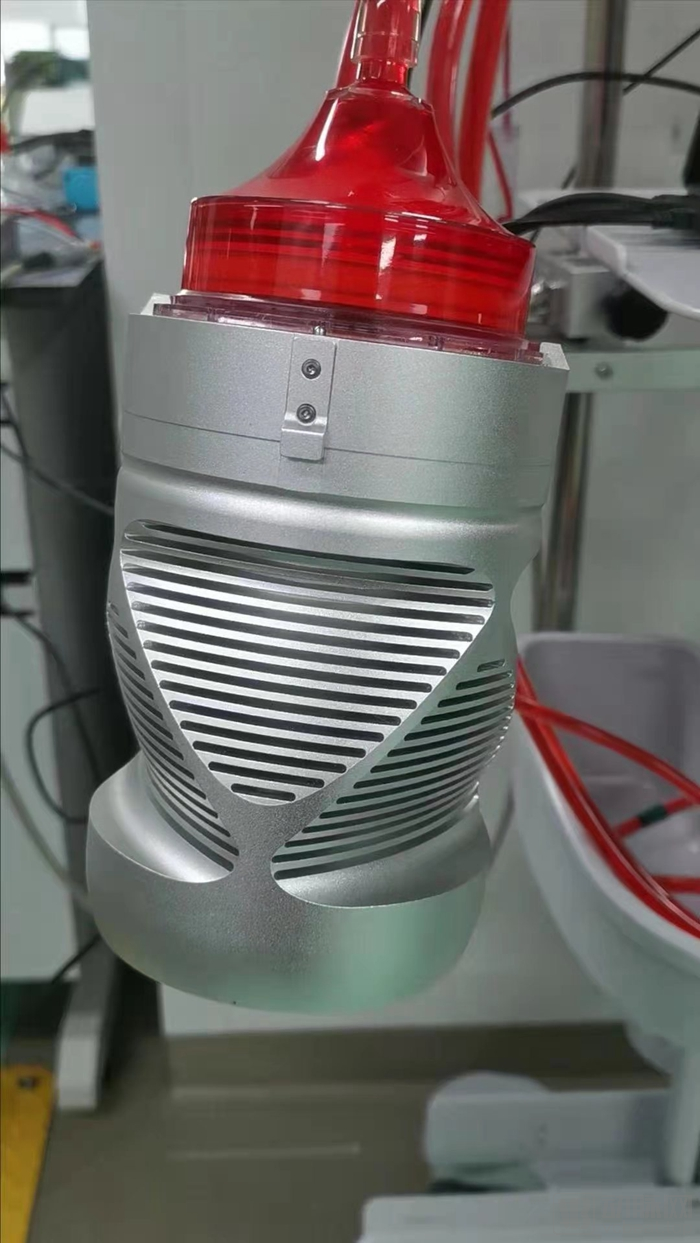
Shengji-1000 ECMO Centrifugal Pump
Furthermore, the Shengji-1000 ECMO system features a neuroprotection module that provides neuroprotective effects during use, thereby minimizing brain injury. When cardiopulmonary function ceases, the brain suffers damage due to ischemia; upon restoration of cardiopulmonary function, these injured brain cells undergo massive death due to their inability to maintain physiological homeostasis, a phenomenon known in clinical medicine as ischemia-reperfusion injury (IRI).
Currently, ECMO devices on the market are primarily used for resuscitation in acute cardiopulmonary emergencies and do not address the mechanisms of brain injury. Consequently, patients undergoing ECMO therapy face a risk of brain damage if adequate neuroprotective measures are not implemented. The Shengji-1000 ECMO system, equipped with a dedicated neuroprotection module, provides protective interventions targeting cerebral injury. This enhances the functionality of ECMO beyond mere life support, enabling patients to regain normal quality of life after treatment.
It is worth noting that Hengfu Kangtai’s ECMO not only matches the performance of imported products but will also be priced reasonably, thereby benefiting a larger number of patients.
However, for ECMO, price is clearly not the sole factor influencing its market development. Since the use of ECMO can lead to various complications, including bleeding, thrombosis, and limb ischemia, which in severe cases can be life-threatening, its application requires collaborative support from multidisciplinary specialists, such as cardiac surgeons, perfusionists, and ICU physicians. This imposes a high threshold for medical teams, and doctors and clinical staff must undergo specialized education and training before operating ECMO devices. However, importers’ support to hospitals is primarily limited to equipment installation services, without providing in-depth training for healthcare professionals.
To address this issue, Hengfu Kangtai has partnered with leading experts both domestically and internationally to provide professional training services for hospital clients, thereby facilitating the subsequent market application and promotion of its products.
Deeply Rooted in the Field of Critical Care Medicine
Currently, Hengfu Kangtai is actively advancing the FDA certification process for the Shengji-1000 ECMO system, which is poised to become the first Chinese-made ECMO device to receive FDA approval. Meanwhile, the team is simultaneously preparing the submission for medical device registration with the National Medical Products Administration (NMPA).
Compared with developed countries, China’s critical care medical resources still suffer from shortages of medical facilities and personnel reserves; however, this also presents opportunities for the development of critical care medicine. In May 2020, the Key Laboratory of Extracorporeal Circulation of the National Medical Products Administration was approved and established under the auspices of the Guangdong Provincial Institute for Supervision and Testing of Medical Devices, which helps accelerate the industrialization of innovations in domestically produced medical products.
In the future, Hengfu Kangtai will continue to align with relevant national policies, support the advancement of critical care medicine in China, and ensure that high-quality medical technologies benefit more patients.