

Exclusive Interview with Wan Ma of Weimai: Building a Digital Therapeutics Platform and Co-Creating a Vertical Disease-Focused DTx Ecosystem

Weimai
Digital Health Service Platform Provider
From April 23 to 25, 2021, the 2021 China Hospital Information Network Conference (CHINC) was grandly held at the Hangzhou International Expo Center. Weimai was once again invited to participate and officially launched its AI-driven digital integrated follow-up system—Weimai eVisit. During the conference breaks, Dr. Wan Ma, General Manager of Weimai’s AI Digital Therapeutics Center, gave an exclusive interview to VCBeat, sharing Weimai’s explorations and practices in the wave of digital therapeutics innovation.
Weimai believes that digital therapeutics, as a novel medical approach or digital health solution, have developed rapidly in recent years. This is because digital therapeutics not only align with the national "Healthy China" strategy of shifting the focus of healthcare forward and gradually transitioning from "treatment" to "prevention," but their value in clinical applications is also increasingly recognized by the industry.
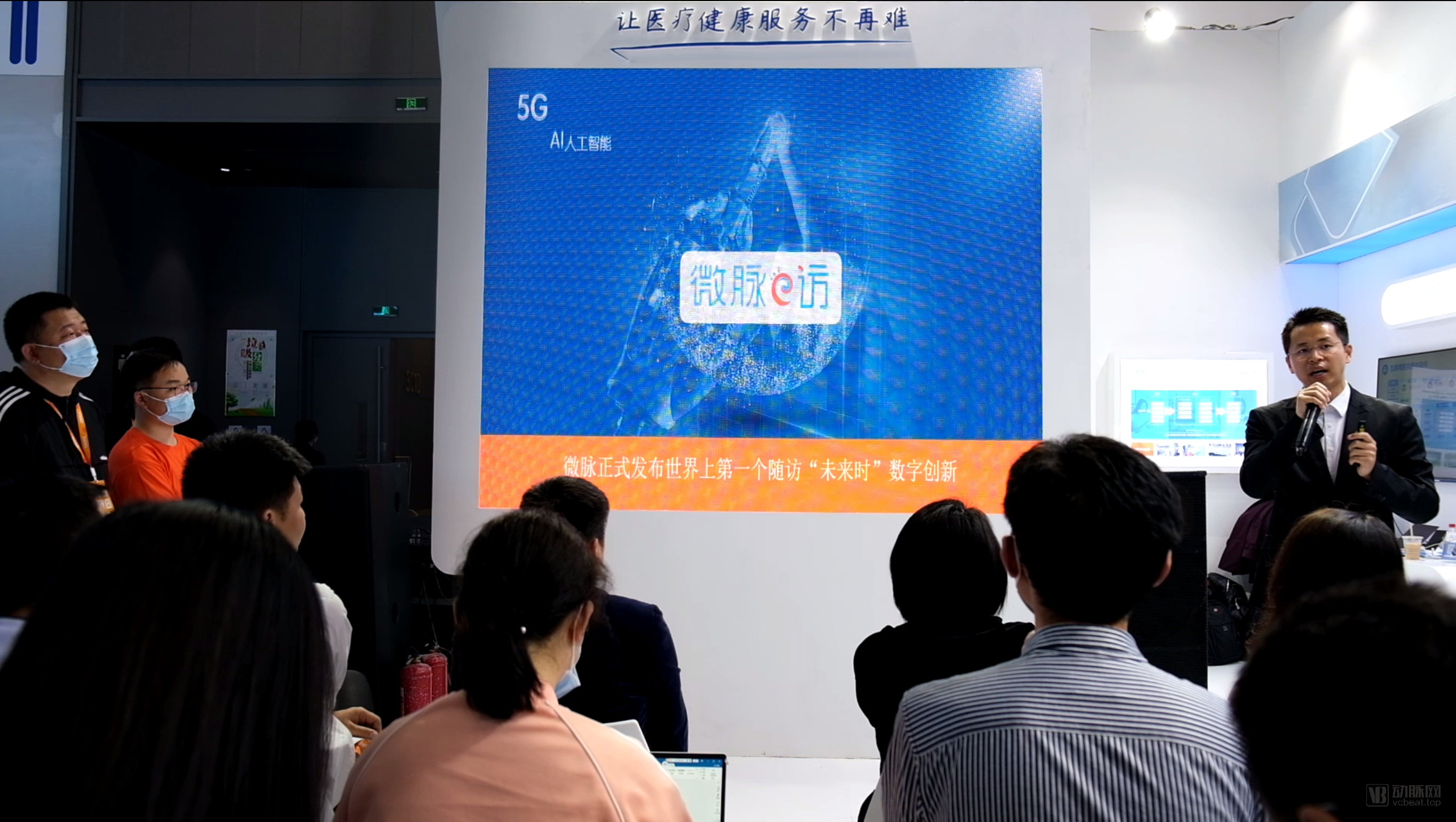
Dr. Wan Ma, General Manager of Weimai AI Digital Therapeutics Center
Extensive medical research has demonstrated a strong correlation between chronic conditions such as hypertension, diabetes, fatty liver disease, and obesity, and patients’ lifestyle behaviors. While medication can only address the symptoms, modifying unhealthy lifestyles constitutes the fundamental approach to treatment. Digital therapeutics are evidence-based, high-quality software-driven intervention programs designed to prevent, manage, or treat diseases.
Currently, digital therapeutics (DTx) are still in the early stages of development globally, with a limited number of products having received regulatory approval. In 2017, ReSET, a treatment for patients with substance use disorder, became the first prescription digital therapeutic to receive FDA approval, marking a milestone in the field of digital therapeutics. In June 2020, EndeavorRx, the world’s first “prescription video game,” was approved by the FDA for treating pediatric patients aged 8 to 12 years with attention-deficit/hyperactivity disorder (ADHD). This approval introduced a novel modality and prescription scenario in which treatment could be administered without medication.
The International Digital Therapeutics Alliance has summarized ten fundamental principles for digital therapeutics (DTx) products, focusing on five key areas: core value, product design and development, product safety and maintenance, clinical validation, and regulatory oversight. Weimai believes that three of these principles are particularly critical in the Chinese healthcare context: namely, that digital therapeutics are software-driven medical interventions, that patient privacy and security must be safeguarded, and that best practices for product deployment, management, and maintenance must be applied. These three principles serve as the key differentiator determining the barrier to entry for entrepreneurs developing digital therapeutics products.
According to Wanma, the digital therapeutics system features three key capabilities: serving as a physician’s assistant, enabling self-driven open-ended dialogues with patients, and providing interpretable data feedback.
Specifically, the system can provide diagnostic recommendations, propose disease treatment plans, and manage patient follow-up, thereby improving physicians' work efficiency. For patients, it enables open, multi-format, and multi-channel interactions to enhance patient adherence. In academic research, it offers causal analysis of patient inquiries, thereby advancing physicians' academic research capabilities.
As early as three years ago, Weimai began exploring digital therapeutics and has achieved phased results in certain specialized diseases. The integration of comprehensive AI computing technology, leveraging both in-hospital diagnostic and treatment data and out-of-hospital rehabilitation data, has demonstrated Weimai’s value as a digital therapeutics platform.
Weimai introduced that, based on its independently developed medical-grade artificial intelligence system, the Neumann AI Framework, it has built the digital therapeutics platform “Weimai e-Visit.” This platform not only provides patients with point-to-point, personalized, and precise services throughout the entire medical consultation process but also creates exclusive composite assistants for hospitals and physicians, thereby alleviating the workload of medical teams.
It is understood that “Weimai e-Visit” possesses three core capabilities: intelligent medical record reading, an intelligent knowledge graph, and intelligent disease reasoning. By leveraging natural language processing (NLP), machine learning (ML), and robotic technologies, it enables medical-grade communication with discharged hospital patients on a large scale within a short timeframe. This system collects real-world follow-up data from patients, processes it through a medical knowledge graph, converts it into structured textual data, and stores it in the patients’ health records.
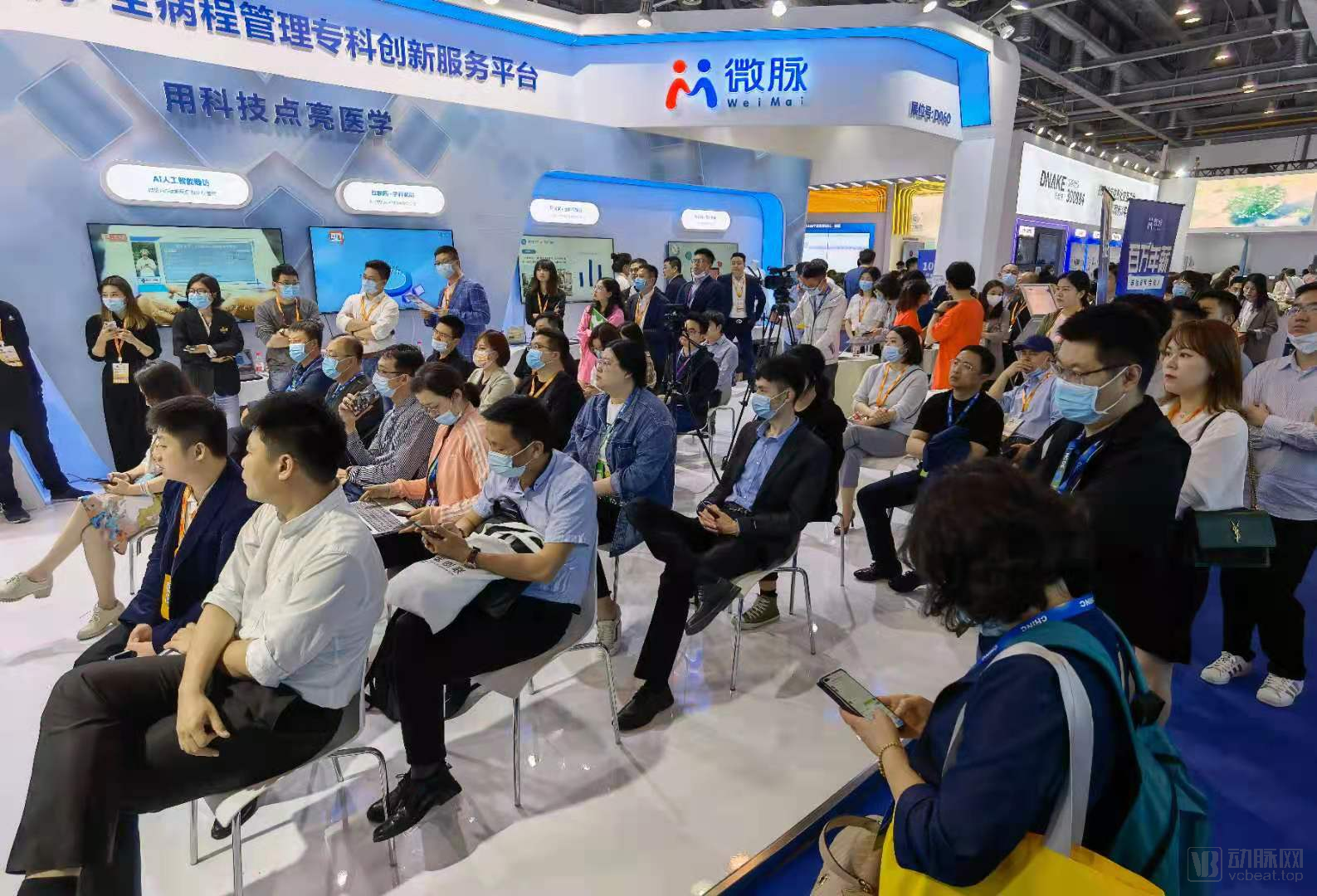
Weimai e-Visit Launch Event
“Integrated Full-Course Management of Pregnancy and Childbirth,” a service design tailored for obstetric and gynecologic patients, is a typical case study of the “Weimai e-Visit” application.
In fact, Weimai has been deeply engaged in specialized fields such as maternal and child health for many years. Its “Internet + One-Stop Maternity Care” integrated innovative service, developed through deep collaboration with public hospitals, covers the entire journey from preconception, pregnancy, and childbirth to postpartum childcare. By integrating online and offline services as well as in-hospital and out-of-hospital care, it reduces the number of hospital visits required for pregnant women, thereby alleviating their burden.
Weimai Analysis: Accompanied by in-hospital medical staff, pregnant women undergo pregnancy-related examinations with a high degree of medical completion. However, outside the hospital where medical staff cannot reach, pregnant women need to rely on themselves to complete relevant fetal monitoring, blood glucose monitoring, etc. If pregnant women fail to follow medical advice due to forgetfulness, non-compliance, and other reasons, it is easy to lead to consequences such as inadequate data monitoring and deviations in efficacy data.
To this end, Weimai has organized service teams led by attending physicians for the vertical population of pregnant and postpartum women, who have periodic medical health management needs. By integrating in-hospital and out-of-hospital services as well as online and offline capabilities, Weimai provides a whole-course management service pathway that spans from in-hospital to out-of-hospital and back to in-hospital care. This achieves a continuous closed-loop digital therapeutic model featuring “AI follow-up + home-based rehabilitation + online follow-up consultations + guided re-admission for diagnosis and treatment.” Pregnant and postpartum women can interact with virtual doctor robots, which inform patients about required actions and precautions during pregnancy and childbirth, provide intervention recommendations in case of condition changes, and offer diagnostic suggestions and treatment instructions to physicians based on information provided by patients.

Regarding the practical application value of Weimai’s digital therapeutics in patient care, Wan Ma further cited the example of patients with malignant tumors, who are highly prone to developing extensive oral ulcers due to chemotherapy during recovery, leading to a significant decline in quality of life. Weimai employs a whole-process management service based on digital therapeutics. By leveraging deep learning of patients’ in-hospital diagnosis and treatment data, it triggers regular AI-driven follow-ups to collect real-world recovery data. Through AI computations, the software initiates autonomous interventions at different time points, with manual intervention when necessary. This approach can substantially reduce the incidence of post-chemotherapy oral ulcers in patients with malignant tumors, shorten the recovery period, and improve the quality of rehabilitation.
The three functional features of being more specialized, more secure, and faster determine the uniqueness of “Weimai e-Visit”.
“Weimai e-Visit” focuses on platform empowerment and the development of channel capabilities. Benefiting from five years of accumulation, Weimai has expanded its reach to 28 provinces and over 160 cities across China, establishing deep connections and collaborations with more than 1,200 public hospitals. The platform boasts over 60 million registered users and serves more than 100,000 doctors. It is through these collaborative practices with numerous hospitals that Weimai has gained a clear understanding of the urgent needs of both patients and healthcare providers, as well as the direction of industry development. This insight has enabled Weimai to leverage its strengths to empower the industry, hospitals, departments, and medical staff, thereby providing comprehensive, one-stop healthcare services covering all populations, aspects, and stages of the health lifecycle to a broader segment of the general public.
“We are now in an era where meticulous work yields fine results. Technology-driven companies, especially those at the forefront of innovation, must undergo a prolonged period of groundwork before achieving tangible outcomes in healthcare,” Wan Ma concluded. Digital therapeutics in China are still in their nascent stage, requiring collaborative efforts from more ecosystem partners. Weimai is willing to open its platform and channel capabilities to all digital therapeutics companies, jointly building a new ecosystem for digital therapeutics in vertical disease areas.