

Milestone Breakthrough: PreCar Project Announces New Achievements, Transitioning from Liver Cancer Early Screening to Full-Course Management
On April 17, 2021, hosted by the Eastern Hepatobiliary Surgery Hospital of Naval Medical University/National Center for Liver Cancer Science, co-organized by Fujian Provincial Cancer Hospital and Mengchao Hepatobiliary Hospital of Fujian Medical University, and undertaken by Berry OncologyChinaProgress Meeting of the Multicenter Prospective PreCancer (PreCar) Project for Ultra-Early Warning and Screening of Liver Cancer & The 1st Summit Forum on Precision Prevention and Control in Early Diagnosis and Treatment of TumorsSuccessfully convened in Fuzhou, China, the conference was attended by one hundred leading liver cancer experts from across the country, including Academician Wang Hongyang, a renowned tumor molecular biologist, and Professor Hou Jinlin, a distinguished expert in hepatology, who delivered insightful presentations.
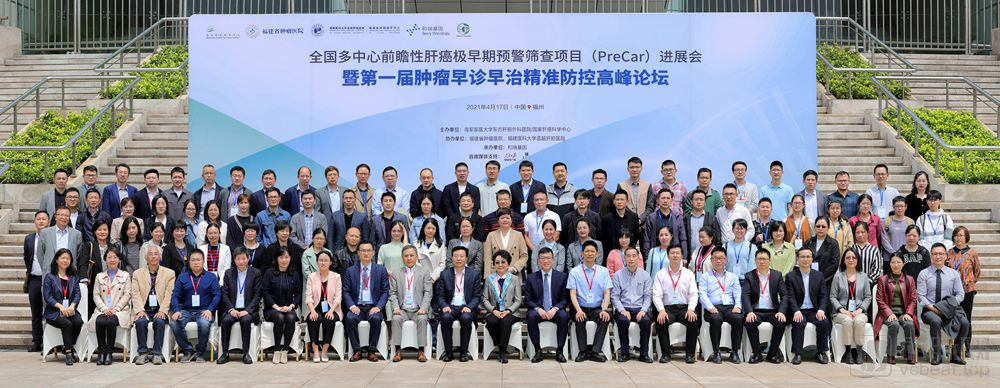
The conference primarily focused on early screening, early diagnosis, and precise prevention and control of cancer, highlighting the current status and challenges of cancer early detection in China. At the meeting, the latest progress and achievements of the PreCar project—a nationwide, multicenter, prospective study on ultra-early warning and screening for liver cancer—were announced, and the extended research project for the Phase II clinical application of PreCar was reviewed and planned.
The PreCar project, launched in April 2018, is an ultra-large-scale prospective cohort study for early screening of liver cancer. It was jointly initiated by Berry Oncology, the Eastern Hepatobiliary Surgery Hospital/National Center for Liver Cancer Science of the Naval Medical University, and Nanfang Hospital of Southern Medical University, with the participation of nearly twenty clinical centers across China. The project aims to screen, identify, and apply ultra-early warning biomarkers for liver cancer in peripheral blood, leveraging technologies such as high-throughput genomic sequencing.
In the industry, few companies are willing to commit substantial funds to large-scale, long-term prospective studies. The PreCar project, spanning three years with a total investment exceeding RMB 100 million, has conducted ultra-early screening and warning for liver cancer in tens of thousands of individuals, and is hailed asThe Largest-Scale and Highest-Level Prospective Study on Liver Cancer in China and Worldwide. As a co-initiator of the PreCar project,Berry Oncology has become the only company in China to validate its technological solution through a large-scale prospective cohort study for early cancer screening.。
1Early Screening and Early Diagnosis: The First Step in Conquering Malignant Tumors
2021 was a critical milestone for the PreCar project. At this PreCar progress meeting, the project’s chief scientistAcademician Wang HongyangFully affirmed the significant achievements and clinical value of the PreCar project in targeting hepatocellular carcinoma, a malignant tumor.Academician Wang HongyangHe stated that only by promptly translating scientific research achievements into clinical practice and actively promoting new concepts and technologies for ultra-early screening of liver cancer can we truly achieve early prevention, early diagnosis, and early treatment. He expressed the hope that researchers, clinicians, and enterprises will collaborate closely to elevate PreCar’s influence from its current standing in China to an even higher level globally, thereby leading the way in early screening, diagnosis, and treatment of tumors in China and contributing to the “Healthy China 2030” initiative.
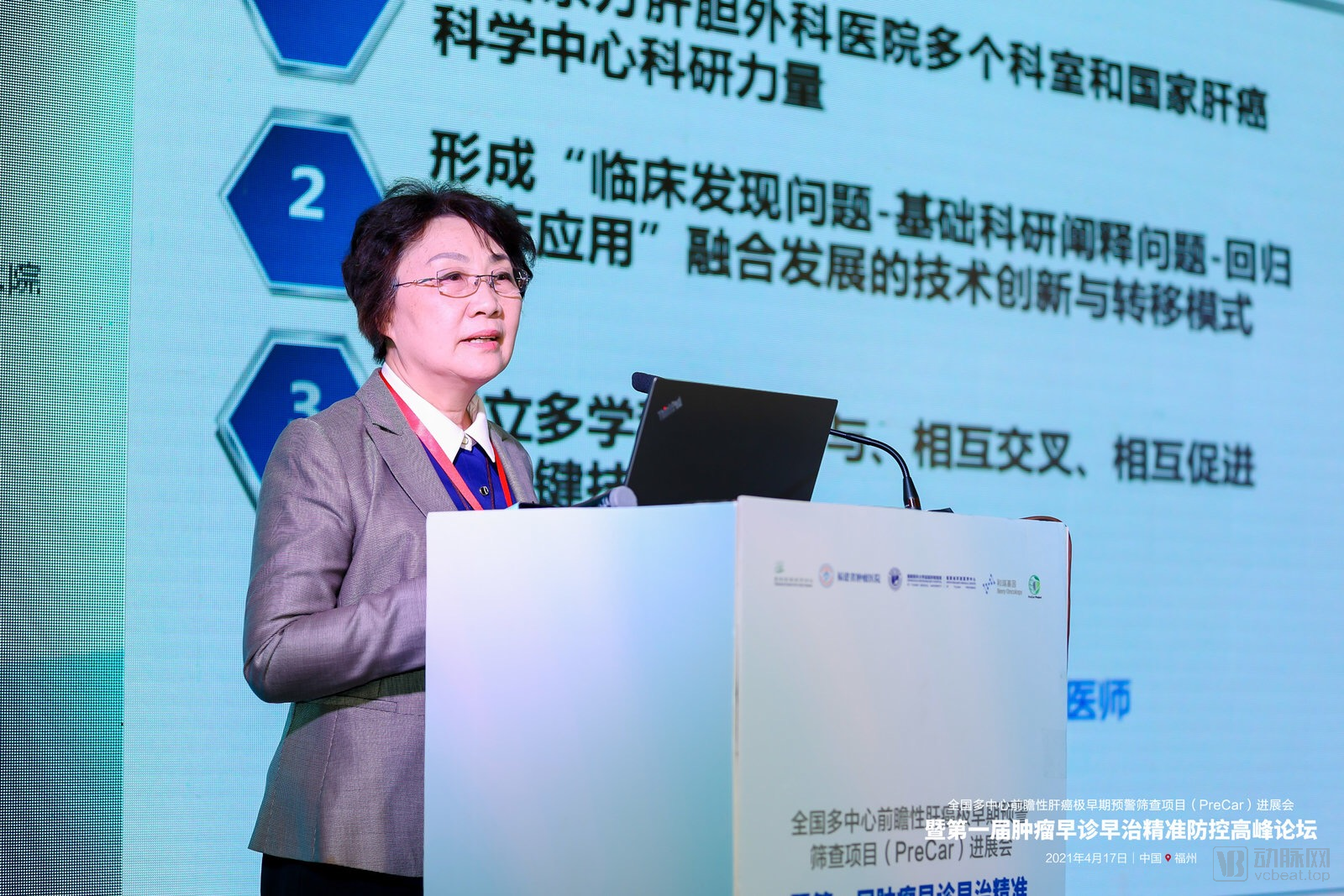
Academician Wang Hongyang, Eastern Hepatobiliary Surgery Hospital of Naval Medical University / National Center for Liver Cancer Science
China ranks first globally in liver cancer incidence, with half of the 910,000 new liver cancer cases diagnosed worldwide each year occurring in China. According to the “Standard for Diagnosis and Treatment of Primary Liver Cancer (2019 Edition)” released by the National Health Commission, primary liver cancer has become the fourth most common malignant tumor and the second leading cause of cancer-related deaths in China. Underlying this burden are 93 million hepatitis B virus carriers and 6 million patients with liver cirrhosis, all of whom constitute high-risk populations for liver cancer.
Faced with such a vast population at high risk for liver cancer, how can we rationally facilitate precise early screening for liver cancer among this large high-risk group under the constraint of limited medical resources? Nanfang Hospital, Southern Medical UniversityProf. Hou JinlinCentered on the theme “A New Model for Personalized Liver Cancer Screening in China,” it shared insights and reflections on exploring a liver cancer diagnosis and treatment pathway tailored to China’s unique characteristics.
 Professor Hou Jinlin, Nanfang Hospital of Southern Medical University
As the lead of the PreCar project,Professor Hou JinlinA “pyramid” screening strategy was proposed, employing the aMAP scoring system in conjunction with whole-genome sequencing (WGS)-based multi-dimensional variant detection. By comprehensively evaluating five clinical parameters—age, sex, platelet count, albumin level, and bilirubin level—the aMAP score for hepatocellular carcinoma (HCC) risk prediction is calculated to identify the top 10% of patients at high risk for HCC. Building on this, WGS-based multi-dimensional variant detection is used to further refine screening among patients at moderate-to-high risk, progressively isolating those at very high risk for close monitoring. This approach ensures that limited medical resources are allocated to the HCC populations most in need, thereby improving the early diagnosis rate of HCC in the general population.
2PreCar: From Early Screening for Liver Cancer to Full-Course Disease Management
As a key highlight of the PreCar Progress Conference, one of the principal investigators of the PreCar projectProf. Chen LeiShared the progress and achievements of the PreCar project at the conference.
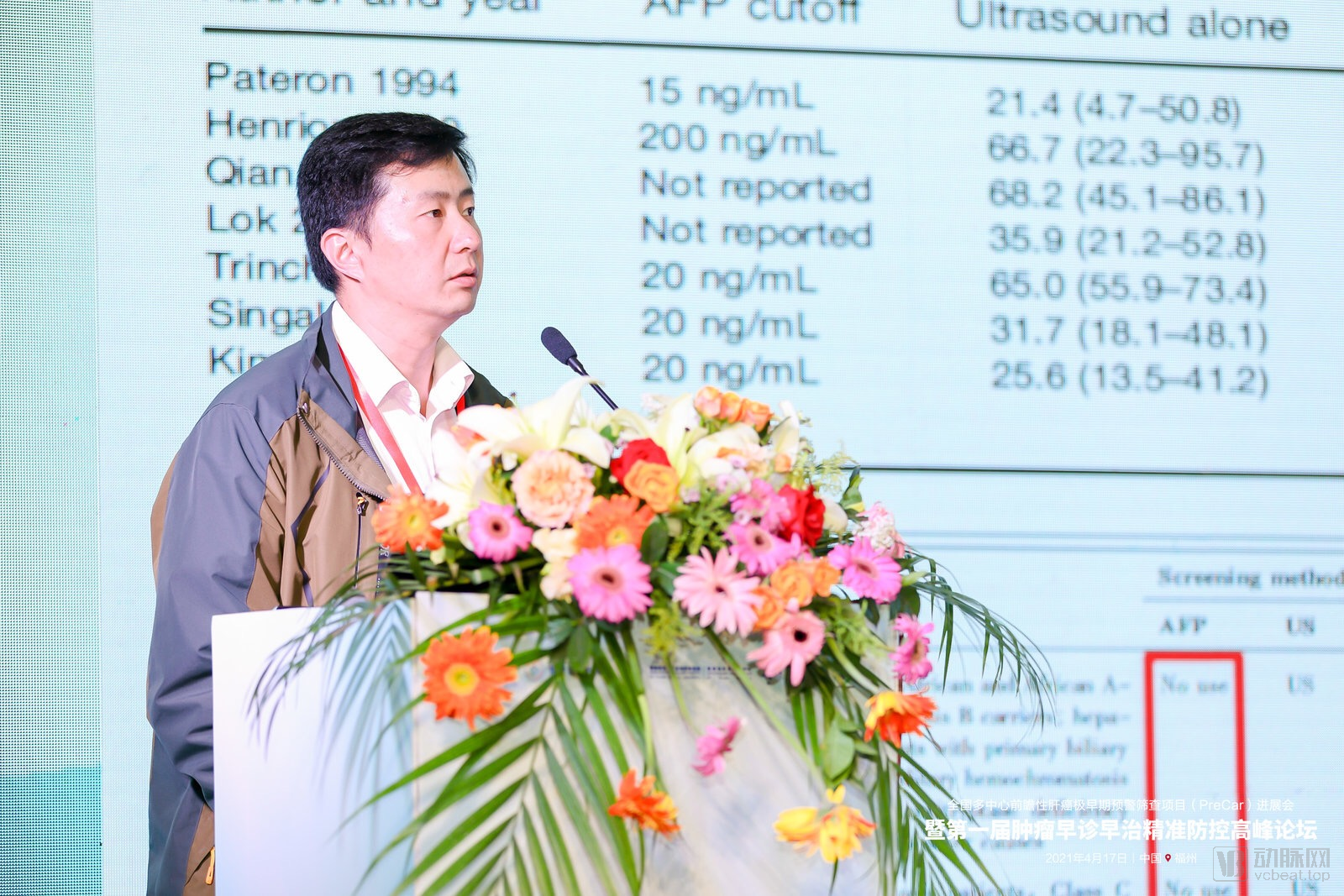
Professor Chen Lei, Eastern Hepatobiliary Surgery Hospital of Naval Medical University / National Center for Liver Cancer
The PreCar project team performs whole-genome sequencing of cell-free DNA (cfDNA) to detect multi-dimensional variations associated with hepatocellular carcinoma (HCC) risk, including nucleosome footprints, fragment size distribution, sequence ends, and copy number variations. By applying an HCC risk warning model to comprehensively weight these multi-dimensional variation data, the team derives the HIFI score. The performance of the HIFI score in distinguishing between individuals with and without HCC has achieved an AUC of 0.996, with sensitivity and specificity reaching 95.42% and 97.91%, respectively, significantly outperforming publicly available comparable HCC detection technologies.
This achievement was published in the internationally renowned journal Cell Research (IF=20.5) in February 2021, causing a significant stir within the industry and garnering widespread attention from both the industrial and academic communities. The project’s forward-looking research findings have played a crucial role in advancing early screening for clinical liver cancer.
With in-depth exploration of clinical practice, the PreCar project will launch a Phase II clinical application expansion study, extending from early screening for liver cancer to whole-course management of liver cancer, thereby meetingFrom precision screening for clinical hepatocellular carcinoma, to early differential diagnosis of benign and malignant lesions in HCC patients, to dynamic monitoring of postoperative recurrence in HCC patients. In this regard, Nanfang Hospital of Southern Medical UniversityProf. Fan RongDelivered an excellent presentation.
 Professor Fan Rong, Nanfang Hospital of Southern Medical University
Accurate diagnosis of the benign or malignant nature of liver nodules is a critical component in the treatment of liver cancer. Worldwide, approximately 70% of patients with primary liver cancer develop the disease on a background of liver cirrhosis. Liver cirrhosis is often accompanied by multiple nodules of varying sizes and types, including regenerative nodules (RN) and dysplastic nodules (DN). Among these, high-grade dysplastic nodules (HGDN) are considered precancerous lesions for hepatocellular carcinoma (HCC), with a fourfold increased risk of progressing to HCC compared to patients without HGDN.
PreCar Project TeamBy integrating whole-genome sequencing (WGS)-based multi-dimensional variant detection with conventional diagnostic methods, we screened intrahepatic nodules in the context of liver cirrhosis to establish a liver nodule screening model. This model was applied to clinical auxiliary diagnosis, facilitating the differentiation between benign and malignant liver nodules and providing effective reference indicators for clinical practice.。
In addition to the difficulty in distinguishing between benign and malignant liver nodules in patients with liver cancer, another reason for the poor curability of liver cancer lies in its high postoperative recurrence rate. Clinically, the survival period of patients with advanced liver cancer after hepatectomy is uncertain, and the 5-year postoperative recurrence rate remains as high as 50%-70%.
The Phase II trial of the PreCar project will further explore,Based on the genomic characteristics of cfDNA, monitor the dynamic changes in cfDNA before and after surgery for resectable liver cancer, thereby assessing the burden of residual minimal disease, predicting the probability of tumor recurrence and intrahepatic de novo lesions, and achieving dynamic monitoring during the perioperative period and postoperative recurrence of liver cancer.. By leveraging its advantages of ultra-high sensitivity and specificity, it provides the most precise postoperative dynamic monitoring for liver cancer patients, meeting the need to assist in preventing the risk of hepatocellular carcinoma recurrence.
3Jointly Developing Pathways for Early Screening and Diagnosis of Liver Cancer in China
The day the PreCar project progress meeting was held also marked China’s 27th National Cancer Prevention and Control Publicity Week. At the meeting, experts in early liver cancer screening discussed scientifically feasible pathways for early detection of liver cancer. Eastern Hepatobiliary Surgery Hospital of Naval Medical UniversityProfessor Wang HuiThis paper elaborates on the "Expert Consensus on Early Screening Strategies for Liver Cancer in China." In addition to standardizing and optimizing screening processes, early liver cancer screening requires the development and integration of new technologies, such as the WGS-based multi-dimensional multi-variant detection technology underlying the PreCar project.

Professor Wang Hui, Eastern Hepatobiliary Surgery Hospital, Naval Medical University
The PreCar project team conducted extensive discussions and iterative research on molecular diagnostic technologies and their clinical applications in early hepatocellular carcinoma (HCC) screening. This work was based on a comprehensive review of domestic and international literature, integrated with HCC- and liver disease-related standards, guidelines, clinical practice, and expert consensus. The team also proposed considerations for incorporating cell-free DNA (cfDNA) whole-genome sequencing into the consensus pathway for HCC screening. These efforts aim to improve methods for predicting, screening, and diagnosing early-stage HCC in at-risk populations, enhance the specificity of examinations, increase patient compliance, and thereby raise the rate of early HCC diagnosis to achieve the benefits of early treatment. Meanwhile, participating experts engaged in active roundtable discussions on promoting the practical implementation of the expert consensus on early HCC screening strategies, as well as on the prospects and considerations for the clinical application of cfDNA whole-genome sequencing in the field of HCC.


As early as March 2019, the Government Work Report explicitly stated that “cancer prevention and control initiatives should be implemented to advance preventive screening, early diagnosis and treatment, and key scientific research, with a focus on addressing critical public livelihood concerns.” Scientific cancer prevention and treatment has become a policy priority at the highest national level. The PreCar project has practically responded to the national call for early screening and diagnosis, breaking through bottlenecks in the early diagnosis and early warning of liver cancer. It has emerged as a key core factor in improving the five-year survival rate of liver cancer patients and constitutes an important component in advancing the development of liver cancer prevention and control in China.
Through three years of dedicated efforts, the PreCar project has achieved substantial results in both scientific research and clinical practice, addressing and overcoming the current bottlenecks in early diagnosis and early warning for liver cancer patients. It provides hepatologists with an effective scientific screening method, holding significant value for improving liver cancer prevention and control in China and globally, as well as for realizing early screening of liver cancer. These remarkable achievements would not have been possible without the forward-thinking design by participating institutions such as the National Center for Liver Cancer and Nanfang Hospital of Southern Medical University, nor without the hard work of hundreds of researchers, clinicians, and other project participants behind the scenes.
As the sole technology enterprise supporting the PreCar project, Berry Oncology has also demonstrated its strength through action.In August 2020, Berry Oncology’s early liver cancer screening product, “Leisining,” developed and validated through the PreCar project, was successfully launched on the market., its ultra-high sensitivity and specificity can facilitate precise screening for liver cancer, early differential diagnosis of benign and malignant liver nodules, and dynamic monitoring of postoperative recurrence in high-risk populations. This approach progressively extends from early screening and warning to comprehensive disease management throughout the entire course of liver cancer, thereby helping patients achieve longer survival and effectively improving the quality of life for liver cancer patients in China.