

Meimuen Medical: Pioneering Domestic Innovation in Aesthetic Devices and Consumables
With the continuous development of the social economy and the steady improvement of people’s living standards, the pursuit of physical appearance, along with the willingness and ability to pay for it, has been gradually increasing. The medical aesthetics industry is now entering a golden period of growth. As upstream products in the medical aesthetics supply chain, medical aesthetic devices and consumables continue to benefit from the overall expansion of the industry.
However, alongside the rapid development of China’s medical aesthetics industry, reports on “medical aesthetics accidents” have increasingly appeared in the media. Public satisfaction with the industry remains generally low. Illegal medical institutions, unqualified practitioners, and non-compliant products have become major factors hindering the industry’s positive development, with most medical aesthetics accidents stemming from unlicensed and non-compliant products. As public awareness of medical aesthetics continues to improve, demand for equipment and services among medical aesthetics institutions and consumers has been steadily rising. However, some of this demand is not met by authentic products, leading to medical aesthetics accidents.
When discussing the upstream segment of the medical aesthetics industry, most people tend to think of injectable products such as hyaluronic acid and botulinum toxin. In reality, however, the market share of medical aesthetic devices is no less significant than that of currently popular hyaluronic acid products, with substantial untapped market potential still remaining. In recent years, non-surgical, minimally invasive medical aesthetic procedures have gained increasing favor among consumers. The market share of non-surgical medical aesthetic treatments has surpassed that of surgical procedures, and their proportion in terms of scale continues to rise. As these procedures are driven more by aesthetic considerations than therapeutic needs, their consumer-oriented attributes outweigh their clinical characteristics. It is understood that most large-scale medical aesthetic devices currently used in China are sourced from abroad, with foreign manufacturers accounting for approximately 80% of the relevant market share. Domestic manufacturers of medical aesthetic devices still need to actively promote the localization of such equipment.
In this context, Hubei Meimuen Medical Equipment Co., Ltd. (hereinafter referred to as “Meimuen”), established in 2019, focuses on the research and development of medical aesthetic devices and consumables. Committed to technological innovation, the company aims to achieve import substitution for medical aesthetic devices and consumables. Currently, multiple products are in the stages of R&D or regulatory submission.
Achieving Import Substitution for Medical Aesthetic Devices
As the founder and CEO of Meimu'en, Cheng Yueran’s decision to launch a venture in the field of medical aesthetic devices was largely driven by his extensive work experience and technical expertise accumulated in the medical device industry.
In 2014, Cheng Yueran, who earned a master’s degree in Electrical Engineering from Cornell University, joined General Electric (GE) and was selected for GE’s highly competitive rotational program. He subsequently held positions in R&D, management, production, and marketing, contributing to the research, development, manufacturing, and market promotion of multiple medical devices. This experience laid a valuable foundation for Cheng’s future entrepreneurial endeavors.
Although his experience at GE was primarily with imaging equipment, Cheng Yueran recognized that, due to the nature of such products, manufacturers cannot directly obtain end-user feedback. Driven by a desire to engage more closely with users and tailor product design and iteration to consumer needs, he ultimately chose to focus on the medical aesthetics sector after extensive research, founding Meimuen. Compared with large-scale medical devices, medical aesthetics equipment benefits from substantial market demand, requires less intensive R&D investment than imaging systems, and represents a niche segment characterized by stronger consumer stickiness.
In recent years, China’s medical aesthetics market has experienced rapid growth. However, as medical aesthetics technologies in China started later than those in developed countries in Europe and the United States, established foreign enterprises have captured the majority of the market share among compliant medical aesthetics institutions in China, leveraging their strong brand and technological advantages. Meimuen aims to introduce more cost-effective medical aesthetics devices and solutions to the market through technological innovation and independent research and development, striving to build a localized Chinese brand of medical aesthetics equipment and gradually replace imported counterparts.
To achieve the goals of technological innovation and import substitution, team strength is clearly paramount. At the outset of the venture, upon learning of Cheng Yueran’s entrepreneurial vision, his former colleagues from GE relocated from cities such as Beijing and Shanghai to Wuhan to join Meimuen’s R&D team, providing substantial support for product development. Currently, most core members of Meimuen’s team possess experience in R&D, production, and market management at Fortune 500 medical device giants. As the company’s primary department, the R&D division alone comprises more than ten engineers specializing in diverse fields.
Self-developed mesotherapy injection device, meticulously refined product
Mesotherapy injection devices are among the most frequently used equipment in medical aesthetic institutions. Their primary function is to deliver various therapeutic agents into the skin using negative pressure technology. Currently, most mesotherapy devices used by medical aesthetic institutions in China are sourced from South Korean companies. Meimuen has successfully developed its own mesotherapy injection device, and the application for medical device registration is currently underway.
During the product development process, the Meimuen team dedicated substantial effort across all aspects. The most immediate focus was on industrial design. Historically, mesotherapy injection devices used in medical aesthetic institutions have featured a wide variety of handpiece designs, with significant variations in size and weight. Drawing on recommendations from over one hundred experts across China and principles of ergonomics, Meimuen implemented groundbreaking adjustments to the handpiece’s shape and positioning, as well as to the device’s screen size, angle, and storage compartment dimensions, striving to closely align with user needs. It is reported that the Meimuen team created dozens of design prototypes for the exterior appearance alone.
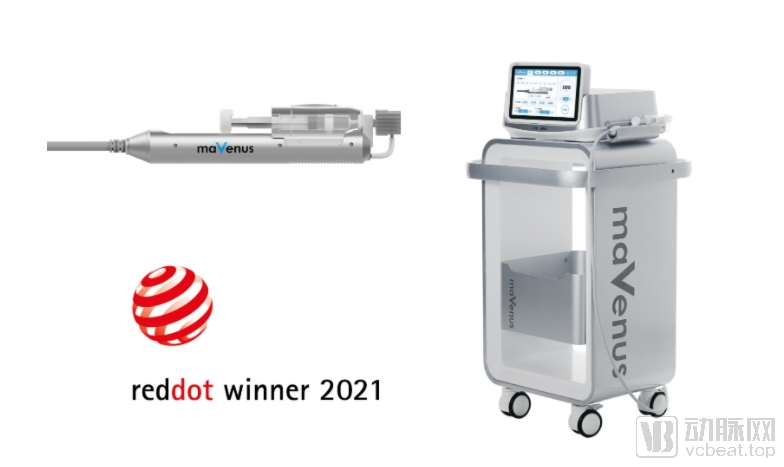
Meimuen Hydro-Lifting Injection Device
Secondly, medication leakage is an unavoidable issue during the use of skin booster injection devices. Because it is difficult for physicians to precisely control the volume of medication injected into the skin, drug waste often occurs. The Meimuen team has addressed this challenge through intelligent dynamic negative pressure technology, which intelligently senses skin contact and ensures stable negative pressure output, thereby significantly minimizing solution overflow. Through continuous improvement and optimization, the device’s dosage output accuracy has successfully reached an industry-leading level of approximately 3 sigma.
Currently, this product has begun to be exported to countries such as Japan and South Korea, with overseas market channels continuously expanding. Leveraging its advantages in design and functionality, Meimuen was awarded the 2021 German Red Dot Product Design Award, gaining international recognition from the design community for its product aesthetics and quality.
In addition to mesotherapy injection devices, Meimuen has also launched consumer-oriented products such as medical cold compress patches. For medical aesthetic institutions, medical cold compress patches are an essential requirement, as most aesthetic procedures require post-operative care with these patches to facilitate recovery. Moreover, such products can reach a broader base of end consumers, indicating significant market potential.
Synergistic Development of Medical Aesthetics, Professional Beauty, and Home-Based Beauty
At this stage, Meimuen has not only developed products in the field of medical aesthetics but also expanded into lifestyle beauty and home beauty, with all three sectors developing in tandem to meet a broader range of market demands.
In the realm of lifestyle beauty, Meimuen is poised to launch a magnetic slimming device that leverages non-invasive, high-energy focused electromagnetic wave technology. This advanced technology induces continuous muscle expansion and contraction, delivering the equivalent of 20,000 crunches in just 30 minutes, thereby achieving fat reduction and muscle toning. While this technology has been widely adopted in the medical aesthetics and fitness industries abroad, the domestic market in China remains largely untapped, despite the emerging concept of magnetic slimming. Furthermore, Meimuen’s focused magnetic wave products offer richer functionalities and greater technological innovation compared to those from European and American manufacturers.
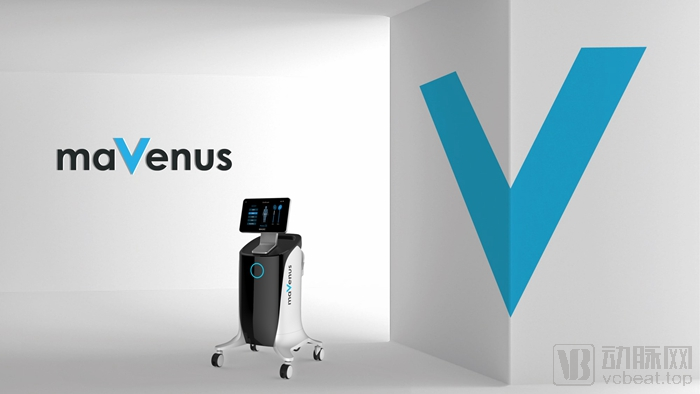
Meimuen Body Contouring Device
In addition, Meimuen is actively developing radiofrequency (RF) products capable of achieving skin lifting and tightening effects. Currently, RF products available in China primarily refer to Thermage CPT and Thermage FLX, commonly known as the fourth- and fifth-generation Thermage devices, respectively. These devices stimulate cellular self-repair mechanisms through thermal energy. Under the action of Acmete-A cellular nutritional support, they promote substantial collagen production in subcutaneous tissues for repair and regeneration, gradually reorganizing and realigning collagen fibers to reconstruct the collagen scaffold. This process effectively reduces wrinkles, tightens the skin, and enhances facial contouring.
Since the second quarter of 2020, the Baidu Index for Thermage has soared, establishing it as a rising star in the medical aesthetics industry, while public awareness of radiofrequency (RF) technology continues to grow. Leveraging its technical expertise, Meimuen has initiated the development of various RF products tailored for both medical aesthetic institutions and home-use scenarios. Additionally, the company currently has five to six other products in simultaneous stages of research and development.
To ensure the smooth advancement of various projects, Meimuen will continue to develop and expand its corporate team, gathering top-tier talent from diverse fields to support the research and development of domestically produced innovative equipment and deliver high-quality products.