

Exclusive Interview with Jiang Xiaodong of Long Ridge Capital: How Will Innovative Medical Services Evolve Over the Next Decade?
On April 17, at the VB100 Strategic Summit of the Future Healthcare Top 100 Conference hosted by VCBeat, Jiang Xiaodong, Managing Partner of Changling Capital, delivered the keynote address titled “Seeing Is Believing: Reimagining the Future of Healthcare Through Innovative Services” as the first speaker in the afternoon session on “Computing the Future: The Path to Innovation for Top 100 Enterprises.”
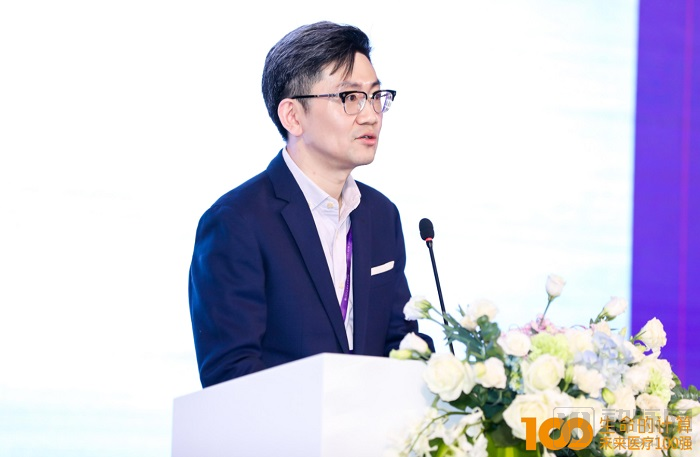 Jiang Xiaodong, Partner at Changling Capital
During the presentation, Changling Capital provided a detailed explanation of its strategic investment in the big health and aging sectors, pointing out that the current state of medical insurance revenue and expenditure requires the healthcare services industry to improve its input-output ratio. In this process, Changling Capital can drive healthcare transformation by continuously investing in innovative healthcare service companies and innovative medical technology enterprises.
Seeing Is Believing: Reimagining the Future of Healthcare with Innovative Services
Changling Capital, spun out of the NEA fund team, has been established for four and a half years.To date, it has completed fundraising for three funds, with the combined size of its USD and RMB funds exceeding RMB 6 billion. Changling Capital has invested in more than 50 companies, primarily across three sectors: innovative healthcare services, innovative medical technology, and new models of aging care.Its primary areas of focus and key sectors are big health and aging. As a venture capital fund specializing in early-stage startups, Changling Capital makes individual investments ranging from RMB 10 million to RMB 200 million.
Over the past five years, the healthcare industry has accelerated its development, driven by technological and model innovations. Nevertheless, healthcare remains a “slow” industry, as it addresses serious and highly complex health issues concerning individual lives, which are not easily resolved. Investing in such a slow-moving sector requires long-term focus and patience. The 12-year investment horizon of Changling Capital’s fund has provided precisely such an opportunity.
All of Changling Capital’s investments are directed toward the most significant “gray rhino” facing China’s economic and social development over the next two decades: the demographic shift toward an aging population.The aging population is surging at a rate of approximately 10 million people per year, with nearly 270 million individuals now aged 60 and above. The demographic structure of the elderly population is also undergoing fundamental changes; in 2019, there were 250 million older adults. According to third-party forecasts, China’s aging population will exceed 400 million by 2033.
The composition of this 400 million-strong population differs fundamentally from that of 2019, with over 70% born between 1962 and 1973. The decade from 1962 to 1973 witnessed the highest number of births, totaling 320 million. In 2021, individuals born in 1962 had not yet reached the age of 60.However, starting next year, structural changes will not only lead to a surge in the aging population; their needs, willingness to pay, and behavioral habits will also be fundamentally different from those of the previous generation.
The average healthy life expectancy for Chinese people is 68 years, and the majority of healthcare expenditures are actually incurred by those over the age of 68, who are often in suboptimal health. Simple arithmetic reveals that the next 20 years from 2018 onward will witness the largest patient population in China’s history. This also presents a significant opportunity for the healthcare industry.
Over the next two decades, the core challenge facing China’s healthcare industry will essentially be a question of whether people or money runs out first.China’s medical insurance revenue and expenditure reached a turning point between 2017 and 2018. Over the past two decades, the system has primarily benefited individuals born between 1930 and 1950, who have now reached age 70 and entered a life stage characterized by a high incidence of disease and a surge in medical costs. In the next 20 years, China’s medical insurance system will need to serve those born between 1950 and 1970.
The vast majority of individuals born in 1930 did not enjoy substantial affluence and had relatively limited purchasing power. In contrast, those born between 1960 and 1973 benefited from the most favorable period of China’s reform and opening-up policy, accumulating the largest share of assets in the country. Driven by higher expectations for longevity and health, they are willing to allocate resources to a degree that was unimaginable for the preceding generation.
Future medical insurance expenditures may double.To achieve rational cost control in medical insurance, two approaches can be adopted. The first is to increase funding., however, in terms of revenue, China’s working-age population is projected to decline from 900 million to below 700 million over the next 30 years, resulting in a shrinking base of medical insurance contributors. Increasing the contribution amount per individual would impose significant hardships on both enterprises and individuals.Second, reduce expenditures., Since the establishment of the National Healthcare Security Administration, cost-cutting measures will be carried out to the end. However, the scale of savings is far outweighed by the rapid growth in expenditures.
Furthermore,Medical insurance coverage for disease treatment is only one type of expenditure; recently, there has been growing public concern about expenses related to long-term care for the elderly.The incidence rate of Alzheimer’s disease (AD) or dementia among individuals aged 60 and above is approximately 3%. With the elderly population projected to reach 400 million by 2033, this translates to 12 million patients (400 million × 3%). At an average annual care cost of RMB 80,000 per person, total expenditures will approach RMB 1 trillion. This trend indicates a significant shortfall in medical insurance coverage.
How to Address This Gap?In fact, there is a third approach, which is the core logic behind Changling Capital’s investment in innovation.,"Do more with less money."These three approaches are not mutually exclusive. However, the focus today is on the third approach,It is about how to improve the return on investment.The current health and wellness industry and the aging care sector are highly inefficient; innovative medical services and advanced technologies can help transform this landscape.
Innovative medical services encompass a broad scope and extensive reach, with numerous innovative concepts and models. Changling Capital has merely explored this topic from a few perspectives drawn from its portfolio of over 50 invested companies.
When it comes to healthcare services, many people think of traditional forms such as hospitals and clinics, which reflects a relatively conventional mindset.Today, the innovation in China’s healthcare services and the opportunities for healthcare service innovation over the next decade lie in OMO (Online-Merge-Offline), rather than O2O (Online-to-Offline), representing the integration of online and offline services.At its core, it addresses the supply-demand imbalance in traditional healthcare service scenarios through an integrated online-offline approach.
Take two companies that were early investments by Changling Capital as examples. One of them isGushengtang Traditional Chinese Medicine. Nearly 20% of Gushengtang’s multi-billion-yuan revenue comes from its internet-based services, and this proportion is steadily rising. In first-tier cities such as Chengdu, Shanghai, Beijing, and Guangzhou, its market share in online traditional Chinese medicine (TCM) services ranks either first or among the top.
Gushengtang is addressing the scarcity of top-tier Traditional Chinese Medicine (TCM) experts. While these leading specialists play a crucial role in patient care, their availability is highly limited. Not only are they few in number, but their service reach is also narrow. Due to spatiotemporal constraints and the inherent limitations of the traditional public hospital model, their full potential remains underutilized. Gushengtang’s approach is to integrate online and offline services.
Whether through internet-based healthcare solutions or offline chain operations, these two approaches are not independent business models; rather, they jointly cover various scenarios across the patient’s entire lifecycle. The specific services provided in each scenario are determined by the type of disease being treated and the requirements for diagnosis, treatment, and subsequent rehabilitation. Changling Capital is currently undertaking more in-depth initiatives, leveraging its Online-Merge-Offline (OMO) capabilities to empower public hospitals. It is also collaborating with leading public hospitals to co-develop and manage their operations on a delegated basis.
Rainbow DoctorHere is another example. In the market for self-paid vaccinations, many clinics struggle with unstable patient volumes on one hand, while on the other, individuals face long waiting times and relatively poor service when booking vaccines such as the HPV vaccine, regardless of whether they visit public or private institutions. Rainbow Doctor has successfully addressed this issue, with monthly transaction volumes for vaccination services on its platform exceeding RMB 100 million. Its user base includes both young people and middle-aged and elderly individuals.
The second perspective is digital therapeutics,It is also one of the key topics to be discussed at the Top 100 Future Healthcare Conference.The core essence of digital therapeutics is to leverage technological means to alter the behaviors of both patients and healthcare providers, thereby changing clinical diagnosis and treatment outcomes, which are quantified using clinical metrics.
Yun Kai Ya MeiFocusing on patients with rare diseases (affecting one in a thousand), this group lacks effective management. Leading experts are primarily concentrated in first- and second-tier cities, whereas patients are largely located in second- and third-tier cities. Leveraging internet-based solutions to provide comprehensive management has yielded significantly different outcomes.Zero-Krypton TechnologyThe internet-based oncology hospital we have established is one of the largest, dedicated to the comprehensive digital management of patients with chronic cancer conditions. Although we are still in the early stages of digital therapeutic development, statistical tracking results already demonstrate a significant difference in three-year survival rates between the more than 30,000 lung cancer patients who received managed care and those who did not.
Healthcare is a slow-moving industry. Although it is currently favored by capital, healthcare demand cannot be simply stimulated by money nor suppressed, as its price elasticity is relatively low. Capital markets are inherently volatile, characterized by fluctuations in valuation, pace, and sentiment. However, the Chinese healthcare sector, which we have been striving to advance, remains a long-term endeavor.Whether for entrepreneurs or investors, particularly the latter, it is essential to uphold a long-term perspective and perseverance. This aligns with Changling Capital’s philosophy of staying away from fleeting trends and believing in the power of compounding.
Changling Capital cited Aier Eye Hospital as an example. If investors had purchased shares at the time of Aier Eye Hospital’s IPO in 2009, their return on investment would have been more than 30-fold by the end of 2019. Today, that multiple has doubled to over 60-fold, even surpassing the return multiple of Tencent, the leading internet company, over the same period.Changling also hopes that more investors will pursue this goal by adopting a long-term, dedicated approach—spending ten years to sharpen a single sword—and forge close partnerships with entrepreneurs.
The Changling Team isHygeia HealthcareThe company’s first investor, and also its last investor prior to the IPO. Changling Capital invested in both the Series A and Pre-IPO rounds. From an investment perspective, this approach aims to identify and benefit from the power of compounding growth; from an industry development standpoint, it reflects a commitment to accompanying the enterprise through long-term growth, dedicating ten years of focused effort to building a great company.
According to data from the United Nations Population Division, 50% of China’s population will be aged 50 and above by 2050. What will their living conditions be like when half the population is over 50? What will society look like once the post-2000s generation has all surpassed the age of 50?Jiang Xiaodong expressed his hope that, through the efforts of at least three generations—those born in the 1970s, 1980s, and 1990s—longevity will no longer be a burden for every Chinese person, but rather a gift of life.
Q&A: How Changling Capital Views the Development of Healthcare Investment
VCBeat:“Because we believe, we see,” embodies a sense of certainty. What vision of the future do you foresee?
Jiang Xiaodong:“Because we believe, we see” essentially means that if you hold a grand vision, even if it appears implausible in the early stages, it may still occasionally come to fruition. The healthcare investment industry is inherently about dreaming and realizing those dreams. Visions must be ambitious; they should not be viewed merely as business transactions, but rather as endeavors that truly serve a broad population. When investing in healthcare services, Changling Capital avoids “high-end” medical segments, aiming instead to support enterprises that serve the general public and address the needs of hundreds of millions, rather than just tens of thousands. In twelve years’ time, Changling Capital hopes to look back with pride on several accomplishments and cherish the journey of having been part of them.
VCBeat:"In recent times, investment in the healthcare sector has been booming. What do you think are the driving forces behind this trend? How do you view this phenomenon?"
Jiang Xiaodong:The pandemic was undoubtedly one of the catalysts. It significantly heightened public attention toward the healthcare industry, a trend observed globally. Secondly, the boom in the secondary market has driven investment in the primary market. The primary market typically lags behind the secondary market. When pharmaceutical and technology stocks perform strongly in the secondary market, investors in the primary market begin to consider allocating capital to these corresponding sectors. Many capital firms that previously did not invest in the healthcare sector have now entered the field. While this has intensified competition, it is ultimately a positive development.
From my personal perspective, I still hope to see more people embark on entrepreneurial ventures, as the bottleneck in the investment industry lies in the scarcity of outstanding entrepreneurs with grand visions. To illustrate the current landscape, a U.S. statistical report on the development of private equity (PE) and venture capital (VC) funds over the past 30 years reveals that 50% of funds failed to raise a second fund after their first; 90% of those with a second fund did not raise a third; and 99% of those with a third fund did not raise a fourth. Ultimately, only a small minority of funds have survived, and profitability remains confined to a select few. If the number of young doctors in China continues to decline while the number of investors in the healthcare sector keeps growing, this would not be a positive development. A key objective in the current development of healthcare services is to enable doctors to lead more dignified and respectable lives.
VCBeat:How Does Changling Capital Reduce Investment Costs? Has It Considered Incubating Innovative Healthcare Service Companies?
Jiang Xiaodong:Over the four and a half years since its establishment, Changling Capital has focused on the big health and new aging sectors, investing in more than 50 companies. Compared with capital firms that invest in hundreds of enterprises across dozens of fields, Changling Capital is more specialized and has built a complete ecosystem within its focus areas. As this ecosystem matures, synergies among portfolio companies will become increasingly pronounced.
Throughout this process, Changling Capital maintains long-term partnerships with its portfolio companies. For instance, the Changling team was not only the first investor in Hygeia Healthcare but also participated in its final pre-IPO financing round. Currently, Changling Capital is incubating three to four projects, all of which are at relatively early stages. While incubation is a more time-intensive endeavor, Changling Capital’s 12-year fund structure provides the patience necessary to grow alongside these enterprises. The firm aims to work closely with entrepreneurs, dedicating sustained effort over many years to build great companies.
VCBeat:During the investment process, how does Changling Capital identify projects with the potential to become great companies?
Jiang Xiaodong:Ultimately, it comes down to encountering entrepreneurs who truly inspire us—those who are pioneering ambitious and innovative ventures. For instance, when we first met Professor Zhu Yiwen, the founder of Hygeia Healthcare, he was a clinician at a public hospital in Shanghai. We invested in Hygeia Healthcare’s angel round and have accompanied the company from its inception to where it stands today, with Hygeia Healthcare now boasting a market capitalization of nearly HK$37 billion.
I remember it clearly. When I asked him what he intended to do, he said he wanted to establish oncology hospitals in third- and fourth-tier cities, or even at the county level. My initial impression was that this sounded highly unreliable. Common sense tells us that cancer patients typically seek treatment in major hubs like Beijing and Shanghai—a trend that held true ten years ago and remains the case today. However, upon hearing his rationale, I found no flaws in his logic. After thorough internal discussions, we recognized the significant risks involved but still decided to invest. The same applied to our investment in LinkDoc Technology. When I first met the founder, LinkDoc had not yet been formally registered. Early-stage investing inherently carries high risk, requiring investors to exercise careful judgment.
China is by no means short of aspiring entrepreneurs, yet not everyone succeeds. Some possess promising ideas; among those with good ideas, some demonstrate strong execution capabilities; and among those with strong execution, some are blessed with favorable luck… Identifying such individuals is inherently unpredictable. The greatest challenge in early-stage investment is not the inability to find these people, but rather overlooking them when they are right in front of us. There are many outstanding physicians in China like Professor Zhu. The issue is that not every one of them can successfully launch a venture and build a company valued at tens or even hundreds of billions. The key reason for believing that he, in particular, will succeed lies in the willingness to make that judgment call.
The most rewarding aspect of early-stage investing is actually seeing things that others have not. You witnessed what the company looked like in its early days, you observed the entire journey and the stark contrasts along the way, and you truly saw how dreams were realized. I believe this is one of the most remarkable and fulfilling experiences in life. Even if you are not the one directly building the company, participating as an investor is equally exhilarating.
VCBeat:In the healthcare services sector, companies like Aier Eye Hospital and Topchoice Medical, which went public in previous years, lean more toward consumer healthcare. In contrast, recent IPOs such as Hygeia Healthcare are more focused on serious medical care. The transition from consumer healthcare to serious medical care is a more challenging process. How do you view this trend?
Jiang Xiaodong:I believe that all healthcare is serious in nature; however, the former may lean more toward consumer-oriented scenarios. For instance, Gushengtang Traditional Chinese Medicine, in which we have invested, operates outside the public healthcare system and involves out-of-pocket payments rather than insurance coverage. Nevertheless, it remains focused on clinical diagnosis and treatment, not merely wellness or health maintenance. Serious medical care can indeed be delivered in consumer-friendly settings, while consumer healthcare can also involve serious medical applications. "Consumerization" refers to enhanced user experience, high accessibility, convenience, and cost-effectiveness; it does not imply that the ultimate medical outcomes are optional. In healthcare, we should ensure convenience for patients while maintaining high-quality clinical outcomes.
VCBeat:How do you view the perspective raised by a panelist during the roundtable discussion that “capital is inherently greedy” and that capital should be more conservative and restrained?
Jiang Xiaodong:You may interpret “greed” as either a derogatory or a neutral term. In my view, it is neutral. I agree that capital is driven by greed, because everyone seeks to make money. Entrepreneurs who lack this drive are not good entrepreneurs. They, too, strive for higher income, greater market share, and better returns. From this perspective, greed and fear themselves propel human progress. This does not mean that capital and enterprises cannot achieve win-win cooperation, since venture investment is inherently not a zero-sum game. Companies can engage in friendly, rational negotiations with investors over the details of collaboration. Their commercial partnership is a joint effort to secure future opportunities in the market. One should not approach these issues with a zero-sum mindset; collaborations founded on such a mindset are destined to be short-lived.
VCBeat:How Does Changling Capital View Its Relationship with Portfolio Companies? Does Adhering to Long-Termism Mean Becoming Friends with These Companies?
Jiang Xiaodong:Be a Partner. In life, we have partners; in business, we also have partners. A partner is someone who does what needs to be done. Partners may argue and may not always see eye to eye on everything. However, true partners understand each other and spare no effort to help each other succeed. Each fund managed by Changling Capital has a term of 12 years. It is widely acknowledged that entrepreneurship is arduous. We aspire to serve as business partners, accompanying entrepreneurs throughout their growth journey and jointly harnessing the power of compounding.
VCBeat:Changling Capital has recently completed the fundraising for its third U.S. dollar fund. What are the subsequent plans?
Jiang Xiaodong:We will continue to advance along the established path set since our founding in 2016, with a focus on the broader health sector and aging-related fields. On another front, as Changling Capital has now been in operation for four and a half years, it has accumulated greater resources and attracted more supporters willing to assist its growth. Consequently, Changling Capital’s aspirations have become more ambitious, and driven by its mission, it operates with an increased sense of urgency.
Over the next two decades, which will witness the most rapid aging of the population, we hope that companies invested in by Changling Capital will fundamentally transform the current inefficiencies in the broader health and aging-care industries, delivering higher-quality, cost-effective services to the 400 million elderly individuals projected by 2030. This opportunity is exhilarating, yet our ability to seize it hinges entirely on our performance. Actions speak louder than words; we must commit ourselves fully.