

SRUC Leverages AI and Milk Spectroscopy for Non-Invasive Bovine Tuberculosis Detection
NVIDIA
Artificial Intelligence Computing Service Provider
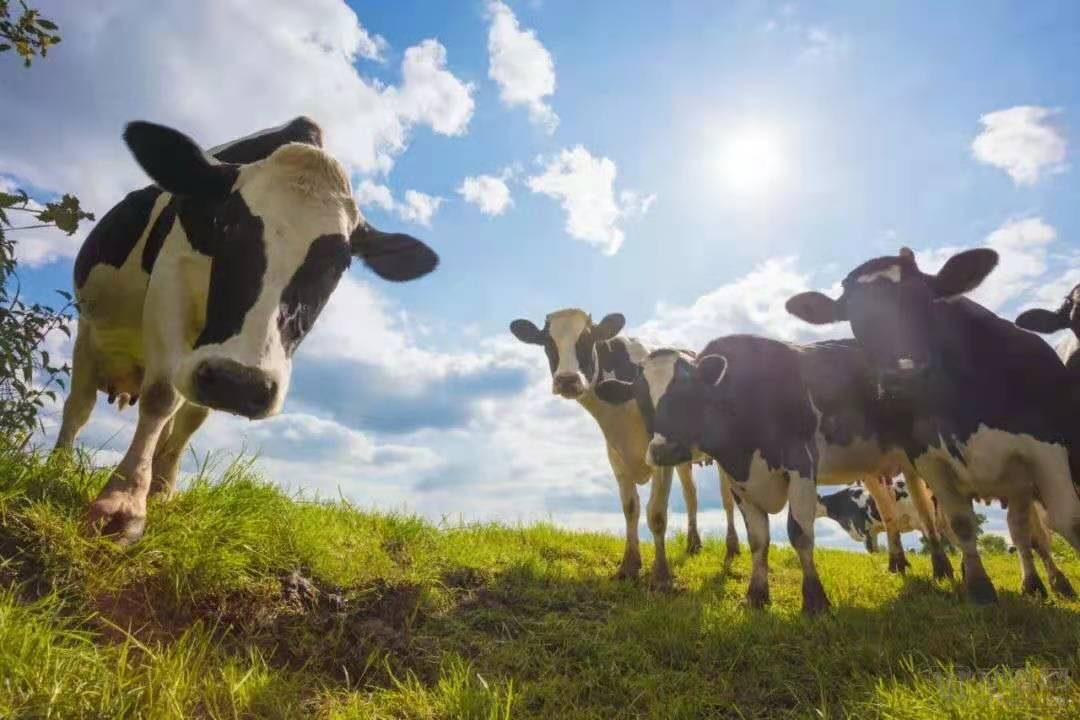
Every morning, millions of bleary-eyed people pour milk into their cereal bowls or coffee cups without giving a thought to where this beverage comes from.
Most people do not consider how to ensure animal health during milk production or how to ensure that the final product meets consumer standards.
For dairy farmers, bovine tuberculosis (bTB) is one of the few diseases that can undo all their hard work. This slow-progressing, chronically debilitating disease poses significant economic challenges to the global cattle industry.
Recently, the Scotland’s Rural College (SRUC), headquartered in Edinburgh, has taken the lead in using GPU-accelerated AI and data science to conduct research on how to monitor and treat bovine tuberculosis (bTB) more rapidly and effectively.
Bovine tuberculosis is caused by bacteria, is highly contagious within cattle herds, and can be transmitted to other animals and humans.
This disease can also trigger involuntary culling, restrictions on animal movements, and incur costs for disease control and eradication programs, thereby imposing significant economic pressure. In countries that have not implemented mandatory eradication programs for bovine tuberculosis-infected herds, the disease also has a substantial impact on public health.
Bovine tuberculosis is a slowly progressing disease. Therefore, cattle do not exhibit signs of infection until the disease has advanced to its final stages.
To monitor the health status of cattle herds, regular diagnostic testing is required. The current standard practice is the Single Intradermal Comparative Cervical Tuberculin (SICCT) test. However, this test is time-consuming and labor-intensive, with an accuracy of only approximately 50–80%.
SRUC has discovered a new method for monitoring bovine tuberculosis through research. This method uses mid-infrared (MIR) analysis technology to test milk samples collected for routine quality control checks.
First, bovine tuberculosis phenotypes (observable characteristics of infected animals) were created using data related to traditional SICCT skin test results, culture status, whether the cattle were slaughtered, and whether any bovine tuberculosis lesions were observed. Then, information from each of these categories was combined to create a binary phenotype, where 0 represents healthy cattle and 1 represents cattle infected with bovine tuberculosis.
MIR data from individual milk samples collected during monthly routine milk recording were matched with the bovine tuberculosis status of individual animals on the SICCT testing date and converted into 53×20-pixel images. A deep convolutional neural network capable of identifying specific high-level features of bovine tuberculosis was trained using these data on an NVIDIA DGX Station.
The SRUC model can identify which cattle will not pass the SICCT skin test, with an accuracy of 95%, and sensitivity and specificity of 0.96 and 0.94, respectively.
To process the millions of data points used for training the bovine tuberculosis prediction model, the SRUC team required a fast, stable, and secure computing system. By leveraging the NVIDIA DGX Station, models that previously took months to develop can now be completed in just a few days. Building on the RAPIDS data science software suite, the team further accelerated their research, initiating the development of deep learning models within mere hours.
Professor Mike Coffey, Head of the SRUC Animal Breeding Team and Director of EGENES, stated: “By leveraging RAPIDS to run our models on the NVIDIA DGX Station, we have accelerated model development by at least tenfold. This enables us to deliver effective solutions for preventing bovine tuberculosis to dairy farmers more rapidly and significantly improves China’s national response to bovine tuberculosis.”
Detecting cows infected with bovine tuberculosis in advance using routinely collected milk samples is an innovative, low-cost testing method, and more importantly, it is a non-invasive approach. It will make a significant contribution to the eradication of bovine tuberculosis in the United Kingdom and other regions.
This tool will help dairy farmers access critical information more quickly, enabling them to make more effective and informed decisions, significantly improving animal health and safety while reducing costs for farms, governments, and taxpayers.
The success achieved in using deep learning to predict bovine tuberculosis status also opens up possibilities for calibrating MIR analysis for other diseases such as paratuberculosis (Johne’s disease), contributing to further improvements in herd health.