

Insights Report on Digital Marketing for Oncology Pharmaceutical Enterprises: Five Key Recommendations to Optimize Pharma-Physician Digital Engagement
The volume-based procurement of generic drugs, launched in 2018, has completely upended the traditional marketing models long taken for granted by pharmaceutical companies. According to research institutions, volume-based procurement is expected to affect 70% of China’s generic drug market in the future.
Meanwhile, the environment for innovative drugs in China has improved significantly, with the launch pace of new therapies gradually aligning with international standards. The dynamic national medical insurance negotiations have intensified competition in the commercialization of innovative drugs, substantially shortening the cycle for product monetization.Innovative drug companies are also facing the dual challenge of innovating their marketing models and business models.
The COVID-19 pandemic in 2020 also delivered an unprecedented shock to the entire industry. Under the influence of the aforementioned multiple factors, domestic Chinese pharmaceutical companies have begun to actively undergo digital marketing transformation:Companies are no longer content with merely leveraging third-party platforms for digital marketing activities. Instead, they are building their own proprietary digital platforms centered around core business operations to continuously accumulate customer data. Marketing decisions are increasingly based on customer insights derived from these internal data platforms, enabling personalized, “one-to-one” experiences and achieving precision marketing.
As a leading SaaS company in China dedicated to empowering digital marketing technologies in the life sciences sector, MedBai Technology provided digital marketing services to over 500 pharmaceutical companies, both domestic and international, throughout 2020.
In 2021, MedBai Technology partnered with VCBeat to launch the Insight Study on Digital Marketing by Chinese Pharmaceutical Companies. Through a series of studies focusing on different therapeutic areas, we aim to summarize the digital marketing experiences of Chinese pharmaceutical companies, distill the core elements of successful digital marketing, and gain insights into future trends in digital marketing, thereby advancing the industry’s digital transformation. For the first phase of this study, we focused on the field of oncology and released the “Insight Report on Digital Marketing by Pharmaceutical Companies in Oncology.”
Scan the mini-program QR code below to read the full report for free.:

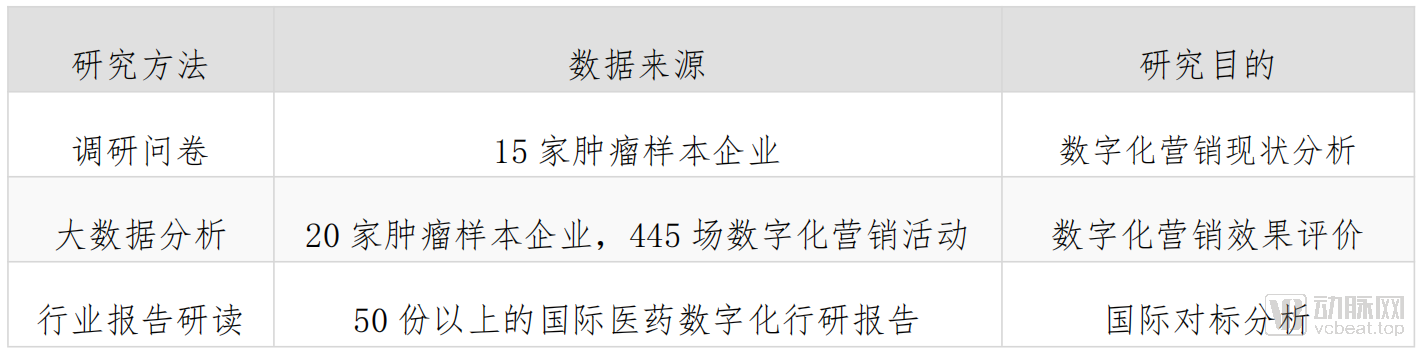
This study primarily employs three methods: survey questionnaires, big data analysis, and review of industry reports. We conducted a survey on the current status and development of digital marketing among 15 sample oncology companies, including domestic enterprises, wholly foreign-owned enterprises, and Sino-foreign joint ventures. Meanwhile, we performed big data analysis on 445 digital marketing activities in the form of webinars hosted by 20 oncology companies on the Yibai Technology SaaS platform, focusing on core metrics such as participant count and viewing duration. Finally, we conducted case studies on more than 50 global reports, white papers, and success cases related to digital marketing in pharmaceutical companies, extracting key information for benchmarking analysis.
Table 1: Primary Research Methods, Data Sources, and Research Objectives
Global pharmaceutical companies' digitalization has entered a phase of rapid development, and the wave of digital marketing has arrived.
A 2020 survey by Indegene of global pharmaceutical companies revealed that spending on digital marketing has increased significantly over the past five years, reaching a historical peak, with average investment more than double that of 2016. In the two major markets of the United States and Asia, the proportion of pharmaceutical companies allocating over 50% of their marketing budgets to digital channels in 2020 was 25% and 14%, respectively. It is projected that over the next three years, these figures will rise to 40% in the United States and 30% in Asia.
Figure 1: The proportion of digital marketing investment in total marketing expenditure by pharmaceutical companies has increased year by year
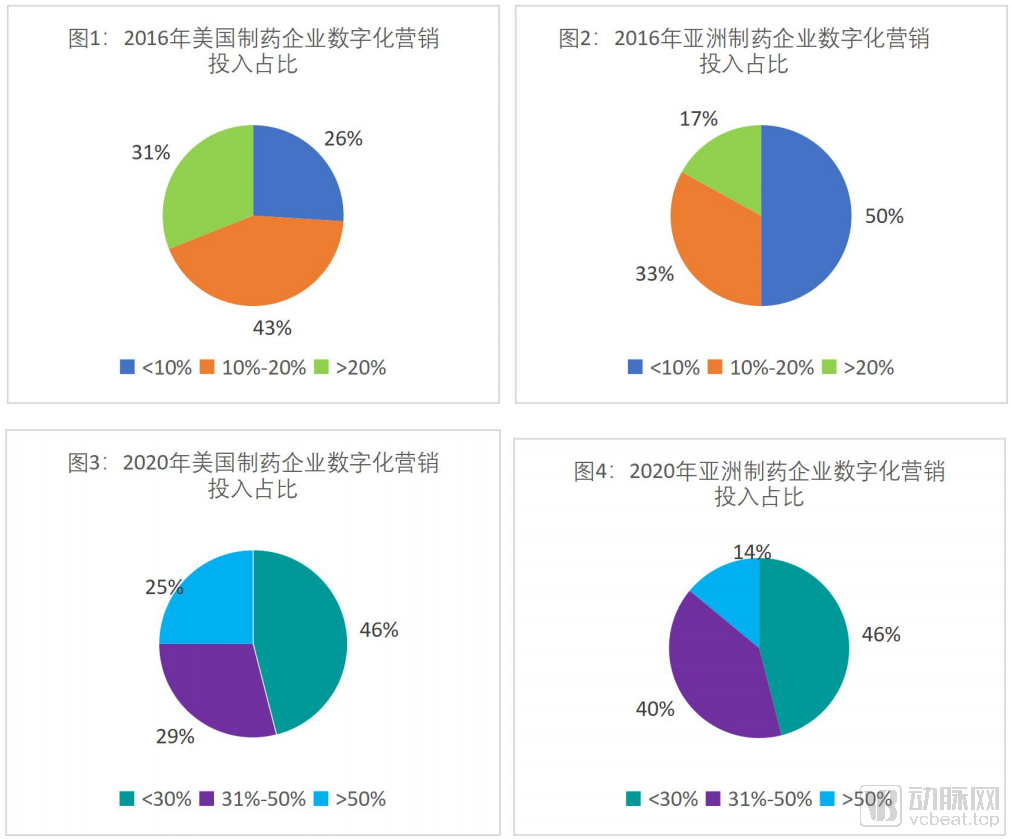
Source: Indegene
The Marketing Environment for Pharmaceuticals in China Has Undergone Significant Changes, Making Digital Marketing a New Imperative for Pharmaceutical Companies
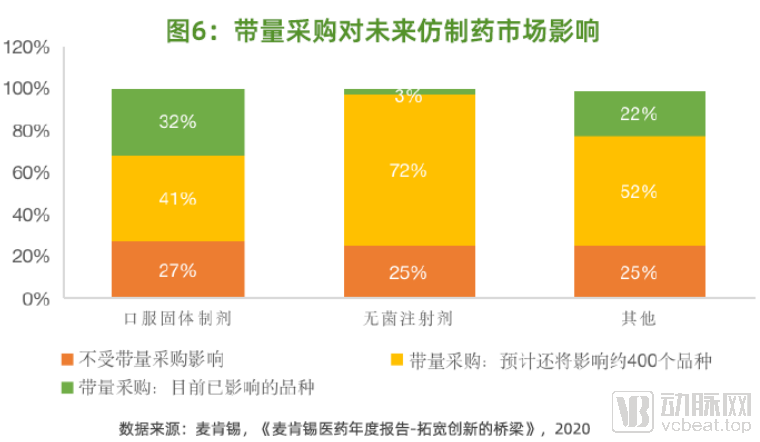
Volume-based centralized procurement, initiated in 2018, has continuously expanded in scope, leading to a significant decline in the prices of generic drugs. The average price reduction across the first four batches of implemented volume-based procurement has exceeded 60%, affecting more than 180 drug varieties. According to McKinsey’s forecasts, over 400 additional products will be included in volume-based procurement within the next three years, impacting 70% of China’s pharmaceutical market. Under the direct influence of this policy, traditional offline promotion models of pharmaceutical companies will face severe disruption, making low-cost, broad-coverage online promotion an essential requirement for Chinese pharmaceutical enterprises.
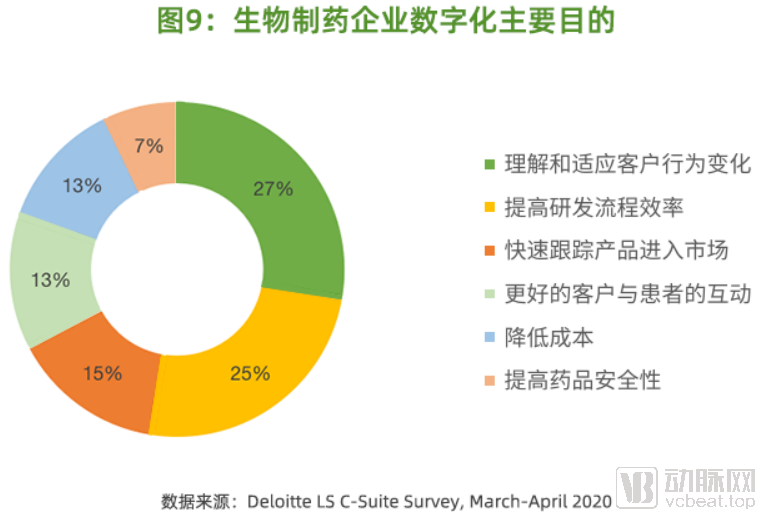
A Deloitte survey conducted in March–April 2020 among CEOs, COOs, CCOs, and other executives from 60 biopharmaceutical companies worldwide further corroborates this point. The results indicate that digital investment priorities for biopharmaceutical companies will continue to focus on gaining deeper insights into the execution of business strategies, including understanding and adapting to changes in customer behavior (28%), improving R&D process efficiency (25%), and accelerating product time-to-market (15%).
Digital channels have become a key source of professional information for physicians, and companies are developing new ways to engage with them.
Chinese physicians have witnessed a significant shift in the channels through which they access professional information. In 2015, doctors still relied primarily on traditional channels such as offline conferences and sales representative visits. However, by 2017, this landscape had undergone a fundamental transformation, with digital channels surpassing traditional ones to become the most important source of professional information for Chinese physicians.
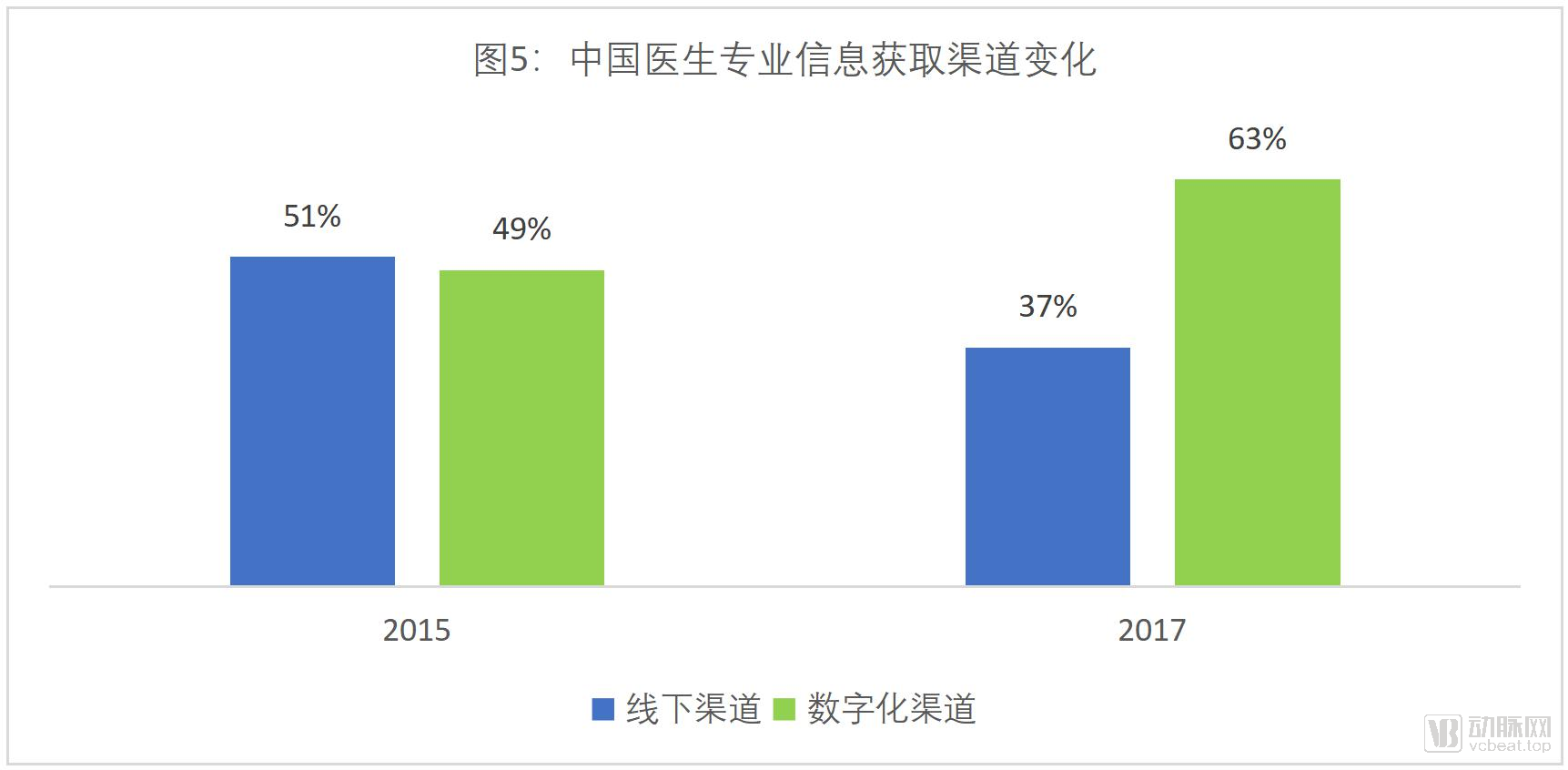
Source: Yibai Technology
Compared with international counterparts, Chinese oncology drug companies invest significantly less in digital marketing.
Among the 15 companies surveyed online, the majority (87%) of oncology firms allocated less than 30% of their marketing budgets to digital marketing. Combined with the previously cited Indegene statistics, this indicates that domestic oncology pharmaceutical companies invest significantly less in digital marketing compared to their global counterparts.
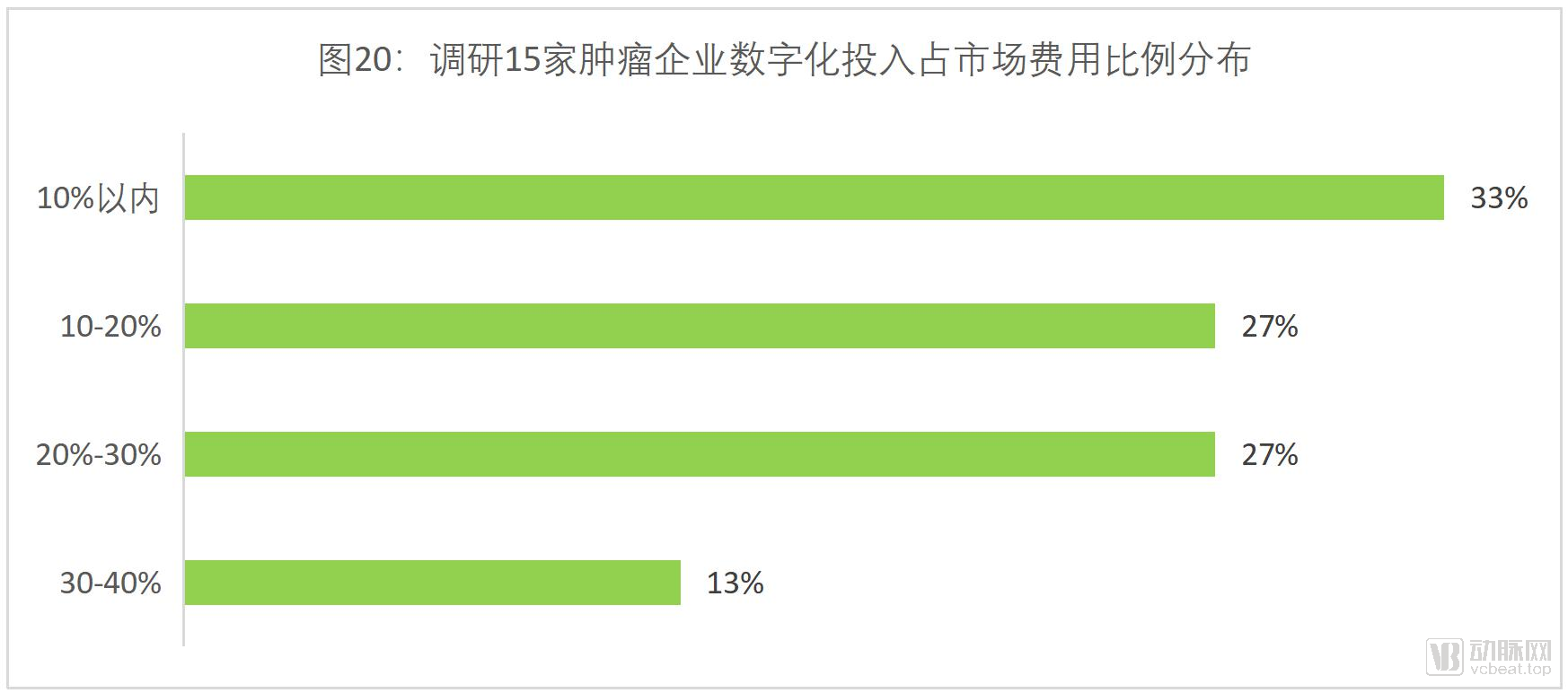
Source: Yibai Technology
Table 2: Comparison of Digital Marketing Investment Proportions Between Oncology Companies in This Survey and Global Pharmaceutical Companies
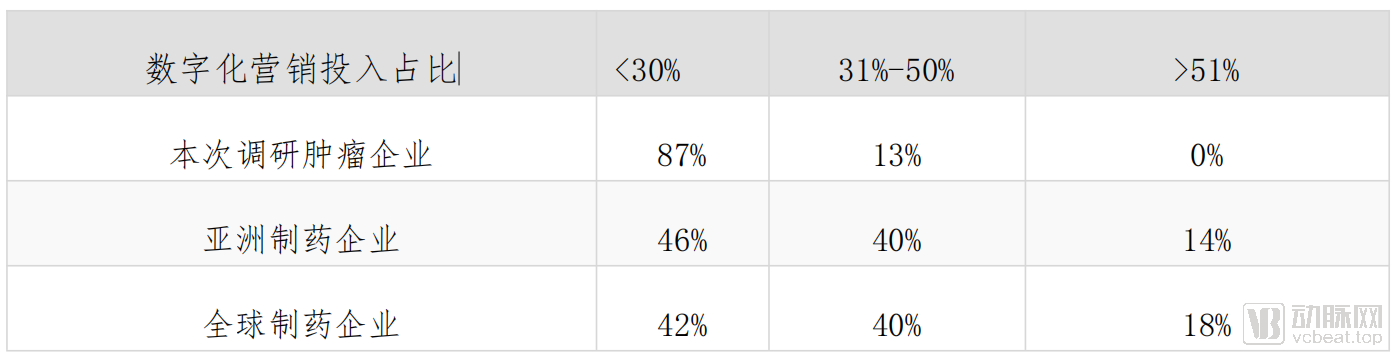
Data source: indegene, The Digital Savvy Pharma Marketer 2020
Data integration has emerged as a new pain point in digital marketing, with domestic oncology companies facing even greater challenges.
In terms of data management, the most prominent challenge is the difficulty in integrating internal and external data. A comparison between foreign-invested and domestic enterprises reveals that foreign-invested companies are currently in the process of achieving data integration, whereas local oncology firms have barely initiated efforts in this area. As digital marketing expands, companies will accumulate increasing volumes of data, making data integration an urgent necessity.
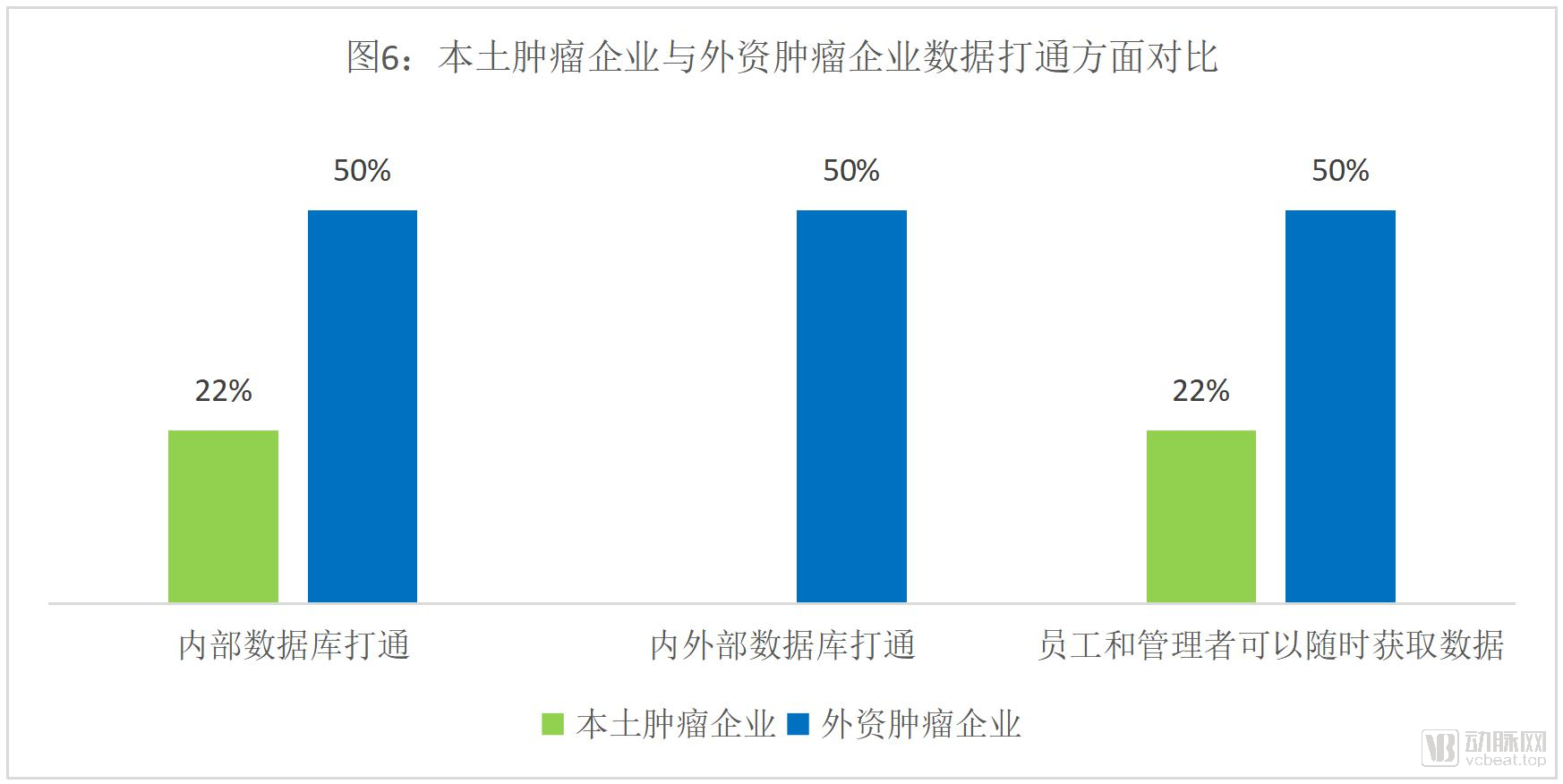
Source: YiBai Technology
Domestic oncology companies face greater challenges, with strategic divergence being the most pressing issue.
According to this survey, domestic oncology companies face a significantly different situation than foreign-funded enterprises in their digital marketing transformation. The main challenges for domestic oncology companies include: lack of innovation in format and content, fragmented data, and difficulty in persuading management; whereas foreign-funded enterprises mainly face greater challenges in areas such as fragmented data and the absence of a unified data management platform.
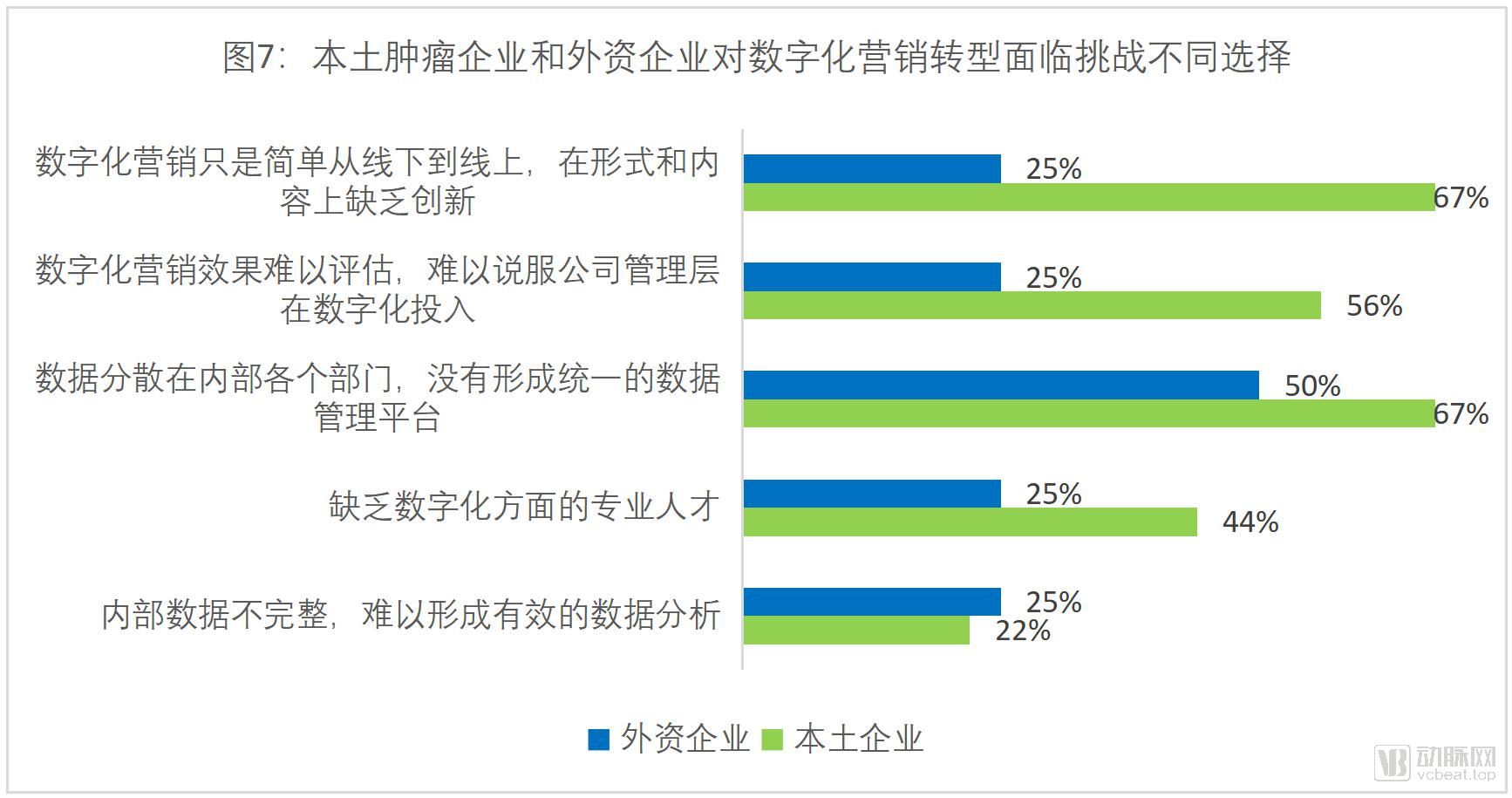
Source: Yibai Technology
This disparity is primarily attributable to the differing strategic positioning of digital marketing between foreign-invested and domestic enterprises. Foreign-invested companies have largely reached an internal strategic consensus, treating digital marketing as a unified corporate strategy. In contrast, domestic oncology companies still harbor internal divergences in their understanding of digital marketing, resulting in a less prominent strategic positioning.
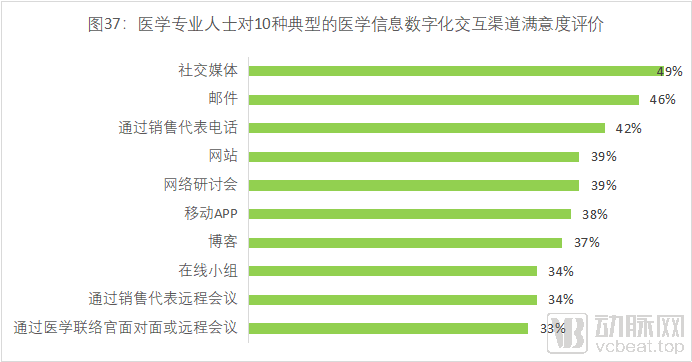
Pharmaceutical companies should place greater emphasis on physicians’ experiences with digital channels.. How to improve physicians’ satisfaction with digital channels is not only a prominent challenge for Chinese pharmaceutical companies in their digital transformation, but also a common issue faced by pharmaceutical companies worldwide. In February 2021, Indigene conducted a survey on digital channel satisfaction among 640 medical professionals in the United States, Europe, and China, including 27 oncologists. The survey results indicated that varying degrees of issues exist in physician interactions across all types of digital channels.
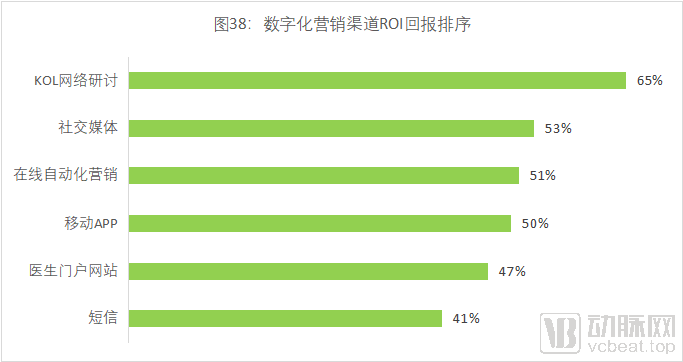
As early as 2016, INDEGENE conducted a survey among more than 40 leading pharmaceutical companies in the United States, Asia-Pacific, Europe, and China, involving over 100 marketing professionals from these firms. The results indicated that pharmaceutical companies considered KOL webinars to be the digital channel with the highest return on investment (ROI), followed by social media, while SMS was perceived as having the lowest ROI.
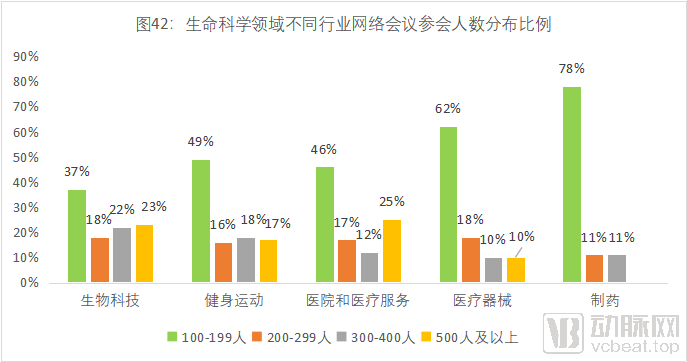
Attendance and viewing duration are the most critical metrics for measuring the interaction between pharmaceutical companies and physicians in webinars.
An average attendance of over 100 participants per session and an average viewing duration of one hour have reached the international benchmark for pharmaceutical companies.. In terms of attendance, the vast majority of webinars organized by pharmaceutical companies had an average attendance of 100–199 participants per session. For webinars with 500 or more attendees, biotechnology companies demonstrated a more pronounced advantage, with 23% of their sessions achieving an attendance scale of over 500 participants.
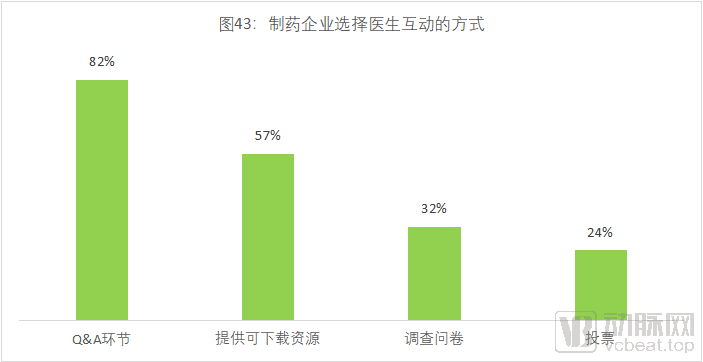
To ensure the quality of interactions with physicians, pharmaceutical companies have adopted diverse strategies—including Q&A sessions, downloadable resources, polling tools, and surveys—to enhance attendee engagement in webinars.
The number of physicians reached via online conferences is limited, and a high-frequency, high-engagement digital interaction platform for physicians has yet to take shape.
Regarding the frequency of KOL online conference activities, most companies (64%) held five or fewer online conferences throughout 2020, while 13% of companies held more than 20 such events annually. Overall, oncology-focused companies demonstrated a relatively low frequency of KOL online conferences, resulting in limited interaction with physicians.
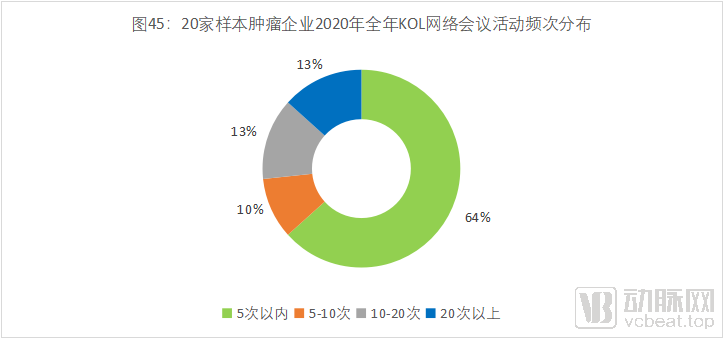
Oncology companies inKOLDigital channels for online conference interactions remain in the exploratory stage. The reasons are multifaceted; a key factor is that oncology companies have yet to establish a comprehensive methodology for ensuring the quality of digital engagements with physicians, such as online conferences, leading to significant reservations about simply transitioning from offline to online formats. We believe that as companies continue to practice and accumulate experience in digital interactions with physicians, there will be substantial improvements in both the frequency and quality of their online conferences.
Oncology pharmaceutical companies hold a large number of small-scale webinars, with overall physician engagement still needing improvement.
Attendance was relatively low, with a significant gap compared to international standards. Survey results indicated that among the 445 webinars analyzed, more than half (65%) had fewer than 100 attendees, while 19% had between 100 and 200 attendees. These figures remain substantially below the international pharmaceutical industry average reported by ON24.
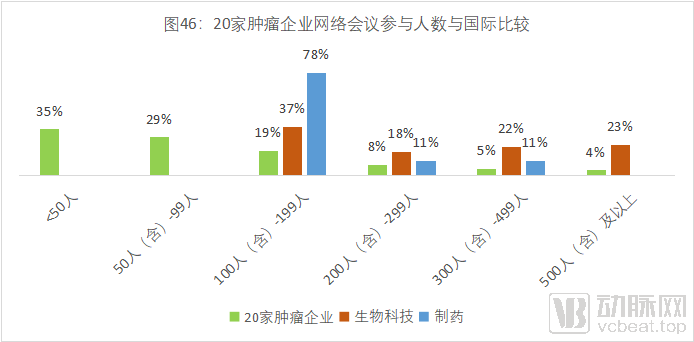
Overall, Chinese oncology companies have seen relatively low attendance at online conferences. Enhancing the appeal of digital channels for virtual meetings and boosting physician engagement are key challenges that oncology pharmaceutical companies need to address.
In summary, there is significant room for improvement in how pharmaceutical companies establish new forms of digital interaction with physicians through digital channels. Regardless of the specific digital channel employed, optimizing customer experience remains a core consideration in corporate digital strategy. Only when physicians demonstrate higher engagement and satisfaction with these digital channels can pharmaceutical companies’ digital marketing efforts deliver greater value.
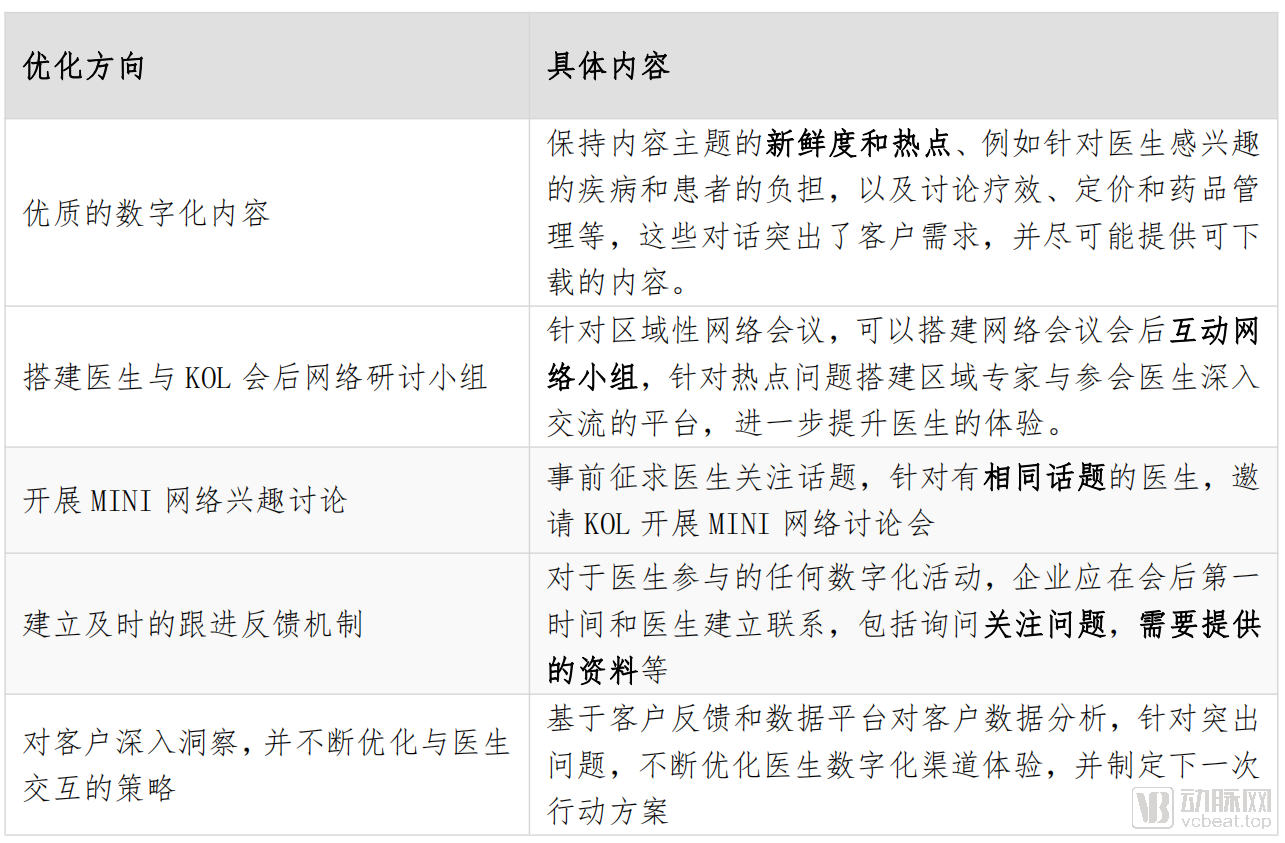
Based on Practical Experience with Digital Marketing Channels, We Propose Five Recommendations to Optimize Digital Engagement Between Pharmaceutical Companies and Physicians:
Table 3: Five Recommendations for Digital Channel Interactions Between Pharmaceutical Companies and Physicians
The above is an excerpt of the key highlights from the report. For the full report, please scan the QR code at the beginning of the article to access it free of charge.