

ZOLL Medical Corporation: The First Global Provider of Comprehensive Defibrillation Solutions with Full FDA PMA Approval

ZOLL
Developer of Medical Devices and Software Solutions
For patients experiencing cardiac arrest, the difference between life and death can be determined within just four minutes. During this critical “golden four-minute” window, cardiopulmonary resuscitation (CPR) combined with an automated external defibrillator (AED) represents the optimal intervention.
In January 2018, ZOLL Medical Corporation announced that it had become the first manufacturer worldwide to receive FDA Pre-Market Approval (PMA) for its full line of defibrillation products.PMA is the most stringent medical device approval program required by the FDA.So, how do ZOLL Medical Corporation's products serve as emergency rescue assistants?
ZOLL Medical Corporation (hereinafter referred to as “ZOLL”), founded in 1980 and headquartered in Massachusetts, USA, is a medical technology company. The company primarily develops and markets medical devices and software solutions to enhance clinical and emergency care efficiency in healthcare institutions, thereby saving patients’ lives.
ZOLL Data Systems, a subsidiary of ZOLL, provides comprehensive services to hospitals, fire departments, EMS (Emergency Medical Services), and accounts receivable (AR) management, ranging from improving patient outcomes to enhancing operational efficiency and increasing revenue.
In 1992, ZOLL successfully went public, with an initial public offering of 2.1 million shares and a market capitalization of $14.6 million.In 2012, Asahi Kasei acquired ZOLL for $2.21 billion.Since then, ZOLL has become a subsidiary of Asahi Kasei. Through the acquisition of ZOLL, Asahi Kasei entered the emergency care business sector, focusing on the production and sales of emergency medical devices primarily in Europe and the United States.
Prior to founding ZOLL, Dr. Paul Zoll was actively engaged in the field of cardiac disease. Throughout his medical career, he remained consistently involved in the development of emergency pacing and defibrillation technologies.
Dr. Zoll was the first physician to successfully use external defibrillation to regulate a patient's heart rhythm., this discovery holds significant importance for reducing mortality from heart disease. In 1964, he developed a method for long-term direct electrical stimulation of the heart via an implanted pacemaker. The implantable cardiac pacemaker, stemming from his technological breakthrough, has now become a primary treatment for heart conditions.
He was awarded the Lasker Award in 1973, a prestigious honor in the medical field second only to the Nobel Prize, and was named a pioneer of cardiac pacing by the North American Society of Pacing and Electrophysiology (NASPE) in 1989.
Richard A. Packer was appointed Chairman of ZOLL in 2016, having previously served as the Company’s Chief Executive Officer and President. Prior to joining ZOLL, he served as Vice President of Whistler Corporation, a consumer electronics company.
Packer holds an MBA from Harvard Business School and a degree in engineering from Rensselaer Polytechnic Institute. As of April 2016, he also served as an executive in the healthcare business division of Asahi Kasei Corporation.
In 2016, Jonathan A. Rennert was appointed Chief Executive Officer of ZOLL. Since joining ZOLL as President in 2008, he has led the company to become a global leader in external defibrillators, diversified its product portfolio by adding transport ventilators and Intrathoracic Pressure Regulation (IPR) therapy, and oversaw the establishment of Asahi Kasei ZOLL Medical Corporation and ZOLL’s Japanese subsidiary.
ZOLL boasts a comprehensive portfolio of products and technologies,Covers defibrillation and monitoring, cardiopulmonary resuscitation (CPR) feedback, data management, fluid resuscitation, and therapeutic temperature control, which can assist clinicians, EMS and fire professionals, as well as lay rescuers, in treating patients.
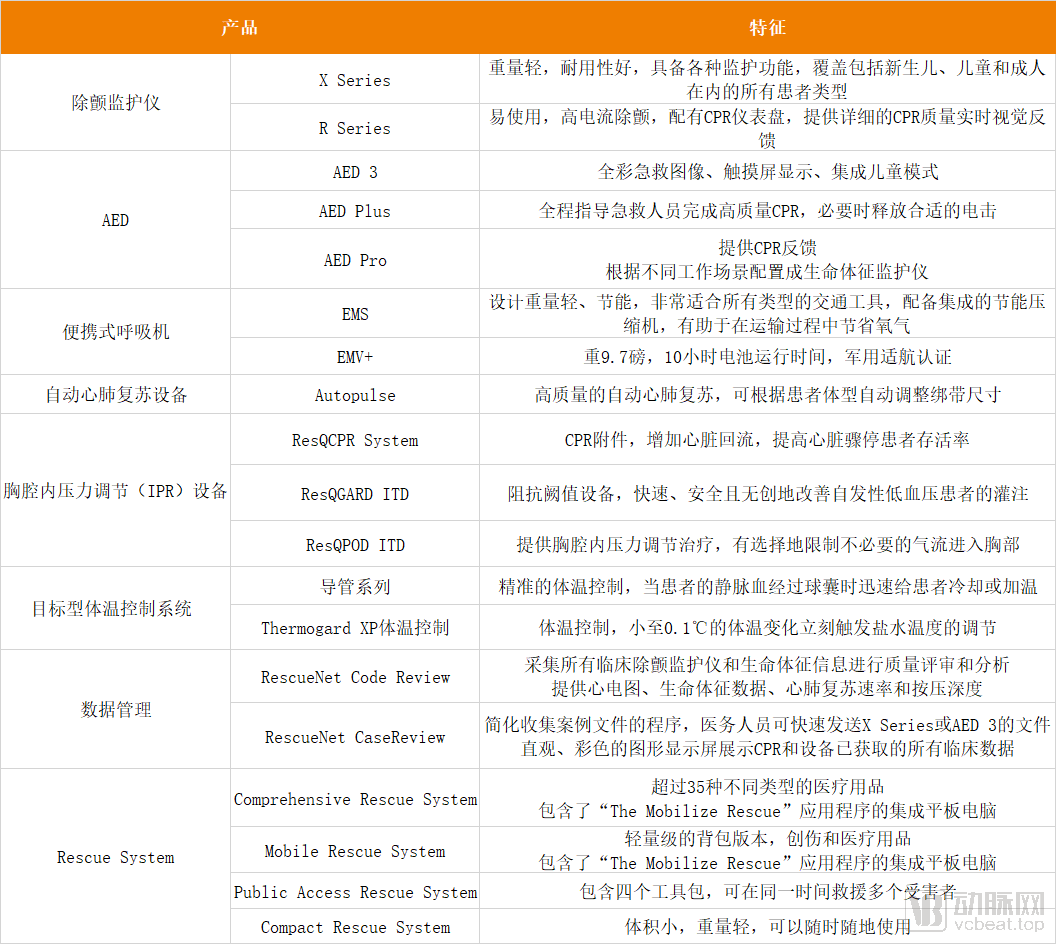
Over the past four decades, ZOLL has continuously acquired companies, expanded its product portfolio, and actively established a broad presence in the EMS, military, hospital, and public health markets. In 2019 alone, ZOLL completed five acquisitions.
In 2018, ZOLL entered into an exclusive partnership with the Defense Logistics Agency to provide Propaq M vital signs monitors to the U.S. Air Force and Army.The Propaq M is a transport monitor with defibrillator and pacemaker options and an integrated printer, designed specifically to meet the rigorous demands of military and aeromedical operations.
In August 2019, ZOLL announced the acquisition of Cardiac Science, with Cardiac Science joining ZOLL’s resuscitation care division based in Massachusetts, USA. Cardiac Science primarily develops, manufactures, and sells automated external defibrillators (AEDs) and related components. This acquisition expanded the composition of ZOLL’s AED product line.
In 2019, ZOLL acquired TherOx, a company that provides supersaturated oxygen (SSO2) therapy for the treatment of patients with acute myocardial infarction, a therapy that has received FDA premarket approval (PMA).
In April 2021, ZOLL acquired Respicardia, a company dedicated to developing implantable neurostimulation therapies that improve cardiovascular health by modulating respiratory rhythm, thereby enhancing the quality of life for patients with heart failure.Respicardia’s implantable neurostimulation therapy device, the remedē System, is used to treat central sleep apnea and is the only FDA-approved implantable device for this indication.
According to the "China Cardiovascular Health and Disease Report 2019" released by the National Center for Cardiovascular Diseases of China, there are approximately 544,000 cases of sudden cardiac death (SCD) annually in China, with a resuscitation success rate of only 1%.
The “golden window” for resuscitation in cardiac arrest is only four minutes, and “CPR + AED” represents the optimal emergency intervention. Since most cardiac arrest cases occur outdoors, where professional medical personnel cannot arrive in time, the AED becomes critically important.
ZOLL is the market leader in noninvasive pacing technology. In 1983, ZOLL launched the “ZOLL NTP 1000,” a noninvasive temporary pacemaker based on Dr. Zoll’s research. In 1988, it introduced the “ZOLL PD 1200” pacer/defibrillator monitor, the first device to effectively combine pacing and defibrillation technologies. Operators can select monitoring, pacing, or defibrillation functions by simply turning a control knob.
Currently, ZOLL offers a range of clinically advanced defibrillator monitors and automated external defibrillators (AEDs) to help improve survival rates for patients experiencing cardiac arrest.
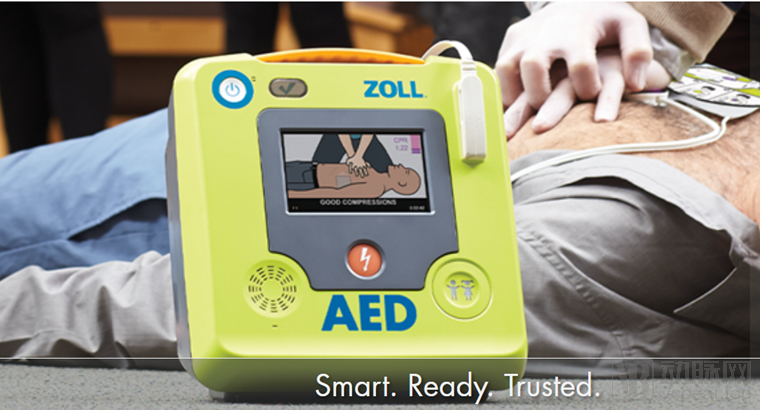
Source: ZOLL Official Website
ZOLL’s defibrillator monitors and AEDs are equipped with Real CPR Help®, which provides real-time feedback on the depth and rate of chest compressions., nearly tripling the survival rate of patients with cardiac arrest. This technology provides real-time visual and auditory feedback to alert rescuers to “push harder” or confirm that compressions are “good,” guiding them to perform high-quality cardiopulmonary resuscitation (CPR) in accordance with established standards.
During cardiopulmonary resuscitation (CPR), rescuers pause compressions to determine whether a regular, shockable cardiac rhythm has been established.ZOLL’s defibrillator monitors and AEDs are equipped with See-Thru CPR technology, which filters out compression-induced waveform artifacts on the electrocardiogram (ECG) monitor., enabling rescuers to view the actual cardiac rhythm during cardiopulmonary resuscitation (CPR), thereby reducing the duration of compression interruptions.
Furthermore,ZOLL has developed a specialized pediatric arrhythmia analysis algorithm capable of distinguishing between shockable and non-shockable pediatric cardiac rhythms.. This algorithm detects whether pediatric or adult electrode pads are connected and automatically adjusts the arrhythmia analysis process accordingly. ZOLL’s AED Plus and AED Pro, as well as the R Series and X Series defibrillators, are all equipped with this algorithm.
In January 2018, ZOLL announced that it had become the first manufacturer worldwide to obtain U.S. Food and Drug Administration (FDA) Pre-Market Approval (PMA) for its full line of defibrillation products. PMA is the most stringent type of medical device review required by the FDA. This demonstrates that ZOLL has passed the highest level of scrutiny by the local regulatory authority, the FDA, in the United States—the market with the strictest regulatory access requirements—and has secured comprehensive market access approval.
ZOLL’s portable ventilator avoids the complexity common to most portable ventilators by providing on-screen prompts that enable clinicians to quickly and easily deliver effective oxygenation therapy to patients. The ventilator incorporates Smart Help technology to simplify alarm resolution and utilizes Masimo pulse oximetry technology to accurately obtain blood oxygen saturation (SpO2) and pulse rate readings.
The EMV+ portable ventilator is designed to meet military and civilian transport standards. Its automatic altitude compensation function, effective up to 25,000 feet, ensures accurate ventilation and patient safety, and it has obtained Military Airworthiness Release (AWR) certification. Weighing only 9.7 pounds, the ventilator features an energy-efficient integrated high-flow compressor and oxygen system.Battery life up to 10 hours, and can be fully charged in 2 hours.
During the pandemic, to meet global demand for ventilators, ZOLL increased its ventilator production volume by 25-fold, manufacturing 10,000 units per month.
The Only Automated CPR Device with Straps Adjustable to Patient Body Size
ZOLL entered into an agreement with Revivant Corporation to market the FDA-approved AutoPulse Non-Invasive Automated CPR System. The AutoPulse system delivers high-quality automated cardiopulmonary resuscitation (CPR) to patients experiencing cardiac arrest, and isThe only device in its class that can automatically adjust strap size based on patient body type。
The AutoPulse can be applied in as little as 14 seconds, reducing compression interruption time by more than 85% compared to manual cardiopulmonary resuscitation (CPR). When the AutoPulse is used as part of a care system combined with extracorporeal membrane oxygenation (ECMO) and therapeutic hypothermia, 60% of patients who experience in-hospital cardiac arrest survive to hospital discharge.
ZOLL can safely and effectively control the core body temperature of critically ill or surgical patients by integrating precise temperature management capabilities into central venous catheters (CVCs), thereby adding thermal regulation functionality to standard critical care CVCs.
Traditional methods of extracorporeal temperature control not only yield poor clinical outcomes but also increase the workload of healthcare professionals. The Thermogard XP Temperature Management System, developed by ZOLL, enables rapid and precise control of patients’ intravascular and surface body temperatures. It allows for the selection of appropriate target temperatures based on individual patient conditions and treatment protocols to achieve optimal therapeutic effects.
By inserting a catheter into the patient’s central venous system, the Thermogard XP Temperature Management System remotely monitors the patient’s body temperature and regulates the temperature of saline flowing through the catheter balloon. As venous blood flows past each balloon, the patient’s body temperature decreases or increases accordingly.
In 2006, ZOLL completed the acquisition of Lifecor’s assets. Lifecor was a privately held medical device company that designed, manufactured, and marketed the LifeVest wearable cardioverter defibrillator.
ZOLL’s LifeVest Wearable Cardioverter Defibrillator (WCD) provides emergency treatment for patients at risk of sudden cardiac arrest, detecting certain life-threatening rapid heart rhythms and automatically delivering shock therapy to save lives.Typically, the entire process—from detection to automatic delivery of treatment—takes about one minute.
LifeVest is a wearable cardioverter defibrillator. Unlike an implantable cardioverter-defibrillator (ICD), it is worn externally and does not require surgical implantation into the patient’s heart. Lightweight and easy to wear, it protects patients from sudden cardiac death, allowing them to carry out most daily activities with peace of mind.
In 2018, the VEST trial demonstrated that the LifeVest wearable cardioverter defibrillator reduced all-cause mortality by 36% within 90 days.
In recent years, news reports of cardiac arrest cases with unsuccessful resuscitation efforts have become commonplace. In an era marked by the high prevalence of cardiovascular diseases, seizing the “golden four minutes” for emergency intervention is critical. With the CPR penetration rate in China remaining below 1%, the AED market represents a significant blue-ocean opportunity.
According to the "China Cardiovascular Health and Disease Report 2019," the National Medical Products Administration approved 77 medical devices for entry into the innovative medical device review channel between January 1, 2018, and August 31, 2019, of which 35 were cardiovascular products, accounting for 45.5%.At this year's Two Sessions, NPC deputies proposed the widespread installation of AEDs in public places.
In China’s AED market, in addition to internationally renowned companies such as Medtronic and Philips, many domestic enterprises are emerging, including Mindray Medical and Yuwell Medical.
In 2013, Mindray Medical developed China’s first domestically produced AED. In a market dominated by imported products, it significantly reduced product prices while gaining market share through superior performance and user-friendly operation. Additionally, in 2017, Yuwell Medical acquired Germany’s PRIMEDIC, localizing internationally leading technologies. PRIMEDIC is a company with over 40 years of history in the research, development, and manufacturing of defibrillators, possessing first-class capabilities in product design and quality control.
Although the AED industry is highly competitive, there are still untapped opportunities in China’s vast market due to its low AED penetration rate, allowing ZOLL to capture a share of the market.