

Structura Biotechnology Accelerates COVID-19 Vaccine Development with Breakthrough Cryo-EM Software
NVIDIA
Artificial Intelligence Computing Service Provider
Structura Biotechnolog’s breakthrough software can rapidly analyze 2D microscopy data to elucidate molecular structures.
In the global race to develop COVID-19 vaccines, the first step for researchers and pharmaceutical companies is to understand the protein structure of the virus.
However, understanding them requires the construction of detailed 3D models of protein molecules, a task that has hitherto been extremely time-consuming. Structura Biotechnology’s pioneering software has accelerated this process.
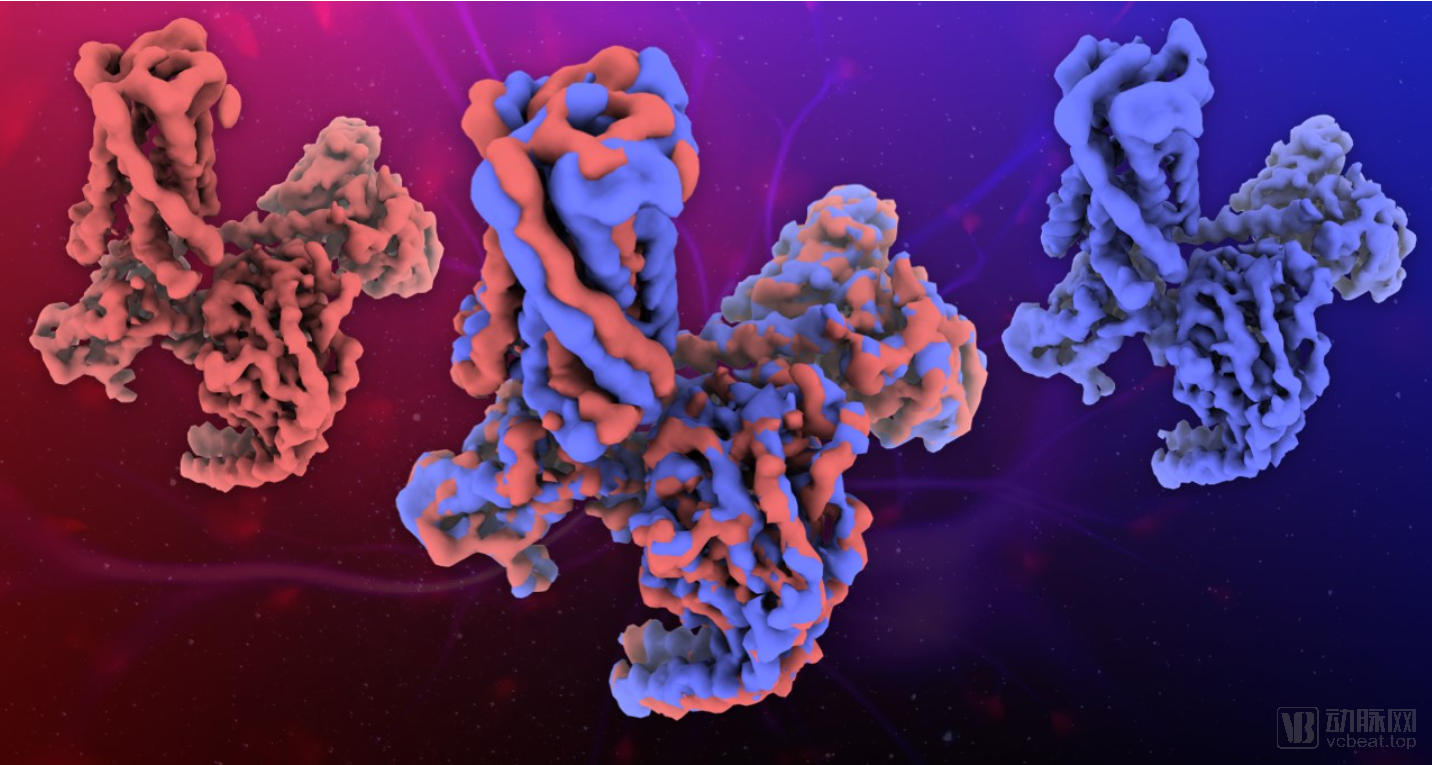
This GPU-driven machine learning algorithm, powered by the Structura software, facilitates an image processing technique known as “cryo-electron microscopy” or “cryo-EM,” a revolutionary breakthrough in the field of biochemistry that was awarded the 2017 Nobel Prize in Chemistry.
Cryo-EM enables powerful electron microscopes to capture detailed images of biomolecules in near-native states. These images can be used to reconstruct 3D models of biomolecules.
Leveraging the valuable 2D image data provided by cryo-EM, Structura’s AI-driven software, cryoSPARC, can rapidly analyze the resulting microscopy data to resolve the 3D atomic structures of embedded protein molecules. This enables researchers to more quickly assess the efficacy of drug binding to these molecules, thereby significantly accelerating the drug discovery process.
Hundreds of laboratories worldwide have adopted the software from this Toronto-based company, which was founded just three years ago. It is hardly surprising that the number of users surged in 2020. In fact, Ali Punjani, the company’s CEO, noted that studies in which scientists used Structura’s software to visualize COVID-19 proteins have been published in multiple journals.
Punjani stated, “Our software helps scientists understand the structure of proteins and how they interact with newly proposed therapies. The more we know about a target structure, the easier it is to design or identify molecules that bind to it and inhibit its function.”
The idea for Structura originated from a conversation Punjani overheard while working at the University of Toronto, which discussed how to use microscopy images to determine protein structures. He believed this topic would serve as an interesting test case for his strong interest in machine learning research.
In 2017, Punjani assembled his team. Structura’s software, powered by large-scale inference and computer vision algorithms, facilitates the reconstruction of 3D models from 2D image data. He stated that the key lies in collecting and analyzing a sufficient volume of microscopic data with enhanced accuracy to achieve high-quality 3D reconstructions.
Punjani said, “This is a highly scientific field with zero tolerance for error; mistakes can waste significant time and money.”
Structura’s software is typically deployed on customers’ hardware, where it must handle the task of processing real-time 3D microscopy data. According to Punjani, laboratories usually run this workload on NVIDIA Quadro RTX 6000 GPUs or similar devices, while many large pharmaceutical companies have already invested in clusters of NVIDIA V100 Tensor Core GPUs as well as various other NVIDIA graphics cards.
Structura conducted all model training and software development on multi-GPU nodes equipped with V100 GPUs. Punjani stated that, due to the unique nature of the problem, his team wrote all GPU kernels from scratch. The code running on Structura’s GPUs was written in CUDA, while cuDNN was employed for certain high-end computational tasks.
Given the value of Structura’s innovative technology and the importance of cryo-EM, Punjabi has not curtailed his ambitions for the company. Recently, the company joined NVIDIA Inception, a startup acceleration program designed to foster startups through advancements in artificial intelligence and data science, thereby revolutionizing the industry.
Punjani stated that any biology-related research can now leverage cryo-EM to provide 3D protein structural information; consequently, the industry has paid significant attention to the capabilities of the Structura software.
He stated, “We are building the fundamental building blocks of Cryo-EM, which will better enable structure-based drug discovery. Cryo-EM will become ubiquitous in all biological research.”