

Chengtian Technology Secures New Approval for Next-Gen Exoskeleton Rehabilitation Robot, Leading Commercialization in China

RoboCT
Exoskeleton Robot and Its Core Component R&D Provider
In late March 2021, the lower-limb exoskeleton rehabilitation robot independently developed by RoboCT—the first and only domestic product indicated for central nervous system disorders (covering patients with paraplegia and hemiplegia)—was approved again, successfully obtaining the Class II medical device registration certificate.This is the second-generation lower-limb exoskeleton rehabilitation robot developed by RoboCT, which holds a significant competitive advantage over most products currently in clinical trials and regulatory submission on the market. Meanwhile,Also approved againThis signifies that the National Medical Products Administration (NMPA) has further endorsed the application of exoskeleton technology in rehabilitation settings, thereby affirming its reliability, as well as its safety and efficacy across a broad range of scenarios.
Previously, RoboCT’s lower-limb exoskeleton gait rehabilitation device was approved for market launch in 2020. The newly approved exoskeleton rehabilitation robot is an upgraded version of that product, featuring superior performance, a more comfortable user experience, and better clinical outcomes.
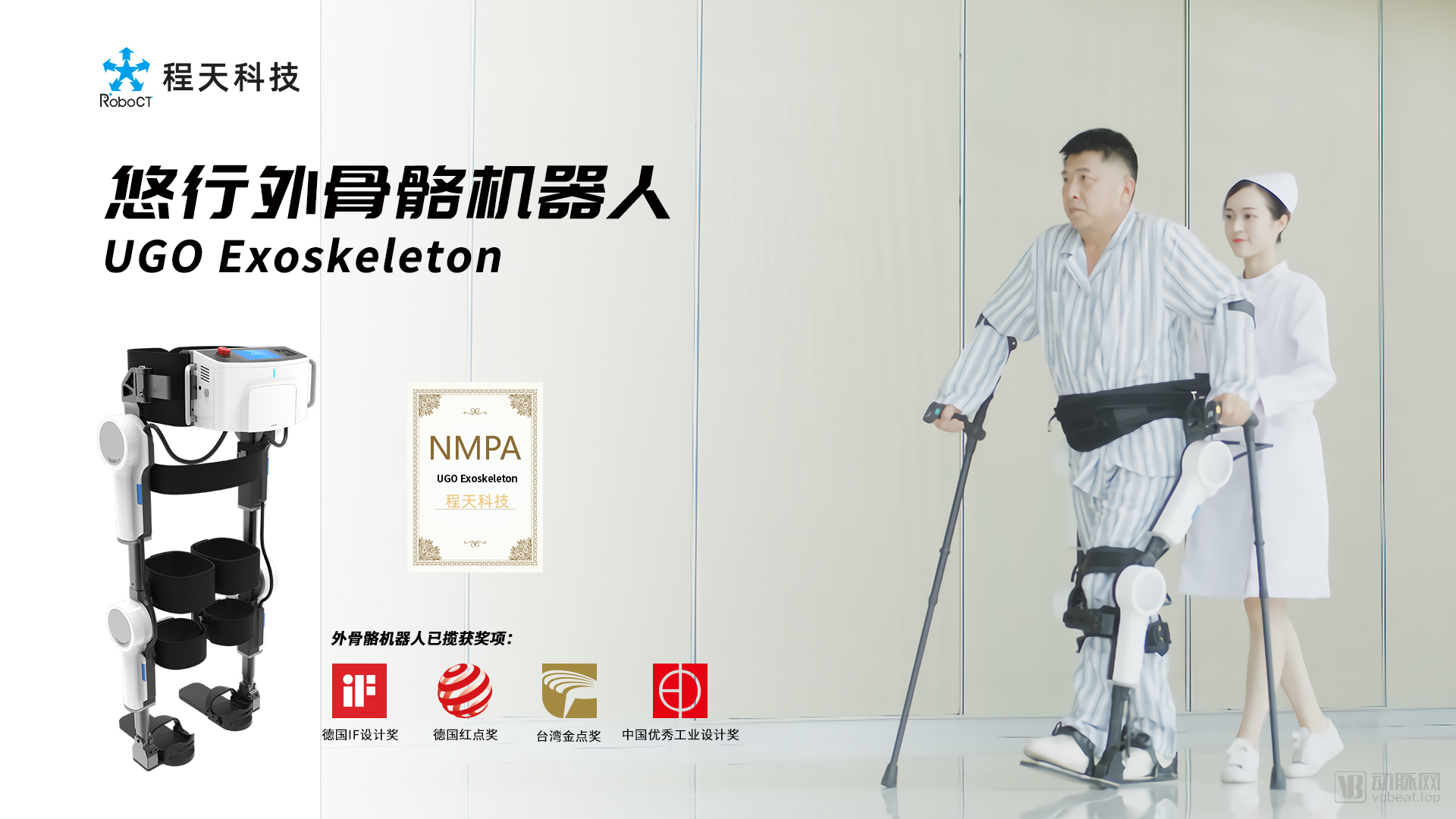
Meanwhile, RoboCT’s lower-limb exoskeleton gait rehabilitation device is also the first intelligent high-end medical robot in China to adopt intention detection technology, with its core components exported extensively to Europe, the United States, Japan, and other countries and regions.
Zhang Jiyu, COO of RoboCT, stated: “As an innovative medical device, the lower-limb exoskeleton walking rehabilitation system represents a major breakthrough in the application of exoskeleton technology in the field of medical rehabilitation. Its performance has reached a world-leading level and will fill a gap in the domestic market.”
In recognition of the innovation behind its exoskeleton rehabilitation robots, RoboCT’s lower-limb exoskeleton gait rehabilitation device was consecutively recognized as a New Industrial Product of Zhejiang Province and included in the 2020 Provincial New Product Trial Production Plan. Furthermore, RoboCT successfully applied for and secured approval for the Zhejiang Provincial Group Standard for Exoskeleton Robots based on this product.
Hangzhou RoboCT Technology Development Co., Ltd. (hereinafter referred to as “RoboCT”) was established in January 2017. As a national high-tech enterprise driven by technological innovation, it is dedicated to the research and development of exoskeleton robotics, intelligent medical devices, specialized robots, and AI systems.
What is the impact of obtaining another medical device registration certificate on the rehabilitation robotics sector? What changes have been made to the new generation of exoskeleton rehabilitation robots? VCBeat conducted an exclusive interview with Zhang Jiyu, COO of RoboCT.
However, China faces a severe shortage of rehabilitation professionals that is disproportionate to its substantial demand for rehabilitation services. Compared with countries where rehabilitation medicine is well-developed, China has significant gaps in both rehabilitation institutions and personnel. Data show that there are only 11,000 rehabilitation therapists in China, whereas the United States has more than 200,000. The number of rehabilitation clinics in China is very limited, while the United States has approximately 30,000 to 70,000 such facilities. In terms of caregiving staff, China currently has a shortfall of up to 7 million caregivers.
On the other hand, as a service-oriented sector, rehabilitation faces pain points such as low efficiency, high costs, regulatory challenges, and difficulties in standardization. Moreover, the high cost of traditional manual caregiving models makes them unaffordable for most patients. Under the influence of these multiple factors, China’s rehabilitation sector has struggled to achieve scale.
The emergence of exoskeleton rehabilitation robots has resolved the aforementioned challenges.As the first and only R&D enterprise in China to obtain a medical device registration certificate for lower-limb exoskeleton rehabilitation robots with an indicated scope covering central nervous system disorders (including patients with paraplegia and hemiplegia), RoboCT’s product approval signifies the official commencement of the commercialization process for exoskeleton rehabilitation robots. Domestic and international stakeholders, including exoskeleton rehabilitation robot companies and investors, will look to RoboCT’s performance as a benchmark for evaluating the industry and individual enterprises. In this sense, the approval of RoboCT’s latest product represents a breakthrough in the field of exoskeleton rehabilitation robots and has accelerated the commercialization of exoskeleton technology in China.
Meanwhile, RoboCT’s latest generation of exoskeleton rehabilitation robots has received regulatory approval again, further promoting the practical application of exoskeleton technology in the field of rehabilitation. For instance, RoboCT’s series of lower-limb exoskeleton walking rehabilitation devices have been deployed for clinical demonstration at multiple medical institutions. To date, over 20,000 patient sessions of exoskeleton-assisted rehabilitation training have been conducted, with both clinical experts and patients highly recognizing the efficacy of these products.
This signifies that, following RoboCT’s introduction of the new “Rehabilitation as a Service” model and its product trial promotion initiatives, exoskeleton rehabilitation robots have gained market acceptance and user recognition, heralding a new phase of development for the exoskeleton rehabilitation robotics sector.
On the other hand, compared with traditional manual therapy models, exoskeleton rehabilitation robots represent high-quality and high-efficiency medical services. For example, comparative clinical trials conducted by RoboCT on lower-limb exoskeleton walking rehabilitation devices demonstrated a 30%–50% improvement in rehabilitation outcomes compared to traditional manual therapy. Furthermore, as a standardized service, exoskeleton rehabilitation robots not only reduce reliance on human labor but also achieve higher service efficiency.
Overall, exoskeleton rehabilitation robots with lower costs and higher efficiency are more likely to achieve large-scale adoption, which will inevitably disrupt traditional rehabilitation models and usher in a new era of rehabilitative medicine.
Zhang Jiyu stated, “The latest generation of exoskeleton rehabilitation robots approved this time redefines the exoskeleton based on our existing leading technologies. Incorporating clinical feedback, we have significantly enhanced the intelligence, human-machine interaction, and user comfort of our exoskeleton rehabilitation robots.”
Perhaps this is why its products have won the “iF Design Award” and the “Red Dot Design Award,” two of the “World’s Top Three Design Awards.”
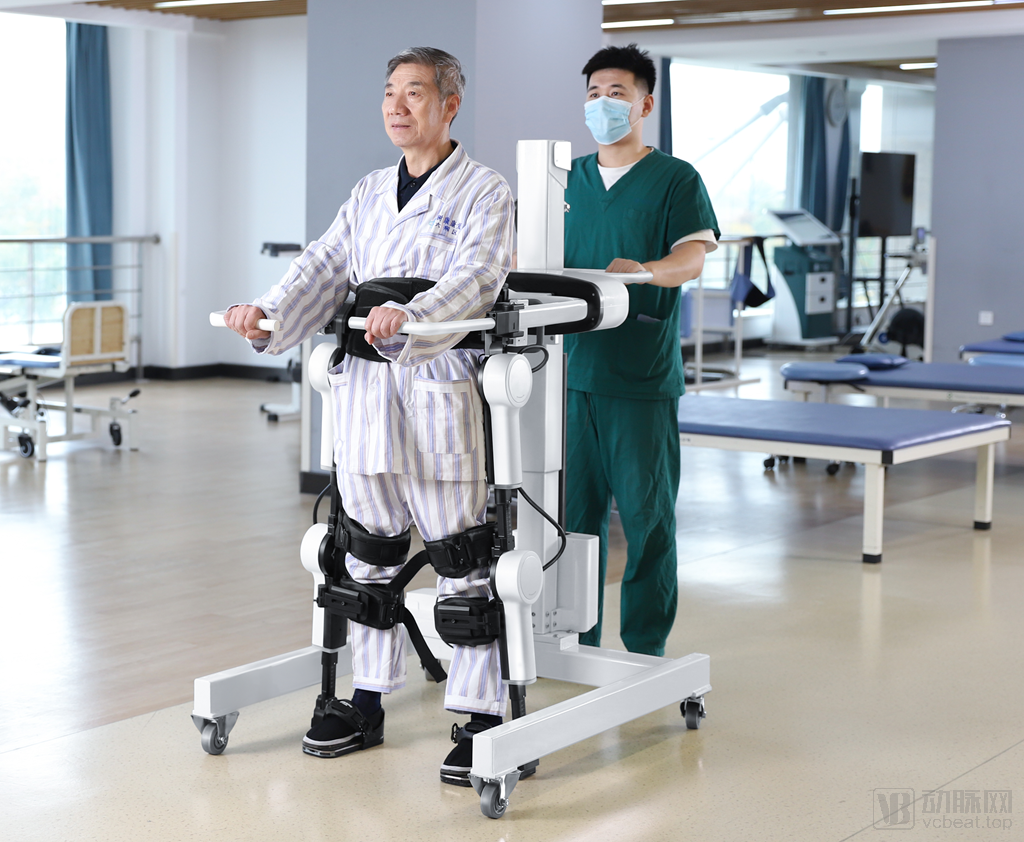
RoboCT has achieved comprehensive performance enhancements, extending beyond mere design improvements. For instance, the latest generation of lower-limb exoskeleton gait rehabilitation devices upgrades the original intent detection and multi-sensor fusion technologies to an all-scenario dynamic gait technology featuring automatic leg-length adjustment and patient body-type matching. This enables flexible use across multiple gaits, modes, and scenarios. Furthermore, the human-machine interaction mode has been optimized through an integrated touchscreen design and ID recognition technology, safeguarding user privacy while delivering exclusive, customized rehabilitation services.
Furthermore, the latest generation of lower-limb exoskeleton gait rehabilitation devices has achieved full-process digitalization of the rehabilitation journey, allowing users to “see” their rehabilitation outcomes. Specifically, the product can record, measure, and evaluate each user’s rehabilitation data—such as range of motion, lower-limb muscle strength grade, balance grade, muscle tone grade, stride length, and gait speed—and visually display their progress following rehabilitation sessions.
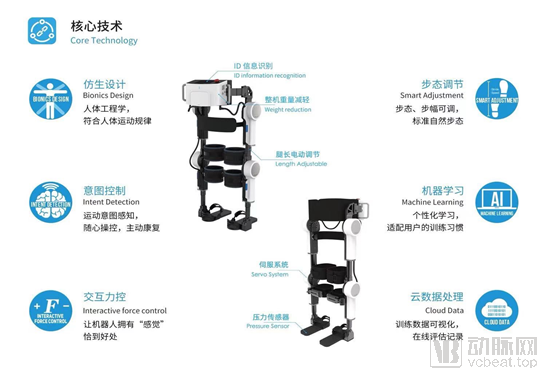
RoboCT’s latest generation of lower-limb exoskeleton gait rehabilitation devices has undergone generational upgrades in technical specifications, user experience, and functional services, redefining rehabilitation exoskeletons and advancing the development of exoskeleton technology.
Furthermore, unlike most products on the market that are still in clinical trials or regulatory submission stages, RoboCT has achieved mass production of exoskeleton robots. Currently, RoboCT has established a standalone four-story manufacturing facility with an annual production capacity of 1,000 exoskeleton rehabilitation robots. Meanwhile, its production facility has obtained certifications for multiple management systems, including ISO 13485, ISO 9001, ISO 45001, ISO 14001, and ISO 27001.
Zhang Jiyu stated, “Currently, RoboCT has five series of exoskeleton rehabilitation robots approved by the NMPA and mass-produced for sale, with each model designed to address different user needs and application scenarios.”
The rapid achievement of mass production is attributable to two key factors: first, the product is independently developed by RoboCT, with 100% independent intellectual property rights for its core modules; second, RoboCT has established a comprehensive supply chain system, and its manufacturing facilities are built to high standards, ensuring product excellence.
Zhang Jiyu stated, “Based on the global shipment volume of exoskeleton rehabilitation robots in 2020, RoboCT’s production capacity is sufficient to meet worldwide user demand. As product promotion and application expand, RoboCT will increase its production capacity and market scale, actively drive the development of the exoskeleton rehabilitation robot industry, and steadfastly fulfill its corporate mission of ‘enabling everyone to enjoy robotic services.’”