

VERO Biotech Secures $50 Million Debt Financing to Advance Portable Nitric Oxide Generator GENOSYL® Delivery System

Runway Growth Capital
Growth Loan Providers
The Fifth Plenary Session of the 19th Central Committee of the Communist Party of China proposed the long-range objectives for basically achieving socialist modernization by 2035, including “building a leading country in culture, education, talent, and sports, as well as a Healthy China.”
Health Status Requirements in the Key Indicator Areas of Healthy China Initiative: Infant Mortality Rate (‰) — 2015: 8.1; 2020: 7.5; 2030: 5.0
Chapter 10, Section 1 emphasizes strengthening comprehensive prevention and control of birth defects by establishing a prevention and control system that covers both urban and rural residents and spans the preconception, prenatal, and neonatal stages, while enhancing the capacity for emergency and critical care of pregnant women and newborns.
Nitric oxide is a potent molecule that plays a crucial role in a wide range of biological functions. In the airways, nitric oxide acts on vascular smooth muscle cells surrounding the low-resistance pulmonary arterioles, and it is used in the treatment of adult respiratory distress syndrome and persistent pulmonary hypertension of the newborn.
On April 2, 2021, VERO Biotech LLC, a biotechnology company based in Atlanta, Georgia, announced that it had been awarded the Golden Helix Award by the Georgia BioIndustry Association. The company developed the GENOSYL® Delivery System (GENOSYL DS), a portable nitric oxide (hereinafter referred to as NO) generator for the treatment of pulmonary arterial hypertension.
In January of the same year, VERO Biotech secured a $50 million debt financing round led by Runway Growth Capital LLC (“Runway”), which will be used to advance the development of GENOSYLDS.
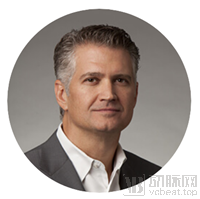
Brent Furse, CEO and President
Since June 2016, Brent Furse has served as Director, Chief Executive Officer, and President of VERO. Prior to joining VERO Biotech, Mr. Furse was a key member of the leadership team at The Medicines Company, having joined the company before its initial public offering in 2000.
Brent has held various leadership roles, including Executive Vice President, Chief Operating Officer, Chief Business Officer, Vice President and General Manager of Interventional Medicine, and Vice President of Sales and Marketing. In addition to his achievements at The Medicines Company, Brent has held leadership positions at the Centers for Disease Control and Prevention and Bristol-Myers Squibb, and has served as a board member at Anthera Pharmaceuticals and Salus Tele-health. Brent holds a bachelor’s degree and an MBA from Mercer University, as well as a bachelor’s degree from Kennesaw State University.

Eric S. Finkelman, Chief Technology Officer
Mr. Eric S. Finkelman has served as the head of operations and product development for 25 years. He has led global teams in operations, R&D, and customer service. He excels at leveraging an expansive mindset and unique leadership approach to build systems and corporate cultures that facilitate personnel communication and product development.
Prior to joining VERO, Mr. Finkelman served as Vice President of Global Operations and R&D at EndoChoice (acquired by Boston Scientific). During his tenure, Mr. Finkelman was responsible for overseeing all activities related to endoscopic imaging platforms. Mr. Finkelman also served as Vice President of Operations and R&D at Sierra Scientific Instruments, a startup funded by the U.S. National Institutes of Health (NIH), which has become a global leader in the gastrointestinal diagnostics industry. Mr. Finkelman holds a Bachelor’s degree in Mechanical Engineering from Rensselaer Polytechnic Institute and a Master’s degree in Manufacturing Engineering from the University of Southern California.
The GENOSYL® Delivery System (GENOSYL DS) is the first “cylinder-free” inhaled nitric oxide (hereinafter referred to as iNO) delivery system approved by the U.S. Food and Drug Administration (FDA). GENOSYL DS transforms the delivery and utilization of nitric oxide (NO). As a vasodilator, NO plays a critical role in the care of patients with adult respiratory distress syndrome and neonatal persistent pulmonary hypertension.
The FDA has authorized GENOSYL® for emergency use in patients with cardiopulmonary complications associated with COVID-19; approved its emergency use in home settings; and approved the transport of GENOSYLDS between hospitals via ground, fixed-wing, and rotary-wing aircraft.
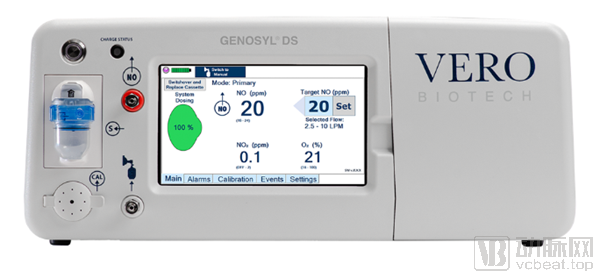
GENOSYLDS Interface | Image Source: VERO Biotech Official Website
>>>>
The Role of GENOSYLDS
GENOSYLDS generates iNO on demand. GENOSYLDS features a lightweight, sleek, and compact design; an intuitive user interface for easy setup and operation; and a portable system designed for convenient hospital use.
GENOSYLDS also features redundant safety with a fully redundant backup system, ensuring device stability and reducing the likelihood of accidents.
iNO is administered at a constant concentration with minimal fluctuation. Meanwhile, gas sensors continuously monitor the concentrations of nitric oxide (NO), nitrogen dioxide (NO2), and oxygen (O2) to ensure patient safety. The consumables are single-use and do not require cleaning or processing.
Features of the iNO Slotless Cartridge Box
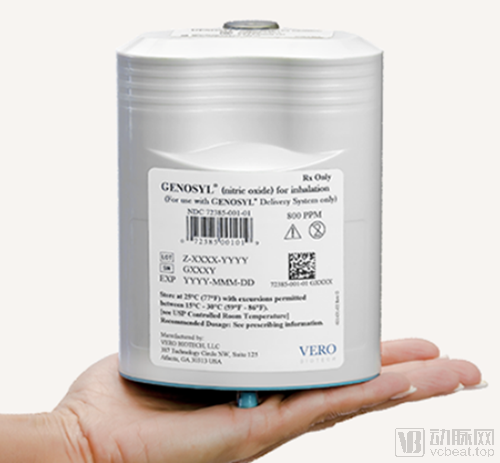
iNO Slotless Cartridge Image Source: VERO Biotech Official Website
The iNO slotless cartridge is disposable, eliminates the need for bulky pressurized gas cylinders, can be stored at room temperature, requires no cleaning, and minimizes personnel exposure to NO.
Comparison of Tankless vs. Tank-Based iNO Technologies
The spring 2021 issue of Respiratory Therapy discussed the direct and indirect costs of tank-based iNO delivery systems and compared outdated technologies with the new medical technology GENOSYL DS (a tankless, portable iNO delivery system).
In respiratory therapy, the authors identified three distinct yet interrelated factors that can impact the cost of reservoir-based delivery systems:
Storage and Logistics Considerations
In today’s healthcare institutions, space is always in short supply. Cryogenic storage tanks are typically housed in hospital warehouses, occupying valuable hospital “real estate” and hindering rapid transfer.
Ergonomic Considerations
Most tank-based delivery systems are so heavy that they require multiple people to transport them, resulting in low efficiency. Moreover, the use of tank-based systems significantly increases the risk of accidents involving personnel and equipment.
Economic Considerations
Tank-based systems are often more complex than simple tankless systems. Hospitals may also be negligent in failing to fully seal the tanks, which can lead to continuous NO leakage and pose safety hazards; this issue does not occur with cartridge-based systems that do not require tanks.
Persistent pulmonary hypertension of the newborn (PPHN) due to hypoxic respiratory failure is a severe condition in full-term and late-preterm (>34 weeks) neonates. PPHN becomes a primary developmental defect when gas exchange fails to transition successfully to the lungs at birth, resulting in elevated pulmonary vascular resistance (PVR).
Meconium aspiration syndrome (MAS), pneumonia, sepsis, hyaline membrane disease, congenital diaphragmatic hernia (CDH), and pulmonary hypoplasia can lead to the development of PPHN. In these conditions, elevated pulmonary vascular resistance (PVR) causes hypoxemia, which in turn leads to right-to-left shunting of blood through a patent ductus arteriosus and foramen ovale.
It is estimated that 100,000 newborns worldwide are affected by PPHN each year. PPHN can occur when an infant’s circulation transitions at birth.
iNO has fundamentally transformed the management of PPHN by dilating pulmonary vasculature, enhancing oxygenation, and reducing the need for invasive extracorporeal membrane oxygenation (ECMO). As the only FDA-approved inhaled nitric oxide therapy for this indication, iNO is currently the standard of care for treating PPHN.
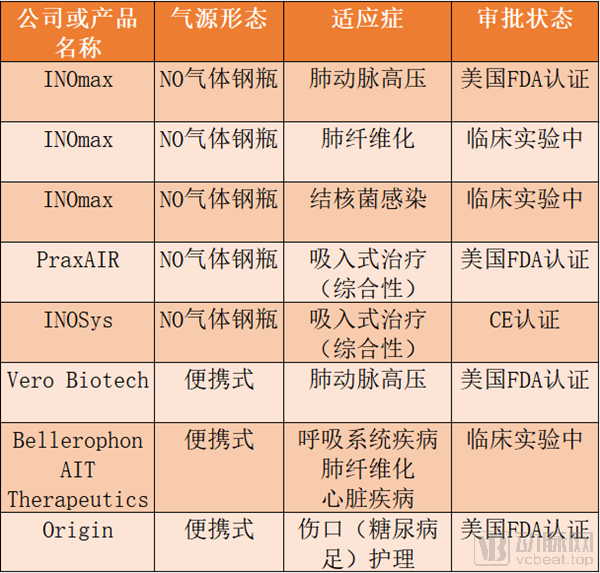
NO Generator Market Overview
In China, the market for portable nitric oxide (NO) generators remains a blue ocean. Currently, Nanjing Nuoling Biotechnology Co., Ltd. has independently developed a compact, portable NO generator (INOwill) capable of generating high-purity NO gas in real time, thereby replacing existing NO gas cylinders. Furthermore, INOwill has entered the clinical trial phase for Class III medical device registration in China, with product commercialization expected to be completed as early as the end of this year.
On January 19, 2021, VERO announced that it had secured a secured term loan. The company received a $50 million investment from Runway Growth Capital, a growth lender that provides loans to companies seeking alternatives to equity financing.
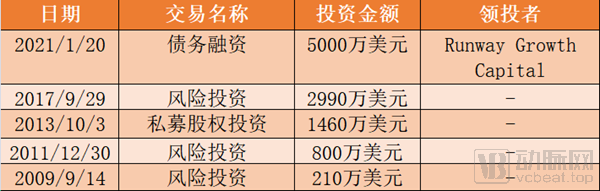
Vero's Historical Financing Rounds (Data Source: Crunchbase)
“After extensive market research, Runway gained a deep understanding of the strengths of our company’s products. Partnering with a premier lender like Runway enhances our corporate credibility and represents an indispensable step in advancing our marketing and product development efforts, thereby better promoting our proprietary tank-free GENOSYL delivery system,” said Brent V. Furse, CEO and President of VERO Biotech.