

ALSOLIFE Files IPO Prospectus: Empowering 'Star Children' Toward Independent Living Through Digital Therapeutics
The American TV series *The Good Doctor*, which premiered in 2017, has received over 80,000 ratings on Douban with a high score of 9.2. It tells the story of Shaun Murphy, an autistic protagonist who overcomes numerous hardships to eventually grow into a brilliant surgical doctor.
Dr. Murphy’s endearing persistence, honesty, and straightforwardness, coupled with his extraordinary diagnostic abilities, have won him countless fans, who affectionately call him “Little Angel Murphy.” This character is both unfortunate and fortunate: although he has had autism since childhood, he falls under the savant syndrome spectrum—specifically, the purest form, without any other comorbid disorders.
Murphy has countless viewers, but what is the reality for children with autism?
Zhang Zhiguang, founder of ALSOLIFE, stated at the Digital Therapeutics Innovation Forum roundtable of the 5th Future Healthcare Top 100: “According to data from the U.S. Centers for Disease Control and Prevention (CDC), the prevalence of autism in the United States has reached 1 in 54, meaning one out of every 54 children is diagnosed with autism spectrum disorder. Over the past decade, the prevalence of autism has doubled.”
Individuals with autism spectrum disorder (ASD) typically experience difficulties in social, emotional, and communication skills. Although ASD emerges in early childhood, it usually persists throughout a person’s lifetime and is associated with a high rate of comorbidities. Approximately 55% of children with ASD have co-occurring cognitive impairments, and 30–50% exhibit symptoms of attention-deficit/hyperactivity disorder (ADHD).
However, the chronic nature, incurability, and high comorbidity of autism represent only part of the challenges. For the demand side—parents of children with autism—navigating intervention strategy selection, assessment, planning, and implementation often consumes substantial time, money, and effort, yet yields minimal therapeutic benefit.
On the supply side, the mainstream assessment systems currently used in the industry are all imported from abroad, making copyright acquisition difficult and costly, and they exhibit poor adaptability to the growth and development patterns of Chinese children.
Faced with these challenges, Zhang Zhiguang, a parent of a child with autism who works in telecommunications big data and intellectual property, was determined to establish ALSOLIFE to help “children of the stars” grow into independent, shining individuals.
Despite their firm resolve, Zhang Zhiguang’s team faced a serious problem at the outset of their venture: the industry’s infrastructure was severely underdeveloped.
Zhang Zhiguang stated that, initially, the industry lacked assessment tools for the foundational abilities of children with autism, and corresponding data were neither centralized nor comprehensive, resulting in a severe shortage of both production tools and resources. On the other hand, the number of registered Board Certified Behavior Analysts (BCBAs) in China was extremely low in 2015, leading to a significant deficiency in professional capacity.
To address these issues, after extensive exploration, Zhang Zhiguang’s team identified the ALSO concept, proposed by Professor Guo Yanqing, an autism expert at Peking University Sixth Hospital, as the most suitable approach.
The ALSO philosophy emphasizes: Grounded in the present, with an eye on the future.Advocating that, starting from the age of two or three, consideration should be given to a child’s needs in their twenties and thirties, and indeed throughout their entire life course, with the ultimate goal of “enabling children to live independently without interference.” When designing instructional programs, it is essential to ensure that “current training must incorporate future needs, and future goals must be practiced today.”
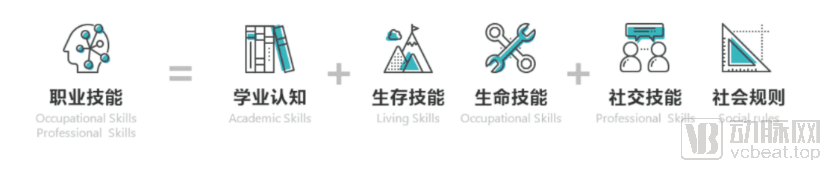
The ALSO philosophy encompasses the above four major categories of skills that children must master for their future lives and careers.
Zhang Zhiguang believes that if the intervention philosophy of ALSO is integrated into daily life, particularly in the domains of A (Academic Cognition), L (Living Skills), and S (Social Skills), then O (Occupational) outcomes can typically be achieved with just a single opportunity.
The ALSO philosophy, as an intervention model, helps children with autism build a bridge between the present and the future, facilitating the critical transition and advancement from “self-care” to “self-reliance,” and ultimately to “independence.”
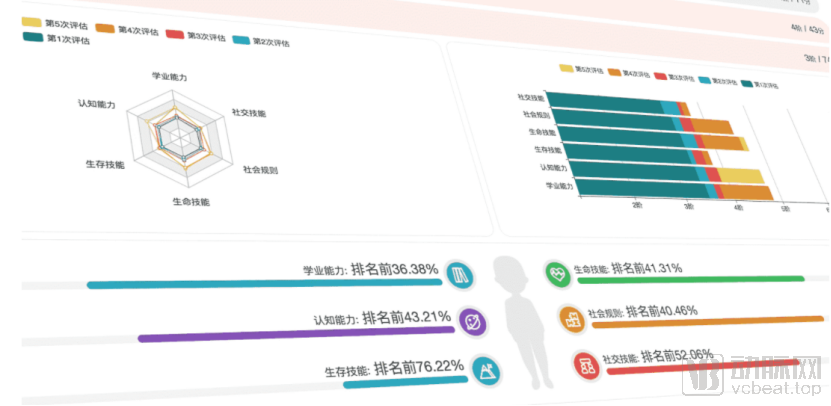
Based on this, ALSOLIFE’s “China Special Needs Children Assessment and Intervention Platform” was officially launched in February 2017, providing children with autism with future-oriented online assessments, targeted reports, individualized teaching plans, and home-based training guidance.
Compared with traditional intervention methods, the ALSOLIFE platform, supported by the concept of high adaptability, has many advantages:
1. Standardize all courses, with clear and specific intervention plans for each skill;
2. Both assessment scales and personalized interventions have been digitized and made intelligent, enhancing intervention efficiency;
3. A detailed data recording and periodic assessment tracking system clearly reflects the progress and deficits of individual cases during the rehabilitation process, intelligently matching the optimal rehabilitation pathway;
4. Establish a clear family intervention plan to organically integrate home-based interventions with school education, thereby comprehensively enhancing the child’s capabilities;
5. A comprehensive rehabilitation data recording system facilitates various research projects for schools and hospitals, enabling data accumulation.
In addition to its online platform-based intervention services, ALSOLIFE established the ALSO·IN Autism Evidence-Based Center in September 2019 to provide offline rehabilitation services. The center offers intervention services for individuals with autism spectrum disorder (ASD) and their families, grounded in developmental milestones and Applied Behavior Analysis (ABA) theory.
Currently, ALSO·IN operates offline institutions in Beijing, Zhengzhou (Centers I and II), Xi’an, and Tianjin, and will soon open new locations in Nanjing, Hefei, and Chengdu.
Zhang Zhiguang stated that over the past four years, ALSOLIFE has served 240,000 families of children with autism, providing a wide range of home-based solutions. The company has been striving to build a digital intervention platform and is now gradually advancing toward digital therapeutics.
Having progressed through both online and offline phases, ALSOLIFE aims to integrate its series of methodological frameworks into an interactive human-computer tool in the next step, a process that relies heavily on talent.
The medical researchers at the ALSOLIFE Research Institute are mostly interdisciplinary professionals with expertise in both psychology and medicine. Last year, the company also recruited its first doctoral supervisor from the United States to serve as a full-time professor at ALSOLIFE.
Zhang Zhiguang, founder of ALSOLIFE, explained that “star dads and star moms” do not use their real names in the community; everyone calls him “Pao Die” (Bubble’s Dad) because his son is named Paopao (Bubble).
“Within our community, one of our partners is known as ‘Qiu’s Dad,’ and the other as ‘Kexin and Keyi’s Dad.’ From the moment our children were diagnosed, our identities changed, and so did our lives. His life has become my life, and we must face the future together,” said Zhang Zhiguang.
"In the process of starting a business, Zhang Zhiguang gradually realized that post-diagnosis intervention for children with autism requires mobilizing the strength of the entire society."
For instance, rehabilitation therapists should recognize that a single, seemingly ordinary minute in their own lives may hold profound significance for a child with autism. It is precisely within such a minute that the child, with the therapist’s assistance, might learn to utter “Mom” and “Dad” for the first time. The therapist and the child form an intimately connected community of shared life.
From a societal perspective, the establishment of various “life communities” throughout the autism intervention process yields substantial social benefits.“Your life is ALSO my life.” This simple statement shines brightly.
Zhang Zhiguang, the founder, has publicly stated that the original intention behind founding ALSOLIFE was quite simple: to help himself and more families affected by autism spectrum disorder (ASD) navigate the intervention journey with greater stability and less suffering, enabling their children to live and work independently without disruption in the future.
All three founders of ALSOLIFE are users of the platform. Over the past four years, the ALSOLIFE team has been exploring governance pathways and the most cost-effective intervention methods in the field through a data-driven and evidence-based medicine approach.They firmly believe that helping others is the way to help oneself; “Stars” never give up.。
At the roundtable discussion of the Digital Therapeutics Innovation Forum during the 5th Future Healthcare 100 conference, Zhang Zhiguang also shared his views on the development of digital therapeutics in China: “I believe that China has more favorable conditions for developing digital therapeutics. First, there is a larger volume of sample data, particularly among populations like ours; second, data acquisition is more efficient. Therefore, we firmly believe that, similar to the trajectory of the internet industry, certain sectors of China’s digital therapeutics market will inevitably surpass those in the United States once they reach a certain stage of development.”
Furthermore, Zhang Zhiguang believes that market acceptance of digital therapeutics is only a matter of time, and for suppliers,The key to digital therapeutics lies in combining rigorous evidence-based medicine with solutions for patient adherence, thereby balancing the equation between supply and demand.
“We hope to help the industry reduce operational costs by 60% through digital therapeutics, which is also the significance of the ALSOLIFE platform. I firmly believe that China’s digital therapeutics will surpass those of the United States in the future and become the world’s leading”1.Zhang Zhiguang concluded.