

Boao Lecheng: Pioneering China's Healthcare Reform as a Policy-Driven Innovation Hub for Global Pharma and Digital Prescription Sales
The journey from Boao Airport to the Boao Lecheng International Medical Tourism Pilot Zone takes nearly 10 minutes, passing through expansive coconut groves and lush green rice paddies. As the destination approaches, the scenery transitions to bustling civil construction sites, with third-party testing centers and factories lining the route in neat rows. The most eye-catching landmark is a newly completed rectangular building whose front facade features a glass curtain wall, affectionately known by locals as the “Box of Life.”
This "Box of Life" is, in fact, the Hainan Boao Lecheng International Innovative Drugs and Medical Devices Exchange and Translation Center. On April 13, the "Never-Ending" International Exhibition of Innovative Drugs and Medical Devices opened here. At the opening ceremony, two national-level innovation platforms were unveiled: the National Mass Entrepreneurship and Innovation Demonstration Base, and the Hainan Key Laboratory for Real-World Data Research and Evaluation under the National Medical Products Administration.
On that day, the "Life Box" exhibition showcased 810 products from 80 leading global pharmaceutical and medical device manufacturers, including AstraZeneca, Johnson & Johnson, Medtronic, Boston Scientific, Novartis, BeiGene, and Zai Lab. Among these, 441 products had not yet been launched in China, and 394 were making their debut in the Chinese market.
It is hard to imagine that this conversion center was built in just four months. This speed reflects the development pace of the Boao Lecheng International Medical Tourism Pilot Zone. Since the establishment of the Hainan Boao Lecheng International Medical Tourism Pilot Zone Administration (hereinafter referred to as the “Lecheng Administration”) in 2019, the pilot zone has continuously accelerated its development, rapidly reshaping people’s understanding of its potential.
The Boao Lecheng International Medical Tourism Pilot Zone enjoys unprecedented policy support, with the successive introduction of measures such as the “Nine National Provisions” for special market access, the “pilot and trial” mechanism, and the establishment of a Real-World Data Research Center, continuously amplifying policy dividends. On April 8, the Ministry of Commerce issued a document supporting the development of the Hainan Free Trade Port, featuring four major policies directly relevant to Lecheng: supporting online sales of prescription drugs; strengthening support for pharmaceutical market access; promoting the development of Hainan’s high-end medical aesthetics industry; and optimizing the market access and development environment across all fields of transplantation science.
With the support of open policies, Boao Lecheng serves as a “testing ground” for the health industry, representing the forefront of China’s healthcare reform.
Amid unprecedented benefits from major policies, how can Boao Lecheng fully leverage its policy advantages to drive growth? VCBeat conducted an on-site visit to the Boao Lecheng International Medical Tourism Pilot Zone and interviewed Gu Gang, Director of the Administration Bureau of the Hainan Boao Lecheng International Medical Tourism Pilot Zone.
At its inception, Boao Lecheng set three “small goals”: to enable Chinese people to access the world’s most advanced pharmaceuticals and medical devices as soon as possible, to promote the development of China’s health industry, and to advance the reform of China’s healthcare system.
How is the first goal of enabling Chinese patients to access the world’s most advanced drugs and medical devices as soon as possible progressing? Boao Lecheng has delivered its answer with the “Double 500” achievement.
In the field of otolaryngology, Hainan Boao Lecheng International Medical Tourism Pilot Zone has reached 500 cases each for the use of specially approved cochlear implants and ophthalmic drugs and devices. Boao Lecheng Super Eye Hospital has completed 500 cases across 16 specially approved projects, setting 14 national firsts.
As of February this year, Hainan Province has approved 130 varieties of urgently needed imported drugs and medical devices for clinical use, with a number of these products becoming flagship offerings in the Boao Lecheng International Medical Tourism Pilot Zone and earning the trust of patients across China. For instance, in late May 2020, more than 30 children with hearing impairments were unable to travel abroad due to the pandemic to upgrade their Cochlear N7 sound processors (external units). Instead, they traveled as a group to the Pilot Zone to receive upgrades to the latest products. As of early February this year, the Boao Lecheng Pilot Zone had completed 500 cochlear implant surgeries, compared to only 76 cases throughout the entire previous year.
In terms of pharmaceuticals, the Boao Lecheng International Medical Tourism Pilot Zone has introduced more than 100 new anti-cancer drugs and rare disease medications. Under the zone’s special preferential policies, these rare disease drugs can be used for patient diagnosis and treatment without requiring domestic registration and market approval. Furthermore, in 2020, the value of pharmaceuticals and medical devices stored in the bonded warehouse reached RMB 171 million, representing a nearly six-fold year-on-year increase from the full-year import value of RMB 24.6221 million in 2019.
Based on the products displayed at the Pharmaceutical and Medical Device Exchange and Transformation Center, Boao Lecheng is expected to see the launch of more products covering a wider range of medical specialties and disease indications in the future. The degree of innovation and diversity of the products exhibited at the center on that day was comparable to those featured in the pharmaceutical pavilion of the annual China International Import Expo (CIIE). However, unlike the CIIE, the International Innovative Pharmaceuticals and Medical Devices Exhibition in Boao Lecheng never closes; it remains permanently open, providing a platform for exchange between international and domestic innovative pharmaceuticals and medical devices. This is why the exhibition in Boao Lecheng is known as the “Never-Ending Pharmaceuticals and Medical Devices Exhibition.”
Taking Boston Scientific, a medical device company, as an example, the company showcased 63 featured products at this exhibition, covering multiple areas of critical and chronic disease management, including cardiovascular and cerebrovascular diseases, atrial fibrillation and stroke prevention, interventional therapy for liver cancer, digestive endoscopic interventions, and urology and women’s health.
Gu Gang stated, “The Exchange and Conversion Center in Boao Lecheng not only showcases innovative products but also embodies reforms in trade, training, registration, and approval, reflecting comprehensive reforms across the healthcare industry. The Medical Device Exchange and Conversion Center serves multiple functional roles: on one hand, it provides a platform for the exchange and conversion of international innovative drugs and medical devices; on the other hand, it acts as a platform to attract the repatriation of overseas consumption and promote the dual-circulation development pattern involving both domestic and international markets.”
Wu Weinong, General Manager of Corporate Affairs at Allergan China, stated that while it typically takes three to five years for a product to be registered and launched in the Chinese market, this “time lag” is gradually being narrowed in Boao Lecheng.
Boao Lecheng has streamlined the approval process for pharmaceuticals and medical devices. By reinforcing the public nature of bonded warehouses, allowing early entry of these products, deepening minimalist approval reforms, centering on patient convenience, optimizing approval procedures, openly inviting qualified experts to participate, and enabling autonomous applications for the use of specially permitted pharmaceuticals and medical devices, the time required for patients to apply for such special permissions has been reduced to 3–7 days.
The primary reasons why Boao Lecheng can accelerate the market launch of drugs and medical devices lie in process innovation and institutional innovation.
In terms of institutional innovation within the park, the Boao Lecheng Administrative Bureau was established in 2019. Its organizational structure is unique among domestic medical industrial parks, drawing on the proven practices of China Merchants Group in Hong Kong and the Maritime and Port Authority of Singapore. The head of the agency or senior civil servants are appointed by the government to represent state administration, while other personnel are recruited through market-based mechanisms. The Boao Lecheng Administrative Bureau exercises governmental functions while also engaging in commercial operations; it has the authority to establish specialized funds, acquire poorly performing entities within the zone, and mandate their exit. These measures have significantly enhanced the operational efficiency of the park.
In optimizing the approval process, Boao Lecheng boasts a unique administrative body at the division-director level—the Lecheng Pilot Zone Medical Products Administration—jointly stationed by the Hainan Provincial Health Commission and the Hainan Provincial Medical Products Administration. As China’s first medical products regulatory agency jointly established by health and drug regulatory authorities, it has innovatively implemented an “integrated” mechanism for medical and pharmaceutical oversight, significantly enhancing regulatory efficiency and accelerating the review and approval of special access for imported innovative drugs, medical devices, and medical technologies.
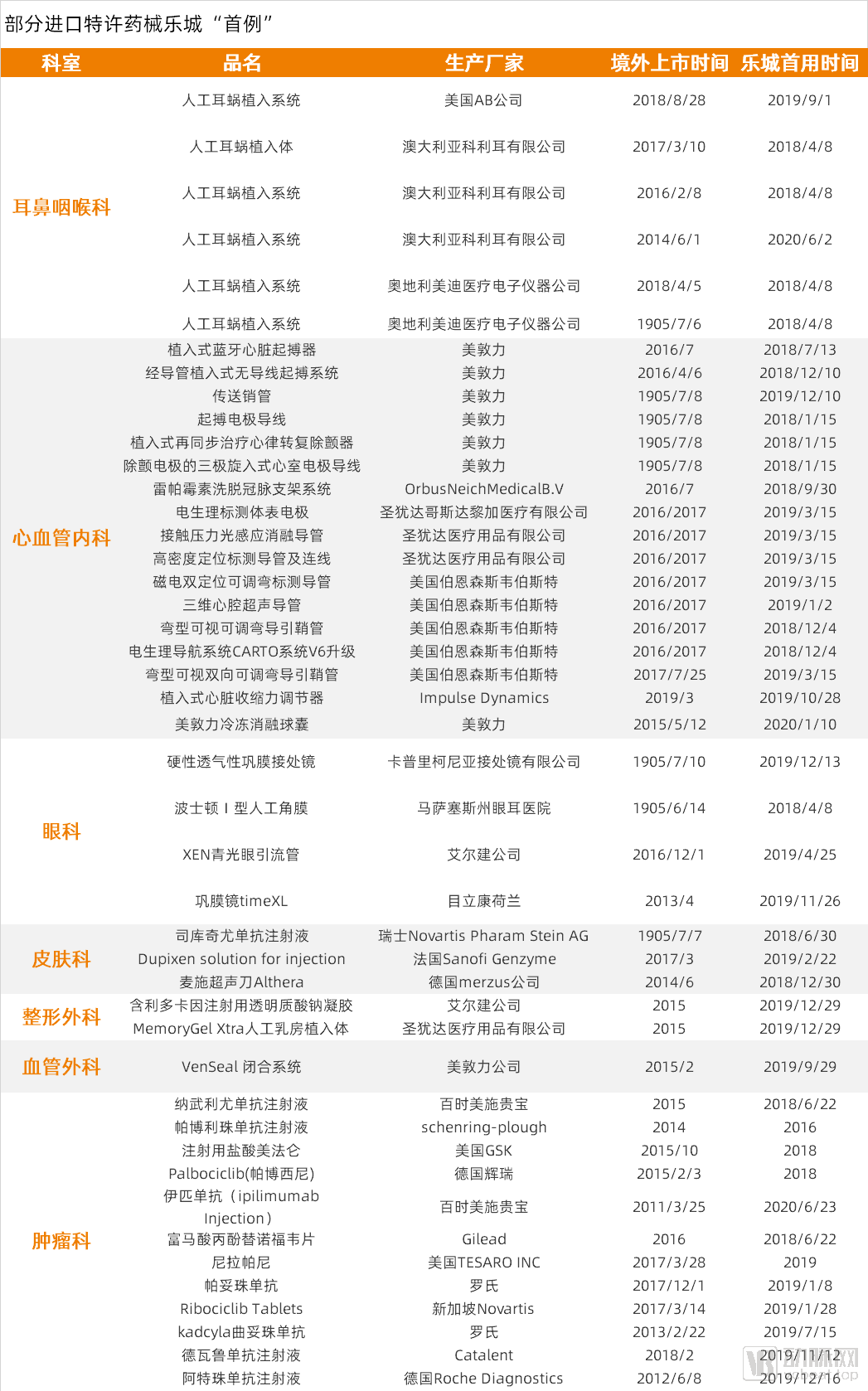
The table does not provide an exhaustive list of all products.
Boao Lecheng, this “test field” for the health industry, is not only a window for global innovative drugs and medical devices to enter China, but also a highland for real-world studies. Boao Lecheng is the only pilot site in China for the application of real-world clinical data.
Real-World Study (RWS) data differs from Randomized Controlled Trials (RCTs): RCTs involve randomly assigning subjects to different groups and implementing distinct interventions to compare outcomes. RCTs require Phase I, II, III, and even Phase IV clinical trials (typically taking 3–7 years); in contrast, RWS leverages post-marketing data from foreign markets, requiring only supplemental clinical data from a small number of Chinese patients to address ethnic differences (enabling time-limited registration within one year). This will significantly reduce the time and cost for bringing internationally registered products to the Chinese market.
Reviewing the process of exploring real-world studies in Boao Lecheng, Boao Lecheng is steadily broadening the path of its real-world data pilot program.
In October 2019, the Boao Lecheng International Medical Tourism Pilot Zone launched its first pilot program for real-world data (RWD) studies, selecting three products from three companies as the initial cohort. Just four months later, Allergan’s “Glaucoma Drainage Device” became the first medical device in China to gain market approval based on real-world data.
On December 28, 2020, at the launch meeting for pilot products using real-world data (RWD) in clinical settings for drugs and medical devices, the drug regulatory authorities announced 14 pilot products for the second batch of RWD studies all at once. This list included 11 medical device products and 3 drug products, further expanding the scope and scale of the pilot program.
In 2021, the Catalys femtosecond laser system for ophthalmic treatment was approved for market launch based on real-world data from Boao Lecheng. In March 2021, pralsetinib, the first innovative drug in China to leverage real-world data from Lecheng for auxiliary evaluation, received marketing approval.
Yang Zhimin, Director at the Center for Drug Evaluation (CDE) of the National Medical Products Administration (NMPA), shared insights on how real-world data from Boao Lecheng facilitates the review and approval of novel anti-tumor drugs. She stated, ““RWD serves as a valuable complement to evidence in new drug development. Currently, drugs suitable for real-world studies in Boao Lecheng primarily include those that are already marketed abroad but not yet available in China, with particularly robust overseas efficacy data; drugs for rare diseases with challenging patient enrollment; and drugs for region-specific rare conditions, such as beta-thalassemia.”
Regarding the future outlook for real-world studies, she believes that multi-party collaboration should be strengthened to actively explore research and analytical methods for real-world data (RWD); scientific tools and innovative analytical approaches should be encouraged to generate high-quality RWD capable of supporting regulatory submissions; and priority should be given to actively exploring the value of RWD in fields such as rare diseases and pediatric medications.
Gu Gang stated, “Moving forward, the Administrative Committee of the Pilot Zone and the National Medical Products Administration will jointly screen and approve imported drugs and medical devices urgently needed for clinical use, institutionalizing the special approval process to enable review and approval upon submission.”
As more products gain market approval by leveraging real-world data from Boao Lecheng, the advantages of real-world research in Boao Lecheng have become a major draw for pharmaceutical and medical device companies. Boao Lecheng aims to emerge as a global hub for real-world research, leading international trends. In the future, Boao Lecheng will host an annual Real-World Research Conference.
Whether it is the use of specially imported drugs and medical devices or the implementation of real-world studies, the development speed of Boao Lecheng in the past two years has been beyond imagination. With continuous policy support, the opening of online prescription drug sales, and the construction of electronic prescription centers, these have become the most focused topics in the industry regarding Boao Lecheng.
Not long ago, the National Development and Reform Commission and the Ministry of Commerce jointly issued the “Opinions on Several Special Measures to Support the Construction of the Hainan Free Trade Port by Relaxing Market Access,” which supports the establishment of the Hainan Electronic Prescription Center in the Boao Lecheng International Medical Tourism Pilot Zone (to provide third-party information services for prescription drug retailers). For prescription drugs marketed and sold in China, with the exception of those subject to special administration as explicitly stipulated by the Drug Administration Law of the People’s Republic of China, all are permitted to be sold online via the Electronic Prescription Center without requiring separate approval.
A few days later, on April 15, the General Office of the State Council issued the “Opinions on Further Advancing ‘Delegation, Regulation, and Service’ Reforms to Support the ‘Six Stabilizations’ and ‘Six Guarantees,’” which deepens such reforms. The document states that, provided the authenticity and reliability of electronic prescriptions are ensured, online sales of prescription drugs—excluding those under special state management—are permitted.
For years, although the new Drug Administration Law legislatively permitted the conditional liberalization of online prescription drug sales, regulatory measures for supervising such sales had yet to be issued. Now, as policies regarding online prescription drug sales continue to emerge, Boao Lecheng’s development of an electronic prescription center will pioneer experience for China and has the potential to become a national model.
Hainan Boao Lecheng’s pioneering initiatives have proposed the government-led establishment of an Electronic Prescription Center. The Hainan Electronic Prescription Center integrates with internet hospitals, prescription systems of Hainan medical institutions, various prescription sales platforms, medical insurance information platforms and payment settlement agencies, as well as commercial insurance institutions, to achieve centralized collection of prescription-related information and facilitate the purchase of prescription drugs.
This model represents an attempt at future prescription circulation platforms, which not only helps to explore and accumulate operational and regulatory experience but may also accelerate the introduction of supervisory and administrative measures.
How to Establish the Electronic Prescription Center in Boao Lecheng? How to Fulfill Its Functions.
Gu Gang stated that the next step for the Electronic Prescription Center is to integrate more internet hospitals and public hospital resources, enabling hospitals and physicians to issue prescriptions online. As a platform for regulation, traceability, and verification, the Electronic Prescription Center will verify which physicians are qualified to issue electronic prescriptions, confirm whether medications are authentic, identify the enterprises involved in drug distribution, and ensure that drugs are genuinely delivered to the applying patients.
Challenges in Establishing an E-Prescription CenterAccording to Gu Gang, the main challenges in establishing an e-prescription center lie in full-process regulatory oversight and data privacy protection. “First, it is essential to verify who prescribes the medication and whether they are qualified to do so. Second, we must ensure that the prescription fully matches the patient’s condition. Third, the security of the prescription must be guaranteed throughout its circulation. Fourth, at the point of administration, it must be ensured that the treatment genuinely meets the patient’s needs. Another core issue is safeguarding data confidentiality.”
Currently, China’s health industry is experiencing robust growth. Developed countries have already established several pharmaceutical industry clusters: the United States has five major biopharmaceutical technology hubs (San Francisco, Boston, Washington, D.C., North Carolina, and San Diego); the United Kingdom boasts the Cambridge Genome Park; France is home to Genopole in the southern suburbs of Paris; Germany has designated biotechnology demonstration zones; and India features the Bangalore Bioinnovation Centre.
Policy dividends in Hainan’s Boao Lecheng International Medical Tourism Pilot Zone continue to accumulate. The Electronic Prescription Center has broken down information barriers among various medical institutions and is poised to become the key to unlocking the trillion-yuan market for outpatient prescription outflow. The zone encourages innovative drugs that have already obtained marketing approval to enter “immediately upon approval,” serving as a gateway for imported products to access the domestic market. The establishment of the Real-World Study Center will be an indispensable component in the full-lifecycle management of pharmaceutical and medical device products. It is foreseeable that Boao Lecheng will become a major hub in China’s biopharmaceutical industry. More importantly, the pilot initiatives implemented in Boao Lecheng help pave the way for healthcare system reforms under China’s 14th Five-Year Plan, allowing experience gained there to be promoted nationwide.