

Virtual Coach for Diabetes Management: How Intelligent Decision-Making Enables Large-Scale Personalized Care
In recent years, digital management approaches have emerged to address challenges such as low adherence to self-management among patients with diabetes, insufficient medical and nursing resources, and the high cost yet low efficiency of manual interventions.
In our previous article, “Smart Devices as the Fundamental Prerequisite for Digital Diabetes Management: What Are the Technological Barriers and Key Innovations?”, we emphasized the importance of the 3D framework for digital diabetes management—Device, Data (from the device), and Decision (medical decisions derived from the data)—with a particular focus on analyzing the foundational value of devices in data acquisition.
With data as the prerequisite, how can efficient medical decision-making be achieved? This is where intelligent decision-making comes into play. Intelligent decision-making refers to a system that leverages multidimensional patient data and intelligent technologies to facilitate patient interaction, minimizes manual intervention, and truly realizes digital management of diabetes. Known abroad as a “virtual coach,” it helps patients better manage their condition, much like a personal coach would.
For the 463 million diabetes patients worldwide and the 116 million in China, medical and nursing resources are scarce, and limited healthcare personnel cannot provide full-process intervention for all patients’ self-management. Even with sufficient medical resources, manual intervention suffers from high costs and low efficiency. Therefore, it is imperative to develop service delivery models that are low-cost, highly efficient, and broadly accessible.
In recent years, the internet has played a significant role in chronic disease management. However, the value of pure internet-based solutions primarily lies in eliminating information asymmetry and improving connectivity efficiency, while challenges such as the scarcity of medical resources and the need for whole-course management of chronic diseases still lack effective solutions.
With innovations by diabetes management companies and advances in artificial intelligence, diabetes care centered on intelligent decision-making is seizing new opportunities for growth. For instance, intelligent decision-making can exponentially leverage limited resources to enable “mass personalization” in chronic disease management. Building on this capability, Onduo Health, a digital diabetes management company, expanded its disease management portfolio in February this year from type 2 diabetes to include prediabetes, hypertension, obesity, and mental health conditions.
From the perspective of feasibility for intelligent decision-making, diabetes care extends beyond in-hospital treatment to encompass a substantial component of out-of-hospital self-management. Diabetes management includes clinical diagnosis and treatment, patient education, disease prevention, early detection, and lifestyle management. With the exception of clinical diagnosis and treatment, these other components do not require extensive physician involvement.
According to diabetes management guidelines, patients with diabetes share similar risk factors, dietary restrictions, and health education needs. Based on these common issues, it is highly feasible for diabetes management institutions to implement personalized care by integrating an intelligent decision-support system with patient-specific data.
Furthermore, evidence of varying degrees has demonstrated that digital diabetes management centered on intelligent decision-making yields clear clinical benefits. As indicated above, the use of intelligent decision-making for diabetes management is both necessary and feasible.
Intelligent decision-making has been adopted by multiple digital diabetes management companies. For instance, Fooducate leverages its proprietary large-scale food database to analyze the nutritional composition of foods and provides personalized nutrition grades and dietary recommendations based on individual factors such as age, sex, weight, activity level, and health status. Other companies, including Welldoc and Linvongo, have also integrated intelligent solutions into their patient management processes. We will illustrate the core functionalities that intelligent decision-making systems should possess through specific case studies and their demonstrated real-world outcomes.
Welldoc first launched its diabetes management application, BlueStar, in 2013 and has received FDA clearance eight times. Centered on intelligent decision-making, BlueStar is a digital diabetes management product that provides comprehensive content and five types of messages: prompts, information, real-time feedback, individual health trends, and overviews.
“Prompts” guide users in entering health data such as glycated hemoglobin levels and exercise duration, which BlueStar then converts into actionable insights. To enhance patient satisfaction, BlueStar allows users to set reminders or disable prompts.
“Information” is used to encourage or entertain users, enabling them to gain confidence through others’ cases or maintain a positive mood through entertaining content, thereby improving adherence to BlueStar’s management.

BlueStar Information
“Real-time feedback” refers to the responses provided after users input data, including dietary and exercise precautions, as well as guidance generated by an intelligent decision-making system based on the user-entered data.
“Individual Health Trends” refers to the user’s physical health trends over a period of time, such as the reduction in glycated hemoglobin (HbA1c) levels over one month or one week. It is important to note that visualized information helps users “see” the results, thereby fostering greater trust in BlueStar and improving adherence to its management program.
“Overview” refers to regularly pushed updates on user health trends, such as monthly health summaries, or the causal relationship between prior behaviors and current physical conditions—for example, how healthy eating and appropriate exercise over the past two weeks have lowered glycated hemoglobin (HbA1c) levels in patients with diabetes.
The delivery of the above five types of information requires BlueStar to leverage its intelligent decision-making system to analyze user data on exercise, diet, medication, and other factors, enabling smart, personalized recommendations. This approach facilitates tailored learning and behavioral plans, truly helping users integrate behavioral therapy into their daily lives.
Clinical studies have demonstrated that BlueStar reduces patients’ glycated hemoglobin (HbA1c) levels by an average of 1.9% and significantly decreases hospitalizations and emergency department visits among individuals with diabetes. BlueStar’s clinical effectiveness underscores the importance of intelligent decision-making.
Furthermore, we found that digital diabetes management requires delivering diverse information to patients; non-personalized interaction methods are tantamount to “information overload” for individuals with diabetes. This indirectly underscores the importance of human-centered engagement. In this regard, Dnurse offers a reference model.
It is understood that Dnurse has established over 6,000 scenarios and employs an intelligent decision-making system for smart matching. For instance, by comprehensively analyzing user data such as blood glucose levels, diet, and physical activity, the system provides personalized recommendations to patients. Furthermore, when issuing repeated reminders to the same user, the intelligent decision-making system leverages these 6,000+ scenarios to ensure each reminder feels like a “humanized greeting” rather than “mechanical language.”
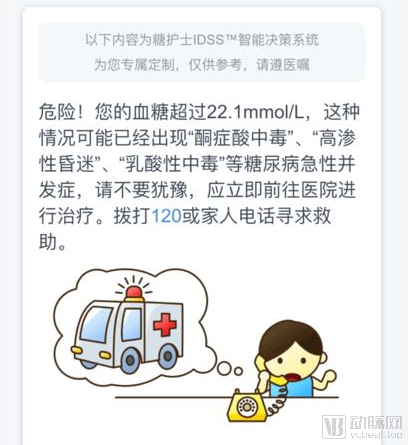
(Recommendations pushed by Dnurse’s intelligent decision support system)
In addition, intelligent decision-making systems should also incorporate features such as Q&A bots, interactive visual interfaces, and incentive design.
Q&A bots, interactive visual interfaces, and incentive design are all measures to enhance user adherence. If information push enables users to passively engage in self-management, then incentive design stimulates patients’ subjective initiative, encouraging them to take a proactive approach to management.
For example, digital diabetes management companies often incorporate features such as gamified levels and point-based rewards to enhance patients’ willingness to monitor blood glucose, record blood glucose values, and log data on diet and exercise. Livongo patients can earn points by recording their diet and step counts in the app, which can then be redeemed for gift cards. Mango Health patients accumulate points by taking medications on time, which can be exchanged for physical gifts. Patients using Dnurse (Tang Hushi) strengthen their awareness of the correlation between blood glucose monitoring results and the causes of blood glucose fluctuations through games like “Blood Glucose Guessing” and “Myth Challenges,” thereby improving self-monitoring consciousness and medication adherence.
In summary, a complete intelligent decision-making system should at least include these core functions:
1. Provide personalized management plans based on the patient's condition and health data, and periodically report monitoring data and trends to facilitate adjustments in daily behavior and management.
2. Provide rich content and humanized, life-oriented interactive methods to help users integrate behavioral therapy into their daily lives, rather than separating diabetes management from everyday living.
3. Patients can enter and view their health information and data anytime, anywhere. The system provides tools for self-assessment and goal setting, leveraging these goals to motivate patients to achieve effective self-management.
4. Synchronize patient information with family members or friends to facilitate their involvement in patient management when necessary;
5. Provide emergency response from the physician team to address sudden patient conditions.
Through the synergistic effects of these features, manual interventions in diabetes management are minimized as much as possible, thereby maximizing patient adherence to self-management and improving overall management outcomes.
By adopting intelligent decision-making, diabetes management companies can not only significantly reduce labor input during the diabetes management process but also achieve a win-win outcome for all stakeholders.
For patients,Self-management through intelligent decision support systems helps improve glycemic control. For example, an analysis by Dnurse of 2.68 million blood glucose records from 300,000 users revealed that patients who managed their condition using an intelligent decision support system achieved a glycemic control compliance rate of 59%.
For diabetes management companies,Implementing intelligent decision-making systems can reduce labor costs, improve user retention and engagement, and further facilitate platform commercialization. For example, Livongo combines intelligent decision-making with a team of human coaches to serve patients, making it possible for one coach to manage thousands of individuals. Livongo’s strong operational metrics have also gained recognition from employers, insurance companies, and the capital markets.
Furthermore, Dnurse has significantly increased the frequency of blood glucose monitoring and user retention rates through its intelligent decision-making system, earning market recognition. Meanwhile, its smart monitoring products, integrated with this intelligent decision-making system, have been exported to 15 countries across Asia, Africa, and Latin America, and the company has begun expanding into the European market.
For payers,Intelligent decision-support systems provide patients with comprehensive reminders, prompts, encouragement, and interactive engagement, thereby improving glycemic control, reducing the risk of complications, and consequently lowering insurance expenditures. In this regard, the United States has established a mature model, driven primarily by commercial insurance payments. In China, however, due to the low coverage rate of commercial insurance, the model wherein insurers leverage digital products for disease management to mitigate claim risks remains in an exploratory stage.
In summary, to enable patients with diabetes to adhere to self-management and maintain a lifestyle indistinguishable from that of the general population, the “3D” elements—Device, Data (generated by the device), and Decision (clinical decisions derived from the data)—are mutually intertwined and inseparable. Digital diabetes management should continuously optimize intelligent decision-making capabilities and human-computer interaction, thereby seamlessly integrating into patients’ daily lives, rather than expecting patients to deliberately alter their lifestyles to accommodate various management tools.