

Zhiyun Tech Files IPO Prospectus: Advancing Traditional Chinese Medicine through AI and Image Processing
From The Yellow Emperor's Inner Canon、"Compendium of Materia Medica""TCM Clinical Diagnosis and Treatment" to date, the changing timesDown, the medical discipline of Traditional Chinese Medicine continues to grow.
To date, Traditional Chinese Medicine (TCM) has developed a relatively complete system of epistemology and methodology for understanding the essential states of human health and disease. It enables a holistic assessment of the fundamental nature of health or illness, thereby facilitating regulation and treatment. This represents a gap in the research and understanding within preventive medicine and Western medicine.
Moreover, the unique advantages of Traditional Chinese Medicine (TCM) in the prevention and control of sub-health conditions and chronic diseases have been extensively validated by clinical practice. TCM has long guided health maintenance through its holistic perspective, syndrome differentiation and treatment, and the principle of preventing disease before it arises, thereby addressing the limitations of modern health management approaches. While Western medicine typically focuses on diagnosing established disease states, TCM’s approach of syndrome differentiation enables the description and assessment of dynamic changes in health status. Rather than being confined to evaluating risk factors for disease, TCM comprehensively measures an individual’s overall health status, aligning more closely with the true essence of health monitoring and management.
In recent years, digital technologies such as artificial intelligence, big data, cloud computing, and the Internet of Things have developed rapidly, penetrating various subfields of healthcare, including Traditional Chinese Medicine (TCM). These digital technologies provide a reliable technological drive for TCM. A growing number of TCM startups with unique characteristics are emerging.
Shanghai Zhiyun Medical Technology Co., Ltd. (hereinafter referred to as “Zhiyun Tech”), established in 2017, has developed an intelligent Traditional Chinese Medicine (TCM) health management platform by leveraging modern information technologies such as big data, the Internet of Things (IoT), cloud computing, and artificial intelligence (AI). By integrating intelligent hardware, the company transforms the traditional TCM diagnostic methods of “inspection, auscultation and olfaction, inquiry, and pulse-taking” into digital data. Furthermore, Zhiyun Tech employs AI algorithms to comprehensively analyze this data, simulating the TCM diagnostic and treatment reasoning process to propose targeted conditioning plans, thereby expanding TCM services in areas such as health management, chronic disease management, maternal healthcare, and pediatric care.
Why Does Traditional Chinese Medicine Need to Go Digital?
To promote the standardized provision of traditional Chinese medicine (TCM) health management services across various regions, the National Administration of Traditional Chinese Medicine issued the "Guidelines for TCM Health Management Services for the Elderly" in 2013. This document established standard specifications for the classification and identification of TCM constitutions, categorizing them into nine types: Balanced Constitution, Qi-Deficiency Constitution, Yang-Deficiency Constitution, Yin-Deficiency Constitution, Phlegm-Dampness Constitution, Damp-Heat Constitution, Blood-Stasis Constitution, Qi-Stagnation Constitution, and Special Diathesis Constitution.
In fact, Traditional Chinese Medicine (TCM) not only classifies populations for diagnostic purposes but also provides comprehensive regulatory solutions addressing mental and emotional states, daily routines, diet, meridians, herbal medicine, physical exercise, and music therapy. Therefore, based on a systematic organization and summary of the original TCM methodological framework, there is an urgent need to construct a quantitative health detection, assessment, and management system with distinct TCM characteristics, grounded in the TCM theory of health state cognition.
The “Opinions on Promoting the Development of ‘Internet Plus Medical Health’” issued by the State Council in 2018 also clarified the potential for digitalization of traditional Chinese medicine (TCM), explicitly supporting the application of intelligent auxiliary systems for TCM syndrome differentiation and treatment to enhance primary-level TCM diagnosis and treatment services. It called for launching mobile healthcare demonstrations based on artificial intelligence technologies and smart medical devices, enabling real-time personal health monitoring and assessment, disease early warning, chronic disease screening, and proactive intervention.
In 2020, traditional Chinese medicine (TCM) played a significant role during the sudden outbreak of the COVID-19 pandemic. Specifically, TCM was deeply involved in the treatment of patients with severe and critical COVID-19, slowing or preventing the progression from severe to critical conditions and facilitating the transition of critical cases to moderate ones, thereby increasing the cure rate and reducing the mortality rate.
AI + Big Data: Restoring Traditional Chinese Medicine Consultation
Since 2017, Zhiyun Technology has been deeply engaged in the field of Traditional Chinese Medicine (TCM) combined with artificial intelligence. Leveraging high-quality domestic resources from institutions such as Shanghai University of Traditional Chinese Medicine and Fudan University, the company focuses on the research and development of intelligent TCM health service products. To date, it has independently developed a range of products, including the TCM Intelligent Mirror, Zhiyun Health App, Zhiyun TCM App, and the TCM Health Management Platform.
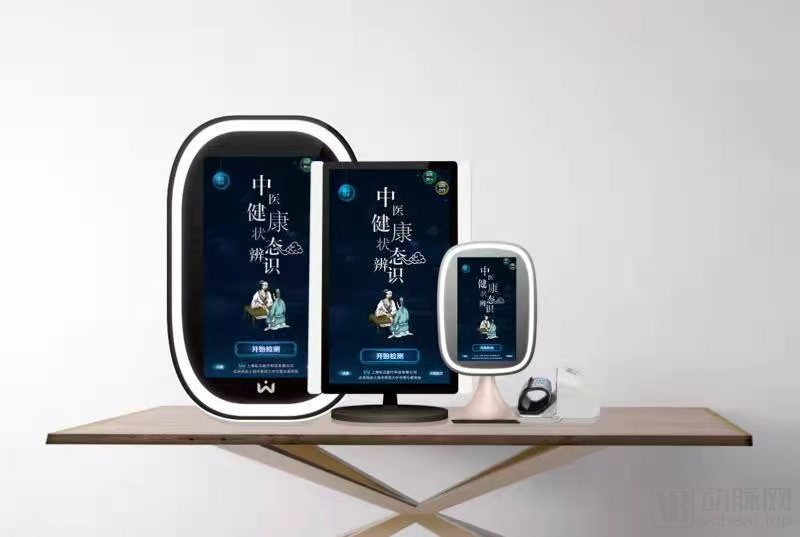
Through collaboration with Shanghai University of Traditional Chinese Medicine and leveraging a database model built on over 200,000 clinical records, the company’s team has developed a TCM Constitution Identification Algorithm. They also designed diagnostic questionnaires based on the Eight Principles and Constitution Differentiation theories, achieving an accuracy rate exceeding 80%. Thanks to continuous refinement by the algorithm team, the product can perform color correction for facial and tongue diagnosis under both natural and indoor lighting conditions, ensuring accurate acquisition of “inspection” data.
For intelligent "pulse diagnosis," the company's R&D team employs advanced multi-channel array flexible sensors as core components installed within a measurement wristband. Nearly one hundred sensing points are distributed across the three traditional Chinese medicine (TCM) pulse-taking positions: "Cun," "Guan," and "Chi." These sensors mimic the function of human cutaneous tactile nerve cells, directly converting pressure variations from radial artery pulsations into digital signals. Subsequently, AI algorithms analyze these signals to determine "pulse patterns," thereby deriving conclusions regarding the individual's TCM constitutional type and Zang-Fu organ syndrome differentiation.
Guided by Traditional Chinese Medicine (TCM) theory and integrated with a large-scale clinical database of the four TCM diagnostic methods, the TCM Smart Mirror utilizes cloud computing and artificial intelligence to automatically collect facial inspection, tongue inspection, and inquiry data. It can be used in conjunction with pulse diagnosis to monitor individual health status in real time via cloud computing and provide personalized wellness regimens.
In addition, the TCM Smart Mirror features functions such as health record management, TCM health consultation, remote diagnosis, and facial analysis via the “Magic Mirror.” Users can receive dietary recommendations tailored to their individual constitution without leaving home, enjoy therapeutic herbal teas during work hours, and consume health-promoting meals after work, ensuring a safe, effective, and convenient wellness experience.
Zhiyun Technology’s initial database contained 200,000 data entries, with a daily influx of 30,000–50,000 image feedback records. The database has now expanded to over 1.2 million entries. Under this feedback mechanism, Zhiyun Technology’s models are continuously upgraded as the database grows, thereby steadily enhancing product accuracy.
Over 20,000 Daily Active Users: The Application of Digital Traditional Chinese Medicine
Overall, Zhiyun Technology has leveraged modern information technologies such as big data, the Internet of Things (IoT), cloud computing, and artificial intelligence to create an intelligent Traditional Chinese Medicine (TCM) health management platform, thereby integrating the four key dimensions of TCM digitalization:
Auxiliary Consultation
Traditional Chinese medicine (TCM) emphasizes the accumulation of clinical experience, making its diagnostic process highly subjective and experience-dependent. Young TCM practitioners may be prone to misdiagnosis or missed diagnosis due to insufficient experience. Therefore, Zhiyun Technology enhances diagnostic accuracy through the intelligent automation of TCM equipment, while also ensuring the precision of treatment plans. This approach further addresses, at their source, critical challenges such as the scarcity of high-quality TCM resources, inconsistent practitioner competency levels, and high healthcare costs.
Data Analysis
To date, many Traditional Chinese Medicine (TCM) terms still adhere to Classical Chinese and literary language; however, statistical analysis of medical records requires the use of modern standardized terminology, posing significant challenges for data cleaning. By fully structuring and standardizing all TCM data collected, TCM health management platforms have substantially improved the efficiency of physicians’ data analysis. This not only makes the diagnostic process more efficient and precise but also significantly accelerates research progress in hospitals and universities.
Database
The informatization of traditional Chinese medicine (TCM) has progressed slowly, posing significant development challenges for primary healthcare institutions. Zhiyun Technology leverages its advanced modern information technology to integrate TCM theories with population health databases. In collaboration with Shanghai University of Traditional Chinese Medicine, the company has developed diagnostic questionnaires and various intervention protocols. This initiative provides primary healthcare institutions with a systematic approach to preventive treatment (“Zhi Wei Bing”), addressing the issue of uneven service quality at the grassroots level through data-driven solutions.
Broad Coverage
The Zhiyun Traditional Chinese Medicine (TCM) Health Management Platform has been deployed in health management organizations, elderly care real estate institutions, community health kiosks, and preventive treatment centers, facilitating the integration of smart TCM health service models into everyday life and further expanding the reach of smart TCM solutions. Currently, Zhiyun Technology serves more than 80 hospitals, pharmaceutical manufacturers and pharmacies, wellness centers, and elderly care institutions, covering a total of over 2,000 outlets. The TCM Smart Mirror has amassed more than 60,000 registered users, with daily active users exceeding 25,000.
Intelligent devices constitute a critical component in the digital transformation of Traditional Chinese Medicine (TCM). By leveraging digital technologies—spearheaded by big data, artificial intelligence, Internet Plus cloud services, and cloud computing—to empower every aspect of TCM practice, these devices significantly reduce the complexity of TCM diagnosis and treatment, thereby enhancing patient care.
If the digitalization of Traditional Chinese Medicine (TCM) requires the combined forces of policy, demand, market, and technology, then the role of policy is undoubtedly particularly significant, serving as a barometer for industry development. The "Opinions on Promoting the Inheritance, Innovation, and Development of Traditional Chinese Medicine," issued by the State Council in 2019, explicitly stated that “by 2022, full coverage of TCM medical institutions operated at the county level should be basically achieved; the ‘Internet + TCM Health Services’ initiative should be implemented; intelligent TCM-assisted diagnosis and treatment systems should be developed; and integrated online-offline services and telemedicine services should be promoted.” This clearly indicates that intelligent TCM service platforms and devices have become an inevitable trend, creating greater opportunities for Zhiyun Technology. Currently, the Zhiyun TCM Intelligent Mirror has been selected as an “appropriate device for preventive treatment of disease.”
“Like all new technologies, pitfalls always accompany hope.” We cannot help but question whether the mindset of Western scientific paradigms can successfully transform traditional Chinese medicine (TCM). In the process of digitalization, have the inherent characteristics of TCM, such as the blurred boundaries of its theoretical concepts, already changed? These concerns warrant our vigilance, yet skepticism also serves as a driving force for technological advancement. Reaching far and wide, the TCM Smart Mirror enables traditional medicine to discard the obsolete and embrace the new in this digital era.