

Pendulum Therapeutics Secures $54M Series C Funding to Advance Microbiome-Based Therapy for Type 2 Diabetes with 90-Day Money-Back Guarantee

Pendulum Therapeutics
Biotechnology R&D Developer
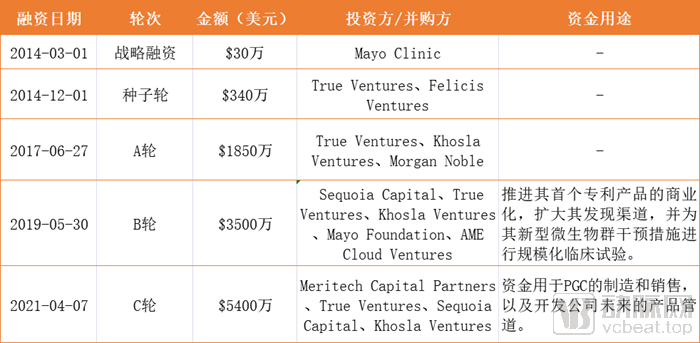
Recently, biotechnology company Pendulum Therapeutics announced the completion of a $54 million Series C financing round. The round was led by Meritech Capital, with participation from Sequoia Capital, True Ventures, and Khosla Ventures. To date, Pendulum’s total funding has reached $110 million.
Pendulum is a biotechnology company that develops medical-grade probiotics through microbiome research to help people regain their health. In 2019, Pendulum received the award from the California Life Sciences Association《2019 Pantheon DiNA Awards – Rising Star Award.
One year later, the world-renowned market data research platform CB Insights released its “Game Changing Startups 2020” report, with Pendulum again selected as one of the three companies featured in the microbial innovation track.
As an innovative leader in the microbiome field, what is Pendulum’s story? What probiotic products has it developed? Which strains are included in its products? What are the specific benefits of these products? Let’s take a closer look.

In 2013, Pendulum was founded in San Francisco. PendulumThe founders are, respectively,John Eid (CSO), Jim Bullard (CTO), and Colleen Cutcliffe (CEO).
The story of how these three individuals came together begins at Pacific Biosciences.

Image source: Pendulum Therapeutics official website
Prior to founding Pendulum, Colleen served as a Senior Biology Manager at Pacific Biosciences and as a Scientist at Elan Pharmaceuticals. She has over 15 years of team management experience in the pharmaceutical and biotechnology sectors.
Years of experience and insight gradually led Colleen to recognize the potential of DNA sequencing and the microbiome. She discovered that this potential could likely help her daughter, who suffers from severe type 2 diabetes. Motivated by this, Colleen dedicated herself to microbiome research.
At that time, Dr. Jim was serving as a Senior Staff Scientist at Pacific Biosciences. Dr. Jim graduated from the University of California, Berkeley, with a degree in Biostatistics. The three things he loved most in life were experimental design, programming languages, and walking his dog.
Dr. Jim said, “I am fortunate to work with brilliant minds on intriguing problems. Building products that benefit people is the most effective motivation for me.”
John also stated, “I love working at Pendulum Therapeutics... Being at the forefront of one of the most exciting fields is truly exhilarating!”
Prior to co-founding Pendulum, John served as Chief Scientist at Pacific Biosciences. He possesses extensive experience in foundational technology development, with expertise spanning advanced microscopy, single-molecule detection and analysis, automated data acquisition systems, biophysical system modeling, and genomic sequencing applications.
Shared biological backgrounds and a common passion for the microbiome led them down the same path.
Finally, they seized an opportunity.
By decoding and studying beneficial gut bacteria, they have identified a highly unique approach with the promise of addressing chronic diseases. The founders aim to tackle illnesses at their root cause and restore health to patients. To this end, they have established a discovery platform featuring high-resolution DNA sequencing and bioanalysis.
Reflecting on her entrepreneurial journey, Colleen stated, “Block out your inner fears, confront risks with honesty, and then venture forth with optimism and courage!” And thus, Pendulum was born.
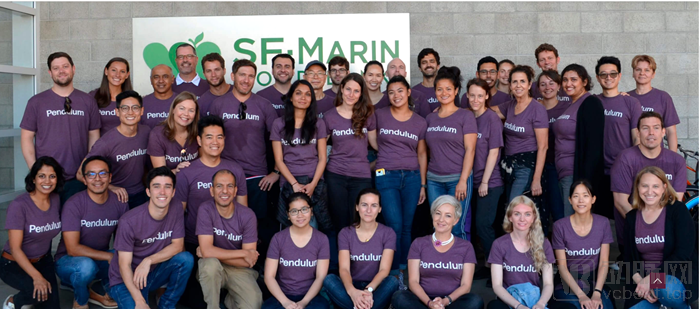
Image source: Pendulum Therapeutics official website
Gut microbiota is no stranger to us; it resides deep within the human intestinal tract and is closely linked to human health. Pendulum rebalances the human microbiome by isolating unique beneficial bacterial strains, with the aim of restoring and improving human health.
The gut microbiota is like a vast “tropical rainforest.” It is a living ecosystem, and every change within it either harms or benefits us.
Davida F. Kruger stated, “Pendulum is fundamentally transforming the dietary management of type 2 diabetes through microbiome science.” This is indeed the case. By leveraging microbiome research, Pendulum has developed a product called Pendulum Glucose Control (PGC), which is primarily targeted at patients with type 2 diabetes.
According to the latest news from the World Health Organization:Worldwide, over420 million people suffer from type 1 or type 2 diabetes.Approximately per year1.6 million people die from diabetes, with the majority of those affected living in low- and middle-income countries.
Type 2 diabetes is often associated with an imbalance in the gut microbiota. Patients with type 2 diabetes tend to lack certain microbial species compared to healthy individuals. These missing bacteria generally perform three key functions in the human body:Enhance intestinal mucosal function, promote the release of certain metabolic hormones and butyrate, and reduce intestinal inflammation.
These functions are critically important to human health. When the bacteria responsible for carrying out these activities are lost, individuals become susceptible to a variety of diseases, includingType 2 Diabetes. Studies have shown that,Managing diabetes generally requires a three-pronged approach: diet, exercise, and the microbiome.This also explains why diet and exercise often fail to adequately control blood glucose levels in daily life.
Currently, the gut microbiota andThe link with type 2 diabetes has been widely recognized by the American Diabetes Association, Mayo Clinic, and Johns Hopkins University. Pendulum has collaborated with leading researchers at Mayo Clinic to establish the first Mayo Registry for medical probiotics.

Image source: Pendulum Therapeutics official website
When we click intoOn the official website of Pendulum, you will see a “motto” of Pendulum—“Feed Your Microbiome, Unlock Your Metabolism.”This sentence isThe goal of Pendulum’s establishment, which has also been initially achieved.
In June 2020, Pendulum launched its first medical-grade probioticLive Bacteria——Pendulum Glucose Control(PGC)。PGC is currently the only medical probiotic in clinical practice that can reduce blood glucose peaks and A1C levels in patients with type 2 diabetes.
Dr. Damaris Vega, an endocrinologist, stated, “We found PGC to be safe and well-tolerated. It is an effective approach for helping patients with type 2 diabetes manage their condition.”
PGC is manufactured using non-GMO vegetable ingredients in an FDA-registered food facility in San Francisco and complies with Good Manufacturing Practice (GMP) standards. As part of a comprehensive diabetes management plan, PEG should be used under physician supervision.
In patients with type 2 diabetes, the lack of bacterial strains that assist in digesting dietary fiber and producing butyrate leads to an imbalance in insulin and glucose levels.
Pendulum’s patented formula contains five targeted probiotic strains and one prebiotic. These patented formulas can effectively replenish bacterial strains in the human body and restore the ecological balance of gut health.
The probiotic strains and prebiotics contained in PGC are: Akkermansia muciniphila WB-STR-0001 (abbreviated as AKK), Eubacterium hallii WB-STR-0008, Clostridium butyricum WB-STR-0006, Clostridium beijerinckii WB-STR-0005, Bifidobacterium infantis 100, and inulin.
Among them, Akkermansia muciniphila and Eubacterium hallii are two highly unique and novel bacterial strains,PGC is the first medical-grade probiotic to incorporate them into its formulation.
Akkermansia muciniphila
Akkermansia muciniphila naturally resides in the gastrointestinal tract, where it directly interacts with the intestinal lining to help maintain a healthy ecosystem of beneficial gut bacteria. Most patients with diabetes have low levels of Akkermansia muciniphilaThe level is lower than that in healthy individuals. This strainAkkermansia muciniphilaInitially by an Associate Professor of Medicine at Harvard Medical SchoolDiscovered by Dr. Lee Kaplan. Currently, regarding Akkermansia muciniphilaresearch has exceeded800 items.
and *Eubacterium hallii*
*Eubacterium hallii* can utilize glucose to produce butyrate, playing a crucial role in maintaining gut metabolic balance. *Eubacterium hallii* is abundant in healthy individuals, whereas its levels are reduced or entirely absent in patients with diabetes.
Clostridium butyricum and Clostridium beijerinckii
*Clostridium butyricum* and *Clostridium beijerinckii* are two bacterial strains naturally present in the human gut microbiota, both capable of producing high levels of butyrate. Butyrate is essential for maintaining glucose homeostasis.
*Clostridium butyricum* and *Bifidobacterium infantis*
Clostridium butyricum and Bifidobacterium infantis help maintain a healthy digestive tract and alleviate irritable bowel syndrome (IBS) symptoms, including reduced abdominal pain, gas, and bloating.
Inulin
Inulin isThe Sole Prebiotic Ingredient in PGC. Inulin is a soluble fiber derived from chicory root. Inulin is classified as a prebiotic because it reaches the lower intestine and stimulates the growth of beneficial bacteria, including the bacterial strains found in PGC. Inulin supplementation helps lower fasting blood glucose, reduce fasting insulin levels, and increase “good” cholesterol in patients with type 2 diabetes.
Overall,PGC provides targeted beneficial bacterial strains for the gut microbiota of patients with type 2 diabetes, increasing butyrate production and regulating mucosal function, thereby fundamentally improving type 2 diabetes.
In a randomized, double-blind, placebo-controlled study.Compared with placebo,After 12 weeks of PGC administration in patients with type 2 diabetes, A1C decreased by 0.6%, and the blood glucose peak (AUC) decreased by 32.5%.

Image source: Pendulum Therapeutics official website
In addition, Pendulum alsoYesA glycemic control survey was conducted on 38 patients with type 2 diabetes over a period of three months or longer. The survey results showed:86% of patients experienced a reduction in A1C, 79% showed decreased blood glucose levels, and 86% demonstrated improved gut health.
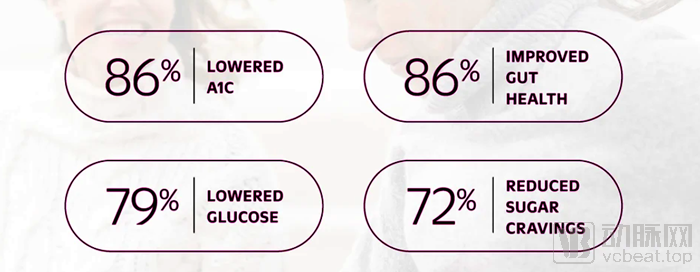
Image source: Pendulum Therapeutics official website
In addition, Pendulum has made a commitment to consumers:If the patient usesAfter 90 days post-PGC, there was no improvement in the patient's condition.Pendulumwill purchase gold100% refund to consumers.
WithFollowing the market launch of PGC, Pendulum Therapeutics initiated research into glucose monitors to better monitor patient conditions and facilitate the collection of clinical trial data.
In March 2021, Pendulum in JMIR Formative Researchpublished a new study on—Continuous Glucose Monitors (CGMs). Pendulum statedCGM can modernize clinical trials through remote data collection.
Pendulumscientists have usedA proof-of-concept trial was conducted using continuous glucose monitoring (CGM). Researchers collected real-world blood glucose data from individuals who had received either a placebo or PGC. In this six-week, double-blind, placebo-controlled, 2×2 crossover study, scientists also used a custom smartphone application to record dietary intake, physical activity, and alcohol consumption.
These data, when combined with continuous glucose monitoring (CGM) data, create a visual dietary log synchronized with concurrent blood glucose levels. One advantage of this model is that no clinical visits are required for any of the procedures. CGM devices take measurements every 15 minutes, capturing a wealth of information, including unexpected results.
On one occasion, an abnormal spike in blood glucose was observed in a subject during overnight fasting. It is important to note that such a finding would be impossible to detect clinically through routine fingerstick blood glucose monitoring. With evidence of this nocturnal surge, the researchers proceeded to interview the subject, inquiring about factors such as whether dinner had been consumed later than usual the previous evening or whether alcohol had been consumed, among other things.
By understanding these conditions, subjects may be asked to repeat the test on the following day if necessary. Researchers use this approach to reduce data variability and thereby estimate the effects of the product or placebo more accurately.AtPendulumin the trial,An average of 3,000 data points were collected from three sensors over a period of 40 days.
Overall, CGM devices are well tolerated by patients. CGM can be used in conjunction with other sensors to provide complementary data without increasing the patient burden. It also enables high-quality measurement of relevant endpoints and allows for precise monitoring of subject adherence at a lower clinical cost.
However, Pendulumalso stated,The potential of CGM has not been fully tapped, and they will continue their research.