

Medino Micro-Tech: Combating Stroke and Building 'China's Medtronic'
Stroke is characterized by high mortality and high disability rates. Timely treatment of stroke patients to save lives and reduce the incidence of disability holds significant social importance.
Clinical experts stated, “Stroke is an acute cerebrovascular disease characterized by brain tissue injury resulting from sudden rupture of cerebral blood vessels or obstruction of blood flow to the brain. Common manifestations include cerebral aneurysm, intracerebral hemorrhage, stroke, cerebral embolism, and cerebral infarction.”
According to the latest released "Report on Cardiovascular Health and Diseases in China 2019," there are approximately 13 million stroke patients in China, and stroke is the leading cause of death. According to the "2019 Health Statistical Yearbook," the number of discharges for cerebrovascular diseases in public hospitals was 5.67 million in 2018, including over 720,000 cases of intracranial hemorrhage, 3.73 million cases of cerebral infarction, and 87,000 cases of cerebral artery occlusion and stenosis.
Currently, treatment modalities for stroke include craniotomy, pharmacological therapy, and interventional therapy. Among these, interventional therapy is increasingly widely adopted due to its minimally invasive nature, high safety profile, and favorable prognosis. However, approximately 93% of the market share in China’s neurointerventional device sector is currently held by foreign brands such as Medtronic and Johnson & Johnson.
In response to this predicament, Miele Medical was established in 2017, dedicated to the research, development, and manufacturing of neurointerventional devices. The company aims to break the monopoly held by foreign brands through technological innovation, thereby benefiting more domestic patients with cerebrovascular diseases.
Wang Disi, founder of Shenzhen Miele Medical Technology Co., Ltd., stated, “Craniotomy for stroke treatment may lead to sequelae such as hemiplegia, dysarthria, and aphasia. In contrast, the interventional devices developed by Miele Medical are designed for minimally invasive interventional therapy, requiring only a small incision in the femoral artery of the patient’s thigh. This approach eliminates the need for craniotomy and reduces surgical time from the original 8–10 hours to just one hour, thereby not only minimizing physical trauma for patients but also providing greater convenience for physicians.”
As is well known, Medtronic is a global leader in medical technology and a benchmark enterprise within the industry. Throughout the entrepreneurial journey, Wang Disi has consistently taken Medtronic as his benchmark for progress. Guided by the conviction to provide customers with high-end, precise, and reliable interventional medical devices, he is committed to breaking foreign monopolies in the interventional field and establishing China’s own “Medtronic.”
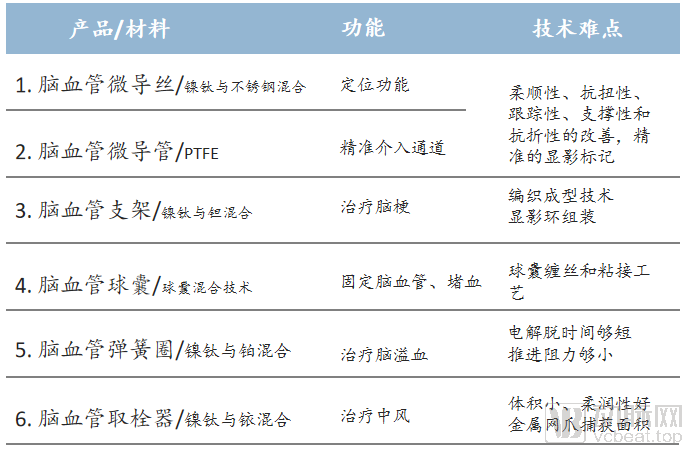
Currently, Miele Medical has laid out a product portfolio including micro-guidewires, microcatheters, coils, balloon catheters, cerebrovascular stents, and thrombectomy devices. Among these, the micro-guidewires and microcatheters have already obtained registration certificates; other product lines are currently in the R&D phase with smooth progress, and it is expected that 2-3 products will obtain certification within 2021.
Miele Medical’s micro-guidewire product line features four major specifications: 0.008 inches, 0.01 inches, 0.014 inches, and 0.018 inches. Wang Disi explained, “Cerebral vessels have numerous branches of varying diameters. In some patients, lesions are located at the distal ends of these branch vessels, where conventional guidewires often fail to meet clinical needs due to limitations in diameter and pushability. In contrast, Miele Medical’s 0.008-inch micro-guidewire can directly reach the M3 and M4 segments of the middle cerebral artery, offering significant advantages and filling a domestic gap in China.”
The microcatheter products developed by Miele Medical will also fill a domestic gap. Data shows that its microcatheters are available in three major sizes: 0.017 inches, 0.021 inches, and 0.027 inches. Among them, the reinforced microcatheter can reach the M3 and M4 segments of the brain directly, helping physicians treat more patients with cerebrovascular diseases more conveniently.
Balloon catheters are used to occlude blood vessels during cerebral hemorrhage surgery and belong to the category of compliant balloon catheters. With the widespread adoption of neurointerventional procedures, the application of balloon catheters is expected to increase significantly. Shenzhen Miele Medical Technology Co., Ltd.’s independently developed balloon catheters are poised to gain a competitive edge in the market through their high quality and reasonable pricing. Currently, no occlusion systems are commercially available in the domestic market, and Miele’s compliant balloon catheter will fill this gap in China.
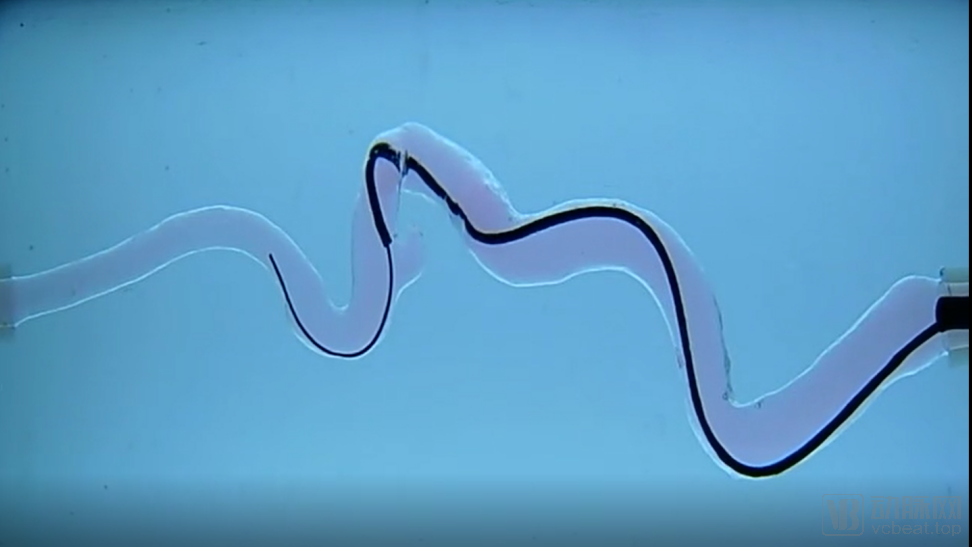
(Balloon catheter, image provided by the company)
The electrolytic detachment coils independently developed by Miele Medical are electrolytic detachment coils. Compared with mechanical detachment coils, which require more than 20 seconds to detach, electrolytic detachment coils can be detached in just 1 second and have low push resistance. Therefore, electrolytic detachment coils have significant advantages in the treatment of cerebral hemorrhage.
Wang Dishi told VCBeat, “Currently, domestic cerebral vascular stent products can generally only access the pericerebral vessels, not the intracranial arteries. Due to their tortuous course, intracranial arteries require cerebral vascular stents with ultra-high conformability. Based on this, Miele Medical has developed a conformable cerebral vascular stent that can be directly used for lesions in the intracranial arteries, filling a gap in the Chinese market.”
As for the thrombectomy device developed by Miele Medical, it also features distinct characteristics: its multi-layered thrombectomy approach provides physicians with three retrieval opportunities, ensuring smooth and thorough clot removal.
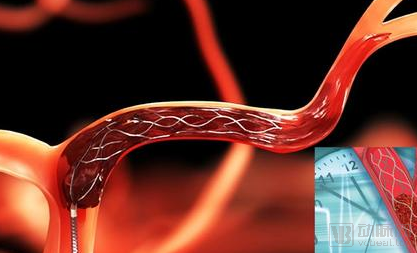
(Thrombectomy device, image provided by the company)
In addition, Miele Medical has also laid out innovative products such as intermediate catheters and flow-diverting stents. Wang Disi stated, “Miele Medical’s product portfolio can meet the needs of minimally invasive interventional treatment for the vast majority of neurological diseases. Furthermore, our products not only match foreign competitors in quality but also offer a significant price advantage.”
According to reports, Miele Medical initiated its European CE certification and FDA certification processes in 2021, marking the start of its global expansion and proactive participation in international competition. What gives Miele Medical the confidence to compete head-on with multinational giants such as Medtronic and Johnson & Johnson?
Wang Disi told VCBeat, “Our confidence stems from our technological advantages, financial strength, and the benefits of domestic production.”
From a technical perspective, founder Wang Disi and the core U.S. R&D team have previously worked at industry giants such as Boston Scientific, Johnson & Johnson, Terumo, and Medtronic. They possess over a decade of experience in the research, development, design, and manufacturing of neuro-interventional products, with in-depth knowledge of the performance, advantages, and limitations of various products.
In addition, Miele Medical has established strategic collaborations with several renowned hospitals, including The Seventh Affiliated Hospital of Sun Yat-sen University, Beijing Tiantan Hospital, Beijing Sanbo Brain Hospital, Shanghai Huashan Hospital, and Guangdong 999 Brain Hospital. Leveraging the expertise of these prestigious institutions and clinical specialists, alongside Miele Medical’s innovative R&D capabilities, the company continuously optimizes and iterates its technologies to ultimately develop products that meet clinical needs.
In terms of funding, Miele Medical has attracted significant attention from investment institutions since its inception. It has successively secured investments from Zhiweiying Investment, Chuanlong Investment, Shenzhen High-Tech Investment Group, Shanghai Chuangrui, and China Merchants Qihang, among others. The company has maintained a smooth financing rhythm, raising funds annually, which aligns with its growth pace and development plans.
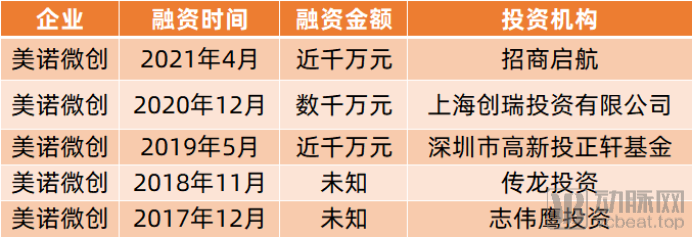
Wang Disi stated, “Each round of financing has been executed in accordance with the company’s development plan, and capital support has significantly accelerated our growth. Currently, Shenzhen Miele Medical Technology Co., Ltd. is launching a new round of financing, and we welcome like-minded partners to join us.”
In China’s neurointerventional market, the government supports the replacement of imported products with high-end domestically produced medical devices. Given the substantial potential for import substitution in this sector, Chinese neurointerventional companies have significant growth opportunities. The state has continuously intensified its efforts in product approval, innovation promotion, and procurement of domestic products, thereby driving the rapid development of the neurointerventional industry. Meanwhile, the vigorous establishment of stroke centers nationwide has contributed to a sustained increase in the number of neurointerventional physicians in China. In terms of products, the quality of domestically produced neurointerventional devices is gradually becoming comparable to that of imported counterparts, while offering lower prices.
Leveraging the aforementioned advantages, Shenzhen Miele Medical Technology Co., Ltd. is highly confident in facing market competition.
Wang Disi stated, “Currently, Miele Medical is expanding its sales and marketing team in preparation for the large-scale commercial launch of its products. Previously, Shanghai Chuangrui invested in Miele Medical in 2020. Leveraging its extensive resource and sales channels, Shanghai Chuangrui will support Miele Medical’s sales and promotional efforts in the future. We believe that the combination of ‘investors + innovative enterprises’ will rapidly generate a ‘1+1>2’ synergistic effect.”
Wang Dishi concluded, “Miele Medical will dedicate itself to the field of stroke, continuously advancing R&D of novel interventional technologies and products for the treatment of ischemic stroke and cerebral hemorrhage, venturing into cerebrovascular intervention, and striving to become the ‘Medtronic of China.’”