

Yibai Tech Empowers 650 Enterprises with End-to-End Digital Marketing Transformation Solutions Amid Industry-Wide Shift

Beijing Medical Technology
Provider of Digital Transformation Services for the Pharmaceutical Industry
The COVID-19 outbreak in 2020 further highlighted the advantages of digital marketing in the pharmaceutical industry. As an internet company specializing in the digital transformation of pharmaceutical marketing, Beijing Medical Technology has shone brightly in the past two years. Since the onset of the pandemic, it has maintained a growth rate of acquiring one new client per day. From January to March, over 100 enterprises launched exclusive platforms on its system, more than 200 case collection campaigns were conducted, and the total number of live stream views exceeded ten million.
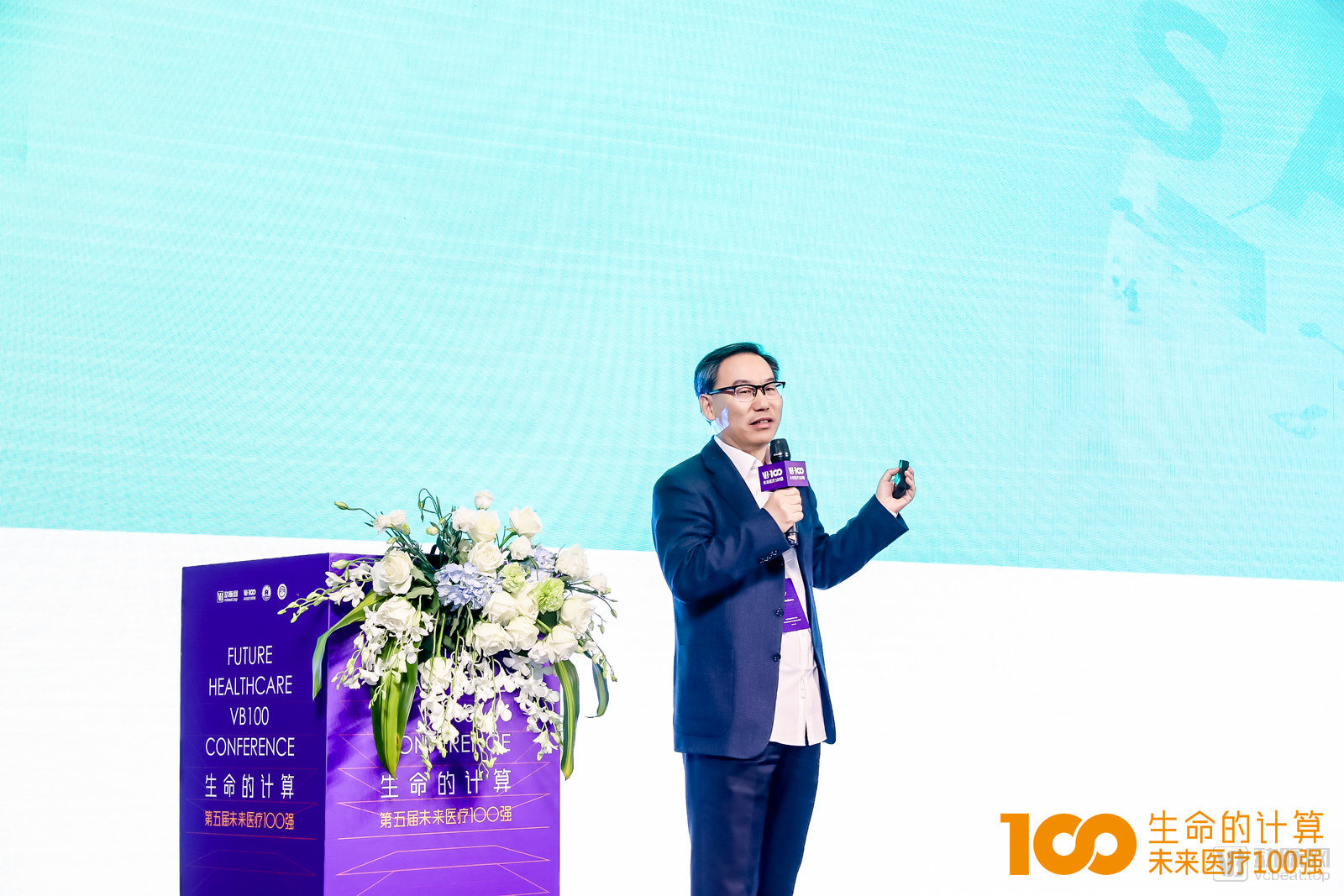
On April 17, at the Pharmaceutical Company Digital Marketing Sub-forum of the Future Healthcare Top 100 Conference,Gao Jianfei, Founder and CEO of Beijing Medical Technologywith"Digital Transformation of Pharmaceutical Marketing in the Post-Pandemic Era"as the title, and shared their insights. VCBeat has compiled their brilliant viewpoints.
IDC predicts that in 2020, Chinese enterprises entered the implementation phase of digital transformation, and by 2027, 75% of enterprises will have completed their digital transformation. On March 31, the National Development and Reform Commission announced that 60 central state-owned enterprises had established digital industry companies to implement the special action plan for the digital transformation of state-owned enterprises. Gao Jianfei stated:“The wave of digital transformation has arrived; over the next decade, we will all be positioned at the convergence of two major trends: life & health and the digital economy.”
The COVID-19 pandemic in 2020 served as an external catalyst for the development of digital marketing in the pharmaceutical industry. The pandemic led to the complete suspension of offline medical conferences and halted all in-person hospital visits by pharmaceutical sales representatives, prompting pharmaceutical companies to shift their marketing efforts entirely online. Beijing Medical Technology’s one-stop, full-scenario solution based on a SaaS cloud platform helped numerous enterprises navigate their marketing challenges.
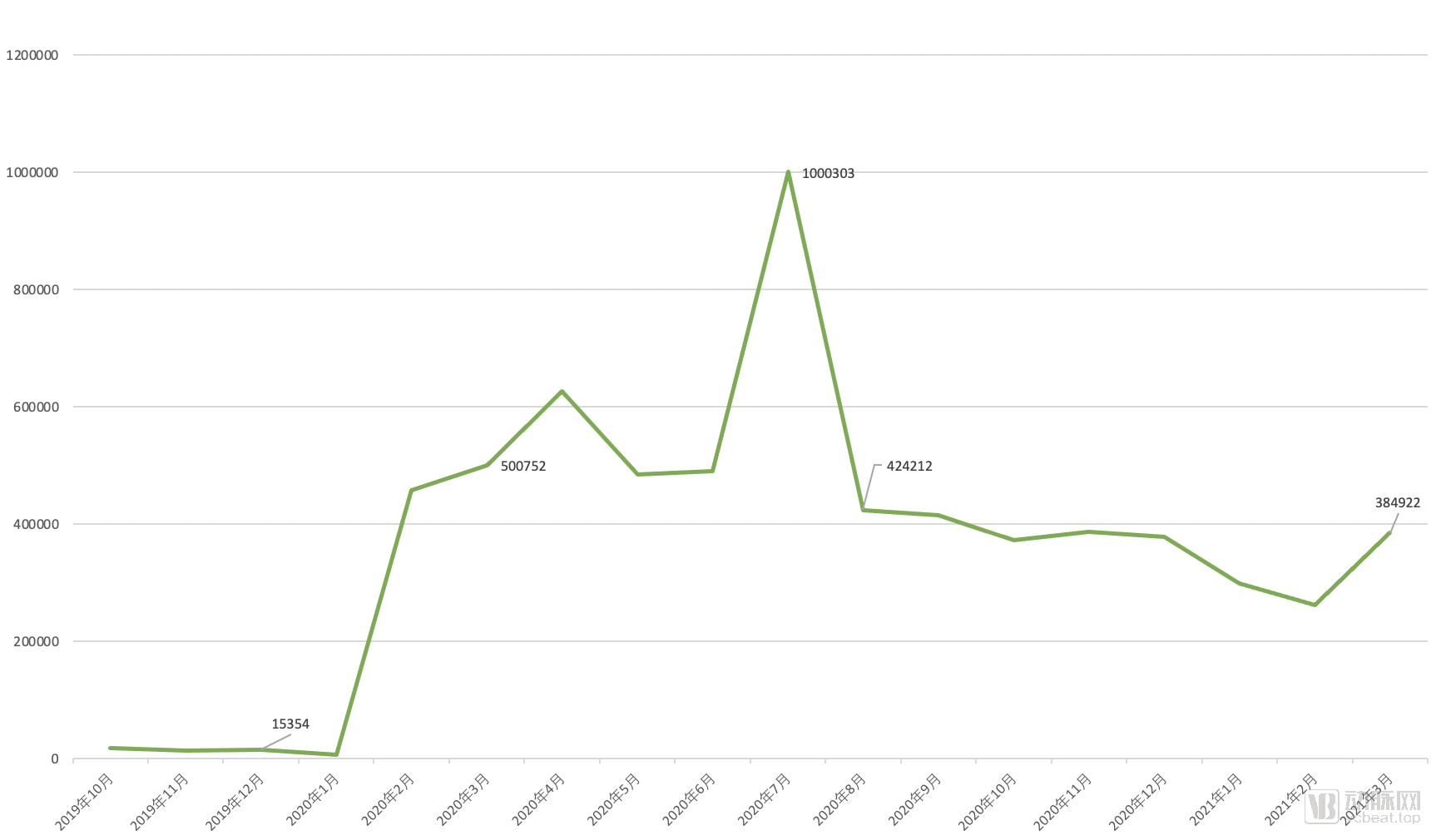
Comparison of Pharmaceutical Companies’ Usage Data on the Yibai SaaS Cloud Platform Before and After the Pandemic
Prior to the pandemic, the usage of Beijing Medical Technology’s SaaS cloud platform grew steadily. Following the outbreak, platform usage surged, peaking in July 2020. Notably, unlike online education platforms that experienced a sharp decline post-pandemic, Beijing Medical Technology’s platform has maintained a consistently high and stable level of usage.“We are highly confident that, in the near future, digital marketing in the pharmaceutical industry will become an irreversible trend.”
“It is widely believed within the industry that the pandemic has accelerated the digital marketing transformation of the pharmaceutical sector. In reality, the pandemic was merely an external factor; the internal drivers encompass three aspects;”Healthcare system reforms, the intrinsic digital marketing needs of pharmaceutical companies, and the increasing immersion of patients and physicians in digital platforms, the combined drive of internal and external factors has fueled the boom in the digital marketing transformation of the pharmaceutical industry.”
Among these factors, policy is the core driver influencing the development of the digital pharmaceutical marketing industry. “While other industries need only focus on the ‘invisible hand’ of the market, the pharmaceutical industry must pay close attention to the ‘visible hand’ of policy,” emphasized Gao Jianfei.Pharmaceutical enterprises must correctly interpret policies.“For example, after the restrictions on online sales of prescription drugs were lifted, there was a steady stream of positive sentiment within the industry; however, in reality, this policy is bearish for the sector in the short term and only bullish in the long run.”
Meanwhile, amid the hype, the industry’s existing challenges cannot be overlooked. In March 2021, the Yibai Digital Marketing Research Institute, in collaboration with VCBeat, jointly released a report on digital marketing by pharmaceutical companies in the oncology sector. The report compared the digital marketing investments of domestic oncology pharmaceutical companies with those of pharmaceutical enterprises in Asia and globally.It has been observed that a significant number of pharmaceutical companies in Asia and globally have allocated over 50% of their budgets to digital marketing, whereas nearly 90% of domestic oncology pharmaceutical companies in China allocate less than 30% to digital marketing.This undoubtedly indicates that China’s pharmaceutical digital marketing industry has significant room for growth, but it still has a long way to go before reaching a market explosion.
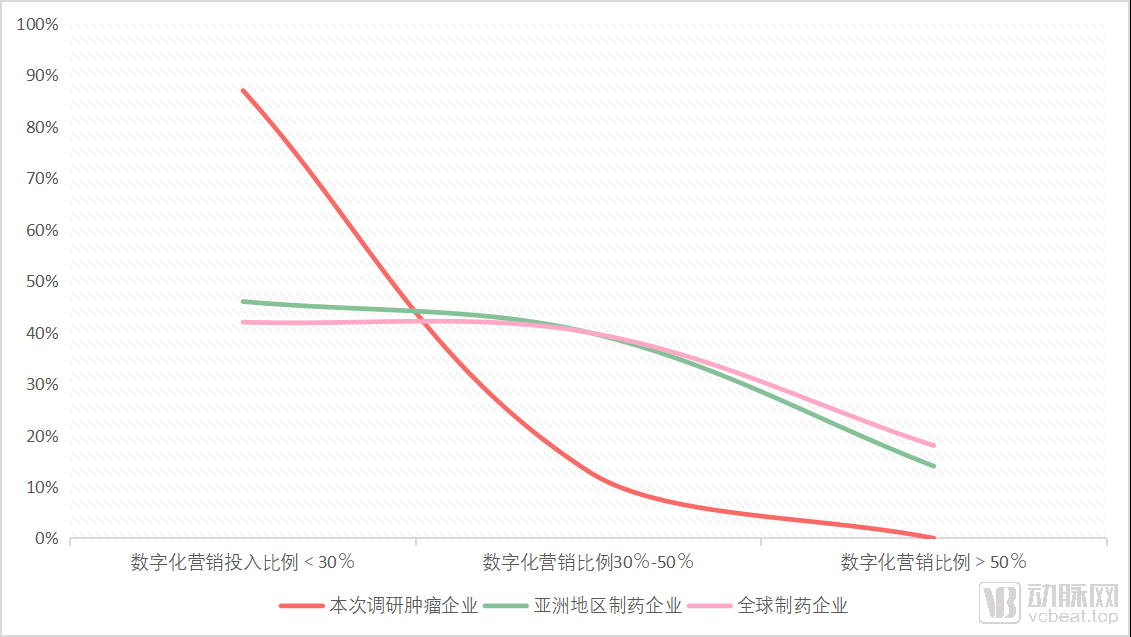
Comparison of Digital Investment Proportions Among Domestic, Asian, and Global Oncology Pharmaceutical Companies
Gao Jianfei has been deeply engaged in the marketing industry for over two decades, witnessing the evolution of marketing theories from the 4Ps (Product, Price, Place, Promotion) to the 4Cs (Consumer, Cost, Convenience, Communication), then to digital marketing (Internet, mobile PCs, smartphones, new media), and further to the digital transformation of marketing (online users, online business operations, online employees, and online management).
Digital marketing has brought about significant transformation to the entire industry. Under the traditional 4P and 4C marketing frameworks, there was little interaction between enterprises and customers, making it difficult to obtain customer feedback or accurately evaluate marketing effectiveness. The rise of digital marketing, driven by internet technologies, has enabled pharmaceutical companies to engage with customers, thereby achieving superior marketing outcomes.
However, Gao Jianfei pointed out that pharmaceutical companies are currently trapped in a digital marketing misconception. While they continuously employ various digital marketing tools and reach customers through diverse third-party platforms, they have yet to establish a closed-loop digital marketing system. “We believe that,”In 2021, the industry entered an era of digital transformation in marketing. Pharmaceutical companies have built exclusive digital platforms to achieve online presence for users, business operations, employees, and management. By accumulating users, content, and behavioral data on these platforms, pharmaceutical companies can gain real-time insights into customer needs, promptly adjust marketing strategies, and achieve low-cost, high-efficiency marketing objectives.”
“The 4Ps, 4Cs, and digital marketing tools address productivity issues, belonging to the realm of consumption. WhereasDigital transformation in marketing is an investment: the greater the investment, the more accumulated content and users, and the larger the future returns.“Gao Jianfei believes.
In other words,The digital marketing transformation in the pharmaceutical industry is not merely about adopting digital marketing tools; at its core, it entails a fundamental shift in corporate business and operational models., enabling traditional pharmaceutical manufacturers to take flight on the wings of the internet, transform into internet companies, and subsequently evolve into big data companies in the future. With the introduction of AI, they will further transition into intelligent big data companies. “These are the three stages of digital transformation for traditional pharmaceutical enterprises in the future. We can boldly envision,”All Enterprises Will Be Intelligent Big Data Companies in the Next 10 Years, this is the blueprint for Digital China 2030.”
China's pharmaceutical industry stands at a crossroads of a new development cycle, with digital marketing having become a critical strategy for pharmaceutical companies. However, in the current domestic market, while numerous enterprises offer digital tools and third-party platforms, very few are capable of providing comprehensive solutions for the digital transformation of pharmaceutical marketing.
Since its establishment in 2016, Beijing Medical Technology has been dedicated to providing comprehensive solutions for the digital transformation of pharmaceutical marketing, built upon a SaaS cloud platform.Comprehensive One-Stop Solution for All Scenarios, to help pharmaceutical companies comprehensively structure their marketing digital transformation and achieve precision marketing.
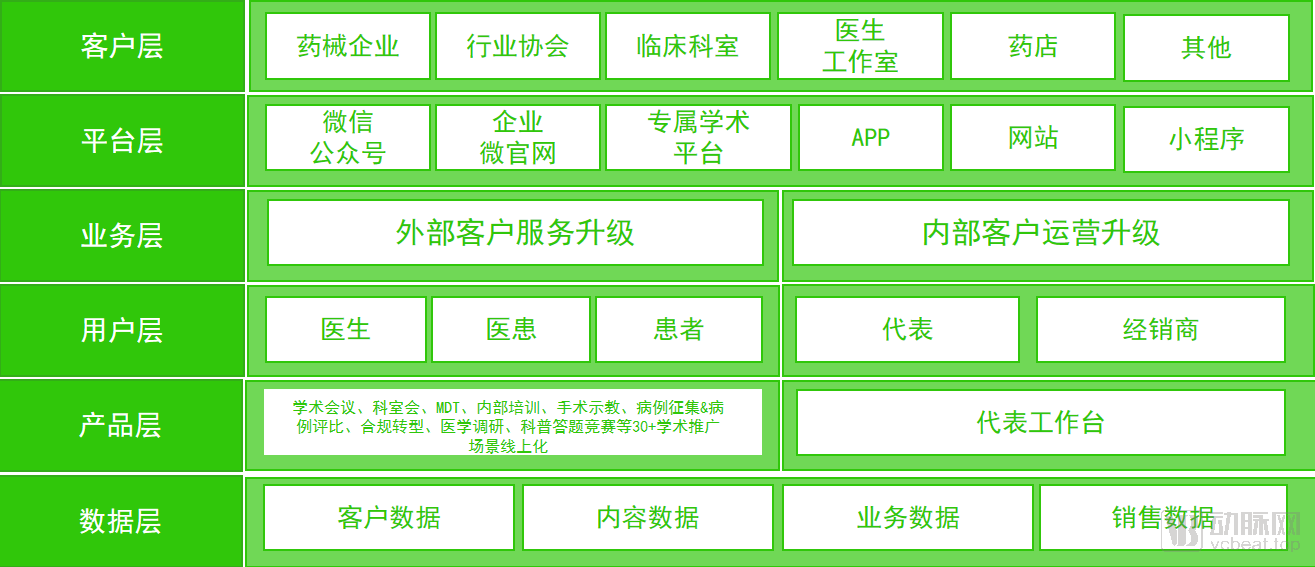
Beijing Medical Technology: All-Scenario, One-Stop Comprehensive Solution
At the product level,Beijing Medical Technology has launched a suite of online digital promotion products, including academic conferences, departmental meetings, multidisciplinary team (MDT) consultations, internal training sessions, and live surgical broadcasts. Additionally, to address pharmaceutical companies’ internal CRM management needs, it has introduced the Pharmaceutical Representative Workbench, empowering representatives to leverage digital channels for customer acquisition and marketing, thereby enhancing the efficiency of client visits. Gao Jianfei stated, “For 80% of offline academic marketing scenarios in pharmaceutical companies, Beijing Medical Technology has launched corresponding online solutions.But I don't think we are disrupting the traditional pharmaceutical marketing industry,The future of pharmaceutical marketing will undoubtedly involve a combination of online and offline strategies.”
Gao Jianfei revealed that Beijing Medical Technology is developing underlying middle-platform video technologies, with its product scheduled for launch in May. “Current conferencing software is primarily designed for internal communication, and there is a lack of solutions tailored to large-scale academic conferences on the market. The scenarios involved in academic conferences are highly complex, encompassing roles such as moderators, speakers, and attendees, creating an urgent need for more suitable conferencing software to meet the demands of large-scale academic events.”
At the platform level,Beijing Medical Technology offers clients a multi-platform suite—including WeChat Official Account management, corporate micro-websites, dedicated academic platforms, apps, websites, and mini-programs—to comprehensively meet their needs.
At the customer level,Beijing Medical Technology’s clientele extends beyond pharmaceutical companies to include medical device manufacturers, industry associations, clinical departments, and physician studios. “As the diversity of our client base grows, so do their needs and expectations, presenting greater challenges for Beijing Medical Technology. This requires us to respond swiftly to client demands and continuously optimize and refine our solutions.”
Gao Jianfei emphasized that the positioning of Beijing Medical Technology is“A technology-driven company focused on the life and health industry, providing services to the industry and enterprises”. Regarding the understanding of SaaS, Gao Jianfei stated, “SaaS is not merely a new software technology featuring unified cloud deployment, multi-tenancy, configurability, and data isolation; it is even moreIt is a brand-new business model that enables the software industry to upgrade from a "bear breaking corn stalks" model to a "snowballing" model.”
Beijing Medical Technology has successfully validated the feasibility of the “snowball” SaaS business model.Currently, the company serves over 650 pharmaceutical enterprise clients, with 88% of them being long-term partners who have collaborated for many years. Meanwhile, Beijing Medical Technology has maintained a fivefold growth in revenue for three consecutive years, reaching RMB 300 million in 2020, and achieving nearly a 400-fold increase in performance over four years.
Notably, since its inception, Beijing Medical Technology has consistently adopted a model of remote business development, remote contracting, and remote delivery, enabling it to remotely assist enterprises in establishing exclusive digital platforms within two hours and thereby accumulating substantial brand influence. Consequently, since the onset of the pandemic, the company has maintained a pace of acquiring one new client per day, with its rapid response and strong execution driving accelerated corporate growth.