

Zhejiang University Children's Hospital Achieves Over 90% Accuracy in AI-Based Pediatric Asthma Diagnosis, Published in Annals of Translational Medicine
Asthma is a common chronic respiratory disease and the second leading cause of death and disability worldwide, after cancer.
According to incomplete statistics, there were over 30 million asthma patients in China in 2019, including more than 6 million children and adolescents. In other words, at least one in every 46 Chinese people suffers from asthma of varying severity, and one in every 64 children is afflicted by asthma.
Despite ongoing advances in medical research, the incidence of childhood asthma in China is rising rapidly due to various influencing factors such as air quality and weather conditions, while disease control rates remain suboptimal. A primary reason for the latter is that primary care pediatricians often fail to differentiate asthma from common childhood respiratory infections, frequently misdiagnosing it as bronchitis, pneumonia, or other similar conditions.
Behind the poor control rates lie significant waste of medical resources, misuse of antibiotics, and excessive use of corticosteroids. Meanwhile, as chronic airway inflammatory lesions progressively worsen, this disease leads to reduced exercise capacity in children—a key contributing factor to the development of chronic airway diseases in adulthood, such as chronic obstructive pulmonary disease (COPD).
Since the problem lies at the primary care level, can we improve the detection rate of childhood asthma by strengthening primary care? Artificial intelligence may be one of the solutions.
Recently, the Children's Hospital of Zhejiang University School of Medicine conducted in-depth research to address this issue, aiming to resolve challenges encountered in the clinical practice of pediatric respiratory diseases. The findings were published in the prestigious international journal *Annals of Translational Medicine*.
Annals of Translational Medicine focuses on specific areas including multimodal therapy, epidemiology, biomarkers, imaging, biology, pathology, and technological advancements in the field of medicine. The research paper titled “The role of artificial intelligence in identifying asthma in pediatric inpatient setting,” which was recently indexed, primarily explores the effectiveness of using artificial intelligence algorithms for clinical auxiliary diagnosis of asthma in children.
This study aims to develop a highly efficient artificial intelligence model capable of identifying asthma cases by learning from historical asthma medical records in the respiratory department of a tertiary-level Grade A specialized children's hospital.
This study was a retrospective analysis in which researchers collected a total of 5,884 de-identified electronic medical records from patients under 14 years of age and divided them into two groups: DataSet-1 and DataSet-2.
DataSet-1 comprised 3,761 respiratory cases (including 1,624 asthma-positive and 2,137 asthma-negative cases), while DataSet-2 included 2,123 general internal medicine cases (with 337 asthma-positive and 1,786 asthma-negative cases). Following stratification, researchers applied a pre-built AI model to evaluate each dataset independently. This model was jointly developed by the Children’s Hospital, Zhejiang University School of Medicine, and Deepwise, a medical artificial intelligence company.
The results showed that the diagnostic accuracies of the two groups were 84.7% and 96.7%, respectively, with area under the curve (AUC) values of 0.909 and 0.981, indicating that the model can rapidly and accurately identify asthma patients in both pediatric respiratory medicine and general internal medicine departments.
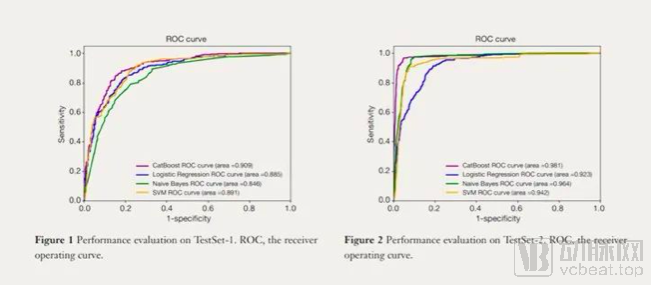
Model ROC Curve Plot
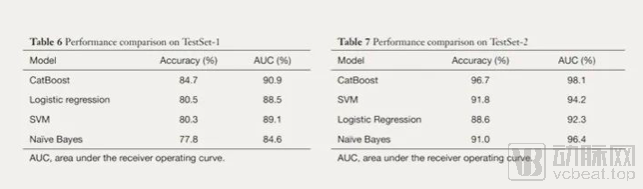
Model Performance Description
Further extending this, if we can deploy the experimental model in primary healthcare institutions, it may assist primary care pediatricians in identifying and diagnosing asthma cases, thereby preventing missed diagnoses and misdiagnoses. This holds significant clinical value and practical significance for improving asthma control among children in China.
In addition to the aforementioned studies, another research outcome on AI-assisted diagnosis of pediatric respiratory diseases, titled “Identification of pediatric respiratory diseases using a fine-grained diagnosis system,” developed through a collaboration between the Children’s Hospital of Zhejiang University School of Medicine and Deepwise AI, has been accepted by the internationally renowned and authoritative journal Journal of Biomedical Informatics (Impact Factor: 3.526). This study explores assisted diagnosis relying solely on medical records, achieving rapid diagnosis of asthma, bronchitis, pneumonia, and upper respiratory tract infections through structured processing and semantic analysis of electronic health records. These findings facilitate the rapid adoption of artificial intelligence technologies in primary care hospitals.
For the Children’s Hospital of Zhejiang University School of Medicine, achieving such research outcomes is by no means accidental. In fact, the hospital has been striving to establish itself as a leading center for medical technology and a prominent hub for the diagnosis and treatment of complex and critical conditions in China. By introducing cutting-edge technologies, it has pioneered a new model for incubating pediatric artificial intelligence (AI) applications. Grounded in real-world clinical challenges and driven by multimodal data, the hospital leverages AI techniques to integrate vast amounts of medical data. This approach not only enhances the output of scientific research but also accelerates clinical translation, thereby creating a one-stop innovation incubation model that bridges medical data with clinical applications.
Through this model, the research output efficiency of the Children’s Hospital of Zhejiang University School of Medicine has been significantly enhanced. As most of these research achievements utilize clinical data as their study subjects, they can be rapidly translated into clinical practice, providing intelligent product solutions to improve daily diagnostic and treatment efficiency as well as the management of complex and critical conditions.
Moreover, the use of AI systems generates new data, which, once integrated into disease-specific databases, can further optimize the AI itself. Throughout this cycle, both scientific research and clinical diagnosis and treatment activities at hospitals operate on an information platform led by the Information Center. This forms a mutually reinforcing closed-loop system that enables continuous iteration and upgrades while ensuring data security.
Based on the aforementioned model, Director Yu Gang of the Information Center and Chief Physician Wang Yingshuo of the Department of Respiratory Medicine at the Children’s Hospital, Zhejiang University School of Medicine, along with their research team, have launched a smart service product for pediatric asthma by leveraging research insights derived from platform data analysis. This AI system is powered by a specialized database for pediatric asthma and enables intelligent interaction with patients, providing AI-driven pre-consultation triage, patient guidance, and follow-up services. Currently, this application has been implemented in clinical practice, assisting both physicians and patients in managing pediatric asthma through intelligent solutions.
Yu Gang, Director of the Information Center at The Children’s Hospital, Zhejiang University School of Medicine, stated that interdisciplinary development in fields such as medical big data, artificial intelligence, and clinical medicine represents the frontier of future scientific research and innovation. By establishing an open collaborative platform, the Information Center engages in deep cooperation with universities, research institutes, and enterprises across industry, academia, research, and application sectors, jointly exploring new models for innovation and application in medical artificial intelligence.
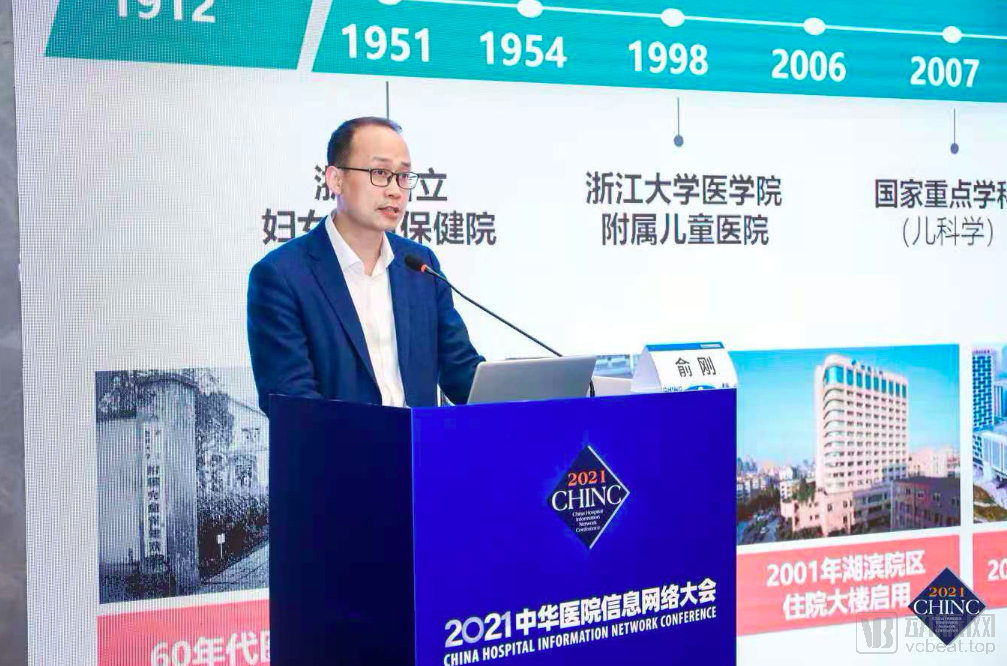
Yu Gang, Director of the Information Center at The Children's Hospital, Zhejiang University School of Medicine, Delivered a Speech at the 2021 Chinese Medical Information Network Conference
As AI continues to integrate and converge with traditional industries, China’s medical device sector has become a major area for the widespread application of AI. Regulatory oversight of AI in healthcare has become more detailed, and the approval process has been continuously accelerated. In June 2019, the Center for Medical Device Evaluation of the National Medical Products Administration issued the Key Points for the Approval of Medical Device Software Using Deep Learning for Decision Support, marking the starting point for policy intervention in the development of medical AI.
Subsequently, the Center for Medical Device Evaluation of the National Medical Products Administration, in conjunction with the National Computer Network and Information Security Management Center, the Chinese People's Liberation Army General Hospital, Tsinghua University, and 12 other entities, jointly initiated the establishment of the AI Medical Device Innovation Cooperation Platform. This platform is dedicated to building an open, collaborative, and shared innovation ecosystem for AI-enabled medical devices. Under this new framework, hospitals, universities, enterprises, and government agencies have formed a unified entity to drive the development of artificial intelligence.
The research achievements from the collaboration between The Children's Hospital, Zhejiang University School of Medicine, and Deepwise Healthcare are undoubtedly a paradigmatic example of driving AI development through hospital-enterprise partnerships. By leveraging their respective comparative advantages, both parties can effectively develop clinically oriented and effective artificial intelligence solutions.
Nevertheless, the clinical demand for artificial intelligence in medical imaging objectively persists. Although the application of AI in medical imaging has initially demonstrated its development potential and, in certain cases, successfully served as an adjunct to physicians, realizing true clinical implementation of AI requires policy support, breakthroughs in core algorithms, deep engagement from hospitals and physicians, capital investment, and market patience.