

Bohou Healthcare Files IPO Prospectus: Founder Yan Honghui Unveils the 'Three-Power Model' to Transform Community-Based Medical Chain Operations
“As population aging intensifies, convenient medical services at the doorstep have become an essential need. Internet healthcare and traditional medical service institutions must complement each other to meet these demands and enhance patients’ healthcare experiences. As the primary care institutions closest to patients, they will serve as residents’ ‘health gatekeepers,’ emerging as new application scenarios for health-tech innovations and key traffic entry points for the industry.”
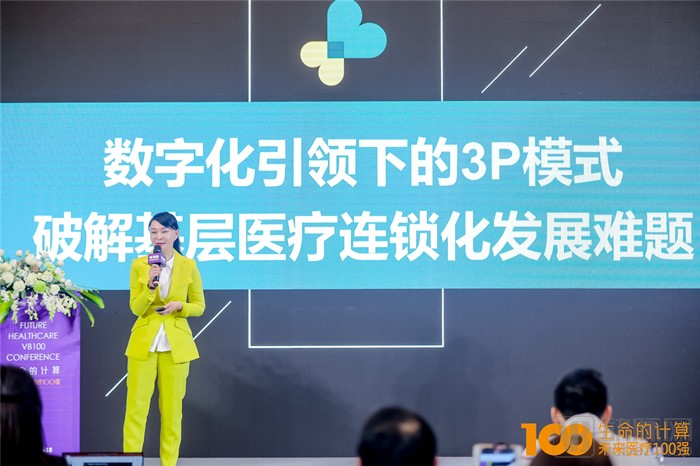
At the sub-forum on Innovative Practices in Primary Care, held during the 5th Future Healthcare Top 100 Conference on the afternoon of April 16, 2021, Yan Honghui, founder of BoHou Medical, shared insights on the chain-based development of primary healthcare. Using BoHou Medical as a case study, she analyzed the pain points in the primary care sector and proposed solutions.
Since its launch of community medical services in 2013, Bohou Medical has consistently adhered to the service philosophy of “Treating Patients Like Family, Providing Holistic Care.” Built on a business model integrating “Treatment + Prevention + Digital Health,” the company is committed to creating a one-stop home healthcare service platform that covers all scenarios and the entire lifecycle. Over eight years of entrepreneurial development, Bohou Medical has provided patients with diverse healthcare solutions, pioneered a new service model combining technology, medical expertise, and intelligence, achieved full coverage of medical insurance for its community medical institutions, and generated hundreds of millions of yuan in revenue.
Rooted in communities, BoHou Medical provides comprehensive, all-hours, and omnichannel services spanning in-hospital, online, and home-based care. By pursuing both external expansion through mergers and acquisitions and internal organic growth, the company has continuously expanded its healthcare service footprint. It currently operates nearly 60 clinics and hospitals, offering therapeutic services focused on general practice, chronic disease management, and physical therapy and rehabilitation; preventive services centered on genetic screening, family health management, and early intervention; as well as digital health value-added services such as at-home nursing, online consultations, and telemedicine.
From community medical services to Sino-Korean hospitals, Boshou University, and high-end medical institutions, and further to the launch of “Yihu Baijia” in 2020, Boshou Medical has consistently adhered to a patient-centric development strategy. With general practice as its core, the company has gradually expanded its specialty services and completed a business transformation from “disease treatment” to “disease prevention.” Boshou Medical has partnered with BGI Genomics to establish a genomic medicine database, introducing services such as early screening, early diagnosis, and genetic testing.
From Yan Honghui’s perspective, the 120 million patients with diabetes and 420 million patients with hypertension—along with a series of other data points—substantiate a current reality: the primary healthcare market is vast in scale. Against the macro backdrop of tiered diagnosis and treatment, and coupled with population aging and the growing number of individuals with chronic diseases, primary healthcare institutions capable of meeting the public’s high-frequency medical needs are poised for a new period of explosive growth.
The uneven distribution of primary healthcare resources, low levels of informatization, and suboptimal diagnostic and treatment capabilities are the key reasons for the low patient volume at primary healthcare institutions. From the patient’s perspective, pain points include fragmented care, imprecise services, and low efficiency in seeking medical attention.
Constrained by the inherent characteristics of “primary” healthcare, grassroots medical institutions face significant shortcomings in medical personnel, equipment, and geographical distribution. Furthermore, low levels of informatization lead to proliferating information “silos” both within hospital departments and between different hospitals. Patient visit cards and medical records are not interoperable, preventing continuous management of patients’ medical information. This results in insufficient capacity for personalized diagnosis and treatment, thereby undermining public trust in grassroots medical institutions.
To this end, BoHou Medical has established a “Three-Power Model,” cultivating cultural power, digital power, and service power to create a new health management model integrating “community, home, and elderly care.”
Bohou Medical’s “Three-Power Model” focuses on building learning capability within its corporate culture by establishing a talent development system aligned with the demands of the digital era; enhancing digital capabilities by advancing digital healthcare and providing multi-channel services to create a comprehensive, multi-dimensional diagnostic and treatment environment for patients; and strengthening service capabilities by developing standardized and refined service models and medical quality systems to deliver an optimal patient experience.
Cultural Power
In terms of cultural strength, since its inception, Bohou Medical has established a patient-centered service philosophy and adopted "Reverence, Universal Love, Integrity, and Excellence" as its core corporate values. Emphasizing the cultivation of medical expertise and talent, the company has spent eight years developing a comprehensive system for attracting and nurturing medical professionals, encompassing selection, utilization, development, and retention. This system features five major course modules and over 100 proprietary courses, effectively addressing the current challenges in recruiting and retaining medical talent within the healthcare industry, while also delivering more efficient, standardized services to patients.
A company’s growth stems from the labor and creativity of every employee, while employees’ pursuit of self-actualization, in turn, fuels the company’s robust development. In terms of talent pipeline, Bothai Medical boasts seasoned experts who provide stability and leadership, complemented by mid-career and young professionals as a strong reserve force. Beyond internal development, Bothai Medical also recruits key experts from across China and introduces leading talents through hiring and employee referrals, continuously injecting “fresh blood” via multiple channels.
Yan Honghui introduced that one of the selection criteria for newly opened community centers by Bohou Medical is that they must serve a surrounding residential population of 15,000 to 20,000, be within a ten-minute walking distance for residents, and be located in a quiet environment. The concentration of patients and the presence of high-level specialists on site continuously attract more patients seeking care by reputation, which in turn draws more experts, thereby forming a virtuous cycle between doctors and patients.
Digital Power
To achieve chain management of community clinics, Botai Medical has independently developed a data service middle-platform system based on technologies such as big data and cloud computing. This system integrates business management, data management, and revenue assistance functions, enabling refined management of operations, data, and marketing for community clinics, while also laying the systemic foundation for future horizontal expansion.
In terms of patient experience, the system introduces AI-assisted development, knowledge retrieval, and classic case studies for digital physicians; for digital patients, it launches online consultation and service evaluation features, providing patients with comprehensive, multi-dimensional, all-scenario services across in-hospital, online, and at-home settings.
In hospital decision-making, Bohou Medical leverages data-driven applications to establish a comprehensive health database for community residents. It has independently developed a medical Internet of Things (IoT) service platform that collects and manages patients’ vital sign data, such as blood glucose and blood pressure, via wearable devices. This enables the creation of detailed patient profiles, facilitating the exploration of subsequent specialized disease management.
To enhance efficiency, the system establishes chained correlations among member data, sales data, and financial data. This mechanism drives increases in follow-up visit and repurchase frequencies, strengthens customer acquisition capabilities, and promotes refined customer operations. During the 2020 pandemic, Botai Healthcare underwent digital transformation, successfully transitioning patients to online channels. In June 2020, Botai Healthcare launched the “Yihu Baijia” internet platform, which, through online-offline integration, improved the tiered diagnosis and treatment process encompassing initial consultations by family doctors and post-diagnosis patient care.
Service Capability
By establishing standardized and refined service models and medical quality systems, we truly realize the essential purpose of community healthcare. With nearly 60 community outpatient clinics serving as service terminals, we enable residents to access convenient medical care within a 10-minute radius.
Yan Honghui shared, “All of the clinic’s profits stem from the aggregate of patients’ perceived quality of medical services.” BoHou Medical actively engages with every aspect of the patient journey, including appointment scheduling, laboratory and diagnostic testing, consultation and medication dispensing, and parking navigation. In 2017, BoHou Medical achieved accreditation from the Australian Council on Healthcare Standards (ACHS), becoming the first community healthcare institution to introduce top-tier international medical service accreditation standards. Since then, BoHou Medical has consistently implemented ACHS healthcare service standards, continuously optimizing its service processes, attention to detail, and service philosophy. This has provided an authoritative benchmark and external oversight mechanism to accelerate the development of the BoHou Medical Group and mitigate medical safety risks.
Cultural power, digital capability, and service excellence have endowed Bohou Medical with the capacity for chain-based operations.
“Be a drop of water in the vast ocean of China’s healthcare system, truly improve primary care in China, and change the world’s perception of Chinese healthcare.” Yan Honghui has consistently upheld this belief, integrating it into the development of Bohou Medical with the aim of establishing it as a model for primary healthcare in China. Looking ahead, Yan Honghui stated that Bohou Medical will firmly build a new community lifestyle model integrating medical and elderly care services. While expanding the market coverage of its community clinics, the company will also promote the research and development of intelligent mobile diagnostic systems, striving to achieve patient satisfaction, employee well-being, and sustainable corporate growth.